

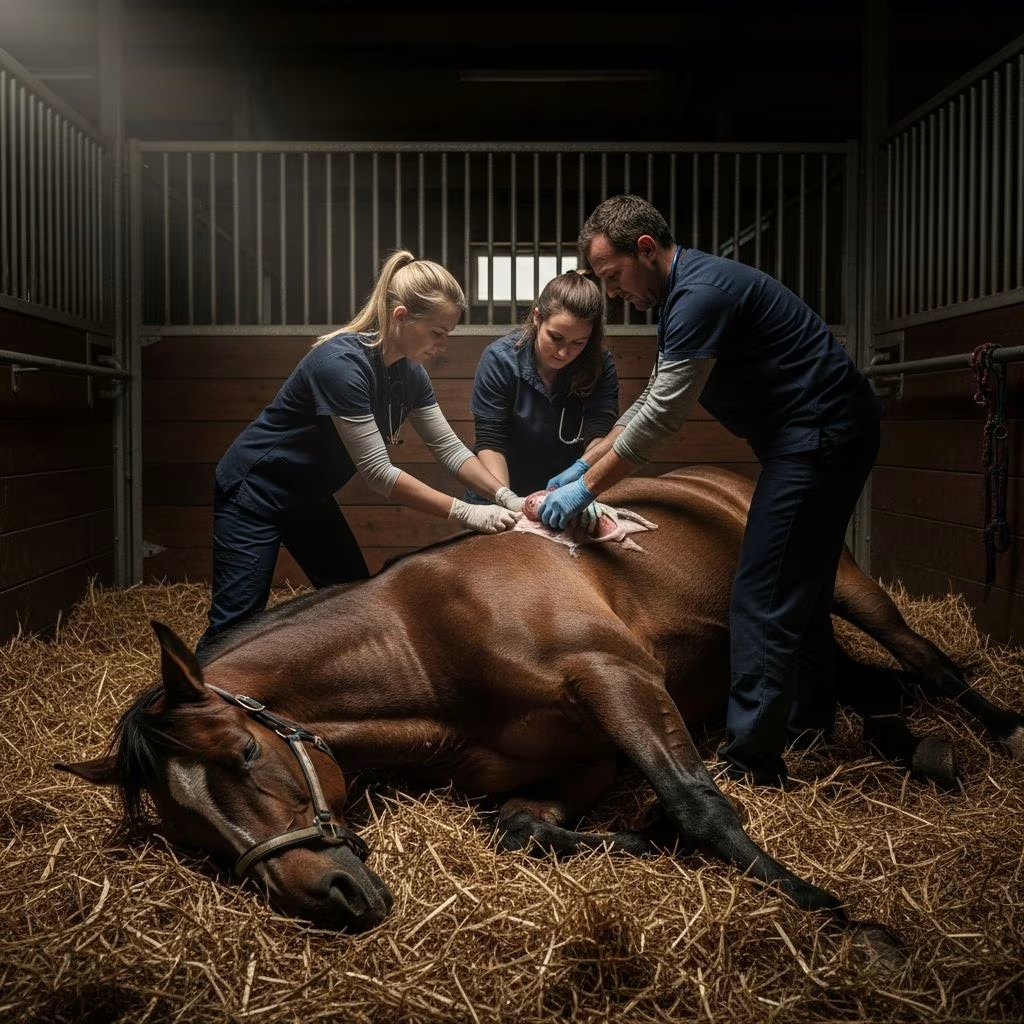
Difficult births, known as dystocia, represent a critical emergency in equine reproduction where the foal fails to deliver normally within expected timelines. These events demand immediate action to safeguard the mare and foal, as delays can lead to severe complications or fatalities. Most instances stem from fetal positioning errors rather than size mismatches.
Recognizing Early Indicators of Foaling Distress
Normal equine labor progresses through three stages: first-stage labor involves uterine contractions and cervical dilation lasting 1-4 hours; second-stage active delivery typically completes in 20-30 minutes post-water breaking; third-stage placental expulsion follows within hours. Dystocia suspicion arises if second-stage labor exceeds 30 minutes after chorioallantois rupture or fails to initiate beyond 4 hours of first-stage signs like restlessness, sweating, or tail swishing.
- Visual cues: Prolonged straining without foal progress, mare exhaustion, or visible limb/head malposition.
- Timeline red flags: No foal presentation after 40 minutes sharply reduces survival odds.
- Associated risks: Twinning, mare obesity, or prior reproductive issues heighten vulnerability.
Primary Culprits Behind Equine Dystocia
Fetal factors dominate dystocia etiology, accounting for over 95% of cases, vastly outnumbering maternal origins. Postural deviations in forelimbs and head are prevalent, often combining in complex ways.
| Cause Type | Frequency (% of Cases) | Examples |
|---|---|---|
| Isolated Fetal Posture Issues | 51.4% | Unilateral elbow flexion, bilateral hip flexion, head deviation |
| Multiple Fetal/Maternal Factors | 48.6% | Forelimb + head malposition, hip flexion + disproportion |
| Maternal Causes | <5% | Uterine torsion, pelvic stenosis |
In one analysis of 72 dystocias, forelimb posture errors topped isolated causes at 18.9%, while head-forelimb combos hit 25.7%. Dead or weakened fetuses exacerbate malpositioning, blocking pelvic transit. Rare contributors include congenital malformations, oversized heads, or twins straining space.
Swift Diagnostic Approaches
Time-critical evaluation starts with vaginal palpation to assess presentation (anterior vs. posterior), position (dorsal/ventral), and posture (limb extension). Rectal ultrasound aids visualization if safe. Sedation via xylazine (0.5-1 mg/kg IV) and butorphanol (0.01-0.02 mg/kg IV) calms the mare for thorough exams; epidural blocks (xylazine 0.17 mg/kg + lidocaine 0.22 mg/kg) halt straining.
Key steps:
- Protective gear: Long gloves, obstetrical lubricants.
- Fetal viability check: Heartbeat via ultrasound or auscultation.
- Classify malposition: E.g., flexed carpi, deviated neck.
Intervention Strategies: From Manipulation to Surgery
Treatment escalates based on complexity and time elapsed. Standing corrections suit simple postures; anesthesia enables advanced maneuvers.
Controlled Vaginal Manipulations
For viable foals in reachable positions, lubricate and manually reposition limbs/head. Elevate mare’s hindquarters via hobbles or winches to shift viscera, easing access. Heavy sedation (xylazine 1 mg/kg IV, diazepam 0.05-0.1 mg/kg IV, ketamine 2.2-2.5 mg/kg IV) or gas anesthesia optimizes relaxation. Traction applies only post-correction, mimicking natural forces.
Surgical Alternatives
Fetotomy (68% usage in one study) slices the fetus for vaginal extraction when C-section risks outweigh benefits, ideal for dead foals. Caesarean sections (13.9%) rescue viable foals in specialized settings, though mare recovery demands intensive care.
- Fetotomy pros: Field-feasible, preserves mare fertility.
- C-section pros: Higher live foal rates if prompt.
- Last resorts: Euthanasia with postmortem foal removal.
Post-Delivery Care for Mare and Foal
Survival hinges on rapid resolution: foal viability plummets post-40 minutes; mare risks uterine rupture or shock. Surviving mares receive broad-spectrum antibiotics, NSAIDs for inflammation/pain, IV fluids for dehydration, and uterine lavage to avert metritis. Monitor placental passage (within 3 hours) to prevent retained placenta complications like laminitis.
Foals need immediate resuscitation: airway clearance, drying, nasal oxygen, plasma transfusions if weak. Neonatal ICU protocols boost outcomes.
| Complication | Mare Risk | Foal Risk | Management |
|---|---|---|---|
| Metritis | High | Low | Antibiotics, lavage |
| Laminitis | Moderate | Low | NSAIDs, hoof support |
| Hypoxia | Low | High | Oxygen, ventilation |
| Sepsis | Moderate | High | Fluids, antimicrobials |
Prognosis Factors and Survival Statistics
Neonatal mortality stays elevated despite interventions, underscoring urgency. Live foal rates exceed 50% with <20-minute resolutions but drop below 10% beyond 60 minutes. Mare survival nears 90% with prompt care, though fertility may decline post-severe cases.
Multiple-cause dystocias complicate outcomes, lacking standardized correction sequences—future research targets this gap.
Prevention Tactics for Breeders
Proactive monitoring trumps reaction: CCTV in foaling stalls, experienced staff during peak season (spring). Pre-foaling exams screen for twins, pelvic adequacy. Select mares with proven ease of delivery; avoid overconditioning.
- Daily checks for Stage 1 signs.
- 24/7 vet on-call for high-risk mares.
- Facilities: Elevated hindquarter setups, anesthesia kits.
Frequently Asked Questions (FAQs)
What is the most common cause of dystocia in horses?
Fetal malposture, especially forelimb flexion or head deviation, drives most cases.
How quickly must dystocia be resolved?
Ideal within 30-40 minutes of Stage 2 onset to maximize mare/foal survival.
Can dystocia be corrected without surgery?
Yes, many via vaginal manipulation under sedation/anesthesia if detected early.
What are signs a mare needs vet help during foaling?
Straining >30 minutes without foal progress, visible malposition, or exhaustion.
Does mare size affect dystocia risk?
Large breeds face higher rates due to longer fetal limbs, but posture trumps size.
Equine Dystocia Management Checklist
Use this for on-farm readiness:
- Emergency kit: Lube, sleeves, sedation drugs, fetotomy wires.
- Anesthesia station: Winch/hobbles, oxygen, monitors.
- Post-care: Antibiotics, fluids, neonatal warmer.
- Records: Track prior dystocias for risk profiling.
References
- Isolated and multiple causes of equine dystocia — PMC/NCBI. 2024. https://pmc.ncbi.nlm.nih.gov/articles/PMC11468425/
- Dystocia in Horses – Causes, Treatment and Associated Conditions — Vetster. 2023. https://vetster.com/en/conditions/horse/dystocia
- Dystocia in Horses — Merck Veterinary Manual. 2023. https://www.merckvetmanual.com/management-and-nutrition/management-of-reproduction-horses/dystocia-in-horses
- Dystocia in Mares: When Every Minute Counts — The Horse. 2022. https://thehorse.com/198205/dystocia-in-mares-when-every-minute-counts/
- EP 84: Dystocia in Horses — Pet Care Partners (YouTube). 2023. https://www.youtube.com/watch?v=IXccadJnYjw



