
Dynamic Laryngeal Issues in Exercising Horses
Exploring transient airway blockages that hinder horse performance during intense workouts and races.
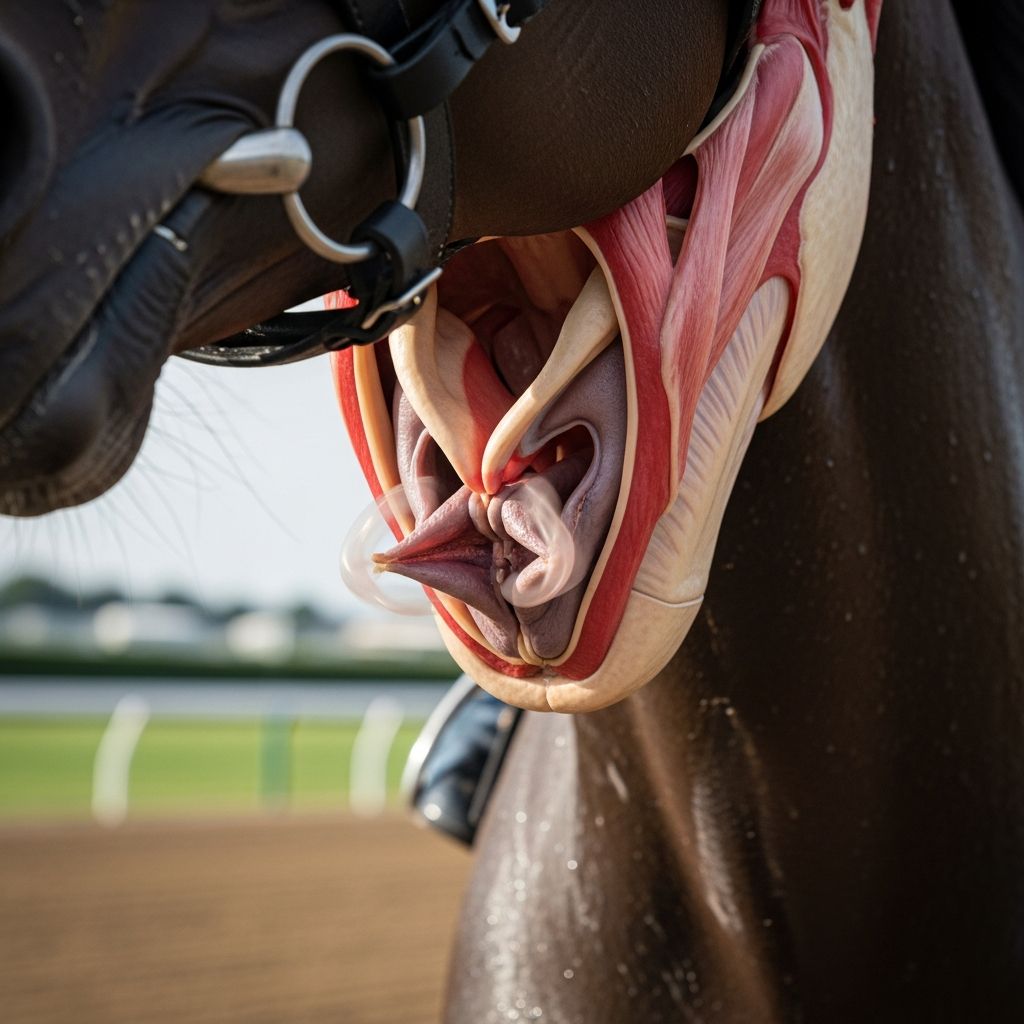
Transient obstructions of the larynx in horses during physical exertion represent a significant challenge for equine athletes, particularly those involved in racing or high-intensity sports. These conditions manifest as sudden narrowing or collapse of laryngeal structures, leading to labored breathing and diminished performance, yet they often evade detection at rest.
Understanding the Larynx’s Role in Equine Respiration
The larynx serves as a critical gateway for air entering the trachea, regulating airflow and protecting the lower airways. In horses, its complex anatomy includes the arytenoid cartilages, vocal folds, and epiglottis, all of which must function seamlessly during exercise when ventilation demands skyrocket. During intense activity, horses can increase airflow by up to 10-fold, generating substantial negative pressure within the airway that tests the structural integrity of these tissues.
Normally, laryngeal muscles maintain an open airway, but subtle weaknesses or dynamic instabilities can cause partial closure, impeding oxygen delivery to muscles and reducing stamina. This phenomenon mirrors exercise-induced laryngeal obstruction (EILO) observed in human athletes, highlighting evolutionary parallels in respiratory physiology across species.
Common Symptoms Observed in Affected Horses
Horses experiencing these issues typically exhibit exercise intolerance, characterized by reluctance to extend effort fully, especially at peak speeds. Owners and trainers often note harsh inspiratory noises, resembling stridor or whistling, that intensify with workload and subside shortly after stopping.
- Inspiratory stridor: A high-pitched sound during inhalation, distinct from expiratory wheezing associated with lower airway problems.
- Reduced performance: Poorer race times, lower placings, or failure to accelerate as expected.
- Post-exercise recovery: Symptoms resolve within minutes of halting activity, unlike persistent conditions such as chronic asthma.
- Age of onset: Frequently appears in young horses around 2-3 years old, coinciding with training intensification.
These signs differentiate laryngeal issues from cardiac problems or poor conditioning, though overlap can complicate initial assessments.
Primary Causes of Transient Laryngeal Obstruction
Several mechanisms contribute to these dynamic collapses, often linked to biomechanical failures under exercise stress. Key culprits include:
Aryepiglottic Fold Collapse
The aryepiglottic folds (AEFs) are flexible tissues connecting the arytenoid cartilages to the epiglottis. During high airflow, negative pressure draws lax folds inward, obstructing the airway. Computational models confirm heightened pressure differentials exacerbate this in affected horses.
Recurrent Laryngeal Neuropathy (RLN)
Also known as laryngeal hemiplegia, RLN involves progressive nerve degeneration, paralyzing the arytenoid cartilage on one side. At rest, asymmetry may be subtle (grades 1-2), but exercise reveals full collapse (grade 4), severely limiting airflow. Thoroughbreds are predisposed due to genetic factors.
Vocal Fold and Epiglottis Abnormalities
Secondary vocal fold collapse can occur post-RLN, where narrowed airways accelerate air velocity, sucking the fold medially. Retroflexed or omega-shaped epiglottides may independently block passage.
Pharyngeal and Soft Palate Instabilities
While not strictly laryngeal, adjacent issues like dorsal displacement of the soft palate (DDSP) or nasopharyngeal collapse frequently coexist, compounding obstruction. Studies in barrel racing horses show these at low speeds, suggesting neuromuscular or stress-related triggers beyond sheer velocity.
| Condition | Prevalence in Studies | Typical Trigger |
|---|---|---|
| Nasopharyngeal Collapse | 49% | Low to high speed |
| Pharyngeal Instability | 42% | Low speed |
| DDSP | 39% | Low speed (19x more common) |
| RLN | Variable | High intensity |
Data from endoscopic evaluations of performance horses illustrate the multifaceted nature of upper airway dysfunction.
Diagnostic Approaches for Accurate Identification
Resting laryngoscopy often appears normal, necessitating dynamic evaluation during exercise. High-speed treadmill endoscopy, where horses gallop with an endoscope in place, captures real-time collapse from onset to peak effort.
- Treadmill testing: Simulates race conditions, revealing subtle instabilities.
- Overground endoscopy: Uses GPS-tracked systems for field diagnosis.
- Airflow measurements: Quantify pressure drops, aiding severity grading.
Differentials include equine asthma (expiratory dyspnea), EIB, and cardiac issues. Lack of response to bronchodilators points toward laryngeal etiology.
Management and Treatment Strategies
Treatment varies by diagnosis and severity, prioritizing performance restoration while minimizing risks.
Conservative Interventions
For mild cases like palatal instability, tack adjustments (e.g., figure-8 nosebands), weight management, and anti-inflammatories reduce episodes. Laryngeal tie-back surgery for RLN repositions the arytenoid, though complications like aspiration exist.
Surgical Options
- Prosthetic laryngoplasty: Sutures hold the cartilage abducted.
- Vocal cordectomy: Removes collapsing folds.
- Laser debulking: For epiglottic cysts or chondritis.
Post-operative rehab includes controlled exercise progression. Human EILO treatments like speech therapy inspire biofeedback techniques for horses, though equine applications are emerging.
Prevention Through Training and Monitoring
Early detection via routine scoping in young athletes prevents progression. Balanced conditioning avoids overexertion, while addressing stressors like trailering or competition anxiety mitigates low-speed triggers.
Genetic screening in breeds like Thoroughbreds identifies at-risk individuals for proactive management.
Frequently Asked Questions (FAQs)
What causes breathing noises in my horse during workouts?
Inspiratory stridor often signals laryngeal obstruction, unlike lower airway wheezes. Consult a vet for dynamic endoscopy.
Can these issues resolve without surgery?
Mild cases may improve with management, but severe RLN typically requires intervention for racing viability.
Are certain breeds more susceptible?
Yes, Thoroughbreds and large warmbloods face higher RLN risks due to conformation and genetics.
How soon after exercise do symptoms fade?
Usually within 5-10 minutes, distinguishing from cardiac or metabolic disorders.
Is treadmill endoscopy essential for diagnosis?
It’s gold standard, as rest exams miss dynamic problems in most cases.
Long-Term Prognosis and Performance Outlook
With timely diagnosis and tailored treatment, many horses regain competitive edge. Untreated cases risk career-ending deconditioning. Ongoing research into neurophysiology promises refined therapies.
In summary, vigilance in monitoring respiratory health during training is paramount for equine success.
References
- Exercise Induced Laryngeal Obstruction in Humans and Equines. A Comparative Review — Erickson BK, et al. PMC. 2019-10-29. https://pmc.ncbi.nlm.nih.gov/articles/PMC6831747/
- Exercise-induced laryngeal obstruction — Wikipedia (informed by primary sources). Last edited 2023. https://en.wikipedia.org/wiki/Exercise-induced_laryngeal_obstruction
- Disorders of the Larynx in Horses — Merck Veterinary Manual. Updated 2023. https://www.merckvetmanual.com/horse-owners/lung-and-airway-disorders-of-horses/disorders-of-the-larynx-in-horses
- Upper Airway Obstruction in Barrel Racing Horses — Kentucky Equine Research. 2023-02-15. https://ker.com/equinews/upper-airway-obstruction-in-barrel-racing-horses/
- Understanding and Treating Exercise-Induced Laryngeal Obstruction — Cleveland Clinic. 2022-07-12. https://consultqd.clevelandclinic.org/understanding-and-treating-exercise-induced-laryngeal-obstruction
Similar Articles








Read full bio of Sneha Tete


