

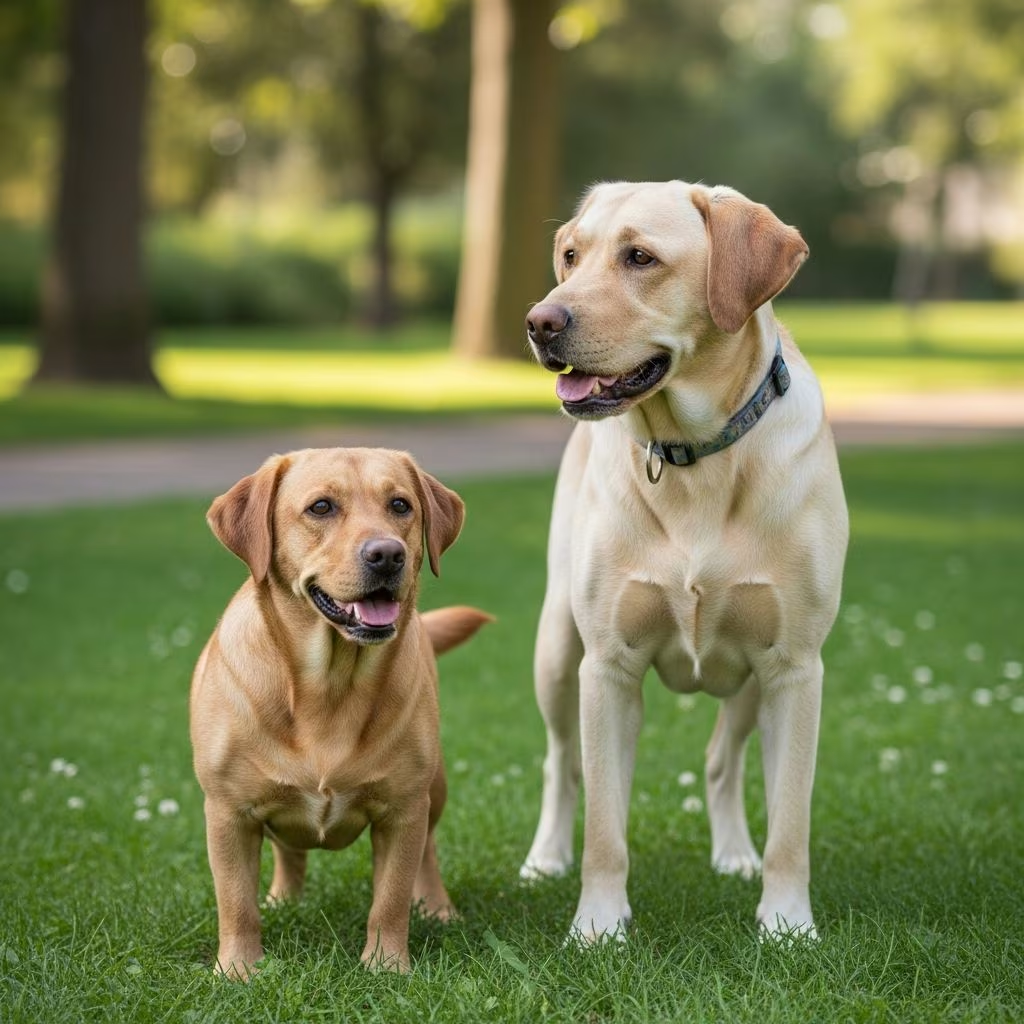
Labrador Retrievers, known for their sturdy build and athletic prowess, can occasionally exhibit dwarfism, a genetic condition leading to disproportionate body development. Primarily manifested as skeletal dysplasia type 2 (SD2), this disorder results in shorter limbs while preserving typical body proportions, often appearing in working lines more than show lines.
Understanding the Genetic Roots of Dwarfism in Labs
Dwarfism in Labrador Retrievers stems from specific genetic mutations inherited recessively from both parents. The most prevalent form, SD2, arises from a single nucleotide mutation (c.143G>C) in the COL11A2 gene, which encodes the collagen alpha-2(XI) chain essential for cartilage and bone formation. Dogs require two copies of this mutated gene to express the condition, making it autosomal recessive with equal impact on males and females.
This mutation disrupts normal bone growth, particularly in the legs, causing them to become shorter, thicker, and mildly curved. Unlike more severe types like SD1 (osteochondrodysplasia), which bends legs dramatically, SD2 produces subtler changes with incomplete penetrance-not all homozygous dogs show obvious signs. Prevalence remains low, under 1% in random Labrador populations, but carriers can unknowingly propagate it.
Another variant, pituitary dwarfism, involves growth hormone deficiency from an underdeveloped pituitary gland, leading to proportionate smallness. Though rarer in Labs, it contrasts with SD2’s disproportionate effects and is more common in breeds like German Shepherds.
Recognizing Physical Manifestations in Affected Puppies
Signs of dwarfism typically emerge by 2-6 months, as growth plates in long bones fail to develop properly. Key indicators include:
- Disproportionately short legs, especially front limbs compared to hind ones
- Thicker, slightly curved leg bones
- Normal trunk length and width, creating a low-slung appearance
- Slowed or stunted height growth without weight proportion changes
- Mild gait irregularities, like waddling or difficulty rising
Unlike pituitary dwarfism, which retains puppy-like features such as retained deciduous teeth, thin coats, and skin issues, SD2 focuses skeletal changes without widespread hormonal effects.
Owners might first notice when comparing to littermates: affected Labs stand shorter at the shoulder, with heights overlapping small normal dogs, masking mild cases unless side-by-side.
Associated Health Complications and Risks
While SD2 is milder than other dwarfisms, it carries joint and mobility risks. Front legs bear more impact, potentially leading to:
| Potential Issue | Description | Management Note |
|---|---|---|
| Joint Enlargement | Swollen elbows or knees from abnormal bone growth | Monitor for arthritis; weight control key |
| Bowed Limbs | Slight outward curving, stressing ligaments | Low-impact exercise prevents further deformity |
| Spinal Deviation | Rare low-slung back affecting posture | Vet X-rays for early intervention |
| Secondary Conditions | Hip dysplasia or patella luxation risk elevated | Genetic screening alongside physical exams |
Severe dwarfism like SD1 links to crippling pain, but SD2 rarely causes ocular, auditory, or cardiac problems. Still, lifelong vigilance counters obesity-exacerbated strain.
Diagnostic Approaches for Confirmation
Veterinary diagnosis combines physical exams, radiographs, and genetic testing. X-rays reveal shortened, dense leg bones by 8-12 weeks. Bloodwork rules out hormonal dwarfism.
DNA tests from labs like UC Davis Veterinary Genetics Laboratory detect the COL11A2 mutation accurately. Clear (N/N), carrier (N/SD2), or affected (SD2/SD2) results guide breeding. Incomplete penetrance means some SD2/SD2 dogs appear normal, emphasizing testing over phenotype.
| Test Type | Purpose | Reliability |
|———–|———|————-|
| Radiographs | Visualize bone length/shape | High for structural changes |
| Genetic Panel | Identify COL11A2 mutation | 100% for genotype |
| Hormone Assay | Check pituitary function | Essential to differentiate types |
Breeding Implications and Prevention Strategies
Dwarfism poses ethical breeding challenges. Carriers (over 1% frequency) transmit without symptoms, so pre-breeding screens prevent affected litters. Working Labs show higher incidence, possibly from unselected pairings prioritizing field performance over health.
Responsible breeders:
- Test sires and dams via cheek swab kits
- Avoid mating two carriers (25% affected risk)
- Pair carriers with clears to produce only carriers or normals
- Disclose results transparently to buyers
Unlike intentional short-legged breeds (e.g., Corgis via chondrodysplasia), Lab dwarfism is unintended, urging genetic diversity.
Daily Care and Lifestyle Adjustments
Dogs with dwarfism thrive with tailored care emphasizing joint preservation and weight management. Core tips:
- Nutrition: High-quality, joint-supportive food (e.g., glucosamine-rich); maintain lean body via calorie control
- Exercise: Swimming, short walks over running/jumping to minimize impact
- Supplements: Omega-3s, chondroitin for cartilage health
- Home Setup: Ramps for furniture, orthopedic beds, non-slip floors
Regular vet checkups track growth, with pain meds or surgery rare for mild SD2. Lifespan matches normals if managed well.
FAQs on Labrador Dwarfism
Can dwarf Labs live normal lives?
Yes, with proper care, they enjoy active lives without severe limitations, though mobility adapts over time.
Is dwarfism painful for Labs?
SD2 is generally not acutely painful but can cause discomfort if joints overload; proactive management prevents issues.
How common is SD2 in Labs?
Rare (<1%), more in working lines; testing ensures informed choices.
Should I breed a carrier Lab?
Only with clears, accepting 50% carrier offspring; prioritize health over size.
What’s the difference between SD1 and SD2?
SD1 causes bent, malformed legs with severe pain; SD2 yields straight but short limbs, milder impact.
Outlook for Dwarf Labs: Hope and Responsibility
Dwarfism redefines the classic Lab silhouette but not their spirit. Genetic awareness empowers owners and breeders to foster healthy generations. Early detection and compassionate care turn potential challenges into manageable traits, letting these short-legged wonders fetch joy undiminished.
References
- Dwarfism in Dogs: What Are the Causes & Symptoms? — Purina. 2023. https://www.purina.com.sg/care-and-advice/dog/health/dwarfism-in-dogs
- Dwarfism in Labradors: Our Vet Explains the Signs, Causes & Care — Dogster. 2023. https://www.dogster.com/ask-the-vet/dwarfism-in-labradors
- Miniature Labrador: Small Size and Dwarfism In Labs — The Labrador Site. 2023. https://www.thelabradorsite.com/miniature-labrador/
- What to Know About Dwarfism in Dogs — American Kennel Club. 2024-01-15. https://www.akc.org/expert-advice/health/dwarfism-in-dogs/
- Skeletal Dysplasia 2 (SD2) in Labrador Retrievers — UC Davis Veterinary Genetics Laboratory. 2023. https://vgl.ucdavis.edu/test/sd2-labrador



