

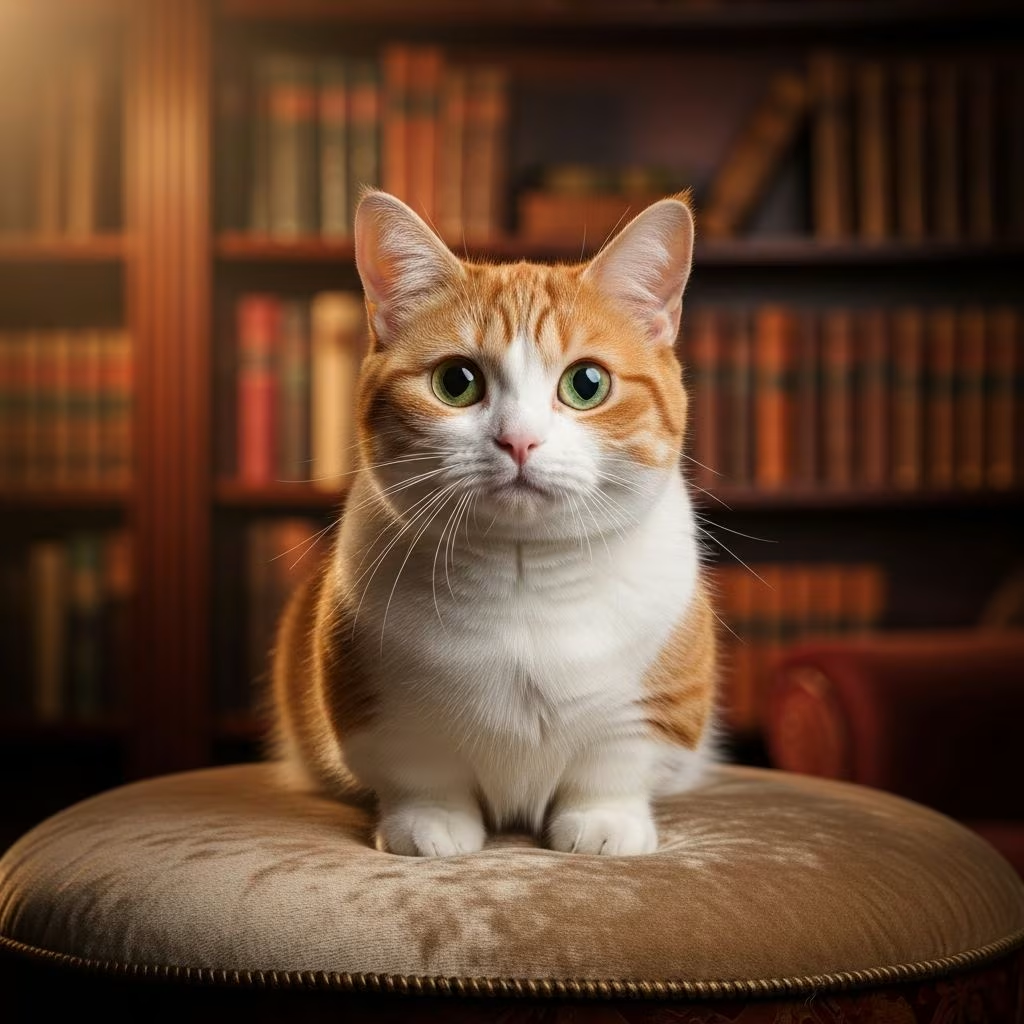
Smaller stature in cats often captivates pet lovers with their endearing proportions, but dwarfism represents a complex genetic or hormonal condition that demands careful management. These felines, frequently linked to breeds like the Munchkin, face disproportionate growth leading to short limbs relative to their body size. Understanding this trait’s origins and implications helps owners provide the supportive environment needed for a fulfilling life.
Genetic Foundations of Feline Dwarfism
Dwarfism in cats primarily stems from mutations affecting bone development, particularly in growth plates. The most recognized form involves an autosomal dominant gene, such as the one linked to UDP-glucose 6-dehydrogenase (UGDH) in Munchkin-like cats, causing shortened legs while the torso remains standard length. This differs from canine counterparts, where fibroblast growth factor 4 (FGF4) plays a similar role, highlighting species-specific pathways.
Other genetic anomalies include chondroectodermal dysplasia, associated with polydactyly and heart defects, and spondyloepiphyseal dysplasia congenita, leading to moderate stature reduction alongside orthopedic issues like clubfeet. These recessive traits often emerge in inbred lines, underscoring selective breeding’s risks.
- Autosomal dominant mutations: One parent carrier suffices for offspring inheritance, rapidly spreading in breeds.
- Recessive forms: Require both parents to carry the gene, rarer but severe.
- Chromosomal irregularities: Broader abnormalities disrupting skeletal maturation.
Hormonal Disruptions Leading to Stunted Growth
Beyond pure genetics, endocrine failures contribute significantly. Pituitary dwarfism arises when the brain’s pituitary gland fails to produce growth hormones, cortisol, and others, resulting in poor coat quality, skin pigmentation issues, and metabolic disturbances. Affected kittens show initial normalcy before growth halts, often with cardiac complications.
Congenital hypothyroidism, or cretinism, involves thyroid gland malformation or dysfunction from birth. Thyroid hormones are vital for skeletal, neural, and dental development; deficiencies cause lethargy, large heads, short limbs, potbellies, and mental dullness. Early intervention with synthetic hormones can mitigate effects, though lifelong therapy is required.
| Condition | Primary Cause | Key Effects |
|---|---|---|
| Pituitary Dwarfism | Gland malformation | Stunted growth, hair loss, heart issues |
| Congenital Hypothyroidism | Thyroid deficiency | Lethargy, disproportionate features, digestive woes |
Recognizing Symptoms in Dwarf Kittens
Owners might first notice dwarf traits at 4-6 weeks, as kittens lag in leg lengthening while heads and torsos grow normally. Common signs include bowed or twisted limbs, enlarged heads with undershot jaws, crowded teeth, and flattened muzzles in severe cases. Mobility limitations appear early, with awkward gaits or reluctance to jump.
Secondary symptoms encompass poor fur growth, weeping eyes, respiratory difficulties from palate deformities, and neurological signs like incoordination in progressive disorders. Obesity risks escalate due to reduced activity, compounding joint stress. Behavioral cues such as lethargy or pain during movement signal underlying issues.
Common Indicators
- Disproportionately short fore and hind legs
- Bowed limbs or spinal curvature (lordosis)
- Enlarged head and misaligned teeth
- Floppy ears or tail abnormalities in related breeds
- Chronic pain, limping, or mobility hesitation
Diagnostic Approaches for Affected Cats
Veterinary evaluation starts with pedigree review and physical exams focusing on limb proportions and joint flexibility. Radiographs reveal growth plate irregularities, spinal deformities, or bone density changes. Blood panels measure thyroid and pituitary hormones, while biopsies confirm tissue-level anomalies.
Genetic testing identifies specific mutations like UGDH, aiding breeding decisions. Advanced imaging, such as CT scans, detects cranial or neurological complications. Differential diagnosis rules out nutritional deficiencies, infections (osteomyelitis), or traumas mimicking dwarfism.
- History and clinical observation
- X-rays of skeleton
- Hormone assays via bloodwork
- Genetic screening where available
Health Complications and Long-Term Risks
Dwarf cats endure heightened orthopedic strain, accelerating osteoarthritis, hip/knee dislocations, and degenerative joint disease. Spinal issues like disk herniation or swayback (lordosis) risk paralysis, especially under obesity’s weight. Cranial distortions may cause cleft palates, impeding nursing, or breathing problems.
Cardiovascular and metabolic disorders shorten lifespans below the typical 12-16 years. Munchkin-related osteodystrophy mirrors Scottish Fold issues, folding cartilage and causing pain. Lethal forms like neuroaxonal dystrophy lead to early demise from brain degeneration.
Obesity forms a vicious cycle: limited mobility promotes weight gain, which worsens joint degeneration. Preventive measures emphasize weight control to preserve function.
Management and Treatment Strategies
No cure exists for genetic dwarfism, but symptom management enhances quality of life. Pain relief via anti-inflammatories and analgesics addresses bone/joint discomfort. Joint supplements with glucosamine and chondroitin bolster cartilage resilience against arthritis.
Hormonal cases demand daily thyroid or growth hormone replacements, monitored by serial blood tests. Surgical corrections for dislocations or fractures prove inconsistent, often worsening outcomes. Weight management through portioned, high-protein diets and interactive toys counters inactivity.
Daily Care Recommendations
- Maintain ideal body weight to reduce joint load
- Provide low-impact exercise like laser pointers
- Use ramps for furniture access
- Administer vet-prescribed supplements
- Schedule bi-annual orthopedic checks
Breeding Ethics and Controversies
Selective breeding for dwarf traits sparks debate due to welfare concerns. Organizations like UFAW highlight compromised jumping and increased injury risks from short limbs. Dominant inheritance facilitates propagation but amplifies health issues in kittens. Many registries ban Munchkin breeding, prioritizing ethics over aesthetics.
Random-bred dwarfs, often from feral or inbred lines, compound problems with poor starts. Responsible ownership favors adoption over breeding, ensuring homes accommodate limitations.
Lifestyle Adaptations for Dwarf Cat Owners
Create an accessible environment with low-entry litter boxes, stable scratching posts, and elevated food bowls to ease spine strain. Interactive play fosters mental stimulation without high jumps. Regular grooming combats coat issues, and dental care prevents problems from misaligned teeth.
Monitor for pain signs like vocalizing or hiding; early intervention preserves mobility. Dwarf cats thrive indoors, shielded from jumping hazards. With dedication, many enjoy 10+ happy years.
Frequently Asked Questions (FAQs)
Can dwarf cats live normal lives?
Yes, with proper care including weight control and joint support, many lead active, pain-free lives despite limitations.
Is Munchkin breeding ethical?
Controversial; health risks prompt bans by some bodies, favoring welfare over appearance.
How do I prevent obesity in my dwarf cat?
Portion meals, avoid free-feeding, and encourage gentle play to match caloric needs.
Are there treatments for hormonal dwarfism?
Lifelong hormone supplements manage pituitary or thyroid types effectively.
What breeds are prone to dwarfism?
Munchkin, plus occasional random-breds; avoid breeding carriers.
References
- Dwarfism in Cats: What You Need To Know — cats.com. 2023. https://cats.com/dwarfism-in-cats
- DWARF, MIDGET AND MINIATURE CATS — messybeast.com. Accessed 2026. http://messybeast.com/dwarfcats.html
- Bone Deformity and Dwarfism in Cats — wagwalking.com. 2023. https://wagwalking.com/cat/condition/bone-deformity-dwarfism
- Dwarfism in Cats: Causes & Care Tips — catster.com. 2024. https://www.catster.com/cat-health-care/dwarfism-in-cats/
- Fact Sheet Feline Disproportionate Dwarfism — qualzucht-datenbank.eu. 2023. https://qualzucht-datenbank.eu/fact-sheet-feline-disproportionate-dwarfism/
- Dwarfism in cats: What you need to know — purina.co.uk. 2024. https://www.purina.co.uk/articles/cats/health/special-needs/dwarfism-in-cats



