

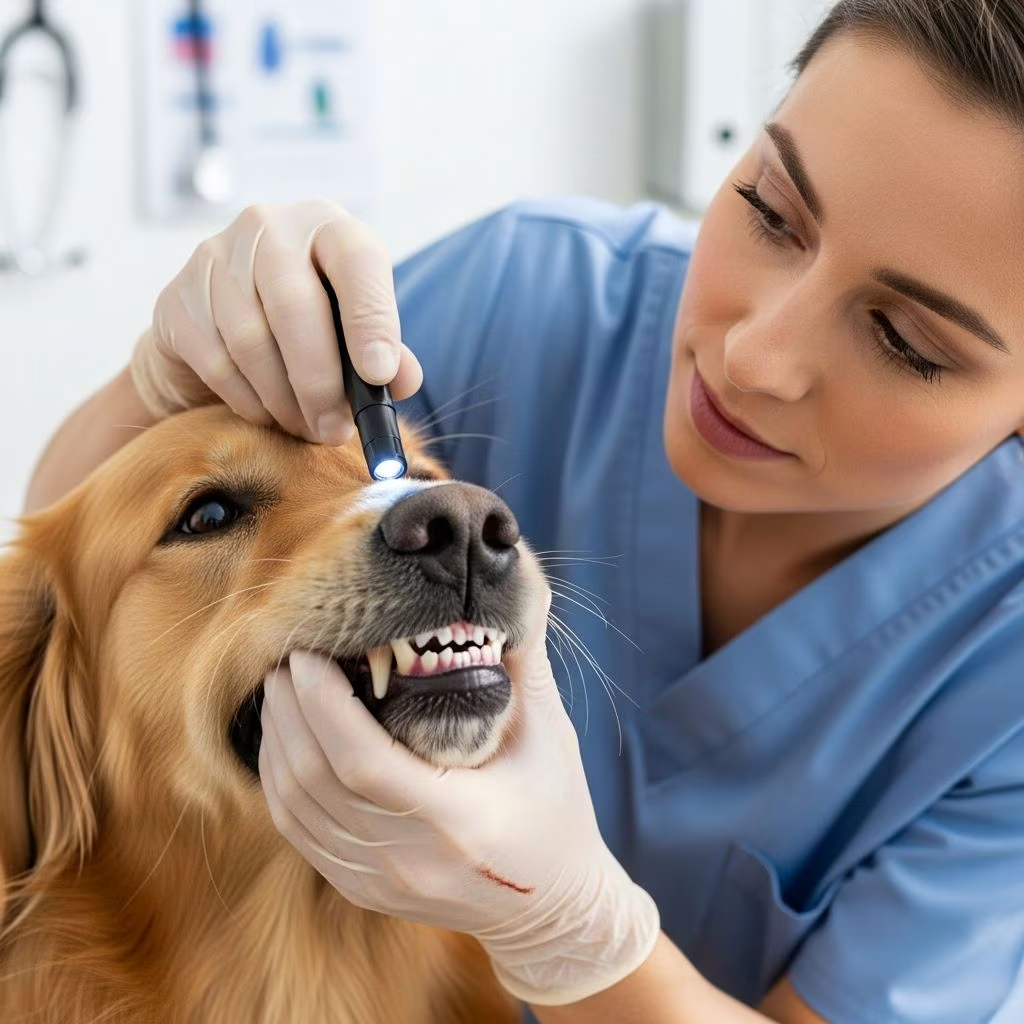
The Dunbar Dog Bite Scale, developed by veterinarian and animal behaviorist Dr. Ian Dunbar, provides a standardized way to evaluate the severity of dog bites. This six-level system helps dog owners, veterinarians, medical professionals, and legal experts assess incidents ranging from mere threats to fatal attacks, promoting better prevention and response strategies.
Origins and Purpose of the Dunbar Scale
Dr. Ian Dunbar created this scale to bring clarity to dog aggression evaluations. Drawing from years of research in canine behavior, he aimed to quantify bite incidents objectively. The framework distinguishes between common, low-level behaviors and rare, dangerous attacks, noting that over 99% of incidents fall into Levels 1 and 2, where dogs are often fearful or overly excited rather than truly vicious.
Unlike broader systems like the WHO’s animal bite categories, which focus on rabies risk with three exposure levels, the Dunbar Scale emphasizes physical injury depth and multiplicity for precise risk assessment in dog-specific contexts.
Breaking Down the Six Levels
The scale progresses from non-injurious aggression to lethal outcomes. Each level builds on the previous, with increasing tissue damage and intent indicators.
Level 1: Threatening Behavior Without Contact
At the lowest tier, dogs display aggressive posturing such as growling, snapping, or lunging without teeth touching skin. No injury occurs, but it signals discomfort or fear. These incidents are extremely common and often stem from poor socialization or territorial instincts. Response involves calming the dog and removing triggers, not punishment.
Level 2: Teeth Contact Without Puncture
Here, teeth graze or press against skin, causing minor nicks less than 0.1 inches deep or slight bleeding from scraping. Vertical punctures are absent. This level represents most everyday mishaps, like play gone wrong. Clean the area with soap and water; medical attention is rarely needed.
Level 3: Shallow Single-Bite Punctures
A single bite produces 1-4 punctures no deeper than half the dog’s canine tooth length. Lacerations may occur in one direction from pulling away. These require cleaning, antibiotics, and bandaging. In legal terms, claims might range from $2,500-$10,000 in some states, factoring in pain and minor scarring.
Level 4: Deep Single-Bite Damage
Punctures exceed half the canine tooth depth, often with bruising from holding or tearing from head-shaking. Stitches, surgery, or therapy may be necessary, risking infection or nerve issues. Settlements can hit $10,000-$50,000 due to recovery time and disfigurement.
Level 5: Multiple Severe Bites
Involves repeated attacks with at least two Level 4 bites or multiples including one deep per assault. Extensive muscle, tendon, or bone damage leads to disability or PTSD. Victims face surgeries, rehab, and high settlements over $50,000-$150,000+. Dogs may be deemed vicious.
Level 6: Fatal or Near-Fatal Attacks
The dog kills or consumes tissue, marking the ultimate tragedy. Wrongful death claims can exceed millions, covering lost support and suffering. These rare cases trigger quarantines and breed-specific laws in some areas.
Visualizing Severity with a Comparison Table
| Level | Description | Injury Type | Medical Needs | Legal Implications |
|---|---|---|---|---|
| 1 | Aggressive behavior, no contact | None | Behavior consult | Warning |
| 2 | Teeth touch, minor nicks | Surface scrape | Cleaning | Minor report |
| 3 | 1-4 shallow punctures | Minor wounds | Antibiotics, bandages | $2.5k-$10k claims |
| 4 | Deep punctures, bruising/tear | Moderate damage | Stitches, surgery | $10k-$50k claims |
| 5 | Multiple deep attacks | Severe tissue loss | Rehab, therapy | $50k+ claims, vicious dog |
| 6 | Fatal | Death/tissue consumption | N/A | Millions, euthanasia |
This table summarizes key differences for quick reference.
Medical Response by Level
Immediate care varies by severity. For Levels 1-2, monitor behavior and clean superficial marks. Levels 3-4 demand professional evaluation for infection risks like rabies or bacteria. Higher levels require ER visits, imaging, and specialists. Children and elderly victims need psychological support due to trauma.
- Always wash bites with soap under running water for 5-10 minutes.
- Apply pressure to control bleeding.
- Seek tetanus shots if outdated.
- Report to animal control for Levels 3+.
Legal and Insurance Ramifications
The scale influences liability. Low levels may not trigger claims, but Levels 4-6 often lead to “dangerous dog” designations, insurance denials, or lawsuits. In Texas and California, it aids in proving negligence. Homeowners policies cap payouts, pushing victims toward personal injury suits.
Preventing Escalation to Higher Levels
Proactive training averts most bites. Socialize puppies early, teach bite inhibition, and use positive reinforcement. Avoid triggers like resource guarding. Spay/neuter reduces aggression. Owners should recognize early Level 1 signs and consult behaviorists.
- Enroll in obedience classes.
- Use muzzles for reactive dogs.
- Supervise around strangers/kids.
- Microchip for traceability.
Comparing Dunbar Scale to Other Systems
The WHO categories focus on exposure: Category I (no exposure), II (minor scratches), III (deep bites/licks on breaks). Dunbar offers finer granularity for dogs. Local laws may use numeric reports.
FAQs on Dog Bite Severity
What is the most common dog bite level?
Levels 1 and 2 account for over 99% of incidents, involving no or minimal injury.
Does breed matter in the Dunbar Scale?
No, it’s injury-based, not breed-specific, though statistics vary.
When to sue after a Level 3 bite?
If medical costs or lost wages exceed coverage, consult a lawyer. Typical claims $2,500+.
Can Level 4 bites heal without scars?
Possible with prompt care, but deep punctures often scar.
How to report a bite?
Contact local health department or animal control immediately.
Training Tips to Avoid Bites
Focus on impulse control: Teach “leave it” and recall. Desensitize to handling. Professional help for aggression histories prevents escalation.
In summary, mastering the Dunbar Scale empowers responsible pet ownership and informed responses to incidents.
References
- Dog Bite Classifications and When to See a Doctor — Joubert Law Firm. 2021-04. https://www.joubertlawfirm.com/blog/2021/april/dog-bite-classifications-and-when-to-see-a-docto/
- Dr. Ian Dunbar’s Dog Bite Scale (Official Authorized Version) — APDT. 2017-01. https://apdt.com/wp-content/uploads/2017/01/ian-dunbar-dog-bite-scale.pdf
- Dog Bite Level Chart by Dunbar Bite Scale — Helbock Law. N/A. https://www.helbocklaw.com/dog-bite-level-chart/
- Understanding Dunbar Bite Levels — Zagoria Law Firm. N/A. https://www.lawzagoria.com/understanding-dunbar-bite-levels/
- Dog Bite Levels and Their Legal Implications in Texas — Texas Dog Bite Lawyer. N/A. https://texasdogbitelawyer.law/dog-bite-level-and-their-legal-implications-in-texas/
- The wound severity of animal bite victims visiting rabies prevention — PMC (NCBI). 2021. https://pmc.ncbi.nlm.nih.gov/articles/PMC8605553/



