
Understanding Drug Movement in Animal Bodies
Master the science of how medications travel through animal systems
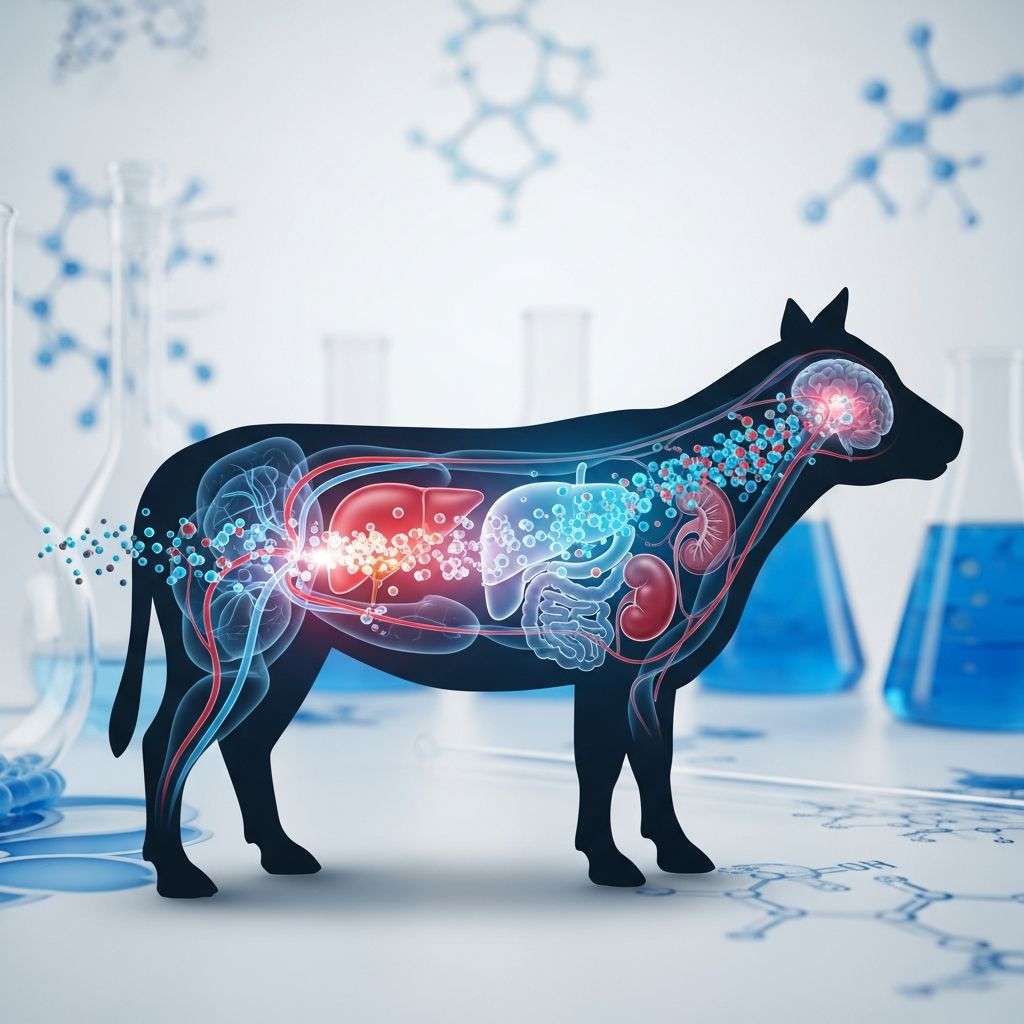
When veterinarians administer medications to their animal patients, they rely on a sophisticated understanding of how those drugs move through the body. This foundational knowledge comes from a discipline known as pharmacokinetics, which provides the mathematical framework for predicting drug behavior and optimizing therapeutic outcomes. Whether treating a dog with an infection, a cat with chronic pain, or livestock requiring preventative care, understanding these principles ensures safer, more effective treatment protocols.
The Foundation: Defining Pharmacokinetics in Veterinary Practice
Pharmacokinetics describes what the body does to a drug, contrasting sharply with pharmacodynamics, which describes what the drug does to the body. This distinction is fundamental to veterinary medicine. Specifically, pharmacokinetics employs mathematical models to track how medications progress through four essential stages: absorption into the bloodstream, distribution to tissues, metabolism into different compounds, and excretion from the body—collectively abbreviated as ADME.
The primary objective of pharmacokinetic studies is to measure plasma drug concentrations over time following administration. Researchers collect these measurements ideally through multiple routes, including intravenous injection, which provides a baseline of 100% bioavailability against which other administration routes can be compared. These data enable veterinarians to develop dosing regimens that maintain therapeutic drug concentrations while minimizing the risk of toxicity.
Understanding pharmacokinetics proves especially valuable when establishing drug withdrawal times for competition animals or food-producing species, where residual drug concentrations pose safety concerns. By predicting how long medications persist in animal tissues, veterinarians can calculate appropriate withdrawal periods before animals can safely compete or enter the food supply.
The Journey Begins: Drug Absorption and Entry Into Circulation
Before any medication can exert therapeutic effects, it must first enter systemic circulation. The path a drug takes fundamentally determines both when and how completely it reaches the bloodstream. Absorption refers to the rate and extent to which a drug enters the body’s circulation, and this process varies dramatically depending on the administration route chosen.
Routes of Administration and Absorption Patterns
Different administration routes create distinct absorption profiles:
- Intravenous (IV) bolus: Delivers 100% of the drug directly into systemic circulation, bypassing the absorption phase entirely. This route produces immediate, predictable plasma concentrations.
- Oral administration: Requires the drug to traverse the gastrointestinal tract lining before reaching the bloodstream, resulting in slower onset and variable absorption depending on gastrointestinal conditions.
- Subcutaneous or intramuscular injection: Allows gradual absorption from the injection site into circulation, producing delayed peak concentrations compared with oral routes.
- Transmucosal absorption: Certain drugs, such as buprenorphine, absorb efficiently through oral mucous membranes, providing rapid systemic availability without gastrointestinal absorption complications.
Consider the practical example of carprofen, an anti-inflammatory pain reliever approved for canine use. When administered subcutaneously, the medication produces a lower peak concentration and reaches that peak more slowly than oral formulations. This delayed absorption translates to postponed pain relief onset, information that guides clinical decision-making regarding which route best serves an individual patient’s needs.
Bioavailability, expressed as a percentage, quantifies the fraction of an administered dose that reaches systemic circulation in its active form. Extravascular routes (any route other than IV) typically show bioavailability at or below 100%. Rare instances of bioavailability exceeding 100% may occur with extended-release formulations exhibiting “flip-flop kinetics,” where absorption proceeds more slowly than elimination, or with drugs demonstrating significant first-pass metabolism bypass.
Beyond the Bloodstream: Distribution to Body Tissues
Once absorbed into the plasma, drugs must traverse cellular barriers to reach their therapeutic targets. The extent and pattern of distribution varies enormously between different medications and reflects fundamental properties of drug molecules.
Volume of Distribution: Measuring Drug Spread
The apparent volume of distribution (Vd) quantifies how extensively a drug disperses throughout the body. This mathematical parameter represents the volume into which a drug appears to distribute if plasma concentrations were uniform throughout that volume. Vd values provide critical insights into where drugs accumulate.
Many medications display Vd values exceeding the animal’s actual body weight—sometimes substantially. Digoxin, a cardiac glycoside used in veterinary cardiology, exhibits a mean Vd of 13 L/kg in dogs. This surprisingly high value indicates that digoxin binds extensively to tissues outside the plasma compartment. When a drug leaves the bloodstream and accumulates in peripheral tissues, the Vd increases proportionally, reflecting the drug’s affinity for extraplasma locations.
In contrast, large molecules like monoclonal antibodies possess extremely low Vd values, approximately 0.05 L/kg, because their molecular size restricts them to the plasma compartment. Similarly, nonsteroidal anti-inflammatory drugs (NSAIDs) demonstrate moderate Vd values between 0.2 and 0.3 L/kg, concentrating in plasma and inflammatory sites rather than distributing broadly throughout tissues.
Opioid analgesics require extensive distribution to penetrate the central nervous system and exert their primary analgesic effects. Consequently, opioids such as fentanyl display high Vd values—approximately 5 L/kg in dogs—reflecting their broad tissue penetration.
Factors Influencing Tissue Distribution
Several physiological factors determine whether drugs remain compartmentalized or distribute broadly:
- Plasma protein binding: Drugs that bind extensively to plasma proteins remain largely confined to the vascular space, limiting tissue penetration.
- Molecular size: Larger molecules face greater barriers to crossing cellular membranes and tissue barriers.
- Lipophilicity: Lipid-soluble drugs penetrate cellular membranes more readily than hydrophilic compounds.
- Tissue affinity: Some drugs possess special affinity for particular tissues, accumulating there preferentially.
Chemical Transformation: Metabolism and Biotransformation
The body does not maintain drugs in their original form indefinitely. Instead, metabolic processes systematically modify drug molecules, typically rendering them less pharmacologically active and more readily excretable. These biotransformation reactions occur primarily in the liver, though extrahepatic metabolism also contributes significantly.
Metabolic pathways modify drug structures through oxidation, reduction, conjugation, and hydrolysis reactions. The liver’s enzymatic systems progressively transform lipophilic drugs into more hydrophilic metabolites suitable for renal or biliary excretion. This metabolic capacity varies between species, breeds, ages, and individual animals, creating substantial pharmacokinetic variability that veterinarians must consider when dosing.
The Exit Strategy: Understanding Drug Clearance and Excretion
Drug elimination occurs through multiple pathways, with renal and hepatic routes predominating. Understanding elimination mechanisms proves essential for adjusting dosages in patients with compromised organ function.
Renal Clearance: The Kidney’s Role
Renal clearance expresses the volume of plasma completely freed from drug per unit time as blood passes through the kidneys. This parameter depends primarily on renal blood flow but also reflects plasma protein binding extent, urine pH, urine-concentrating ability, and concomitant medication effects.
When renal function declines—a common scenario in aging animals or those with chronic kidney disease—drug clearance diminishes proportionally. Veterinarians assess renal function changes using serum creatinine concentration or calculated creatinine clearance. When renal clearance decreases, dose or dosing interval adjustments become necessary to prevent drug accumulation and toxicity.
For drugs with short elimination half-lives, prolonging dosing intervals proves more appropriate than reducing individual doses as renal function deteriorates. Conversely, medications with long half-lives that accumulate with repeated dosing may require both dose and interval adjustments to maintain therapeutic concentrations safely.
Elimination Rate Constant and Half-Life
The elimination rate constant (kel) and elimination half-life (t½) represent critical parameters derived from plasma clearance and volume of distribution. The half-life—the time required for plasma concentration to decline by 50%—provides an intuitive measure of how long a drug persists in the body. Short half-life drugs require frequent dosing, while long half-life medications necessitate less frequent administration.
Half-life calculations guide clinicians toward steady-state achievement. For practical purposes, steady state is reached within 3 to 5 half-lives regardless of drug type or dose. Specifically, after one half-life, concentrations reach 50% of steady-state levels; after two half-lives, 75%; after three half-lives, 87.5%; and after four half-lives, 93.6%. This predictable progression enables veterinarians to calculate when therapeutic concentrations will stabilize and when dosage adjustments will take effect.
Reaching Equilibrium: Steady-State Plasma Concentrations
During repeated dosing or continuous infusions, drugs accumulate until achieving a dynamic equilibrium known as steady state. At this plateau, the rate of drug administration equals the rate of elimination, maintaining relatively constant plasma concentrations between doses.
For medications requiring rapid therapeutic effect and possessing very short half-lives, constant-rate IV infusions prove advantageous in critical care settings. In these scenarios, the dosing interval becomes infinitesimally short relative to the half-life, and infusion rates are calculated using specific formulas that account for plasma clearance and target concentration.
Individualizing Treatment: Accounting for Variability
Pharmacokinetic studies typically employ healthy animals under controlled conditions. However, actual clinical patients present considerable physiological diversity requiring dosage individualization. Factors affecting pharmacokinetic parameters include:
- Age: Neonatal and geriatric animals often show altered drug absorption, distribution, and clearance.
- Sex: Hormonal differences can influence metabolism and distribution.
- Species and breed: Significant pharmacokinetic variation occurs between species and within dog and cat breeds.
- Disease states: Renal or hepatic disease profoundly affects drug elimination capacity.
- Drug interactions: Concomitant medications may inhibit or enhance metabolism.
Validation of pharmacokinetic predictions in individual patients through therapeutic drug monitoring—collecting blood samples to measure actual plasma concentrations—proves especially valuable for drugs with narrow therapeutic indices. Drugs like gentamicin, an antibiotic with limited margin between effective and toxic concentrations, benefit tremendously from such monitoring to ensure optimal dosing.
The Receptor Connection: Linking Plasma Concentrations to Effects
Pharmacodynamic responses generally reflect the number of drug receptors the medication occupies through drug-receptor theory. In most instances, tissue drug concentrations parallel plasma concentrations, allowing clinicians to use plasma measurements as surrogate markers for tissue availability. This relationship justifies the extensive use of plasma concentration monitoring in therapeutic drug management.
Key Pharmacokinetic Parameters Summary
| Parameter | Definition | Clinical Significance |
|---|---|---|
| Volume of Distribution (Vd) | Theoretical volume into which drug distributes | Indicates tissue binding and localization patterns |
| Plasma Clearance (Cl) | Volume of plasma cleared per unit time | Determines elimination rate and dosing intervals |
| Elimination Rate Constant (kel) | First-order rate constant for drug elimination | Used to calculate half-life and steady-state achievement |
| Elimination Half-Life (t½) | Time for 50% plasma concentration reduction | Guides dosing frequency and steady-state timing |
| Bioavailability (F) | Fraction of dose reaching systemic circulation | Determines dose adjustments between routes |
Practical Application: From Theory to Clinical Practice
Pharmacokinetic knowledge transforms abstract mathematical concepts into tangible clinical decisions. Understanding absorption rates guides route selection. Recognizing distribution patterns informs tissue penetration expectations. Appreciating metabolism pathways explains individual variability. Comprehending clearance mechanisms enables safe dosing in compromised patients.
As veterinarians develop facility with these principles, they gain the capacity to optimize dosing regimens, predict drug interactions, adjust treatments for individual patient characteristics, and establish evidence-based withdrawal times. This scientific foundation elevates veterinary pharmacotherapy from rote protocol following to thoughtful, individualized medical decision-making.
References
- Pharmacokinetics – MSD Veterinary Manual — MSD Animal Health. Accessed February 2026. https://www.msdvetmanual.com/pharmacology/pharmacology-introduction/pharmacokinetics
- Pharmacokinetics 101 for Veterinarians: Practical Guide — Clinician’s Brief. Accessed February 2026. https://www.cliniciansbrief.com/article/veterinary-pharmacokinetics-guide
- Overview of Pharmacokinetics – Clinical Pharmacology — Merck Manuals Professional Edition. Accessed February 2026. https://www.merckmanuals.com/professional/clinical-pharmacology/pharmacokinetics/overview-of-pharmacokinetics
Similar Articles








Read full bio of medha deb


