

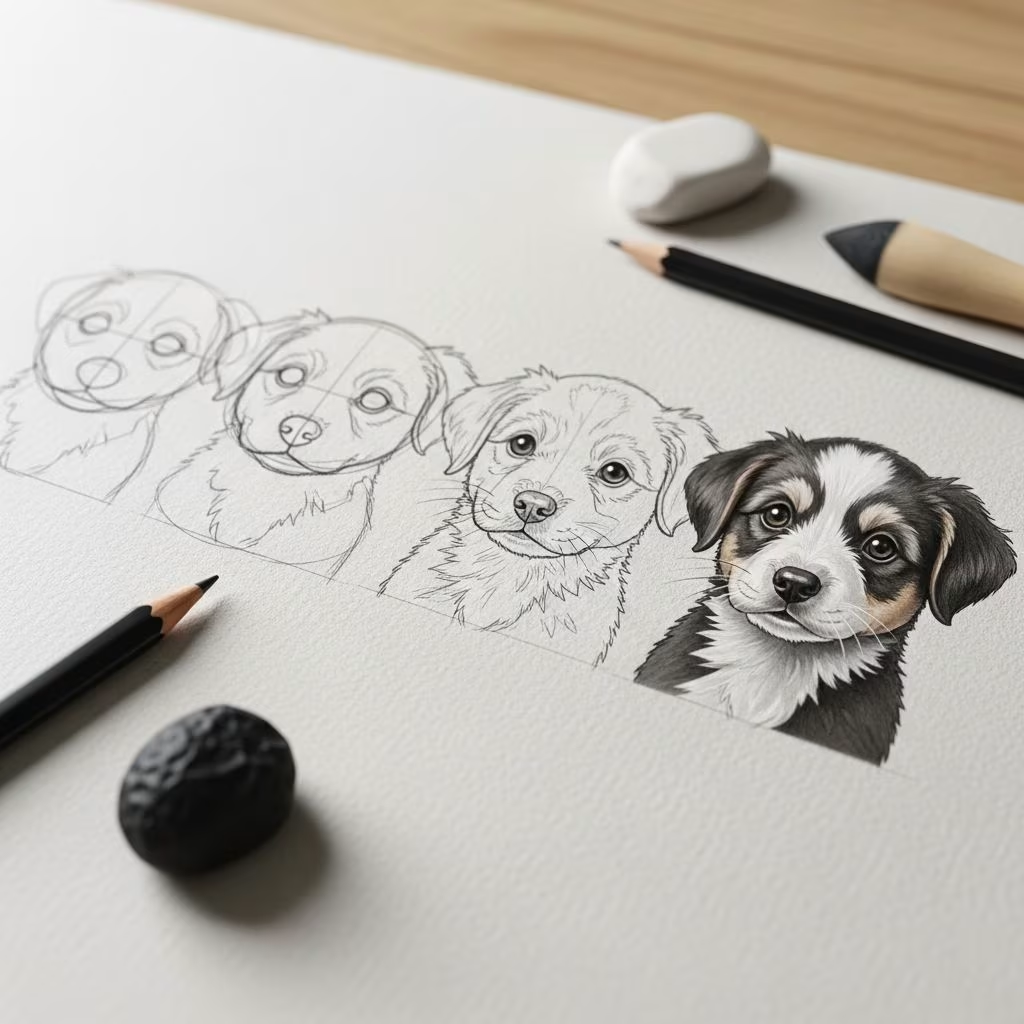
Puppies capture hearts with their playful energy and expressive faces, making them a favorite subject for artists. Whether you’re a complete novice or looking to refine your skills, learning to draw puppies involves breaking down their forms into manageable parts. This guide explores foundational techniques, using geometric shapes to build structure, adding details for realism, and finishing with texture and shading. By following these methods, you’ll create charming sketches that highlight a puppy’s innocence and charm.
Essential Materials for Puppy Sketching
Before diving into the drawing process, gather basic supplies to ensure smooth progress. A set of pencils in varying hardness (HB for light lines, 2B-6B for shading) provides versatility. Include erasers for corrections—both kneaded for subtle lifting and vinyl for precise removal. Smooth sketch paper prevents smudging, while optional tools like blending stumps enhance fur effects.
- Pencils: HB, 2B, 4B for outlines and depth.
- Erasers: Kneaded and white vinyl types.
- Paper: 80-100gsm sketch pads.
- Extras: Blending tools, fixative spray for final pieces.
These items keep your workflow efficient, allowing focus on creativity rather than equipment issues.
Building the Puppy’s Basic Framework
Start every puppy drawing with a lightweight understructure to capture proportions accurately. This skeleton-like guide mimics the dog’s anatomy using simple lines and shapes, preventing common errors like oversized heads or mismatched limbs. Reference a photo of your chosen puppy breed to align features correctly.
Begin with the spine as a curved line, indicating posture—playful pups often have an arched back for energy. Add ovals for the ribcage and pelvis; puppies have proportionally larger torsos for their stubby legs. Connect these with gentle curves to form the body’s flow. For the head, place a circle slightly forward, tilted to suggest curiosity.
- Draw a central spine line from neck to tail base.
- Overlay torso ovals: larger for chest, smaller for hips.
- Position head circle overlapping the neck area.
- Sketch leg lines as angled sticks ending in paw triangles.
This framework ensures balance, especially for dynamic poses like sitting or bounding.
Refining Body Proportions for Puppy Charm
Puppies differ from adults with oversized heads, plump bodies, and short limbs, exaggerating cuteness. Flesh out the skeleton by encasing it in rounded forms. Use ovals for thighs and upper arms, emphasizing chubbiness. Taper legs toward paws, keeping them pudgy for youthfulness.
For the torso, smooth connections between ribcage and pelvis, dipping slightly at the belly to show a tucked posture. Heads demand attention: elongate the muzzle slightly for breeds like Labs, keeping it short for others. Ears flop generously, adding to the endearing look.
| Body Part | Puppy Proportion Tip | Shape Guide |
|---|---|---|
| Head | 1/3 body length | Oval with cross guidelines |
| Torso | Half body length | Two overlapping circles |
| Legs | Shorter than adult | Cylinders with oval paws |
| Tail | Curved and bushy | Gentle S-curve line |
Adjust sizes per breed—Labs have sturdy builds, while Collies appear slimmer. Practice multiple poses: standing reveals height, sitting compresses the form.
Capturing Expressive Facial Features
A puppy’s face conveys personality through eyes, nose, and mouth. Position eyes low on the head circle for a doe-eyed effect, using almond shapes with reflective highlights for life. Noses are broad and moist-looking; shade darkly at the center, lighter edges.
Mouths curve upward in perpetual smiles—draw a soft W from front view. Ears vary: erect triangles for shepherds, floppy lobes for spaniels. Add whiskers sparingly, following natural flow. Use facial guidelines (cross for alignment) to space elements proportionally.
- Eyes: Triangular, positioned midway down head.
- Nose: Central oval, bridged to eyes.
- Ears: Attached high, draping sides.
- Mouth: Gentle arcs suggesting playfulness.
Refine by observing light sources; shadows under jaws add dimension.
Adding Realistic Fur and Texture
Fur brings sketches to life, varying by breed—short and sleek for Labs, fluffy for Collies. Layer strokes following growth direction: short on face, longer on body. Start light, building density with darker pencils.
For fluffiness, use V-shaped clumps rather than single hairs. Shade base tones first, then overlay strands. Tails demand volume; exaggerate bushiness with layered curves. Blend for softness, lift with eraser for highlights simulating shine.
Techniques include:
- Hatching: Parallel lines for even coverage.
- Scumbling: Circular motions for fuzzy areas.
- Clumping: Grouped strokes mimicking tufts.
Practice on scrap paper to match fur flow before applying to your main sketch.
Shading and Depth for Lifelike Results
Shading transforms flat outlines into three-dimensional art. Identify a light source—typically upper left—to cast shadows consistently. Puppies’ rounded forms catch light on curves, deepening recesses like underbellies or leg joints.
Build layers: light base shading for mid-tones, medium for shadows, dark for deepest areas. Blend stumps smooth transitions on smooth coats; leave texture on shaggy ones. Highlights on noses, eyes, and fur tips pop vibrancy.
Common pitfalls: over-shading erases cuteness—keep tones soft. Compare values by squinting; adjust for balance.
Common Mistakes and Fixes
Beginners often misjudge proportions, resulting in awkward stances. Solution: Measure head-to-body ratios early (puppy heads are ~40% of total height). Symmetrical faces falter without guidelines—always plot eyes, nose first.
Fur overloads sketches; focus on suggestion over every strand. Static poses bore—incorporate slight twists for energy. Erase guidelines cleanly before finalizing to avoid clutter.
- Fix oversized paws: Scale to body size.
- Improve expressions: Exaggerate eye size slightly.
- Enhance movement: Angle limbs dynamically.
Exploring Breed Variations
Different breeds offer unique challenges. Golden Labs feature stocky builds, droopy jowls, wavy fur. Border Collies demand sleek lines, alert ears, dense coats. Pugs wrinkle faces with pushed-in noses; Chihuahuas elongate limbs proportionally.
Adapt frameworks: bulkier torsos for retrievers, narrower for hounds. Study references per breed for authenticity.
Advanced Techniques for Polished Art
Once basics master, experiment with poses—rolling pups curl tightly, bounding ones stretch. Color adds appeal: soft pencils mimic fur hues. Digital tools replicate traditionally with brushes emulating strokes.
Composition matters: frame close-ups for impact, full-bodies for context. Sign and date works to track improvement.
FAQ
What if I can’t draw straight lines?
Use light strokes and a ruler for initial guides; freehand improves with practice.
How long until I draw without references?
Weeks of daily sketches build muscle memory for intuitive proportions.
Best pencils for beginners?
HB for outlines, softer like 4B for shading—affordable sets suffice.
Can kids follow these steps?
Yes, simplify to shapes only; supervision aids younger artists.
How to draw from imagination?
Practice skeletons repeatedly, then modify for fantasy pups.
Practice Prompts to Hone Skills
Daily exercises accelerate growth:
- Sit a puppy for 5-minute gesture sketches.
- Draw 10 head studies varying expressions.
- Replicate breeds weekly for diversity.
- Shade one body part per session.
Share progress online for feedback, fueling motivation.
References
- How to Draw Dogs in 4 Easy Steps! — Emily’s Notebook. Accessed 2026. https://emilysnotebook.co.uk/all-posts/how-to-draw-dogs-in-4-easy-steps/
- How to Draw Dogs — CLIP Studio Paint Art Rocket. 2020-01-01. https://www.clipstudio.net/how-to-draw/archives/160330



