
Double Yellow-Headed Amazon Parrot: Care, Personality & Breeding
Complete guide to Double Yellow-Headed Amazon parrots: personality, care requirements, diet, and training tips for pet owners.
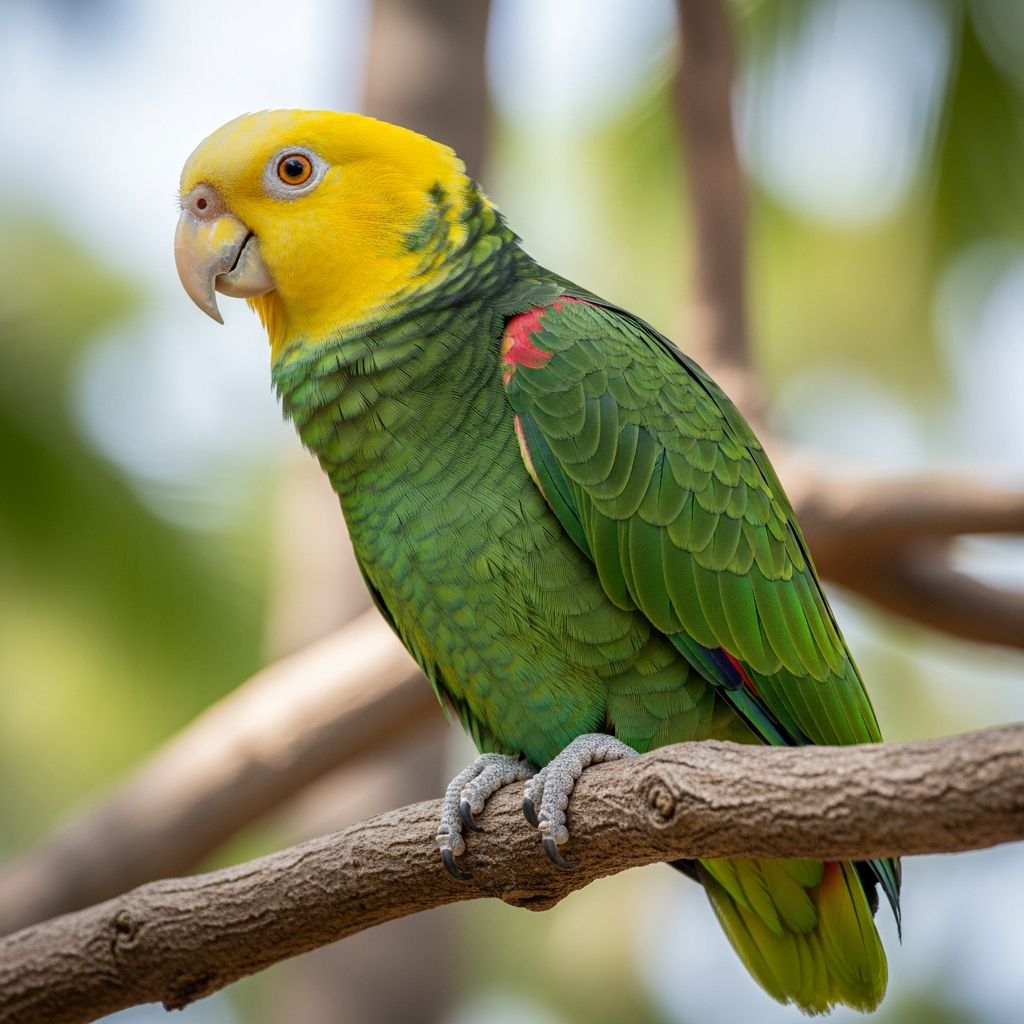
What Is A Double Yellow-Headed Amazon Parrot?
The double yellow-headed Amazon parrot, commonly known as the yellow-headed parrot, stands among the most sought-after companion Amazon species in the avian pet trade. Their popularity stems from their striking visual appearance and remarkable ability to develop an extensive vocabulary, making them exceptional communicators. These birds have captivated humans since the 1500s, when they were kept by diverse groups ranging from maritime pirates to European nobility. Documented observations indicate that double yellow-headed Amazons possess a more stable and predictable temperament compared to their similarly talented cousins, the yellow-naped Amazon, making them an excellent choice for both novice and experienced bird owners.
These medium-sized parrots measure between 14 to 16 inches in length and are immediately recognizable by their distinctive coloration pattern. The most defining feature is the generous yellow plumage covering their head, with yellow flecks extending down to the back and nape of the neck, and additional yellow feathers adorning the legs. Their shoulders display striking red coloring, while the remainder of their body is covered in deep green feathers. The distinctive white ring around each eye and horn-colored beak complete their striking appearance. Young birds present quite differently, appearing primarily green with minimal yellow confined to the area above the beak and slight red markings on the shoulders. These juveniles undergo a dramatic transformation as they mature, achieving their full adult coloration beginning around 3 to 5 years of age.
Physical Characteristics
Double yellow-headed Amazons possess the characteristic robust build typical of Amazon parrots, featuring broad wings and a short, square-tipped tail. Their stout, hooked beak serves multiple purposes beyond cracking nuts and seeds—it functions as a versatile tool for grasping, exploring, and climbing. Their feet are specially adapted for life in trees, featuring two toes pointing forward and two pointing backward, providing exceptional gripping capability. The yellow coloration that defines this species increases progressively with age, with some birds developing nearly completely yellow heads within just a few years, while others require several years for the full head transformation to occur through successive molts.
Native Region & Natural Habitat
Double yellow-headed Amazon parrots are endemic to Mexico and northern Central America, where they inhabit specialized ecosystems that provide their essential needs. These birds demonstrate a strong preference for mangrove forests and forests situated near rivers, lakes, and other freshwater bodies. Their native habitat provides the dense canopy cover, abundant food sources, and water access that these social parrots require for survival. Understanding their natural habitat is crucial for providing appropriate captive care, as their environmental preferences significantly influence their behavioral and dietary requirements in captivity.
Personality & Behavior
The personality of a double yellow-headed Amazon parrot is characterized by abundant charm and spirited behavior. These birds are gregarious in nature and, when hand-raised from a young age, develop strong bonds with their human family members. However, as they mature, they frequently exhibit what aviculturists call “one person bird” syndrome, where they develop an intense preference for a single individual within their household. This selective bonding can prove frustrating for other family members who seek equal interaction with the bird. Fortunately, this behavior can often be mitigated through consistent and equal attention from all household members during the bird’s early years, though in some cases, even dedicated efforts cannot redirect the bird’s affections from its chosen human.
Double yellow-headed Amazons are highly intelligent and require consistent mental stimulation to thrive. These birds become bored remarkably easily without adequate engagement and “jobs” to occupy their active minds. When understimulated, they are prone to developing problematic behaviors including excessive screaming and hostile aggression. While they are not known as chronic pluckers, they can readily adopt other neurotic patterns that may prove annoying to owners. The intelligent nature of these parrots means they respond well to training, interactive toys, and regular social engagement.
Characteristic Behaviors
Male double yellow-headed Amazons are particularly known for performing what enthusiasts describe as a “mach strut”—an elaborate display where the bird flares its tail feathers while sliding across the floor and producing distinctive shrilling sounds. This behavior is both entertaining and a clear demonstration of the bird’s personality and confidence. The behavior is particularly prominent during breeding season, when males may become noticeably aggressive. During this period, which typically lasts several weeks, males can display dangerous aggression that may necessitate restricting the bird’s free flight in homes with multiple occupants until the aggressive behavior subsides.
Speech & Sound
Double yellow-headed Amazon parrots are renowned for their exceptional vocal abilities and remarkable mimicry skills. They are boisterous birds by nature and tend to be quite loud, with characteristic screaming sessions occurring twice daily at dawn and dusk. This vocalization pattern is entirely normal behavior and should not be interpreted as a sign of distress or behavioral problems. However, screaming does become problematic when birds scream persistently throughout the day, which typically occurs when birds are bored due to inattentive ownership.
The double yellow-headed Amazon’s vocal talents extend far beyond standard parrot vocalizations. These birds are especially talented in learning and performing opera and other sophisticated musical styles in their entirety. They can master numerous words and phrases, making them charming and entertaining companions for those who appreciate their vocal nature. The excellent powers of mimicry these birds possess make them highly sought after in the pet trade. However, prospective owners must understand that consistent vocal stimulation and engagement are essential to prevent the development of destructive screaming behaviors caused by boredom and lack of attention.
Sound Management
Potential owners should recognize that these parrots require consistent stimulation and do not thrive on solitude. The DYH needs regular interaction, environmental enrichment, and mental challenges to maintain psychological well-being. Owners who are unwilling to provide this level of attention should carefully consider whether this species is appropriate for their lifestyle.
Diet & Nutrition
Proper nutrition is fundamental to maintaining the health and longevity of double yellow-headed Amazon parrots. A high-quality parrot food formulated specifically for Amazon species should constitute the foundation of their diet. Commercial parrot pellets provide balanced nutrition with appropriate proportions of vitamins, minerals, and other essential nutrients. However, diet should not consist exclusively of pellets; fresh fruits and vegetables should be offered regularly to provide dietary variety and enrichment.
Double yellow-headed Amazons in their natural habitat consume seeds, nuts, fruits, and vegetation. In captivity, this natural diet diversity should be replicated as closely as possible. Fresh leafy greens, carrots, berries, and other vegetables provide valuable micronutrients and encourage natural foraging behaviors. Nuts and seeds can be offered in moderation, as these high-fat foods should not dominate the diet despite their palatability. Fresh, clean water must be available at all times and should be changed daily to prevent bacterial contamination.
Housing & Environment
Appropriate housing is critical for the physical and psychological well-being of double yellow-headed Amazon parrots. These medium-sized, active birds require spacious enclosures that allow for movement and exercise. The minimum cage dimensions should be 30 inches by 30 inches by 30 inches, though larger accommodations are always preferable. The cage should feature multiple perches of varying diameters, constructed from natural wood whenever possible, as these allow for healthy foot exercise and maintenance of nail length.
Environmental enrichment is not optional but essential for preventing behavioral problems. Toys are absolutely critical for this highly intelligent species, and variety in toy selection ensures continued interest and mental stimulation. The most important toys are those that can be chewed and shredded, including easily destroyed soft wood and paper toys that satisfy natural destructive tendencies. These should be supplemented with sturdier toys made from lava, leather, hard woods, and acrylic that provide longer-lasting entertainment value. Toys should be rotated regularly to maintain novelty and prevent boredom. Given their intelligence, these parrots benefit from puzzle feeders, foraging toys, and interactive toys that challenge their problem-solving abilities.
Lifespan & Long-term Commitment
Double yellow-headed Amazon parrots live remarkably long lives, with typical lifespans exceeding 30 years in captivity and potentially extending into the 50-year range with optimal care. This extended lifespan represents a significant, long-term commitment that prospective owners must carefully consider. These birds may outlive their owners, necessitating plans for their care should circumstances change. The longevity of these parrots means that acquiring one should not be an impulsive decision but rather a deliberate commitment to providing decades of appropriate care, attention, and environmental enrichment.
Breeding & Subspecies
Some aviculturists recognize the double yellow-headed Amazon as a subspecies of the yellow-crowned Amazon (Amazona ochrocephala), though taxonomic classification remains subject to discussion among ornithological experts. Related subspecies include the Magna (Amazona ochrocephala magna) and the Tresmariae (Amazona ochrocephala tresmariae), which display more extensive yellow plumage extending beyond the head. However, these subspecies are significantly less available in the pet trade than the standard double yellow-headed Amazon.
Double yellow-headed Amazon parrots are commonly bred in captivity, making them readily available through avian specialty stores, private bird breeders, and rescue organizations dedicated to avian adoption. Baby double yellow-headed Amazons are typically most available during the early fall months, though availability varies depending on geographic location and breeding patterns specific to individual regions.
Ideal Owner Profile
Double yellow-headed Amazon parrots make excellent companions for individuals who understand their specific needs and are willing to accept them as complex, independent beings with distinct personalities. The ideal owner possesses patience, consistent commitment to daily interaction and enrichment, and realistic expectations regarding the bird’s vocal nature. These parrots require an owner who can establish clear boundaries and routines while remaining confident and patient in training efforts.
All in all, the double-yellow headed Amazon makes a great companion for the person who fully comprehends its requirements and can accept it as it truly is: a charming, hardy, talkative, noisy, sometimes moody bird that is simultaneously fiercely independent yet intensely attached to its chosen human companions.
Frequently Asked Questions
Q: What is the typical lifespan of a double yellow-headed Amazon parrot?
A: Double yellow-headed Amazon parrots typically live 30 years or more in captivity, with some individuals reaching into their 50s with proper care. This extended lifespan requires serious commitment before acquiring one.
Q: How extensive is their vocabulary and speaking ability?
A: These parrots have excellent speaking ability and can master numerous words and phrases. They are particularly talented at learning complete opera performances and sophisticated musical styles, making them among the most articulate parrot species.
Q: Are they good for first-time bird owners?
A: While double yellow-headed Amazons have relatively stable temperaments compared to other Amazon species, they require experienced handling due to their intelligence, vocal nature, and need for substantial daily enrichment. They may be challenging for complete novices.
Q: How much noise do they produce?
A: These are boisterous birds with characteristic screaming sessions at dawn and dusk. They can be quite loud, particularly when bored. Apartment living may pose challenges due to noise levels.
Q: What is “one person bird” syndrome and can it be prevented?
A: This occurs when mature birds strongly prefer a single household member. Early, consistent equal attention from all family members can help prevent or mitigate this behavior, though some birds remain bonded to their chosen person regardless of efforts.
Q: What size cage do they require?
A: Minimum cage dimensions should be 30 inches by 30 inches by 30 inches, though larger enclosures are preferable. Multiple perches and abundant environmental enrichment are essential for psychological well-being.
Q: Do they require special toys and enrichment?
A: Yes, enrichment is essential. They require a variety of toys including destructible soft wood and paper toys as well as durable toys made from lava, leather, and hard woods. Puzzle feeders and interactive toys that challenge their intelligence are particularly beneficial.
Q: When do they develop their full adult coloration?
A: Double yellow-headed Amazons begin developing adult coloration around 3 to 5 years of age, though the yellow continues to expand with successive molts over several years. Full head coloration typically takes at least five to six years to completely develop.
References
- Double Yellow-Headed Amazon Parrot Personality, Food & Care — Lafeber Company. 2024. https://lafeber.com/pet-birds/species/double-yellow-headed-parrot/
- Yellow-Headed Amazon – National Aquarium — National Aquarium. 2024. https://aqua.org/explore/animals/yellow-headed-amazon
- Yellow-headed Amazon — Audubon Field Guide. 2024. https://www.audubon.org/field-guide/bird/yellow-headed-amazon
- Amazona oratrix, Yellow-headed amazon parrot — Loro Parque Fundación. 2024. https://www.loroparque-fundacion.org/en/portfolio/amazona-oratrix-yellow-headed-amazon-parrot/
- Double Yellow Headed Amazon Fact Sheet — Northern Parrots. 2024. https://www.northernparrots.com/blog/double-yellow-headed-amazon-factsheet/
Similar Articles








Read full bio of Sneha Tete


