

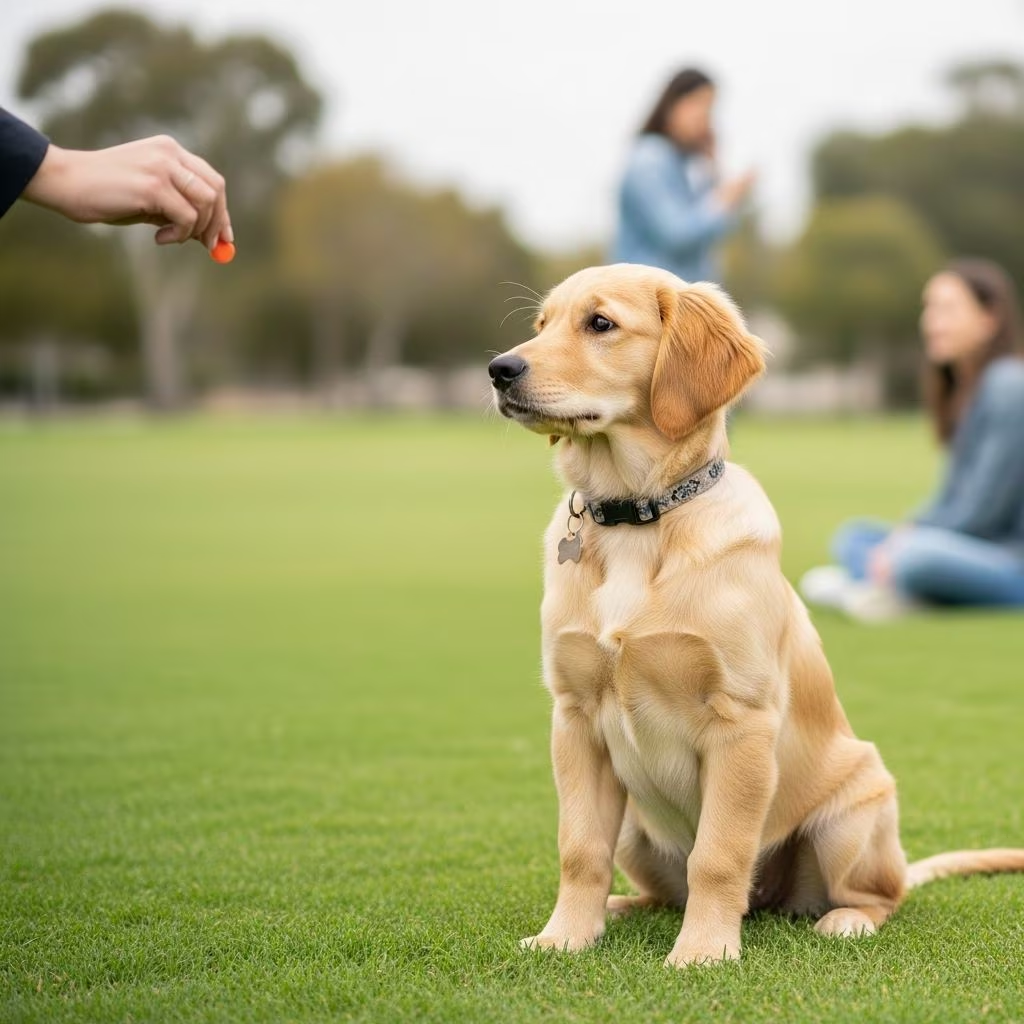
Your dog has been making great progress with training—learning to sit, stay, and walk nicely on a leash using positive reinforcement methods. But then a friend visits, lets your dog jump up excitedly, or hands out treats without a cue, undoing weeks of work in minutes. This common frustration can derail even the best training plans. Consistency is key in dog behavior, yet well-meaning visitors often sabotage it unintentionally. This article explores proven strategies to protect your dog’s progress, drawing from science-based approaches like those from Kinship Dog Training, which emphasize mutual trust, respect, and reward-based learning.
Positive reinforcement builds reliable behaviors by associating good actions with rewards, but mixed signals confuse dogs. The American Veterinary Society of Animal Behavior (AVSAB) stresses that inconsistent handling leads to anxiety and poor responses, recommending force-free methods for long-term success. By setting clear expectations with others, you reinforce the foundation of a well-adjusted canine companion.
Why Consistency Matters in Dog Training
Dogs thrive on predictable rules. Inconsistent reinforcement creates confusion: one person rewards jumping, another ignores it, leading to frustration barking or selective listening. Research from the Journal of Veterinary Behavior shows that variable reward schedules can strengthen behaviors but also cause extinction bursts—temporary worsening before improvement[peer-reviewed]. Kinship’s holistic method focuses on positive reinforcement to foster trust, preventing these issues.
- Learning Theory Basics: Dogs learn through operant conditioning—behaviors followed by rewards increase, punishments decrease reliability.
- Pack Dynamics: Unlike wolves, domestic dogs look to humans as guides; mixed messages mimic an unstable ‘pack’.
- Real-World Impact: In group classes like Kinship’s Puppy Manners, dogs master sit, down, and leave-it under controlled consistency.
Without uniformity, skills like recall fade. A study by the University of Pennsylvania’s Working Dog Center found consistent handler protocols boost off-leash reliability by 40% in detection dogs—principles applicable to pets (Penn Vet, 2023).
Communicate Your Training Rules Clearly
Prevention starts with conversation. Before guests arrive, explain your rules: ‘Please don’t pet unless all four paws are on the floor.’ Provide handouts or fridge magnets with cues like ‘Sit to Greet’ or ‘No Treats Without Asking.’ Kinship trainers recommend scripting these talks to avoid awkwardness.
| Situation | What to Say | Why It Works |
|---|---|---|
| Family Visits | ‘Fido only gets treats for sitting—want to try?’ | Involves them positively |
| Strangers on Walks | ‘He’s in training; please don’t feed him.’ | Sets quick boundary |
| Kids Playing | ‘Ask him to sit first before petting.’ | Teaches responsibility |
For housemates, hold a ‘family training meeting.’ Assign roles: one manages treats, another doors. This mirrors advanced class prerequisites at Kinship, where fluency in stay and leave-it is required before progressing.
Prepare Your Dog for Inconsistent Interactions
Build resilience by practicing ‘proofing’—exposing your dog to distractions while rewarding correct responses. Use a mat or place command: send your dog there during visits, rewarding calm stays with high-value treats like stuffed Kongs.
- Four on the Floor Greetings: Reward paws-on-ground during hellos; ignore or turn away for jumps.
- Leave-It Protocol: Teach dropping items on cue, vital when others offer forbidden snacks.
- Recall in Distraction: Practice come-when-called amid toys or people, progressing to 30 feet.
Incorporate daily life training: during meals, cue ‘place’ with a chew toy. Kinship’s puppy topics include handling, socialization, and polite greetings to build these skills early.
Handling Common Sabotage Scenarios
Guests Handing Out Free Treats
Treats without cues teach ‘begging works sometimes.’ Solution: Keep treats hidden or use a treat pouch only you control. Redirect: ‘Watch me do sit first!’ Demonstrating reinforces your method.
Family Members Undermining Rules
Grandma sneaks table scraps? Politely intervene: ‘That confuses his potty training.’ Offer alternatives like vet-approved chews. If persistent, supervise interactions or use baby gates.
Strangers on Walks or Parks
‘Good dog!’ petting mid-leash pull encourages pulling. Cue sit before allowing interaction. For off-leash areas, recall before approaches. AVSAB guidelines endorse management over confrontation[AVSAB Position Statement on Puppy Socialization, 2023].
Children and Rough Play
Kids elicit jumping or nipping. Teach ‘gentle’ games: tug only on sit. Supervise with rules like no chasing if aroused. Kinship private lessons address puppy biting via positive redirection.
Table scraps lead to begging; counter with ‘place’ during meals.
Tools and Techniques to Maintain Control
Empower others with tools: clickers for precise timing, leashes for management, or ‘training vests’ signaling ‘in training.’
- Clicker Training: Marks exact good behavior, speeding learning.
- Head Halters/Muzzles: For reactive dogs, prevents escalation (use positively conditioned).
- Apps/Logs: Track sessions, share progress to motivate consistency.
Private lessons customize for family dynamics, covering leash skills and reactivity.
The Role of Professional Help
If sabotage persists, enroll in classes like Kinship’s Puppy Mixed Level for socialization and skills. Instructors like Annika Browne use relationship-centered methods for manners and behavior. Day training handles busy schedules.
Behavior mod for aggression differs from manners; seek certified pros (CPDT-KA or IAABC).
Frequently Asked Questions (FAQs)
Q: What if my family ignores my training rules?
A: Supervise closely, use gates, and involve them in fun sessions. Consistency from you overrides occasional lapses with positive reinforcement.
Q: How do I stop jumping on guests?
A: Reward four-on-the-floor; turn away from jumps. Practice with friends simulating guests.
Q: Can old dogs learn new consistency?
A: Yes, adults respond well to positive methods. Start with short sessions.
Q: What’s the best treat for training?
A: High-value like cheese or chicken, tiny pieces to avoid overfeeding.
Q: How long until training sticks despite others?
A: 4-6 weeks of daily practice; fluency builds resilience.
Long-Term Success Strategies
Sustain progress with ongoing enrichment: rotate toys, new tricks like targeting. Annual refreshers prevent regression. Celebrate wins—your bond strengthens with every consistent cue.
By prioritizing communication and preparation, your dog’s training withstands real-world tests, leading to a harmonious life together.
References
- Canine Kinship Method Overview — Canine Kinship. 2023. https://www.caninekinship.com
- Advanced Class Prerequisites — Kinship Dog Training. 2024. https://www.kinshipdogs.com/what-you-need-to-know
- Puppy Training Classes — Kinship Dog Training. 2024. https://www.kinshipdogs.com/puppy
- About Kinship Dog Training — Kinship Dog Training. 2024. https://www.kinshipdogs.com/about-us
- Private Lessons for Behavior — Kinship Dog Training. 2024. https://www.kinshipdogs.com/private-lessons
- Basic Training Cues — Kinship. 2023. https://www.kinship.com/dog-behavior/basic-training-cues-dog
- Position Statement on Puppy Socialization — American Veterinary Society of Animal Behavior (AVSAB). 2023-10-01. https://avsab.org/resources/position-statements/



