

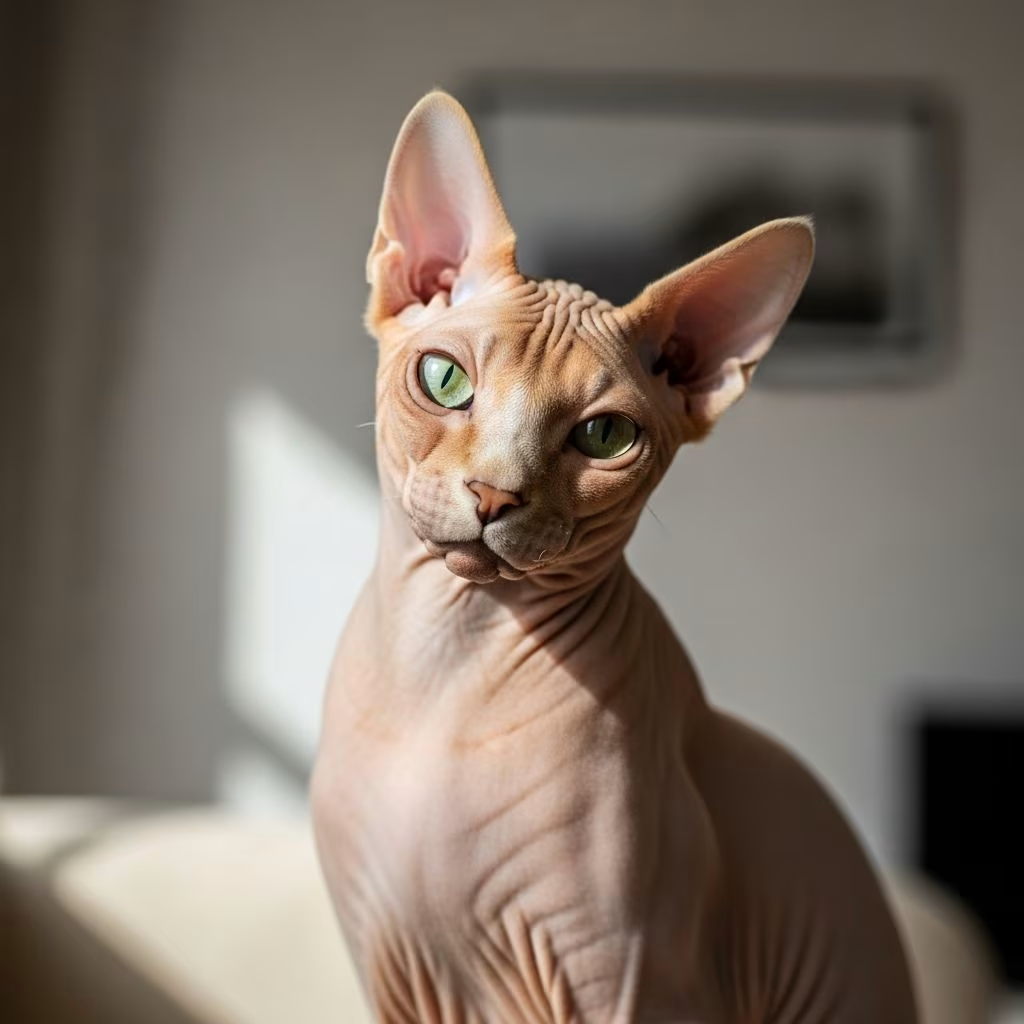
The Donskoy cat, also recognized as the Don Sphynx, represents one of the most distinctive hairless cat breeds in the world. Originating from Russia in the 1980s, this elegant feline possesses a remarkable combination of striking physical features and affectionate personality traits that have captured the hearts of cat enthusiasts globally. Unlike other hairless breeds, the Donskoy carries a dominant hairlessness gene, making it genetically unique among its peers in the feline world.
The Fascinating Origins of the Donskoy Breed
The story of the Donskoy cat begins in the city of Rostov-on-Don, Russia, during the mid-1980s. A professor named Elena Kovaleva, working at the State Pedagogical Institute, encountered a distressing scene when she discovered a small kitten being mistreated by a group of children. Moved by compassion, Kovaleva rescued the kitten and brought her home, naming her Varvara. This single act of kindness would inadvertently lead to the creation of an entirely new cat breed.
In the months following her rescue, Varvara began to lose her hair in an unusual pattern. Rather than growing back, her coat gradually disappeared entirely. At the time, many people assumed the cat was suffering from an illness or disease, and there was considerable pressure on Kovaleva to dispose of the animal. However, what appeared to be a medical condition was actually a spontaneous genetic mutation that would revolutionize cat breeding.
When Varvara reached breeding age, Kovaleva decided to mate her with a local male European Shorthair cat named Vasily. The resulting litter contained both hairless and fully haired kittens, which provided the first clue that hairlessness in these cats was controlled by a genetic factor rather than an environmental cause or illness. One of these offspring, a daughter named Chita, would become instrumental in establishing the Donskoy breed.
The pivotal moment in breed development came when Irina Nemykina, a professional cat breeder and future felinologist, took interest in these unusual kittens. Recognizing the genetic significance of the hairless trait, Nemykina initiated a dedicated breeding program focused on stabilizing and developing the breed. Through years of careful selective breeding and refinement, she successfully established the Donskoy as a distinct and consistent breed. The name she chose—Don Sphynx—cleverly references both the Don River near Rostov-on-Don and the hairless appearance of the cats, drawing a parallel to the mythological Sphinx creature.
Genetic Distinction: What Makes Donskoy Unique
One of the most significant differences between the Donskoy and the Canadian Sphynx, another famous hairless breed, lies in the genetic mechanism controlling hairlessness. The Donskoy carries a dominant hairlessness gene, meaning that a kitten needs to inherit the gene from only one parent to express the hairless phenotype. This is distinctly different from the Canadian Sphynx, which carries a recessive gene requiring both parents to contribute the trait for hairlessness to appear in offspring.
This genetic distinction has profound implications for breeding programs and the predictability of litter outcomes. With a dominant gene, breeders can more readily produce hairless kittens by crossing a Donskoy with a coated cat, whereas breeding Sphynx cats requires both parents to carry the recessive gene. The Donskoy’s dominant gene made it the first truly hairless cat breed to emerge from a spontaneous mutation, representing a unique occurrence in feline genetics.
Physical Characteristics and Appearance
The Donskoy cat possesses a distinctive and unmistakable appearance that sets it apart from most other feline breeds. These cats are medium-sized, typically weighing between 6 to 12 pounds, with males generally being noticeably larger and more muscular than females. Their build is described as sturdy and robust, with strong bone structure that belies their delicate appearance.
Body Structure and Form
The Donskoy’s body is almost pear-shaped, with a deep groin line and a characteristic rounded abdomen sometimes referred to as a “fatty belly,” where the cat naturally accumulates fat, particularly during winter months. The chest is wide and pronounced, while the back end, or croup, is similarly broad. Front legs are proportionally shorter than the hind legs, yet they maintain proper proportion to the overall body structure.
The tail is medium-length, straight, and tapers gradually from the body to a rounded tip. Their feet are particularly distinctive, featuring oval shapes with exceptionally long, slender toes connected by visible webbing. This unique feature, combined with the flexibility of their digits, gives Donskoy paws an almost hand-like appearance, earning them the nickname “monkey fingers.”
Facial Features
The head of a Donskoy is wedge-shaped with a distinctly angular appearance. Prominent cheekbones stand out noticeably, contributing to an alert and intelligent expression. The ears are large and positioned high on the head, giving the cat an almost sentinel-like appearance. The eyes are large, almond-shaped, and may display a variety of colors, adding to the breed’s expressive nature.
One of the most striking features of the Donskoy is its extensive wrinkling. Deep wrinkles appear across the entire body, including the cheeks, jowls, area beneath the chin, and vertically between the ears and down the forehead. Additional horizontal wrinkles form above the eyes, at the base of the neck, across the breast, at the tail’s base, on the front and underside of the legs, along the body’s sides, and extending to the underbelly and groin area. These wrinkles are not defects but rather natural characteristics of the breed that contribute to its unique aesthetic.
Coat Types and Characteristics
Donskoy cats exhibit remarkable diversity in coat expression despite being a hairless breed. The breed standard recognizes four distinct coat types, each developing differently as the kitten matures.
The Four Coat Types
- Rubber Bald: Cats in this category are born completely hairless and remain entirely bald throughout their lives. Their skin is smooth and feels warm and velvety to the touch, resembling soft rubber.
- Flocked: These kittens are born with a fine, fuzzy coat similar to peach fuzz. This wool-like covering gradually becomes wiry and disappears over approximately the first year of life, though some residual hair may remain on the face, legs, and tail area.
- Velour: Cats with this coat type start with a thicker fuzz that gradually deteriorates over time. While some may completely lose their coat and become entirely bald, others may retain sparse patches of hair throughout their lives.
- Brush: This final coat type is the most hair-retentive. Brush-coated Donskoys retain a bristly, often wiry coat across their body, though some bald areas may still develop on the head, upper neck, and back regions. The coat may feel soft, wavy, or wiry depending on the individual cat.
The texture of the skin itself is consistently described as warm, elastic, and velvety, providing a distinctive tactile experience when petting these cats. The elasticity of their skin contributes to the pronounced wrinkles that characterize the breed.
Temperament and Behavioral Traits
Despite their alien-like appearance, Donskoy cats possess warm, affectionate, and engaging personalities that make them wonderful companions. They are known for being curious, intelligent, and highly social creatures that thrive on human interaction and attention.
These cats are notably active and athletic, enjoying play and exploration. They are smart and responsive, often learning quickly and demonstrating problem-solving abilities. The breed is characterized as soft-hearted and good-natured, displaying genuine affection toward their owners. Donskoys are extroverted and love being the center of attention, actively seeking interaction and engagement with their human families. They tend to be friendly not only with their owners but often with guests and visitors as well.
The combination of intelligence, playfulness, and affection makes Donskoys engaging and entertaining pets. However, their strong need for social interaction means they require significant human attention and engagement to thrive emotionally. They are not ideal for households where they would be left alone for extended periods.
Breed Recognition and Official Status
The Donskoy breed has achieved recognition from major international cat associations, though the timeline varies depending on the organization. The World Cat Federation recognized the breed in the mid-1990s, establishing it as a legitimate pedigree breed. Subsequently, The International Cat Association (TICA) granted official recognition to the Donskoy in 2005, solidifying its status among recognized cat breeds worldwide.
This official recognition validates the breed’s consistency, genetic stability, and adherence to established breed standards. It also provides a framework for responsible breeding practices and ensures that cats registered with these organizations meet specific criteria for physical characteristics, health, and genetic soundness.
Special Care Considerations for Donskoy Cats
The hairlessness of Donskoy cats necessitates specialized care that differs significantly from that required by conventionally furred cats. Prospective owners must understand these requirements before committing to bringing a Donskoy into their home.
The exposed skin of hairless Donskoys requires protection from both sun exposure and cold temperatures. Extended sun exposure can lead to sunburn, requiring cat-safe sunscreen application or protective clothing during extended outdoor time. Conversely, these cats feel cold more readily than furred cats and require warm environments, appropriate clothing, and heated resting areas, particularly in cooler climates or seasons.
Regular bathing is essential for Donskoy cats, as oils that would normally be distributed through fur instead accumulate on their skin. Monthly bathing helps maintain skin health and prevents buildup of these natural oils. Additionally, their ears, which are quite large, may require regular cleaning to prevent wax buildup and infections.
The wrinkled skin areas need particular attention to prevent moisture accumulation and potential fungal infections. Regular gentle cleaning of skin folds, especially around the facial wrinkles and between toe webbing, helps maintain skin health.
Frequently Asked Questions About Donskoy Cats
Are Donskoy cats truly hypoallergenic?
While the lack of fur reduces the amount of shed hair, Donskoy cats are not completely hypoallergenic. Cat allergies are primarily triggered by proteins found in saliva and skin secretions rather than hair itself. Therefore, individuals with cat allergies may still experience reactions to Donskoy cats, though typically less severe than with furred breeds.
How do Donskoy cats stay warm?
Donskoy cats have naturally elevated body temperatures compared to other cats, which helps them generate warmth internally. However, they still require environmental support through warm resting areas, appropriate clothing, and protection from cold drafts to maintain comfort and health.
What is the lifespan of a Donskoy cat?
With proper care, Donskoy cats typically live 12 to 15 years or longer, similar to other domesticated cat breeds. Health, genetics, diet, and quality of veterinary care all contribute to longevity.
Can Donskoy cats go outdoors?
While Donskoy cats can spend time outdoors, they require significant protection due to their hairlessness. Supervision, protective clothing, and careful attention to temperature and sun exposure are essential for their safety and comfort.
Conclusion
The Donskoy cat represents a remarkable combination of genetic uniqueness, distinctive physical characteristics, and engaging personality. Originating from a chance rescue and subsequent dedicated breeding efforts in Russia, this breed has established itself as a recognized and beloved feline throughout the world. Their hairless coat, dominant genetic trait, and warm, affectionate nature make them fascinating companions for those prepared to meet their specialized care requirements. For individuals seeking an extraordinary and interactive cat breed with unmistakable visual appeal, the Donskoy offers an unparalleled experience in feline companionship.
References
- Donskoy – Don Sphynx Cat — TICA (The International Cat Association). https://tica.org/breed/donskoy/
- All about Donskoy cat breed — Animalia Bio. https://animalia.bio/pets/donskoy-cat
- Donskoy – Don Sphynx Cat — Omlet. https://www.omlet.us/breeds/cats/donskoy_-_don_sphynx_cat/
- Donskoy Cat Breed Profile — Litter-Robot. https://www.litter-robot.com/blog/donskoy-cat/
- Donskoy Facts – Cat Breeds — Wisdom Panel. https://www.wisdompanel.com/en-us/cat-breeds/donskoy
- History – DONSKOY CATS OF AUSTRALIA — Donskoy Cats of Australia. https://donskoycatsofaustralia.com/about/



