

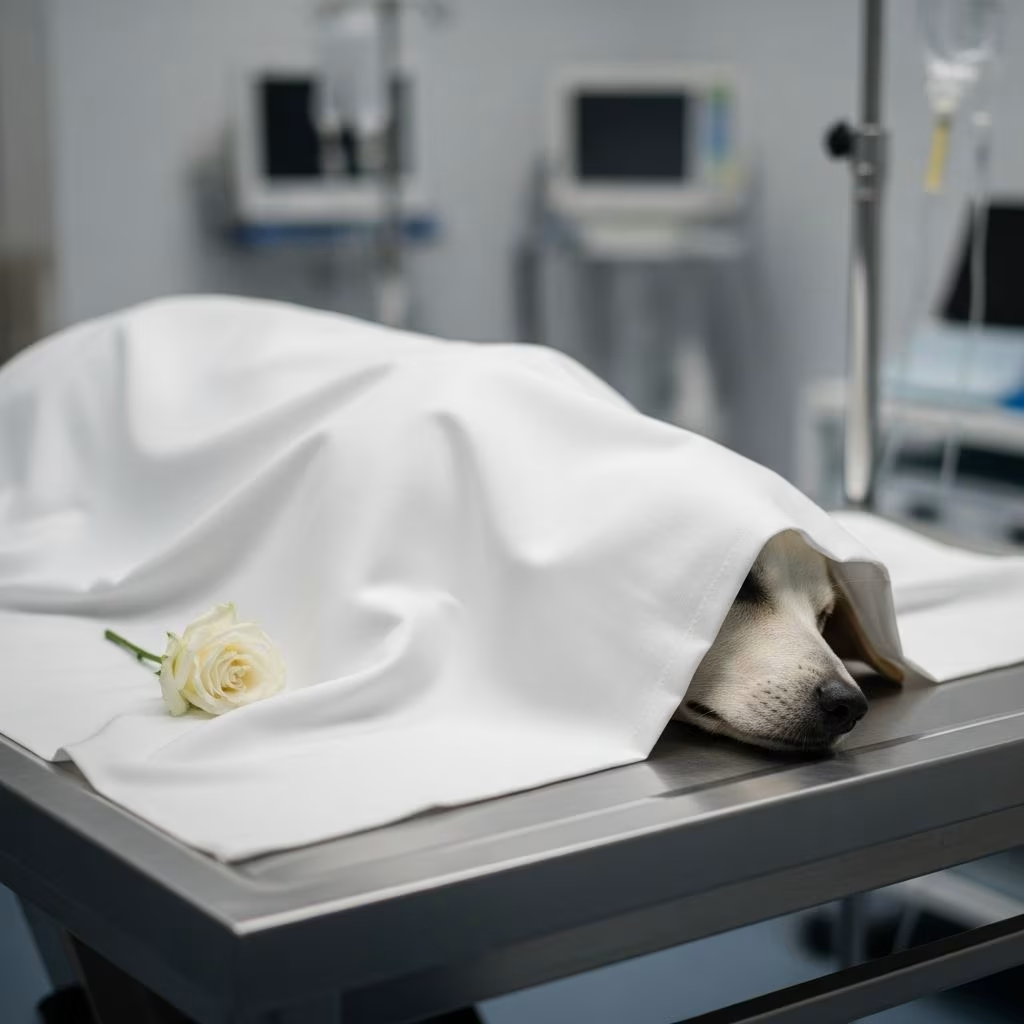
Pet owners often seek meaningful ways to honor their dogs after they pass, and body donation offers a compassionate path forward. This practice allows tissues, blood, or even whole cadavers to support veterinary medicine, helping other animals recover from injuries or illnesses while advancing education and research.
Why Consider Donating Your Dog’s Remains?
Donating a dog’s body provides tangible benefits beyond personal grief. Tissues like bones, tendons, and ligaments can repair fractures, treat bone cancer, or mend ruptures in other dogs, turning loss into widespread aid. One donor’s contributions might assist 50 to 80 recipients, amplifying impact through surgical transplants.
Blood donation programs, meanwhile, sustain emergency care. Healthy dogs contribute units that save up to four lives each, addressing conditions like immune-mediated destruction where a pup like Albert required multiple transfusions for recovery.
Additionally, cadavers enhance veterinary training, teaching procedures from surgeries to diagnostics without relying on live animals. Owners report fulfillment in knowing their pet advanced future care.
Blood Donation: Saving Lives from Healthy Dogs
While not post-mortem, blood donation sets the stage for lifelong giving. Programs like Pet Blood Bank UK host nationwide sessions, screening dogs for health, age (typically 1-8 years), and weight (over 25kg). Collections yield red cells and plasma for urgent cases.
The process prioritizes comfort: teams monitor donors, halting if unease arises. Owners like Joanne praise the ease, noting professional handling eases participation. Over 1,000 dogs benefited last year, underscoring demand.
- Eligibility Basics: Purebred or mixed, healthy, up-to-date vaccines.
- Session Details: 30-45 minutes, full health check, light meal advised.
- Post-Donation: Treats, rest, and follow-up monitoring.
Even ineligible dogs aid via volunteering or fundraising, sustaining charity operations.
Tissue Donation Programs Explained
Post-passing tissue donation focuses on orthopedics. Veterinary Tissue Bank (VTB) in Europe processes bones, tendons, and ligaments for transplants addressing accidents, arthritis, spinal issues, or congenital defects.
Ethical standards mirror human programs: owners consent via forms detailing history and vaccines. UK-only for quality control. After retrieval, private cremation and ashes return are options, plus remembrance tributes.
Registration simplifies decisions—submit details for a donor card and tag, informing vets of wishes. Revocable anytime, it eases end-of-life choices.
| Common Tissue Uses | Conditions Treated | Potential Recipients per Donor |
|---|---|---|
| Bone Grafts | Fractures, Cancer | Multiple surgeries |
| Tendons/Ligaments | Ruptures, Arthritis | 50-80 dogs/cats |
| Other (e.g., Cornea) | Eye Injuries, Blindness | Specialized cases |
Such donations stem from traumas like car accidents or age-related decline, making them vital.
Whole Body Donation for Veterinary Education
Beyond tissues, full cadavers train vets on complex procedures. Programs like A Priceless Gift collect via consent forms with microchip and history details, supplying schools for dentistry, nerve blocks, or surgeries.
Ethical frameworks demand owner consent covering procedures and disposal. No commercial gain; focus on education. Surveys show owners donate to train future vets, valuing legacy.
Unlike humans, animal consent adapts via owners as proxies, ensuring informed choices. Euthanasia must be medically justified, excluding convenience cases.
- Benefits: Reduces animal testing needs, hones skills for real cases.
- Process: Vet coordinates post-euthanasia; remains used ethically.
- Alternatives: Simulators supplement, but cadavers provide realism.
Navigating the Donation Decision
Discussing donation preemptively with family and vets clarifies options. Consent forms outline uses, ensuring alignment with values. Grief support often integrates, as donation aids coping by fostering purpose.
Challenges include eligibility (e.g., disease-free) and logistics, but programs handle transport and processing gratis. Registering signals intent without commitment.
Legal aspects emphasize non-commercial ethics, prioritizing animal welfare and owner autonomy.
Real Stories of Impact
Albert’s tale exemplifies blood’s role: a young Dachshund’s immune crisis demanded transfusions, leading to recovery. Tissue recipients gain mobility post-fracture; educators perform life-saving drills confidently.
Owners find solace: one program notes donation lightens loss by helping peers. Parallel human efforts, like Anatomy Gifts Registry, inspire veterinary parallels, benefiting animals indirectly.
Steps to Register and Participate
- Research Programs: Check VTB for tissues, Pet Blood Bank for live donations, or education gifts like A Priceless Gift.
- Assess Eligibility: Healthy for blood; any breed/size post-mortem for tissues.
- Register Online: Forms yield cards/tags; vets notified.
- Discuss with Vet: Integrate into care plans.
- At Passing: Confirm wishes; sign consent for collection.
Programs guide throughout, offering support hotlines.
FAQs on Dog Body Donation
Is my dog eligible for tissue donation?
Most are, if UK-based for VTB, with reviewed health history. No organs yet, but tissues widely usable.
Does donation cost anything?
No—programs cover processing; optional cremation may have fees, with ashes returned.
Can I change my mind?
Yes, registration is non-binding; reaffirm at time of need.
What about mixed breeds or small dogs?
All accepted for tissues/education; blood prefers larger for volume.
How does this help veterinary progress?
Provides real specimens for training, reducing live animal use and improving outcomes.
Ethical Considerations in Pet Donation
Veterinary donation upholds principles like informed consent and non-commercial use. Owners must grasp procedures, alternatives (cremation/burial), and benefits. Transparency builds trust.
Unlike human programs, no autonomy debate—owners decide. Guidelines prevent misuse, ensuring dignity.
Broader impacts include fewer research animals, as cadavers suffice for many studies.
In summary, donation transforms grief into generosity, sustaining veterinary advancements. Explore programs today to plan ahead.
References
- Dog Donor Schemes | Dog Tissue and Blood Donation — D for Dog. 2023. https://www.dfordog.co.uk/blog/dog-tissue-blood-donor-schemes.html
- Tissue Donation for Pet Owners — Veterinary Tissue Bank. 2024. https://www.vtbank.org/pet-owners/tissue-donation.php
- Ethical collection of animal cadavers for veterinary education — PMC (Peer-reviewed). 2024-10-15. https://pmc.ncbi.nlm.nih.gov/articles/PMC11853696/
- Leaving a Legacy of Compassion — PETA Prime. 2023. https://prime.peta.org/news/leaving-a-legacy-of-compassion/
- A Priceless Gift – Veterinary Education Pet Gifting Programme — A Priceless Gift. 2024. https://apricelessgift.com
- Dog owners’ awareness of and motivations towards pet cadaver donation — BVA Journals (Peer-reviewed). 2022-05-01. https://bvajournals.onlinelibrary.wiley.com/doi/full/10.1002/vetr.3267
- Body Donation Reduces the Need for Animal Subjects in Medical Research — MedCure. 2023. https://medcure.org/body-donation-reduces-the-need-for-animal-subjects-in-medical-research/



