

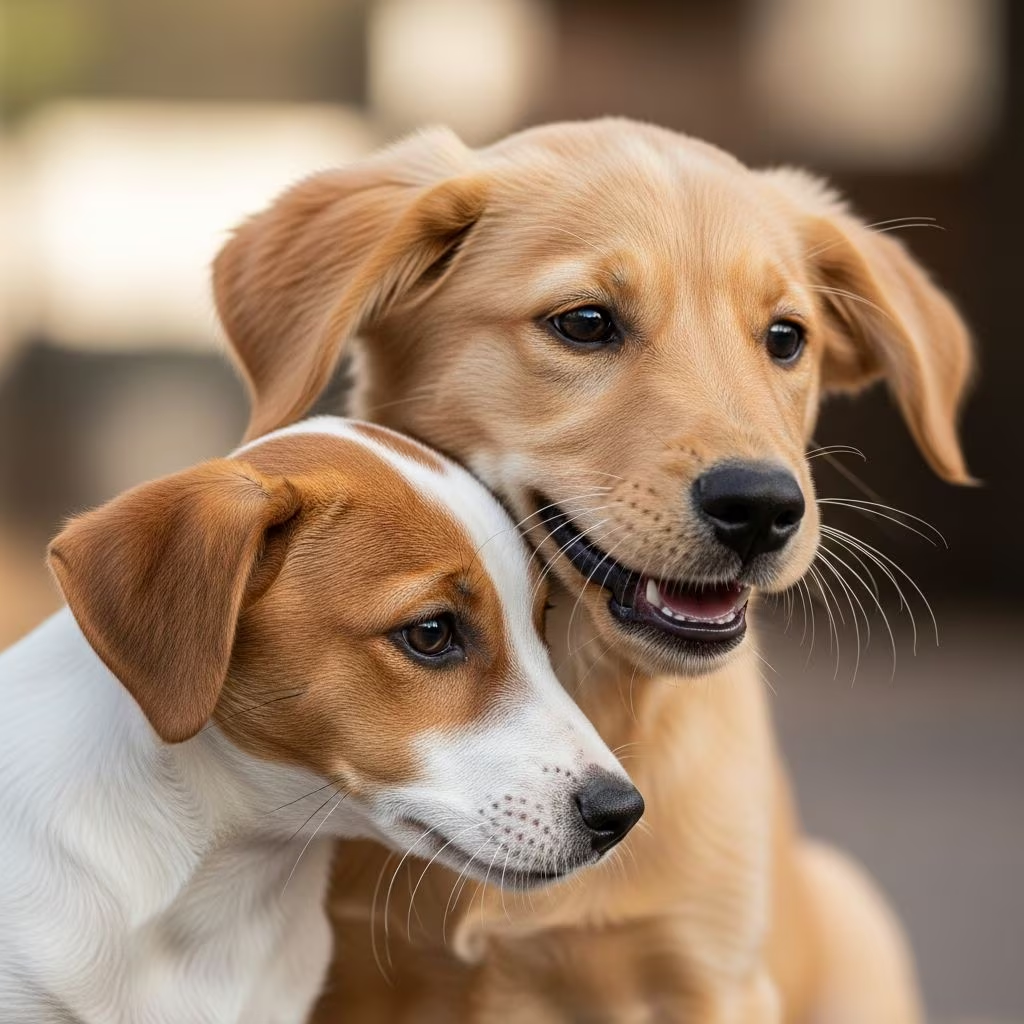
Many new puppy owners encounter behaviors that appear assertive or challenging, often labeled as \”alpha\” tendencies. However, modern canine behavior science reveals these actions stem from normal development, unmet needs, or environmental factors rather than a quest for pack leadership. Understanding the root causes allows owners to guide puppies effectively without outdated confrontational methods.
Debunking the Alpha Dog Myth in Modern Training
The notion of dogs constantly vying for dominance originates from misinterpreted studies of captive wolves in the 1940s and 1970s. These observations involved unrelated wolves stressed in unnatural settings, leading to aggressive hierarchies not seen in wild packs. Applying this to domestic dogs, especially puppies, is flawed since dogs and humans form unique interspecies bonds driven by learning, resources, and socialization rather than rigid ranks.
Outdated techniques like the alpha roll—physically forcing a dog onto its back—misinterpret a voluntary appeasement gesture where lower-status wolves submit willingly. Forcing this on puppies risks fear-based aggression, escalating conflicts and damaging trust. Positive reinforcement, operant conditioning, and counter-conditioning build desirable behaviors while strengthening bonds, as supported by behavioral science.
Common Behaviors Mistaken for Dominance
Puppies naturally mouth, jump, and test boundaries as they explore and play. Biting hands during teething or high arousal is developmental, not defiance. Nudging for attention, pulling on leashes, or barging through doors often reflect excitement, poor impulse control, or lack of training rather than leadership bids.
Recognizing context is key: a puppy growling over food might signal resource guarding from fear, not superiority. Owners who misread these as dominance may respond punitively, worsening issues.
True Indicators of Potential Problems
While most puppy antics are harmless, certain patterns warrant attention. Persistent aggression toward family or unfamiliar dogs, especially with stiff posture or intense stares, could indicate underlying issues.
- Resource guarding: Stiffening, growling, or snapping when approached near food, toys, or resting spots.
- Leash reactivity: Lunging or barking at passersby, often rooted in fear.
- Status signals: Placing paws on others, prolonged eye contact, or blocking paths.
- Defensive responses: Snapping when handled or interrupted.
These differ from play by lacking relaxation cues like play bows or wagging tails. Early intervention prevents escalation.
Factors Influencing Puppy Behavior
Genetics and Breed Tendencies
Behavior has a heritable component, with studies estimating 62-73% heritability for aggression-related traits. Certain breeds may show bolder temperaments due to selective breeding for guarding or herding, but genetics alone don’t dictate outcomes. Environmental influences during critical socialization windows (3-12 weeks) can override predispositions.
Role of Socialization and Environment
Puppies deprived of diverse experiences struggle with social cues, leading to frustration and reactivity. Isolation amplifies issues, creating a cycle of avoidance and intensified responses. Inconsistent rules or overly permissive homes can foster poor impulse control, mimicking dominance.
Health Considerations
Sudden behavior changes may signal medical problems like thyroid imbalances, pain, or hormonal shifts, prompting irritability. A veterinary check rules out these before behavioral training.
Building a Strong Foundation: Effective Training Strategies
Focus on leadership through resource control, consistency, and positivity. Control access to food, walks, and play to reinforce that good things come from you.
| Strategy | Description | Benefits |
|---|---|---|
| Positive Reinforcement | Reward desired actions with treats/toys | Builds trust, accelerates learning |
| Impulse Control Games | Teach \”sit\” before doors/meals | Reduces frustration-driven outbursts |
| Socialization Exposures | Gradual intro to new stimuli | Prevents fear-based reactivity |
| Structured Routine | Consistent schedule for all activities | Promotes security and predictability |
Start sessions short (5-10 minutes) when the puppy is calm. Use high-value rewards for challenges like recall amid distractions.
Addressing Specific Challenges
Managing Mouthing and Biting
Redirect to toys, yelp dramatically to mimic littermate feedback, and pause play. Consistency yields quick results without force.
Resource Guarding Interventions
Trade-ups (better treat for item) desensitize puppies to approaches, turning guarding into positive anticipation.
Leash and Doorway Manners
Practice \”wait\” commands, rewarding calm exits. Threshold training prevents door-darting.
Long-Term Prevention and When to Seek Help
Enroll in force-free puppy classes by 12 weeks for socialization and skills. Monitor progress; if aggression intensifies or targets humans, consult a veterinary behaviorist. Early, professional guidance averts chronic issues.
Confrontational methods like leash jerks increase aggression risk 2.9 times. Opt for science-based approaches for lasting harmony.
Frequently Asked Questions (FAQs)
Is alpha behavior common in puppies?
Perceived alpha traits are often normal exploration. True concerns arise if paired with fear or pain signals.
Can all dominant puppies be reformed?
Yes, with prompt, positive intervention. Genetics influence but don’t doom; environment shapes outcomes.
How do I establish myself as leader without force?
Control resources calmly and reward compliance. Dogs follow providers of value.
What if my puppy growls at me?
Avoid punishment; remove triggers and consult a pro. It may indicate guarding or fear.
When is the best time for socialization?
3-16 weeks is critical; continue positively lifelong.
References
- Most Common Signs of Dominant Dog Behavior — Canna-Pet. 2023. https://canna-pet.com/articles/most-common-signs-of-dominant-dog-behavior/
- Dog Behavior and Training – Dominance, Alpha, and Pack Leadership — VCA Animal Hospitals. 2024. https://vcahospitals.com/know-your-pet/dog-behavior-and-training-dominance-alpha-and-pack-leadership-what-does-it-really-mean
- Puppies Who Demonstrate \”Alpha\” Behavior — Whole Dog Journal. 2023. https://www.whole-dog-journal.com/puppies/puppies-who-demonstrate-alpha-behavior/
- Puppy Red Flags: Early Warning Signs Your Dog Might Develop Aggression — 4Knines. 2024. https://4knines.com/blogs/4knines-blog-home-page/puppy-red-flags-early-warning-signs-your-dog-might-develop-aggression-and-how-to-stop-it
- Does Your Dog Think He’s Boss? Signs of an Alpha Dog — Holiday Barn. 2023. https://holidaybarn.com/blog/what-happens-when-your-dog-thinks-hes-the-boss/



