

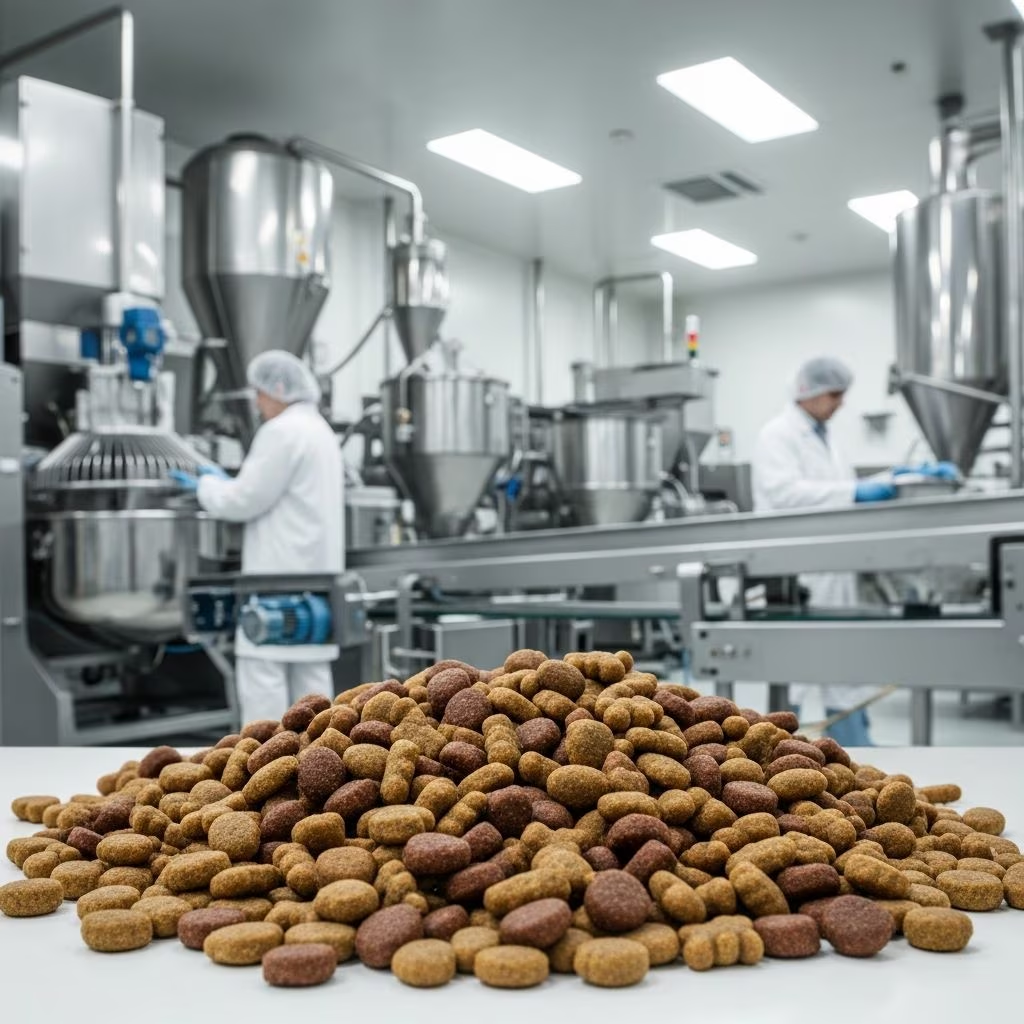
The pet food industry represents a significant segment of the American economy, with millions of dogs relying daily on commercially produced nutritional products. Behind every bag of kibble or can of wet food lies a complex manufacturing process governed by strict regulatory standards and quality control measures. Understanding how domestic dog food is produced provides pet owners with confidence in the products they choose for their companions and insights into the rigorous standards protecting animal health.
The Foundation: Regulatory Framework for Domestic Production
American dog food manufacturers operate under comprehensive regulatory oversight designed to ensure product safety and nutritional adequacy. The Association of American Feed Control Officials (AAFCO) establishes nutritional standards and ingredient definitions that manufacturers must meet. The Food and Drug Administration (FDA) oversees the safety and sanitation of pet food facilities, with regulations that address everything from ingredient sourcing to packaging and distribution.
Facilities manufacturing pet food domestically must comply with Current Good Manufacturing Practice (CGMP) standards, which mandate specific protocols for facility design, equipment maintenance, personnel training, and record-keeping. These regulations apply whether manufacturers produce food exclusively for pets or integrate pet food production alongside human food operations, though separate equipment and processing lines are required.
Raw Material Selection and Initial Processing
The quality of finished dog food begins with careful ingredient selection and evaluation. American manufacturers source proteins from established suppliers, including meat meals, poultry by-products, and fish-based proteins, all of which must meet AAFCO standards. Grain ingredients such as corn, rice, wheat, and barley are selected based on nutritional requirements and formulation specifications.
Upon arrival at the facility, all raw materials undergo rigorous inspection and testing protocols. Suppliers must provide documentation of ingredient sourcing, and manufacturers conduct microbiological testing to verify the absence of harmful pathogens including Salmonella and E. coli. Temperature and humidity-controlled storage environments prevent ingredient degradation and contamination, with rotation systems ensuring older supplies are processed first.
The grinding or milling stage transforms whole grains and meal ingredients into uniform particle sizes. This step improves ingredient consistency and ensures even mixing during formulation. Hammer mills and roller mills are employed to achieve precise particle size specifications, which directly influence the final product’s texture and digestibility.
Formulation and Nutritional Balancing
Once ingredients are prepared, the formulation process creates recipes tailored to meet specific nutritional requirements. Nutritionists and food scientists calculate precise ratios of proteins, fats, carbohydrates, vitamins, and minerals to ensure complete and balanced nutrition. This formulation process distinguishes premium products from basic offerings, with considerations for life stages (puppy, adult, senior), activity levels, and special dietary needs.
The dry mixing stage combines ground cereals, protein meals, and powdered vitamins and minerals in large horizontal ribbon blenders or paddle mixers. Mixing typically continues for 90 to 180 seconds to achieve homogeneous distribution, ensuring every kibble receives consistent nutrition. Advanced facilities employ computerized systems to verify mixing uniformity and document compliance with formulation specifications.
When formulations include liquid ingredients such as fats, oils, or molasses, controlled spray systems Apply these materials to the dry mixture. This stage requires precision, as improper application can result in clumping or uneven fat distribution, which affects both product quality and shelf stability.
The Extrusion Process: Cooking and Shaping
Extrusion represents the central manufacturing operation for dry dog food production, transforming raw ingredient mixtures into recognizable kibble. The process begins with preconditioning, where dry ingredients combine with water and steam in specialized equipment. This hydration step creates a dough-like mixture and initiates cooking, beginning the process of starch gelatinization and protein denaturation.
The preconditioned mixture then enters the extruder barrel, where twin-screw or single-screw machines apply tremendous pressure and heat. Inside the extruder, temperatures reach 110–160°C (230–320°F), and pressure builds to 20–30 bar. These extreme conditions serve multiple critical functions: they cook starches to improve digestibility, denature proteins for better nutrient availability, and eliminate pathogenic microorganisms that could compromise product safety.
As the heated dough exits the extruder, it passes through a die plate with pre-shaped openings that determine kibble form. The rapid pressure release causes the kibble to expand and achieve its characteristic light, aerated texture. A rotary cutter immediately sections the kibble into precise sizes according to product specifications.
Drying, Cooling, and Coating Operations
Freshly extruded kibble contains substantial moisture content that must be removed to ensure stability and prevent mold growth during storage. Industrial ovens or fluid bed dryers reduce moisture from approximately 45% immediately after extrusion to final moisture levels typically between 10-12%. This drying stage is critical, as inadequate drying leads to premature spoilage, while excessive drying can make kibble brittle and unpalatable.
Following drying, kibble passes through cooling systems that bring product temperature to ambient levels. Rapid cooling is essential because warm kibble cannot be coated effectively with fat or flavor enhancers, and residual heat can degrade added nutrients and palatability factors.
The coating stage enhances both nutritional value and palatability. Liquid fat or oil, commonly chicken fat, is applied at rates of 2–10% by weight, with the fat heated to 49–60°C (120–140°F) before application. This fat coating adds caloric density and supports absorption of fat-soluble vitamins. Following fat application, a secondary coating of liquid digest—a concentrated flavoring agent—is sprayed at rates of 2–4% by weight and heated to 32–49°C (90–120°F). Finally, dry powder seasonings or palatability enhancers are applied through a controlled curtain system, with feline products receiving higher application rates (2–3%) than canine products (1.0–1.5%).
Quality Assurance Throughout Production
Domestic manufacturers implement comprehensive quality assurance programs to verify that finished products meet all nutritional, safety, and quality specifications. Routine testing evaluates protein, fat, fiber content, vitamins, and minerals through laboratory analysis. Microbiological testing screens for Salmonella, molds, and yeasts that could indicate contamination or spoilage risks.
Physical property testing confirms kibble size consistency, color uniformity, and density within acceptable ranges. Accelerated shelf life testing exposes products to elevated temperatures and humidity to predict real-world stability, ensuring products remain nutritionally sound throughout their labeled shelf life.
Facilities maintain detailed records of all production batches, ingredient suppliers, processing parameters, and test results. This traceability system enables rapid response to any identified issues and supports product recalls if necessary. Many manufacturers conduct additional testing beyond regulatory requirements, demonstrating commitment to safety that exceeds baseline standards.
Wet and Canned Food Production
Wet dog foods follow alternative manufacturing pathways suited to their moisture content and preservation requirements. Ingredients are mixed, and the combined mixture is filled directly into cans, trays, or pouches. The container itself becomes the cooking vessel; products are heated to high temperatures under pressure to eliminate pathogens and achieve sterility. This retort processing renders the sealed container shelf-stable at room temperature without refrigeration, eliminating the need for preservatives required in some traditional canned products.
The sealed container maintains product sterility until opening, providing both safety and convenience. Manufacturing of wet foods requires different equipment than dry food production but maintains equivalent quality standards and regulatory compliance.
Facility Design and Sanitation Standards
Domestic dog food manufacturing facilities are designed with food safety principles integral to their structure. Separate areas for receiving, processing, and packaging prevent cross-contamination. Equipment is constructed from food-grade stainless steel with smooth surfaces that facilitate thorough cleaning. Drainage systems prevent accumulation of moisture that could harbor pathogens.
Personnel working in manufacturing areas receive training on proper hygiene, including handwashing protocols, use of protective equipment, and contamination prevention procedures. Regular facility cleaning and sanitization schedules, verified through microbiological testing, maintain sanitary conditions throughout production.
Ingredient Sourcing and Supplier Verification
American manufacturers often employ supplier verification programs that assess ingredient sources before materials enter the facility. This proactive approach verifies that suppliers maintain appropriate safety controls and that ingredients meet AAFCO standards and nutritional specifications. Documentation of ingredient sourcing provides transparency and supports traceability throughout the supply chain.
Many domestic producers prioritize partnerships with local and regional suppliers, supporting American agriculture while reducing transportation distances and associated environmental impact. This approach also strengthens supply chain resilience and supports economic development within domestic markets.
Packaging and Distribution Considerations
Finished dog food products are packaged in materials selected to preserve nutritional integrity and prevent contamination. Kibble is typically packaged in multi-wall paper bags or moisture-resistant pouches with closures designed to maintain freshness. Wet foods utilize cans, trays, or flexible pouches that have undergone sterilization and integrity testing.
Labels communicate nutritional information, ingredient lists, feeding guidelines, and safety information required by FDA regulations. Storage recommendations educate consumers about proper handling to maintain product quality through retail distribution and home storage.
Comparing Domestic and Imported Production
| Factor | Domestic Production | Imported Products |
|---|---|---|
| Regulatory Oversight | FDA and state agencies conduct inspections and enforcement | Verification depends on importing company’s supplier controls |
| Ingredient Standards | AAFCO standards consistently applied | Varies by country of origin; may differ from AAFCO |
| Supply Chain Transparency | Direct control and documented traceability | Extended supply chains with multiple intermediaries |
| Facility Inspection Access | FDA and state inspectors have direct access | Limited inspection authority in foreign facilities |
| Response to Issues | Rapid identification and domestic remedy options | Extended timelines due to international logistics |
Consumer Benefits of Understanding Manufacturing
Knowledge of dog food manufacturing processes helps pet owners make informed purchasing decisions aligned with their values and their dogs’ nutritional needs. Understanding the extrusion process, for example, clarifies why properly manufactured kibble supports digestibility and pathogen elimination. Recognition of quality assurance testing demonstrates the safety measures protecting pets from contamination.
Pet owners increasingly seek transparency from manufacturers regarding sourcing practices, facility locations, and production standards. Domestic manufacturers often provide detailed information about American facility locations and ingredient sourcing, allowing consumers to verify product origins and support domestic production.
Frequently Asked Questions
What does “made in the USA” certification mean for dog food?
Products labeled as made in the USA indicate that substantial portions of manufacturing occurred in domestic facilities, though individual ingredients may be sourced internationally. FDA labeling standards require that products contain at least 95% domestic content to claim “Made in USA” designation.
How can pet owners verify a product’s manufacturing location?
Check product packaging for facility location information, which manufacturers often include on bags or cans. Contact manufacturer customer service for detailed sourcing information, and visit company websites, which frequently provide facility information and sourcing transparency.
Do domestic facilities use different ingredients than international manufacturers?
While domestic manufacturers access quality domestic ingredients, they may also source some ingredients internationally to achieve specific formulations. AAFCO standards apply uniformly to domestic producers regardless of ingredient origin, ensuring nutritional consistency.
What safety advantages exist in domestic manufacturing?
Direct FDA oversight, accessible facility inspections, rapid response capabilities to quality issues, and documented supply chains provide distinct safety advantages. Domestic manufacturers can more quickly adjust production or implement recalls if issues arise.
How do manufacturers ensure batch consistency?
Computerized systems monitor processing parameters, ingredient ratios, cooking temperatures, and drying conditions throughout production. Laboratory testing of finished products verifies nutritional consistency, and documented records enable identification and correction of deviations.
Conclusion: Supporting Informed Pet Nutrition Choices
Understanding the domestic dog food manufacturing process empowers pet owners to make confident decisions about their dogs’ nutrition. The rigorous standards, quality controls, and regulatory oversight governing American production facilities demonstrate commitment to pet health and safety. From initial ingredient selection through final packaging, every stage involves careful management and verification.
Pet owners seeking domestic products can confidently choose manufacturers that prioritize transparency about sourcing, facility locations, and manufacturing practices. This knowledge transforms dog food selection from a simple purchasing decision into an informed choice supporting both pet health and personal values regarding domestic production and supply chain transparency.
References
- How pet food is made — GAPFA (Global Association of Pet Food Manufacturers). Accessed 2026. https://www.gapfa.org/files/download/9_GAPFA_Factsheet_How_pet_food_is_made.pdf
- How dry pet food is made — FEDIAF (European Pet Food Industry Federation). Accessed 2026. https://europeanpetfood.org/pet-food-facts/fact-sheets/quality-and-safety/how-dry-pet-food-is-made/
- How Is Dog Food Made Step by Step? A Detailed Technical Guide — Pet Treats Machine. Accessed 2026. https://petreatsmachine.com/how-dog-food-made-step-by-step/
- Pet Food Processing Principles and Possibilities — Heat and Control. Accessed 2026. https://www.heatandcontrol.com/blog/pet-food-processing-principles-and-possibilities
- A Comprehensive Guide to Pet Food Manufacturing — SafetyCulture. Accessed 2026. https://safetyculture.com/topics/pet-food-safety/pet-food-manufacturing
- How do I Start an Animal Food Business? — U.S. Food and Drug Administration. Accessed 2026. https://www.fda.gov/animal-veterinary/animal-foods-feeds/how-do-i-start-animal-food-business



