

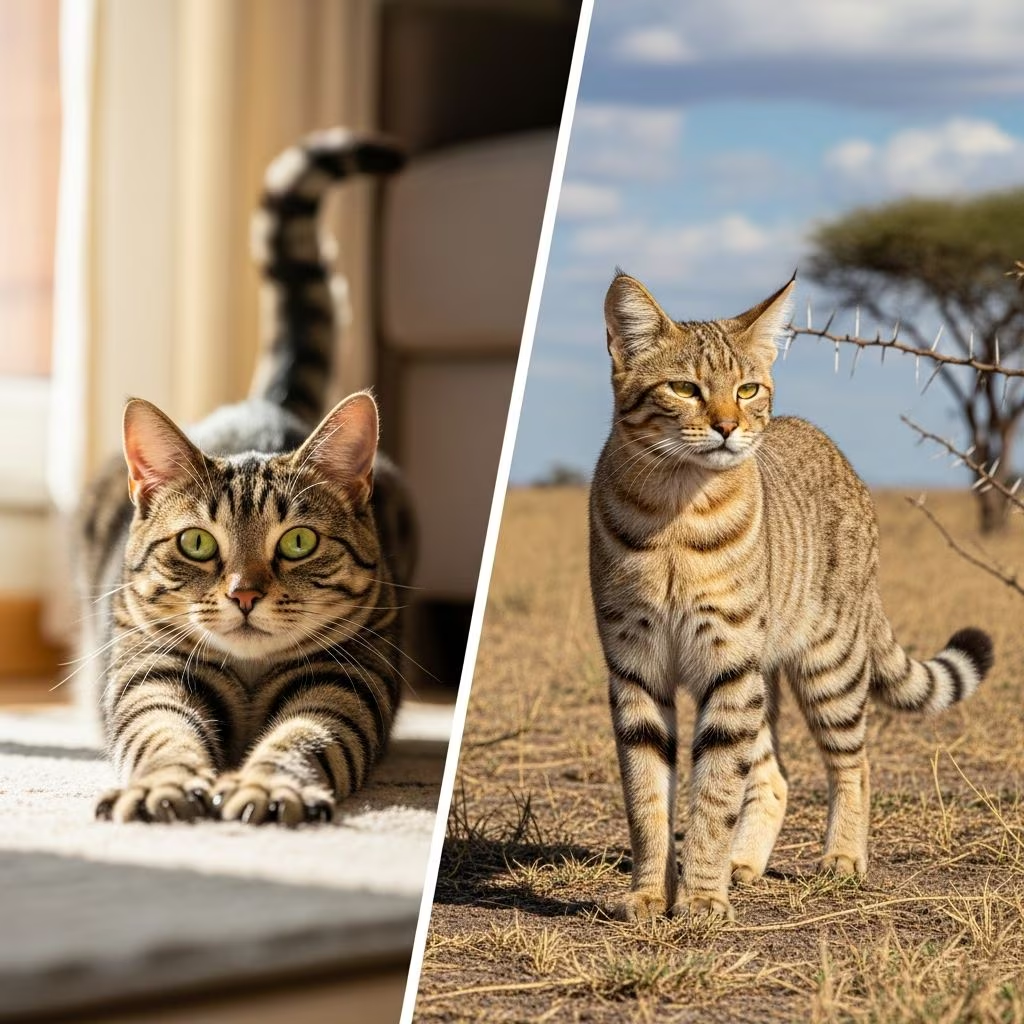
The domestic cat, a beloved household companion, traces its origins directly to the African wildcat (Felis lybica), a resilient predator adapted to harsh African environments. While thousands of years of selective breeding have introduced vast variety in domestic breeds, core physical and behavioral traits persist, revealing the wild heritage beneath the purring facade. This article delves into their evolutionary journey, physical distinctions, survival strategies, and the ongoing challenges of hybridization.
Evolutionary Origins: From Wild Hunters to Home Companions
Domestication of cats began around 9,000-10,000 years ago in the Near East, where African wildcats were drawn to human settlements by abundant rodents feasting on stored grain. Unlike dogs, which underwent intensive breeding for specific roles, cats self-domesticated through a symbiotic relationship, tolerating humans in exchange for prey-rich environments. Genetic studies confirm that all domestic cats descend from a small number of African wildcat founders, maintaining much of their ancestor’s genetic purity despite widespread interbreeding.
This gradual process preserved innate instincts like hunting and territoriality, allowing domestic cats to thrive both indoors and as free-roaming ferals. Today, over 600 million domestic cats worldwide embody this blend of wild prowess and adapted sociability.
Physical Comparisons: Size, Build, and Adaptations
African wildcats and domestic cats share a similar overall size, but subtle differences highlight their respective lifestyles. African wildcats measure 18-30 inches in head-body length and weigh 6-14 pounds, slightly larger and leaner than the average 8-10 pound domestic cat. Their bodies are muscular and athletic, optimized for endurance in open terrains.
| Feature | African Wildcat | Domestic Cat |
|---|---|---|
| Weight | 6-14 lbs | 6-12 lbs (average) |
| Leg Length | Longer, upright posture | Shorter, more compact |
| Build | Lean, muscular | Variable, often less lean |
| Tail | Longer, ringed with black tip | Shorter, varied patterns |
The most distinctive trait is leg proportion: African wildcats have notably long legs, especially forelegs, conferring a cheetah-like gait and upright sitting posture absent in domestic cats. This adaptation aids in high-speed chases and tree climbing across savannahs and deserts. Domestic cats, while agile climbers and pouncers, have shorter limbs suited to navigating human homes and gardens.
Coat Patterns and Camouflage: Blending into Environments
African wildcats sport a sandy brown to grayish-yellow coat with faint stripes, black leg bands, and a dorsal stripe running from shoulders to tail base. Ears feature a signature reddish tint on the back, eyes have white outlines, and tails end in 2-3 black rings tipped black—perfect for concealment in arid grasslands. Paw pads are black, aiding silent stalking.
Domestic cats exhibit far greater color diversity due to breeding—think Siamese blues, calico patches, or Sphynx baldness—but tabby patterns echo wild ancestors, especially in Abyssinians and Bengals. Feral populations often revert to wildcat-like sandy coats for camouflage. These markings serve the same purpose: breaking up outlines to ambush prey or evade predators.
Sensory Superpowers: Eyes, Ears, and Whiskers
Both cats possess extraordinary vision, with a reflective retinal layer (tapetum lucidum) amplifying low light for nocturnal hunting. Pupils slit in daylight and expand widely at night, signaling excitement or focus. Hearing is acute, pinpointing rustles from rodents or insects.
Whiskers, or vibrissae, function identically: measuring gaps wider than the head, conveying spatial awareness, and signaling mood through positioning—fanned for curiosity, flattened for aggression. African wildcats rely on these for navigating dense scrub at night, while domestic cats use them squeezing through furniture or detecting toys.
Hunting Techniques and Dental Arsenal
Obligate carnivores, both prey on small mammals, birds, reptiles, amphibians, and insects using ambush tactics. African wildcats exhibit patience, stalking for hours before a explosive pounce, leveraging superior hearing. They open jaws wide; canines pierce and hold, while carnassial molars shear meat via lateral chewing—head twisting to optimize bite.
Domestic cats mirror this: watch one dissect kibble or a mouse toy with sideways head jerks. Though fed commercially, their 60+ million feral counterparts hunt 2,000+ species globally, proving retained prowess. Encouraging play hones these instincts, preventing obesity and boredom.
Territorial Behaviors and Communication
Territoriality defines both. African wildcats maintain home ranges of 4-52 km² (males larger), marked by urine spray, cheek rubbing (facial pheromones), and claw scratches. Domestic cats delineate gardens similarly, scratching posts mimicking trees.
Tail, ear, and whisker positions communicate universally: upright tail for greeting, twitching for irritation, pinned ears for fear. African wildcats are solitary except during mating; domestic cats form loose colonies but prefer solo hunting. Hygiene rituals persist—separate eating, drinking, and toileting zones to avoid contamination.
Habitat Adaptability: Wild Ranges vs Human Homes
Versatile African wildcats inhabit deserts, savannahs, woodlands, and semi-arid zones across Africa, Middle East, and Asia—anywhere with cover and prey. They lack fixed dens, resting variably for flexibility.
Domestic cats adapt similarly, from urban alleys to farms, but rely on humans for shelter. Feral groups exploit anthropogenic niches, much like ancestral grain stores.
Hybridization Threats and Conservation
Free-ranging domestic cats pose hybridization risks, diluting wildcat genes. Yet, South African studies show low introgression, thanks to behavioral avoidance and protected areas. African wildcats are IUCN Least Concern but vulnerable to habitat loss, poisoning, and snares. Discouraging pet roaming aids preservation.
Enriching Domestic Cats’ Wild Instincts
- Play Hunting: Use wand toys, laser pointers to simulate stalks and pounces.
- Vertical Space: Install shelves, cat trees for climbing, mimicking trees.
- Scent Play: Rotate toys, add catnip for territorial engagement.
- Diet Mimicry: Puzzle feeders encourage ‘hunting’ meals.
- Outdoor Safety: Harness walks or enclosures prevent hybridization.
These activities keep domestic cats physically fit and mentally sharp, honoring their wild roots.
Frequently Asked Questions
Can domestic cats survive in the wild like African wildcats?
Yes, many ferals do, hunting effectively, though softer breeds struggle without human aid.
Are African wildcats dangerous to humans?
No, they are elusive and avoid contact, posing no threat.
How do I tell if a stray cat is a wildcat hybrid?
Look for long legs, reddish ear backs, uniform sandy coat without bold domestic patterns.
Do domestic cats need to hunt to be happy?
Not for survival, but hunting play satisfies instincts, reducing stress.
What’s the biggest difference between them?
Wildcats’ extreme adaptability and wild purity vs. domestic variety and human dependence.
References
- Domestic Cats Vs. African Wildcats — Purina. 2023. https://www.purina.com/articles/cat/behavior/understanding-cats/domestic-vs-african-wildcats
- African Wildcat — Wildcat Conservation. 2023. https://wildcatconservation.org/wild-cats/africa/african-wildcat/
- Wildly African – The African Wildcat — Londolozi Blog. 2023-04-13. https://blog.londolozi.com/2023/04/13/wildly-african-the-african-wildcat/
- African Wildcats — Save A Cat. 2023. https://www.saveacat.org/african-wildcats.html
- Genetic analysis shows low levels of hybridization between African wildcats — PMC (Peer-reviewed). 2015-02-04. https://pmc.ncbi.nlm.nih.gov/articles/PMC4314262/
- How are our pet cats similar to wildcats? — Cats Protection. 2023. https://www.cats.org.uk/cats-blog/how-are-our-pet-cats-similar-to-wildcats



