

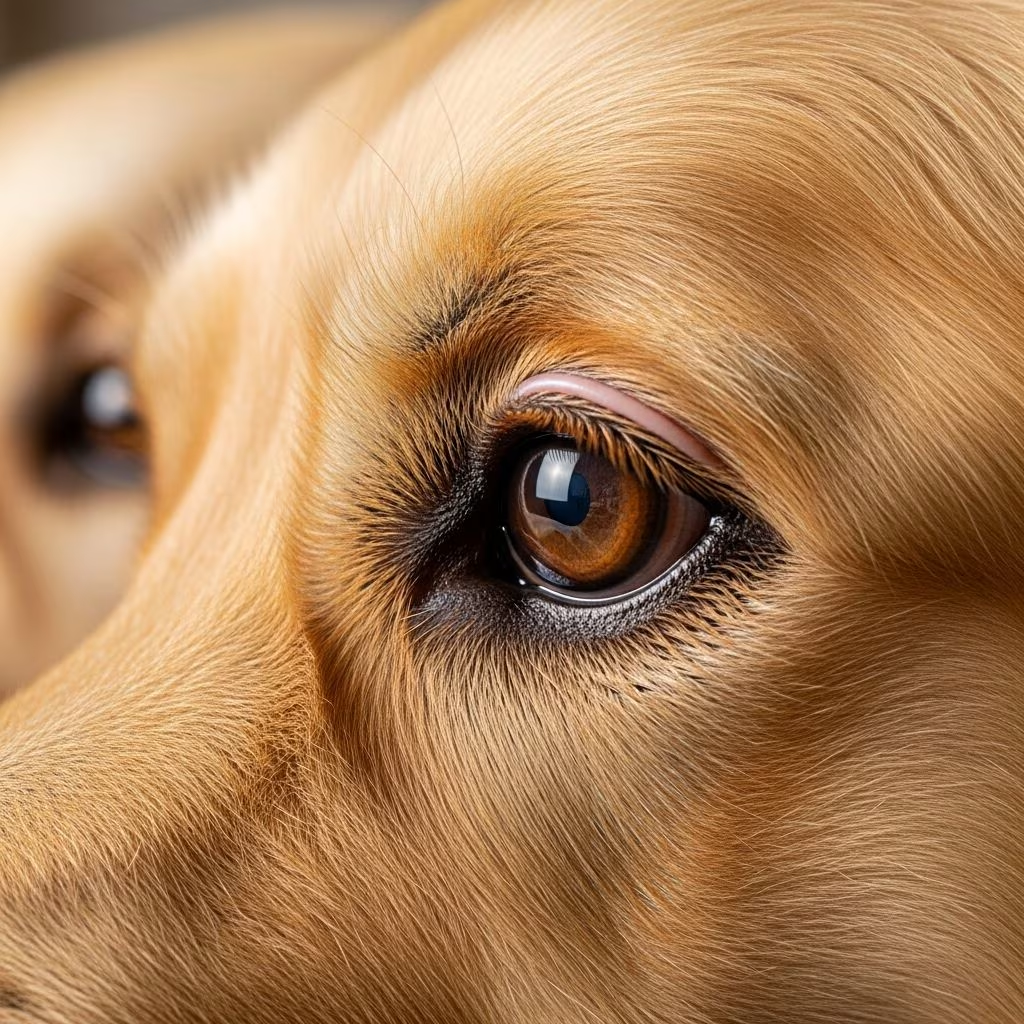
Dogs have **three eyelids**, unlike humans who have only two, providing advanced protection for their eyes during active lifestyles. This unique feature includes upper and lower eyelids plus a third eyelid, known as the nictitating membrane, which sweeps across the eye for moisture and defense.
The Basics of Canine Eye Protection
Canine eyes are built for survival in diverse environments, from chasing prey to navigating rough terrain. The eyelids form the first line of defense, shielding the sensitive eyeball from dust, wind, and impacts. While the upper and lower eyelids function similarly to ours—blinking to spread tears and remove irritants—the third eyelid adds an extra layer of coverage.
Positioned in the inner corner of the eye, the third eyelid remains mostly hidden but extends passively or actively when needed. This structure helps maintain a moist ocular surface, crucial for clear vision in dogs who rely heavily on sight alongside scent.
Detailed Anatomy of a Dog’s Eyelids
The canine eye is a spherical globe encased in protective layers. Here’s a breakdown:
- Upper Eyelid: Larger and more mobile, it closes downward during blinks, supported by the levator palpebrae superioris muscle innervated by the oculomotor nerve.
- Lower Eyelid: Shorter, it meets the upper lid to seal the eye, lined with Meibomian glands that secrete oils to prevent tear evaporation.
- Third Eyelid (Nictitating Membrane): A thin, translucent fold with cartilage for support, located nasally. It features the nictitans gland at its base, producing up to 50% of tear fluid.
Surrounding tissues include the conjunctiva, a pink mucous membrane lining the lids and covering the sclera, and cilia (eyelashes) primarily on the upper lid.
Functions of Each Eyelid in Daily Life
Each eyelid serves specific purposes tailored to a dog’s needs:
| Eyelid Type | Primary Functions | Key Supporting Structures |
|---|---|---|
| Upper | Blinking for tear distribution, protection from overhead threats | Levator muscle, eyelashes |
| Lower | Seals eye during sleep, supports tear film stability | Meibomian glands |
| Third | Passive wiping of debris, extra moisture, shields during head shakes | Cartilage plate, nictitans gland |
The third eyelid’s passive movement during rapid eye shifts or globe retraction via the retractor bulbi muscle clears the cornea without full closure.
Why Dogs Evolved Three Eyelids
Evolutionary pressures shaped this anatomy. Predatory ancestors needed eyes that stayed functional amid dust, branches, and high-speed pursuits. The nictitating membrane, common in birds and reptiles, allows quick lubrication without interrupting vision—ideal for hunting packs.
In modern dogs, breeds like brachycephalics (e.g., Pugs) show exaggerated third eyelids due to shallow orbits, while sighthounds have streamlined lids for speed.
Common Eye Conditions Linked to Eyelids
Problems arise when eyelids malfunction. Watch for these:
- Third Eyelid Prolapse: Visible pink mass in corner, often post-anesthesia or with dehydration.
- Cherry Eye: Nictitans gland swells and protrudes; requires surgical tacking.
- Entropion/Ectropion: Inward/outward lid rolling irritates cornea.
- Conjunctivitis: Inflamed lining from allergies or infection, causing redness.
Breeds like Bulldogs and Shih Tzus are prone due to facial structure.
Recognizing Normal vs. Abnormal Eyelid Behavior
Healthy dog eyes show clear corneas, brisk blinks every 5-10 seconds, and invisible third eyelids. Abnormal signs include squinting, discharge, cloudiness, or persistent third eyelid exposure signaling pain, infection, or systemic illness like tetanus.
Use this checklist for daily exams:
- No rubbing paws on eyes
- Symmetrical blinking
- Moist but not watery surface
- No color changes in sclera
Veterinary Care and Eyelid Maintenance
Prevent issues with routine care:
- Clean around eyes with vet-approved saline wipes.
- Trim facial hair in long-coated breeds to avoid lash irritation.
- Monitor post-surgery or during illnesses.
- Annual vet eye exams, especially for at-risk breeds.
For prolapse, vets may lubricate or surgically reposition. Antibiotics treat infections, while surgery corrects conformational defects.
Comparing Dog and Human Eye Anatomy
| Feature | Dogs | Humans |
|---|---|---|
| Eyelid Count | 3 (incl. nictitating) | 2 |
| Tear Production | High via glands, rapid blink | Moderate, slower reflex |
| Protection Style | Passive wipe + full close | Only full closure |
| Tapetum Lucidum | Present (night vision) | Absent |
Dogs’ setup excels in dynamic protection, humans’ in precision focus.
Third Eyelid in Action: Real-World Scenarios
Observe your dog swimming—the third eyelid protects against water. During zoomies, it sweeps debris. In sleep, partial coverage prevents drying. Understanding this enhances bonding and early detection.
FAQs on Canine Eyelids
Do all dogs have a third eyelid?
Yes, every dog has one, though visibility varies by breed and health.
Is a visible third eyelid always bad?
No, temporary visibility occurs with fatigue or anesthesia; persistent needs vet check.
How to treat cherry eye at home?
Do not; seek professional surgery to avoid gland damage.
Can eyelid issues affect vision?
Yes, untreated irritation leads to ulcers, scarring, and partial blindness.
Are there breeds without three eyelids?
No, all canines possess this trait anatomically.
Advanced Insights for Dog Owners
Beyond basics, the third eyelid’s cartilage prevents folding issues, and its glands (Moll and Zeiss) near lashes add lubrication. Innervation ties to cranial nerves for reflex blinks.
Research shows third eyelid removal (nictitation) increases dry eye risk, emphasizing preservation in surgeries.
For breeders, genetic screening prevents entropion in lines like Shar-Peis.
References
- Anatomy of the Eye of the Dog – YouTube — VetCast. 2024 (approx.). https://www.youtube.com/watch?v=4MA4Uaoz4I8
- Structure of the Canine Eye — Whole Dog Journal. 2023 (accessed). https://www.whole-dog-journal.com/health/structure-of-the-canine-eye/
- Eye problems in dogs — PDSA. 2020-02-01. https://www.pdsa.org.uk/pet-help-and-advice/pet-health-hub/symptoms/eye-problems-in-dogs
- Dog Vision and Eye Anatomy: How Dogs See — PetMD. 2024 (approx.). https://www.petmd.com/dog/general-health/how-do-dogs-see-world
- Dog Eye Structure: Anatomy & Functions — MP Labo. 2024. https://www.mplabo.com/en/questions/the-structure-of-the-eye/
- Pet Eye Disease, Dog Eye Anatomy And Structure — Safari Vet. 2024 (approx.). https://www.safarivet.com/care-topics/dogs-and-cats/eye-disease/



