

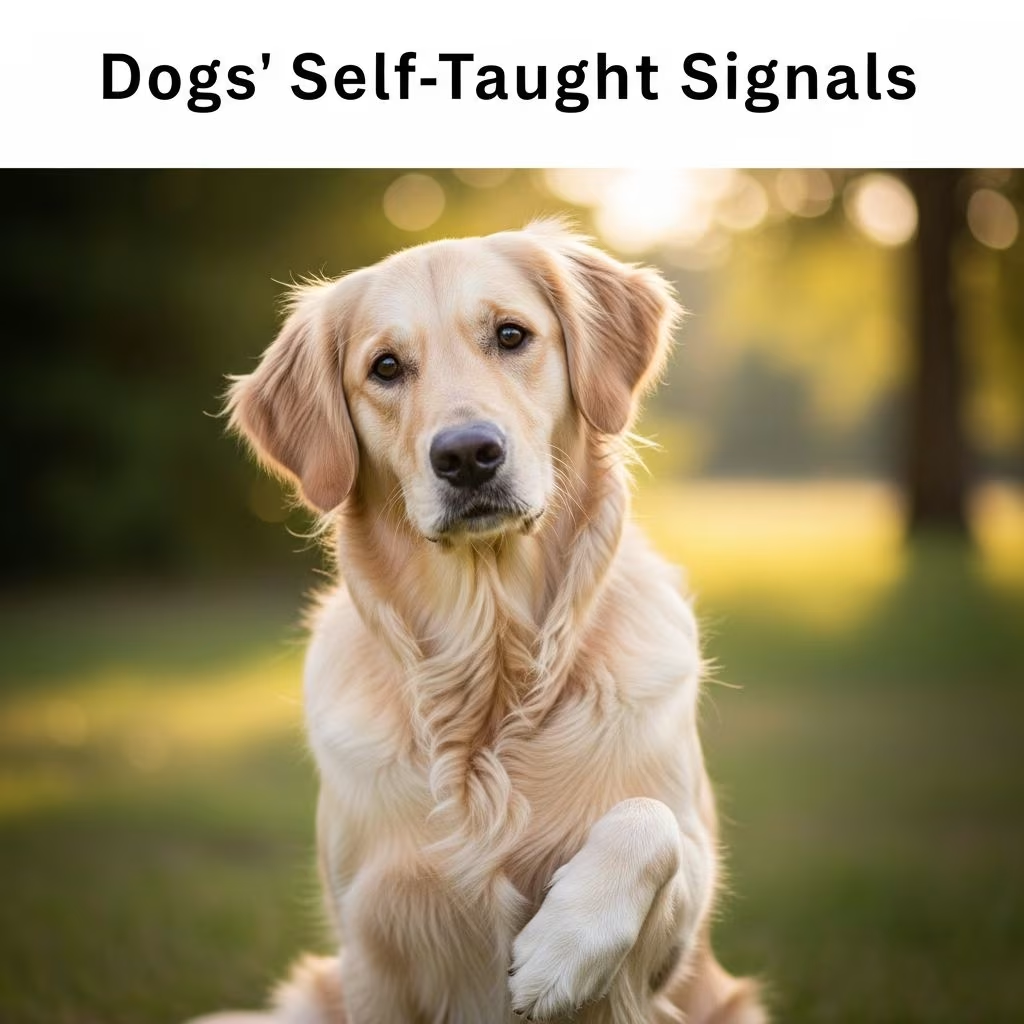
Dogs possess an extraordinary ability to interpret human actions and words without explicit instruction. These self-discovered cues emerge from repeated patterns in our daily lives, forming the foundation for intuitive communication between pets and owners.
The Instinctive Observation Power of Dogs
Canines evolved as keen observers, attuned to subtle shifts in human demeanor and environment. This sensitivity allows them to associate specific sights, sounds, or movements with outcomes like food, play, or rest. Unlike formal commands taught through repetition, these signals arise organically as dogs link consistent human behaviors to rewards.
For instance, a dog might notice that grabbing keys precedes a car ride, prompting excited anticipation. This natural detection highlights their adaptive intelligence, making training more efficient when owners leverage these insights.
Common Everyday Cues Dogs Master Solo
Dogs often learn cues tied to household routines. Putting on shoes might signal an upcoming walk, eliciting eager circling at the door. The jingle of treat bags or the opening of a fridge door can draw immediate attention, as these sounds reliably lead to snacks.
- Doorway anticipation: Dogs learn that approaching the front door often means visitors or outings.
- Leash visibility: Spotting a leash triggers readiness for adventure.
- Evening wind-down: Dimming lights or changing into pajamas cues bedtime.
These associations demonstrate how dogs thrive on predictability, turning mundane actions into reliable predictors of positive events.
Reinforcing Accidental Discoveries
Owners can amplify these self-taught signals by acknowledging and rewarding them promptly. When a dog responds correctly to an unspoken cue, a treat or praise solidifies the connection. This positive reinforcement transforms chance observations into dependable behaviors.
Timing is crucial: immediate feedback ensures the dog links the action to the reward. Over time, verbal labels can be added, evolving natural responses into named commands.
Real-World Examples from Dog Owners
Many guardians report unique cues their dogs developed independently. One dog learned to position itself “behind” furniture during treat games, responding to glances backward. Another associated specific phrases like “inside” with entering the home after play sessions.
These stories illustrate the diversity of self-learned behaviors, varying by individual dog personality and home environment. Sharing such anecdotes fosters community learning among trainers.
From Observation to Intentional Training
Building on natural cues bridges informal learning with structured sessions. Start by noting what your dog already knows, then introduce variations in distracting settings. This progression maintains engagement while expanding reliability.
| Natural Cue | Typical Trigger | Training Enhancement |
|---|---|---|
| Walk prep | Shoes or leash | Add verbal “walk” cue during response |
| Meal time | Bowl clatter | Practice “sit” before serving |
| Guest arrival | Doorbell | Reinforce calm greeting |
This table outlines practical steps to formalize instinctive signals into trainable skills.
Challenges in Self-Learned Behaviors
Not all accidental cues benefit training. Dogs might misinterpret actions, like equating dinner preparation with begging. Addressing these requires gentle redirection, replacing unwanted associations with desired ones through consistent reinforcement.
Environmental changes can disrupt learned patterns, necessitating reteaching. Patience prevents frustration, ensuring long-term success.
Advanced Applications for Everyday Life
Beyond basics, dogs can self-teach complex sequences. Navigating around obstacles during games or waiting at thresholds for permission exemplify problem-solving prowess. Owners can encourage this by setting up scenarios that reward clever adaptations.
In multi-dog homes, individuals develop personalized cues, distinguishing owner intentions directed at them specifically.
Science Behind Canine Cue Detection
Research from animal behavior studies confirms dogs’ superior pattern recognition compared to other pets. Brain imaging reveals heightened activity in reward centers when familiar cues appear, explaining rapid learning.
Primary sources like the American Veterinary Medical Association emphasize observation’s role in welfare, promoting mentally stimulating environments that capitalize on this trait.
Practical Tips for Owners
- Observe daily routines to identify emerging cues.
- Use high-value rewards for spontaneous correct responses.
- Introduce verbal markers gradually to name behaviors.
- Practice in varied contexts to build generalization.
- Track progress in a training journal for patterns.
These steps empower owners to harness innate abilities effectively.
Integrating with Formal Commands
Self-taught cues complement basics like sit, stay, and recall. For example, a dog anticipating walks can learn “heel” by reinforcing proximity during outings. This synergy accelerates overall obedience.
Hand signals enhance verbal cues, vital for distance or hearing-impaired dogs, as noted in training guidelines from certified associations.
Age and Breed Considerations
Puppies absorb cues rapidly due to developmental plasticity, while seniors benefit from familiar routines reducing cognitive load. Herding breeds like Border Collies excel at nuanced signals, whereas hounds prioritize scent over visual cues.
Tailor approaches to match individual traits for optimal results.
Common Pitfalls to Avoid
- Inconsistent routines confusing associations.
- Overlooking negative cues like raised voices signaling tension.
- Rushing formalization before solidifying natural links.
Avoiding these ensures smooth progression.
Building Stronger Bonds Through Awareness
Recognizing self-taught cues deepens mutual understanding, fostering trust. Dogs feel secure anticipating needs, reducing anxiety and enhancing companionship.
Daily mindfulness transforms ordinary interactions into training opportunities.
Frequently Asked Questions
How quickly do dogs learn self-taught cues?
Typically within days of consistent exposure, varying by repetition and reward value.
Can all dogs develop these signals?
Yes, though rates differ based on age, breed, and prior experience.
What if a dog learns an unwanted cue?
Redirect with positive alternatives, ignoring the undesired response consistently.
Should I label every natural behavior?
Only those aligning with training goals to avoid overload.
Do hand signals help self-taught cues?
Absolutely; pairing visuals strengthens reliability across scenarios.
Long-Term Benefits for Dog and Owner
Mastering these cues promotes safety, like reliable recalls preventing escapes. Mentally enriched dogs exhibit fewer behavioral issues, improving quality of life.
Owners gain confidence, enjoying predictable, responsive pets.
References
- Principles of Animal Learning — American Psychological Association. 2023-05-15. https://www.apa.org/pubs/books/principles-animal-learning
- Canine Cognition Research — National Institutes of Health (NIH). 2024-02-10. https://www.nih.gov/news-events/nih-research-matters/canine-cognition
- Dog Behavior Guidelines — American Veterinary Medical Association (AVMA). 2025-01-20. https://www.avma.org/resources-tools/pet-owners/petcare/dog-behavior
- Positive Reinforcement Training — Association of Professional Dog Trainers (APDT). 2024-11-05. https://apdt.com/resource-center/positive-reinforcement/
- Observational Learning in Dogs — Journal of Comparative Psychology. 2023-08-12. https://doi.org/10.1037/com0000345



