

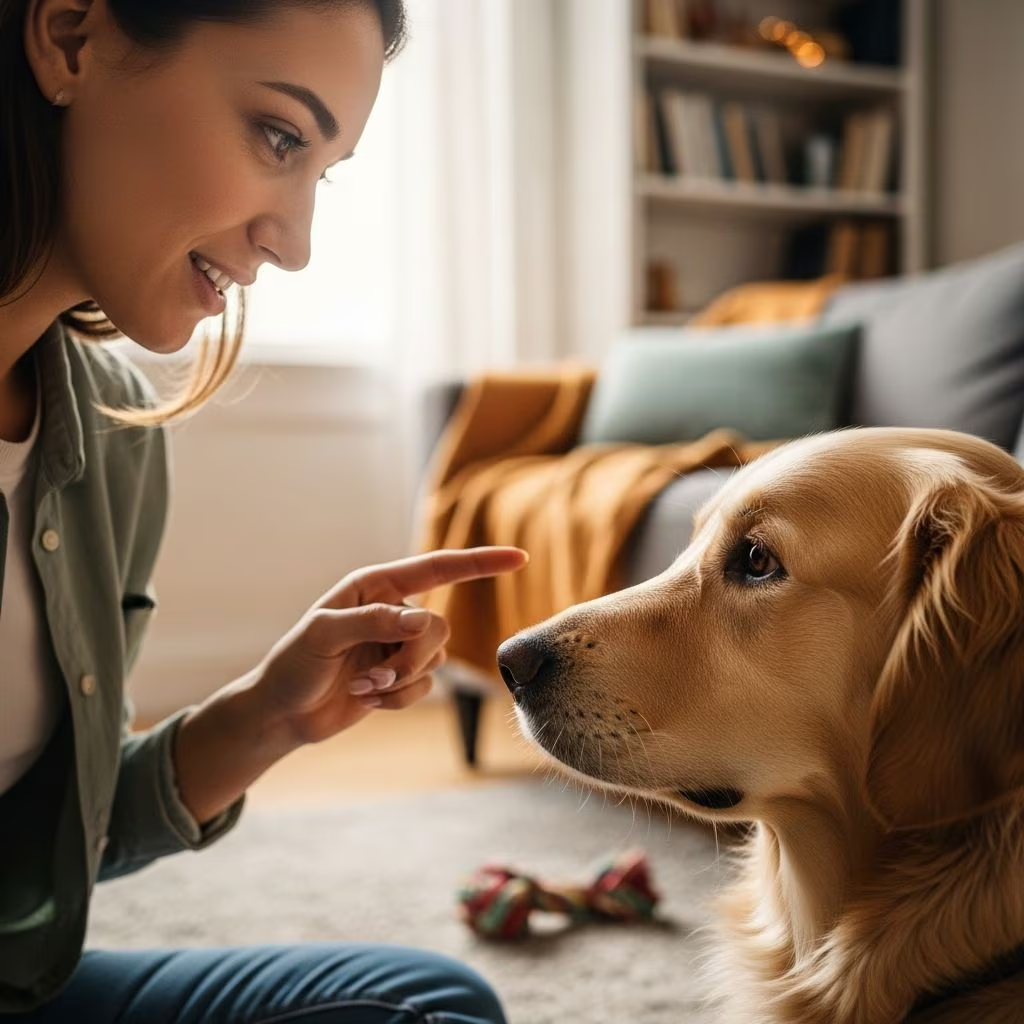
Dogs possess an remarkable talent for deciphering human body language, allowing them to anticipate needs, gauge emotions, and respond with precision. This ability stems from millennia of co-evolution, making them uniquely attuned to our nonverbal signals.
The Evolutionary Roots of Canine Human Reading
Domestic dogs have honed their skills in interpreting human gestures through domestication, distinguishing them from other animals. Studies show they excel at following pointing gestures, gaze directions, and momentary head turns to locate rewards, a capability linked to their shared history with humans. This interspecies synchronization enables dogs to share emotions and intentions effectively.
Unlike wolves, dogs preferentially look to humans for guidance in problem-solving, demonstrating forward ear positioning during attentive interactions, which correlates with successful learning. Research from Tufts University emphasizes that observing the full spectrum of a dog’s responses helps humans understand this dynamic exchange.
Facial Signals That Dogs Notice Instantly
Your face serves as a primary canvas for emotional communication with dogs. They distinguish between joyful smiles and furrowed brows, adjusting their behavior accordingly. A relaxed, smiling expression often elicits tail wags and approach, while tense features prompt caution or avoidance.
- Happy faces: Soft eyes and upturned mouths signal safety and play, encouraging engagement.
- Angry or stressed looks: Narrowed eyes or clenched jaws convey threat, leading dogs to back away or freeze.
- Neutral or soft gazes: Partially closed eyes indicate calm, mirroring pleasure or submission in canine responses.
Observing these nuances helps owners foster trust, as dogs mirror detected emotions.
Posture’s Powerful Influence on Dog Reactions
The way you position your body speaks volumes to dogs. Standing tall with chest forward projects authority, often calming boisterous pups, whereas leaning in shows interest and invitation.
| Human Posture | Dog Interpretation | Typical Response |
|---|---|---|
| Straight, upright stance | Confidence or dominance | Relaxed obedience or alertness |
| Bent forward, knees flexed | Engagement and friendliness | Approach and play initiation |
| Turned away or crouched low | Non-threat or submission | Increased comfort, reduced tension |
| Slouched or tense shoulders | Stress or uncertainty | Mirroring anxiety or comforting behavior |
These interpretations align with canine instincts; a looming posture mimics predatory stances, while open body positions resemble pack invitations.
Gestures and Pointing: Directing Canine Attention
Dogs uniquely follow human pointing, even brief ones, outperforming chimpanzees in such tasks due to domestication. An extended arm guides them to objects, while nodding reinforces positivity.
Slow, deliberate hand movements calm dogs, contrasting sharp gestures that signal urgency or agitation. The American Kennel Club notes dogs track these for cues on actions to take.
Movement Patterns Dogs Decipher
The pace and style of your movements reveal intent. Swift strides suggest excitement, prompting dogs to match energy, while languid steps promote tranquility.
- Quick, erratic motions: Interpreted as play or alarm, exciting responsive dogs.
- Smooth, slow walks: Convey peace, encouraging settled behavior.
- Sudden stops or pivots: Signal caution, making dogs pause and assess.
This sensitivity explains why calm handlers de-escalate tense situations.
Eye Contact’s Dual Role in Communication
Prolonged stares can intimidate dogs, mimicking challenges, while averted eyes show deference. Brief, soft looks build rapport, as dogs read wide-open eyes as potential aggression.
During training, consistent eye contact paired with positive reinforcement strengthens focus.
Tone and Vocal Cues Amplify Body Signals
Though nonverbal, voice modulates body language impact. High-pitched tones with upbeat postures energize, low soothing ones with relaxed forms comfort. Dogs integrate these for holistic understanding.
Emotional Aura Dogs Sense Profoundly
Dogs detect subtle stress through tense muscles or rapid breathing, often offering solace like leaning or nuzzling. The ASPCA highlights this mirroring, where owner calm begets canine serenity.
Raised emotional states, positive or negative, amplify responses; joyful bounces invite play bows.
Common Misinterpretations to Avoid
Owners often overlook how direct approaches or hugging overwhelm dogs, who perceive them as threats. Instead, side entries and open palms signal safety.
Stiff petting from above mimics dominance, better replaced by chest scratches. Context matters: a wagging tail amid stiff posture indicates unease.
Training Tips to Enhance Mutual Understanding
Practice consistent signals: pair ‘sit’ with hand cues and calm posture. Reward attentive responses to build clarity.
- Observe your dog’s full body for feedback.
- Use slow movements in new environments.
- Avoid mixed signals like tense excitement.
- Encourage reciprocity by responding to their cues.
These foster bidirectional communication.
Real-World Applications for Daily Life
In walks, loose leashes with relaxed strides prevent pulling. At home, mindful postures reduce jumping. Veterinary visits benefit from owners modeling calm.
FAQs
Why does my dog back away when I lean in?
Leaning forward can appear threatening; try turning sideways to seem less imposing.
Can dogs tell if I’m stressed?
Yes, they sense tension via posture and energy, often comforting you.
How do I teach my dog gestures?
Use pointing with treats repeatedly; dogs naturally follow human directions.
What if my dog ignores my signals?
Ensure consistency and observe their body language for context clues.
Does breed affect interpretation?
All dogs share core skills, though working breeds may be more attuned.
Building Lasting Bonds Through Awareness
By refining your nonverbal communication, you empower clearer interactions, reducing frustration and deepening companionship. Dogs thrive when humans meet them in their language of cues.
References
- Dogs Understand Human Body Language: 8 Fascinating Signals They Read Every Day — OLK9 Iowa. Accessed 2026. https://olk9iowa.com/dogs-understand-human-body-language/
- Decoding Dog Body Language: How Dogs Communicate with Humans and Each Other — Native Pet. Accessed 2026. https://nativepet.com/blogs/health/decoding-dog-body-language-how-dogs-communicate-with-humans-and-each-other
- Doggie Body Language Translated for Humans — Cesar’s Way. Accessed 2026. https://www.cesar.com/dog-care/socialization/doggie-body-language-translated-for-humans
- Dogs’ Body Language Relevant to Learning Achievement — PMC (National Library of Medicine). 2015-06-24. https://pmc.ncbi.nlm.nih.gov/articles/PMC4494300/
- Dog Communication and Body Language — Tufts University. Accessed 2026. https://sites.tufts.edu/collaborativeforshelterdogs/dog-behavior/dog-communication-and-body-language/



