

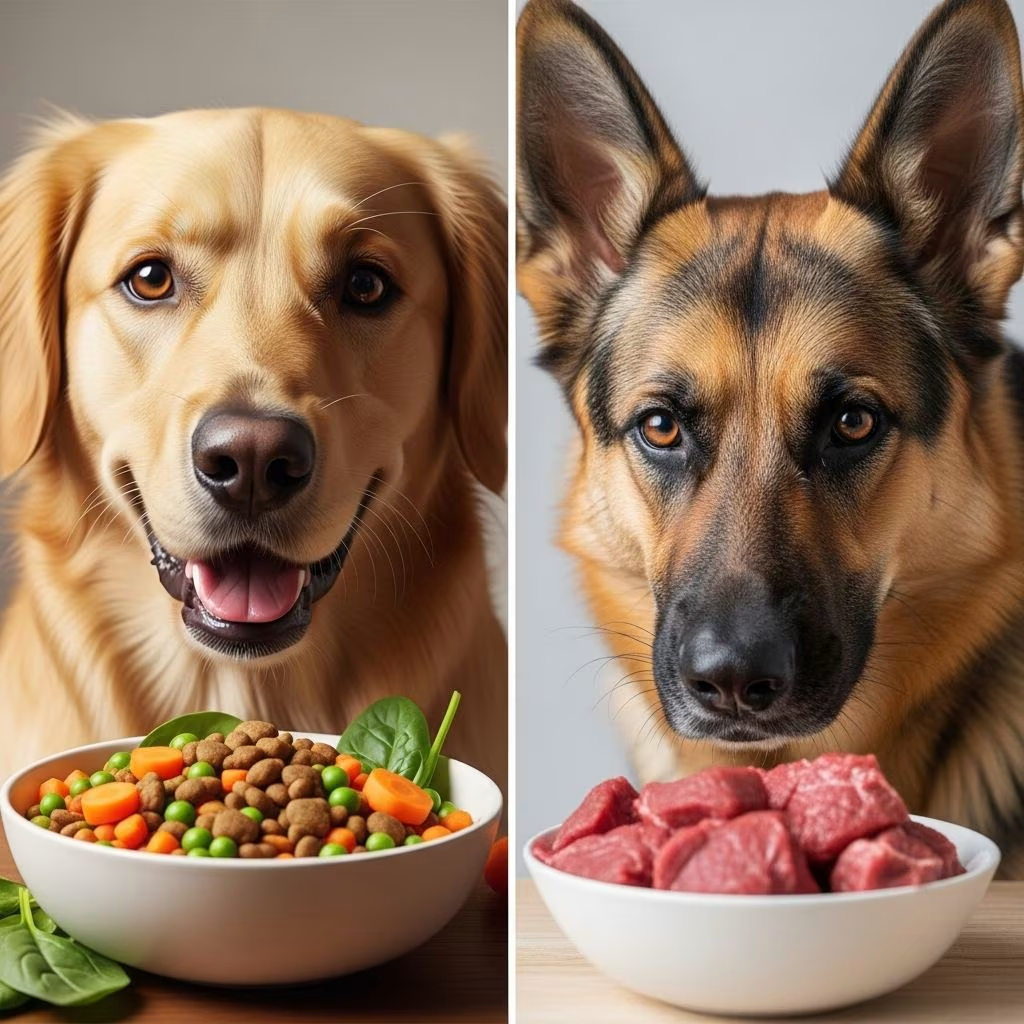
Domestic dogs possess a unique dietary flexibility that sets them apart from their wild wolf ancestors. While classified under the Carnivora order, scientific evidence from genetics, digestion studies, and evolutionary biology confirms dogs function as **omnivores**, efficiently processing both animal proteins and plant-based carbohydrates.
The Evolutionary Journey from Wolf to Dog
Dogs diverged from wolves tens of thousands of years ago, coinciding with human agriculture’s rise. This partnership drove genetic changes enabling dogs to exploit human food scraps, including starchy leftovers from farming. A landmark genome analysis revealed dogs evolved distinct adaptations for a starch-rich diet, unlike wolves who rely primarily on meat.
Wolves maintain a hypercarnivorous profile, with diets showing a 52:47:1% ratio of protein:fat:carbohydrates by energy, derived from large prey and minimal plant matter. In contrast, dogs self-select diets closer to 30:63:7%, reflecting greater carbohydrate tolerance shaped by domestication.
Genetic Evidence of Omnivorous Adaptation
Researchers sequenced genomes from 60 dogs and 12 wolves, identifying 36 regions of divergence. About one-third involved starch digestion and fat metabolism. Dogs developed extra copies of the AMY2B gene, boosting salivary amylase production to break down starches into sugars—up to 28 times more than wolves.
Other key genes like MGAM and SGLT1 enhance maltose breakdown and glucose absorption. These changes, fixed across breeds, prove dogs adapted to omnivorous diets during early domestication. Wolves lack these, limiting their starch processing efficiency.
| Genetic Feature | Dogs | Wolves |
|---|---|---|
| AMY2B Gene Copies | Multiple (higher amylase) | Fewer (limited starch digestion) |
| Starch-Related Regions | 12/36 divergent regions | Minimal adaptation |
| Glucokinase Activity | High (omnivore-like) | Lower (carnivore-like) |
This table summarizes core differences, highlighting dogs’ omnivorous shift.
Digestive Capabilities: Beyond Meat
Dogs possess Type D taste buds sensitive to sweet, fruity compounds absent in obligate carnivores. Their saliva contains α-amylase for initial starch hydrolysis, and livers exhibit high glucokinase for glucose metabolism—traits aligning with omnivores.
A 2008 study tested six starches (cassava, rice, corn, sorghum, peas, lentils) in dog diets, finding over 98% digestibility across all. This confirms modern dogs handle plant carbohydrates exceptionally well.
- Cassava flour: 99% digestible
- Brewer’s rice: 98.5% digestible
- Corn: 98.2% digestible
- Sorghum: 98.7% digestible
- Peas: 99.1% digestible
- Lentils: 98.9% digestible
Such efficiency debunks myths of plant intolerance.
Wolves vs. Dogs: Dietary Realities
Free-living wolves forage opportunistically but consume negligible vegetation, avoiding rumen contents. Fossil and ecological data reinforce their true carnivore status, with meat comprising nearly all caloric intake.
Dogs, however, thrived by scavenging diverse human refuse, including grains. Ancient dog feces reveal omnivorous microbiomes, with plant fibers alongside animal remains. This adaptability fueled their global success as companions.
Modern Diet Myths and Trends
Grain-free, meat-only diets surged recently, echoing human paleo fads rather than canine biology. These overlook dogs’ 15,000-year evolution away from wolf-like needs. Balanced commercial foods, meeting AAFCO standards, incorporate digestible carbs for energy without health risks.
Wholly meat diets risk deficiencies in fiber and digestible carbs, potentially harming gut health long-term. Veterinary experts stress formulation over raw ancestry—dogs excel on varied nutrition mirroring their omnivorous adaptations.
Health Implications of Omnivorous Feeding
Omnivorous diets support lean body condition, vitality, and longevity. Carbs provide quick energy, sparing proteins for muscle repair. Dogs regulate intake toward moderate carbs, avoiding excesses.
During food scarcity, dogs limit protein breakdown intermediately between rats (omnivores) and cats (obligate carnivores), showcasing adaptive carnivore roots with omnivorous flexibility. This positions dogs as “adaptive carnivores”—carnivora with broad capabilities.
Practical Nutrition Guidelines
Choose diets with high-quality proteins (25-30% dry matter) alongside digestible carbs (30-50%). Avoid extremes: too little meat starves taurine needs; excess ignores starch prowess.
- Consult vets for breed-specific needs.
- Prioritize complete, balanced formulas.
- Monitor weight and stool quality.
- Incorporate variety via treats/veggies.
- Test novel proteins gradually.
Frequently Asked Questions
Are dogs true carnivores?
No, while in Carnivora, dogs evolved omnivorous traits like enhanced starch digestion, distinguishing them from wolves.
Can dogs thrive without grains?
Yes, if balanced, but grains aid digestibility and aren’t harmful—myths stem from trends, not science.
Is a vegan dog diet safe?
Possible with vet oversight and supplementation, as dogs digest plants well, but meat-inclusive is simpler.
How much starch do dogs need?
Varied by activity; 20-50% caloric carbs suit most, matching self-selection studies.
Do puppies differ nutritionally?
Puppies need higher protein/fat for growth but retain omnivorous digestion from weaning.
Conclusion: Embracing Canine Omnivory
Dogs’ triumph as man’s best friend stems from dietary versatility. Honor this by feeding balanced, science-backed nutrition—not ancestral guesses. Their genes and guts affirm: omnivores by design.
References
- When Did Dogs Become Omnivores? The Scientific Evidence Behind Canine Diet Evolution — Feed Petaluma. 2023. https://www.feedpetaluma.com/blogs/blog/when-did-dogs-become-omnivores-the-scientific-evidence-behind-canine-diet-evolution
- Study Proves Definitively That Dogs Are Nutritional Omnivores — Omni.pet. 2013 (referencing Nature study). https://omni.pet/blogs/news/study-proves-definitevely-that-dogs-are-nutritional-omnivores
- The omnivorous dog dogma and carnivorous cat connection — Wageningen University (WUR). 2014. https://edepot.wur.nl/332038
- Are Dogs Carnivores or Omnivores? Experts Explain — Rover.com. 2023. https://www.rover.com/blog/are-dogs-carnivores/
- Dietary nutrient profiles of wild wolves: insights for optimal dog nutrition? — PubMed (Bosch et al.). 2015-10-28. https://pubmed.ncbi.nlm.nih.gov/25415597/



