

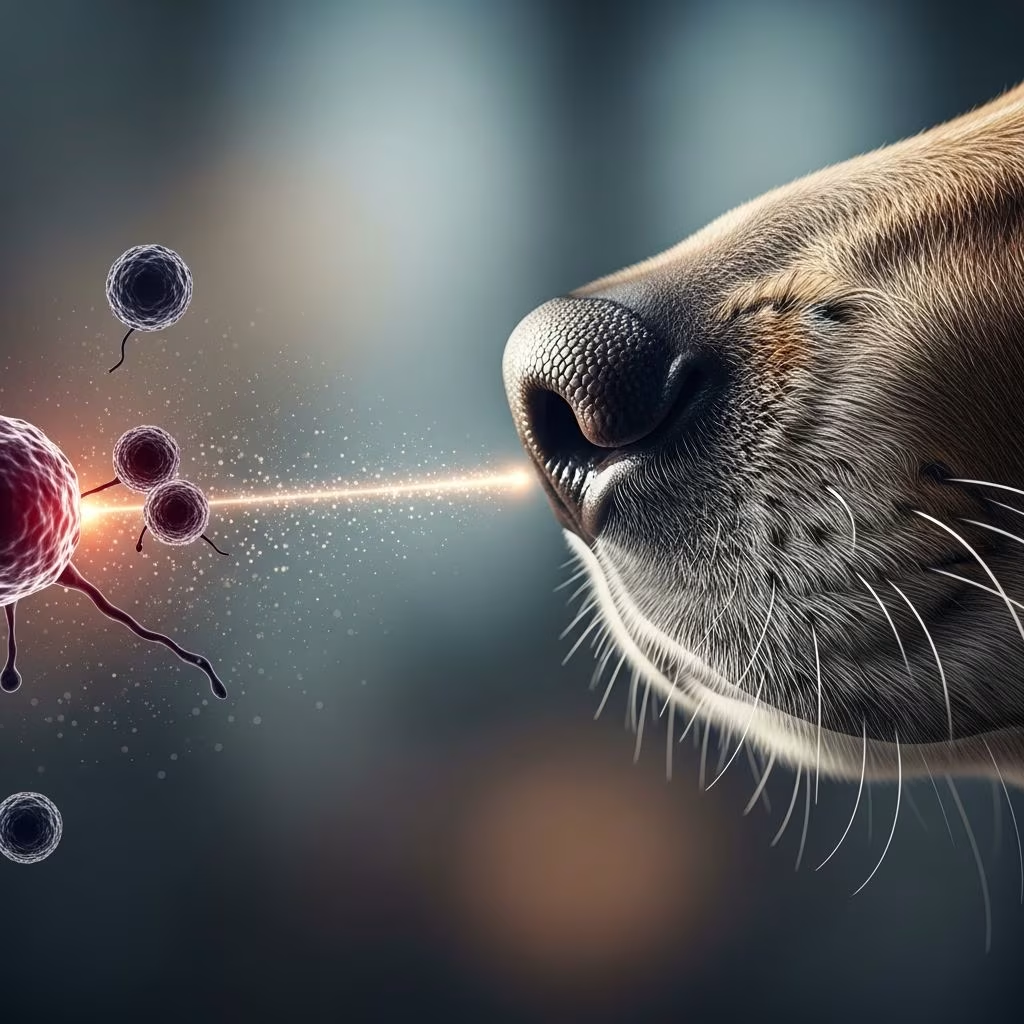
Dogs possess an olfactory capability far surpassing humans, enabling them to identify **cancer** through subtle scent cues produced by malignant cells. This ability stems from their detection of **volatile organic compounds (VOCs)**, chemical byproducts altered in cancerous tissues.
The Science of Canine Olfaction in Disease Detection
Dogs’ noses contain up to 300 million olfactory receptors, compared to humans’ 6 million, allowing them to sense odors at concentrations as low as parts per trillion. Cancer disrupts normal cellular metabolism, releasing distinct VOC profiles into breath, urine, blood, and saliva. These signatures form the basis for canine detection.
Research demonstrates dogs can differentiate these profiles with remarkable precision. For instance, trained canines identify lung cancer from exhaled breath with sensitivities around 86% and specificities of 72%. This outperforms many conventional screening methods in non-invasive settings.
Breakthroughs in Human Cancer Detection
Since the late 1980s, anecdotal reports highlighted dogs persistently investigating moles later diagnosed as melanoma. Controlled studies confirmed this: dogs accurately flagged breast, lung, bladder, prostate, and colorectal cancers from breath, urine, stool, and skin samples.
A pivotal study trained dogs on lung cancer odors from tumor tissue, breath, and urine, achieving cognitive association for blind testing. Post-surgical assessments showed dogs recognizing tumor absence, aiding surgical outcome verification. Another trial reported **97% accuracy** in pinpointing lung cancer via breath analysis.
| Cancer Type | Sample Type | Detection Accuracy | Source |
|---|---|---|---|
| Lung | Breath, Urine | 86-97% | |
| Melanoma | Skin Lesions | High Sensitivity | |
| Breast/Lung | Breath | Confirmed | |
| Bladder/Prostate | Urine | High |
Canine Cancer Detection: A New Frontier
Emerging research extends this talent to detecting cancer in dogs themselves. A University of Pennsylvania study trained bio-detection dogs on blood serum from hemangiosarcoma cases, achieving **70% accuracy** across blind trials—comparable to human cancer detection rates. Hemangiosarcoma, aggressive and hard to diagnose early, lacks routine screening tools, making this promising for annual checks prompting ultrasounds or CTs.
Separately, University of Wisconsin researchers used saliva samples: six dogs distinguished malignant tumor saliva from healthy ones with high sensitivity and specificity, missing few true positives. This proof-of-concept calls for expanded trials to differentiate tumor types and non-cancerous conditions.
- Key Advantage: Non-invasive sampling via saliva or blood.
- Potential Use: Routine vet screenings for early intervention.
- Challenges: Scaling training and standardizing protocols.
How Dogs Are Trained for Medical Scent Work
Training leverages positive reinforcement: dogs associate target odors with rewards like treats or toys. Initial phases expose them to cancer samples; advanced blind tests ensure reliability without prior exposure. Breeds like Labrador Retrievers and German Shepherds excel due to scent drive, but various breeds succeed.
Programs at facilities like Penn Vet’s Working Dog Center refine protocols for diseases from PTSD to cancers. Dogs evaluate matched sets—cancer, diseased non-cancer, healthy—mirroring real diagnostics.
Limitations and Pathways to Clinical Adoption
While promising, challenges persist. VOC complexity varies by cancer stage and type, potentially confusing dogs. Small sample sizes in studies limit generalizability; larger trials are needed. Dogs can’t specify cancer location or type, necessitating confirmatory tests like biopsies.
Translating to clinics involves hybrid approaches: canine screening flags risks for machine-based VOC analysis. Regulatory approval and vet integration remain hurdles, but successes inspire electronic noses mimicking canine olfaction.
Real-World Impacts and Future Prospects
Early detection transforms outcomes. For hemangiosarcoma, scent tests could prevent metastasis by prompting timely imaging. In humans, non-invasive breath tests rival CT scans for lung cancer screening accessibility.
Future directions include feline applications, multi-cancer panels, and AI-enhanced training. Global programs expand: over 300 unique samples trained U.S. dogs to differentiate healthy from cancerous.
Frequently Asked Questions (FAQs)
Can any dog be trained to smell cancer?
High-drive breeds with strong scent motivation perform best, but motivated dogs of various breeds succeed with proper training.
How accurate are dogs at detecting cancer?
Accuracies range from 70% for canine hemangiosarcoma to 97% for human lung cancer, depending on study and cancer type.
What do dogs smell when detecting cancer?
Unique **VOCs** from metabolic changes in cancer cells, present in breath, urine, blood, and saliva.
Will cancer-sniffing dogs replace vet diagnostics?
No, they serve as early screeners, prompting advanced tests like imaging or biopsies.
Are there cancer detection services available now?
Limited research programs exist; commercial vet services are emerging but not widespread.
References
- Trained dogs can detect hemangiosarcoma by scent — Penn Today, University of Pennsylvania. 2023. https://penntoday.upenn.edu/news/sniffing-out-cancer-trained-dogs-can-detect-hemangiosarcoma-scent
- Sniffer Dogs Diagnose Lung Cancer by Recognition of Exhaled Gases — PMC (PubMed Central), peer-reviewed. 2023-02-20. https://pmc.ncbi.nlm.nih.gov/articles/PMC9954099/
- Research Suggests Dogs Can Be Trained to Sniff Out Cancer in Other Dogs — University of Wisconsin School of Veterinary Medicine. 2023. https://www.vetmed.wisc.edu/research-suggests-dogs-can-be-trained-to-sniff-out-cancer-in-other-dogs/
- Can Dogs Smell Cancer? — Roswell Park Comprehensive Cancer Center. 2020-08. https://www.roswellpark.org/cancertalk/202008/can-dogs-smell-cancer
- Meet America’s Cancer-Sniffing Canines — American Kennel Club (AKC). Recent. https://www.akc.org/expert-advice/news/meet-americas-cancer-sniffing-canines/
- Cancer-sniffing dogs 97% accurate in identifying lung cancer — American Osteopathic Association. 2019-06-17. https://osteopathic.org/2019/06/17/cancer-sniffing-dogs-97-accurate-in-identifying-lung-cancer-according-to-study-in-the-journal-of-the-american-osteopathic-association/



