

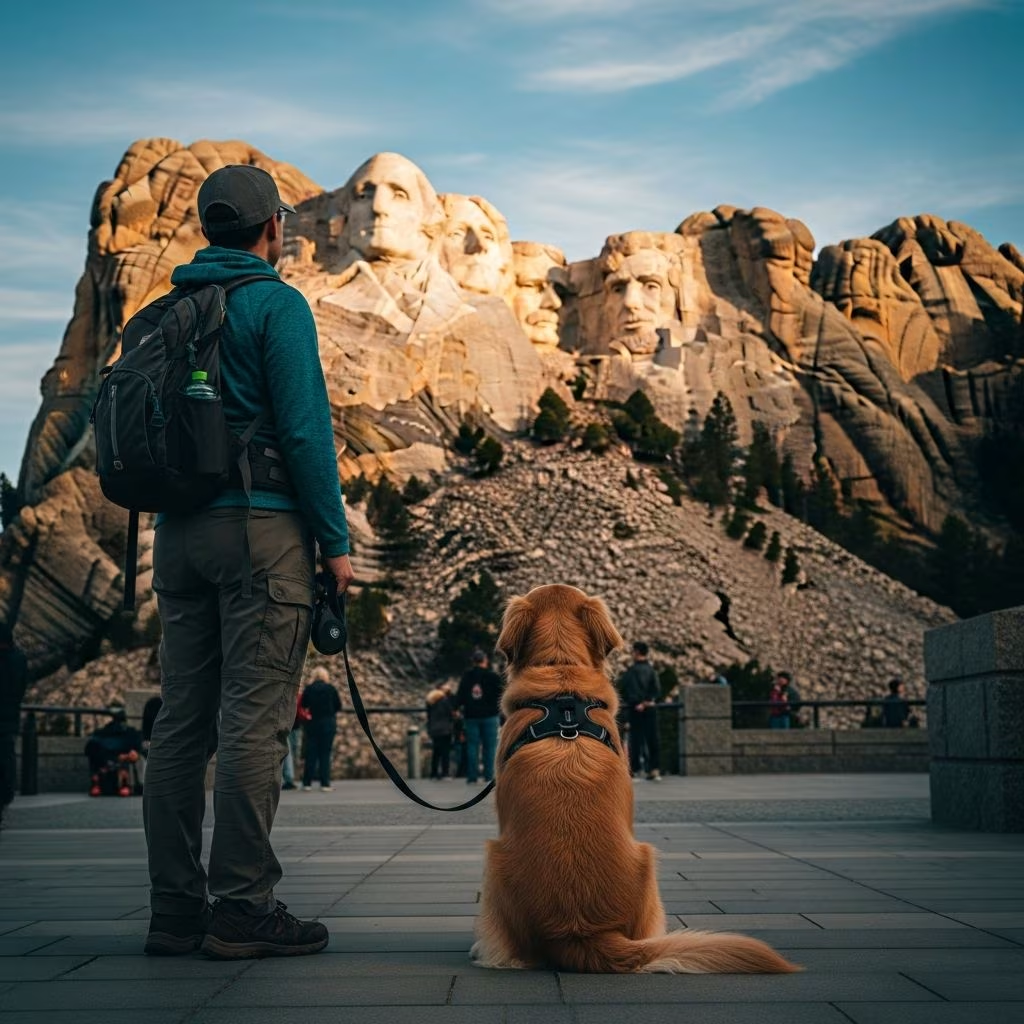
Planning a trip to Mount Rushmore with your four-legged friend requires understanding specific regulations designed to protect both the monument and the diverse wildlife in the area. While many pet owners dream of sharing this iconic American experience with their dogs, the rules governing canine access are quite specific. Understanding these guidelines beforehand will help you plan a stress-free visit that respects the memorial and ensures a positive experience for everyone.
Understanding Mount Rushmore’s Pet Policy Framework
Mount Rushmore National Memorial receives millions of visitors annually, making it one of America’s most visited landmarks. The sheer volume of human traffic necessitates strict pet management policies. These regulations balance the desire of visitors to include their pets in travel experiences with the practical challenges of maintaining safety and preserving the site’s integrity. The memorial’s pet policy reflects broader National Park Service guidelines that prioritize visitor safety, wildlife protection, and site preservation.
The fundamental rule is straightforward: dogs cannot proceed beyond the main visitor entrance to Mount Rushmore. However, this doesn’t mean your dog must stay behind entirely. Strategic pet-friendly zones exist where your canine companion can enjoy the outdoor experience while remaining in compliant areas.
Designated Pet-Friendly Zones at the Monument
The areas where dogs are permitted represent the outer perimeter of the memorial complex. These zones have been deliberately designated to provide pet owners with viable options while maintaining visitor flow and safety.
Parking Structure Areas
The parking garages represent the primary location where dogs receive full access on the memorial grounds. Two main parking structures contain designated pet exercise areas in the green spaces between and alongside them. These locations have been specifically developed to accommodate dogs, featuring waste disposal stations on each side of the garages. From these positions, visitors can still observe Mount Rushmore, though the monument appears relatively distant. The faces carved into the mountainside remain visible but appear noticeably smaller compared to views from closer proximity.
Adjacent Pathways and Sidewalk Extensions
Dogs are permitted along sidewalks extending laterally from the main entrance columns and throughout designated areas adjacent to the parking facilities. These pathways allow for leisurely walks while your pet remains within policy-compliant zones. The marked orange-shaded areas on official park maps clearly indicate where pets may freely roam.
Essential Leash and Conduct Requirements
Whether in parking areas or permitted pathways, specific behavioral standards apply to all canine visitors:
- Leash Length Limitation: Dogs must remain on leashes no longer than six feet in length at all times within the memorial grounds. This requirement applies universally across all pet-permitted areas.
- Noise Control: Dogs cannot engage in excessive barking or other disruptive vocalizations. Given the high volume of visitors and the acoustic properties of the location, noise restrictions are enforced.
- Waste Management: Pet owners bear complete responsibility for immediate cleanup of any waste. Provided waste receptacles are located strategically throughout permitted areas.
- Supervision Requirements: Dogs cannot be left unattended or tied to objects while owners explore other areas. Your pet must remain under active supervision throughout your visit.
Comprehensively Restricted Areas for Dogs
Understanding where dogs absolutely cannot go is equally important as knowing permitted zones. These restrictions exist for specific safety and operational reasons.
Main Visitor Complex
Once visitors pass through the pergola marking the main park entrance, dogs are completely prohibited. This restriction encompasses all developed visitor areas, including the main walkway, Avenue of Flags, and Grand View Terrace—the primary viewing platforms for observing the monument. Pet owners must make arrangements for their dogs before entering this zone, as re-entry to retrieve pets is complicated by entrance protocols.
Public Buildings and Facilities
All interior spaces are off-limits to pets. This includes the visitor center, gift shop, food service establishments, the Sculptor’s Studio, restrooms, and any other enclosed structures within the memorial. Only service animals recognized under Americans with Disabilities Act requirements are exempt from this prohibition.
Hiking Trails
Numerous trails traverse the memorial grounds, offering scenic experiences unavailable from parking areas. These trails are completely closed to pet access, including the Presidential Trail and the Nature Trail. This policy protects fragile ecosystems, prevents wildlife disturbance, and ensures visitor safety.
Amphitheater and Ranger Programs
Ranger-led interpretive programs, lectures, and amphitheater events prohibit pet attendance. These restrictions maintain appropriate atmospheres for educational experiences.
Rationale Behind Restriction Policies
Mount Rushmore’s pet policies stem from several interconnected concerns. The sheer visitor density—millions annually—creates logistical challenges for accommodating animals. Crowded conditions increase risks of pet anxiety, aggressive behavior, or visitor-pet conflicts. Additionally, the memorial lies adjacent to mountain terrain inhabited by wild animals, particularly mountain goats. Dogs can trigger aggressive responses in these animals or cause them to flee their natural habitat, disrupting ecosystems and potentially creating dangerous encounters. The memorial’s primary mission centers on preserving this historic monument and ensuring visitor safety, necessitating comprehensive restrictions in developed areas.
Enforcement and Financial Penalties
Mount Rushmore rangers and volunteer staff actively patrol the grounds. Visitors who breach pet restrictions by bringing dogs into prohibited zones will receive citations. Minimum fines start at $75 but may increase substantially depending on violation severity or repeated infractions. These penalties represent serious financial consequences that visitors should factor into their decision-making regarding pet compliance.
Service Animals: An Important Exception
The Americans with Disabilities Act provides essential protections for individuals with disabilities who rely on trained service animals. Service animals specifically trained to perform disability-related tasks receive full access throughout Mount Rushmore, including all restricted areas otherwise closed to pets.
This exception does not extend to all companion animals, however. Emotional support animals, comfort animals, or therapy animals do not qualify for service animal status under ADA requirements at Mount Rushmore. These animals must comply with standard pet regulations, regardless of their importance to owners’ wellbeing. The distinction recognizes that service animals perform specific trained functions essential to disability management, whereas emotional support animals provide comfort without task-specific training.
Alternative Approaches for Pet-Owning Visitors
Several strategies allow pet owners to enjoy the Mount Rushmore area while accommodating their dogs:
- Pet Care Services: Visitors can arrange professional pet sitting or doggy daycare in nearby Keystone. Local businesses cater to tourists seeking temporary pet supervision while exploring restricted areas.
- Accommodations with Pet Facilities: Numerous hotels near Mount Rushmore welcome dogs, featuring designated pet areas and relief zones. Properties near the memorial offer convenient logistics for pet owners.
- Pet-Friendly Lodging Experiences: Specialized accommodations like glamping resorts provide upscale lodging options where pets enjoy full privileges, including nearby hiking trails accessible to dogs.
- Extended Parking Area Visitation: Maximizing time in pet-permitted parking zones allows enjoyment of the outdoor experience, fresh air, and monument viewing from distance.
Regional Pet-Friendly Alternatives
The Black Hills region surrounding Mount Rushmore offers numerous pet-friendly attractions and natural areas where dogs receive unrestricted access. These alternatives provide enriching experiences without navigating complex restrictions. Hiking trails throughout the broader area welcome dogs on leash, providing forest exploration opportunities unavailable at the memorial itself. Devil’s Tower, another nearby national monument, maintains similarly restrictive pet policies, making these regional alternatives particularly valuable for pet-owning visitors.
Preparing Your Dog for the Visit
If you plan to include your dog in parking-area activities at Mount Rushmore, preparation ensures positive experiences:
- Acclimate your dog to leash constraints before arrival
- Practice controlled behavior in crowded environments
- Bring adequate water and portable bowls
- Apply sunscreen appropriate for dogs if traveling during peak sun exposure
- Pack waste bags beyond those provided
- Ensure current vaccinations and identification tags
- Consider your dog’s tolerance for crowds and loud environments
Frequently Asked Questions About Dogs at Mount Rushmore
- Can my dog enter the main visitor center?
- No. All interior facilities are prohibited for non-service animals. Only ADA-recognized service animals performing specific disability-related tasks are permitted indoors.
- What happens if I violate pet policies?
- Park rangers enforce regulations through citations beginning at $75, with potential increases based on violation severity.
- Are there nearby areas where my dog can hike?
- Yes. Regional trails throughout the Black Hills accommodate leashed dogs, offering opportunities unavailable at Mount Rushmore proper.
- Can emotional support animals access restricted areas?
- No. Emotional support animals do not qualify for ADA service animal exemptions and must follow standard pet regulations.
- What’s the maximum leash length permitted?
- Leashes cannot exceed six feet. Longer leads violate park regulations.
- Are there designated dog parks nearby?
- Mount Barkmore Dog Park exists within walking distance of some accommodations, providing off-leash dog recreation opportunities.
Best Practices for Respectful Pet Visitation
Visitors choosing to bring dogs to Mount Rushmore should recognize their role in maintaining pet-friendly policies. Consistent violations or irresponsible behavior could lead to stricter regulations affecting all future pet owners. Conscientious compliance with existing rules—picking up waste, maintaining leash control, preventing excessive noise, and respecting posted boundaries—preserves opportunities for other pet owners while protecting the memorial and surrounding wildlife. Your responsible pet management directly influences the continuation of current pet-friendly policies.
Planning Your Mount Rushmore Experience
A successful Mount Rushmore visit with your dog requires advance planning and realistic expectations. Recognize that your pet’s presence will limit your ability to fully explore the main memorial. Plan for extended time in parking areas rather than rushing through restricted zones. Consider whether parking-area viewing provides sufficient experience, or whether arranging alternative care while you explore interior areas makes sense for your situation. Building flexibility into your itinerary prevents frustration when navigating pet restrictions.
References
- Pets – Mount Rushmore National Memorial — National Park Service. May 25, 2023. https://www.nps.gov/moru/planyourvisit/pets.htm
- What Can I Do With My Pet? — National Park Service. December 20, 2022. https://www.nps.gov/places/what-can-i-do-with-my-pet.htm
- Dogs at Mount Rushmore: Pet Rules Explained — Dirt in My Shoes. https://www.dirtinmyshoes.com/is-mount-rushmore-dog-friendly/
- Americans with Disabilities Act (ADA) Service Animal Requirements — U.S. Department of Justice Civil Rights Division. https://www.ada.gov/
- National Park Service Pet Policy Guidelines — U.S. Department of Interior National Park Service. https://www.nps.gov/



