

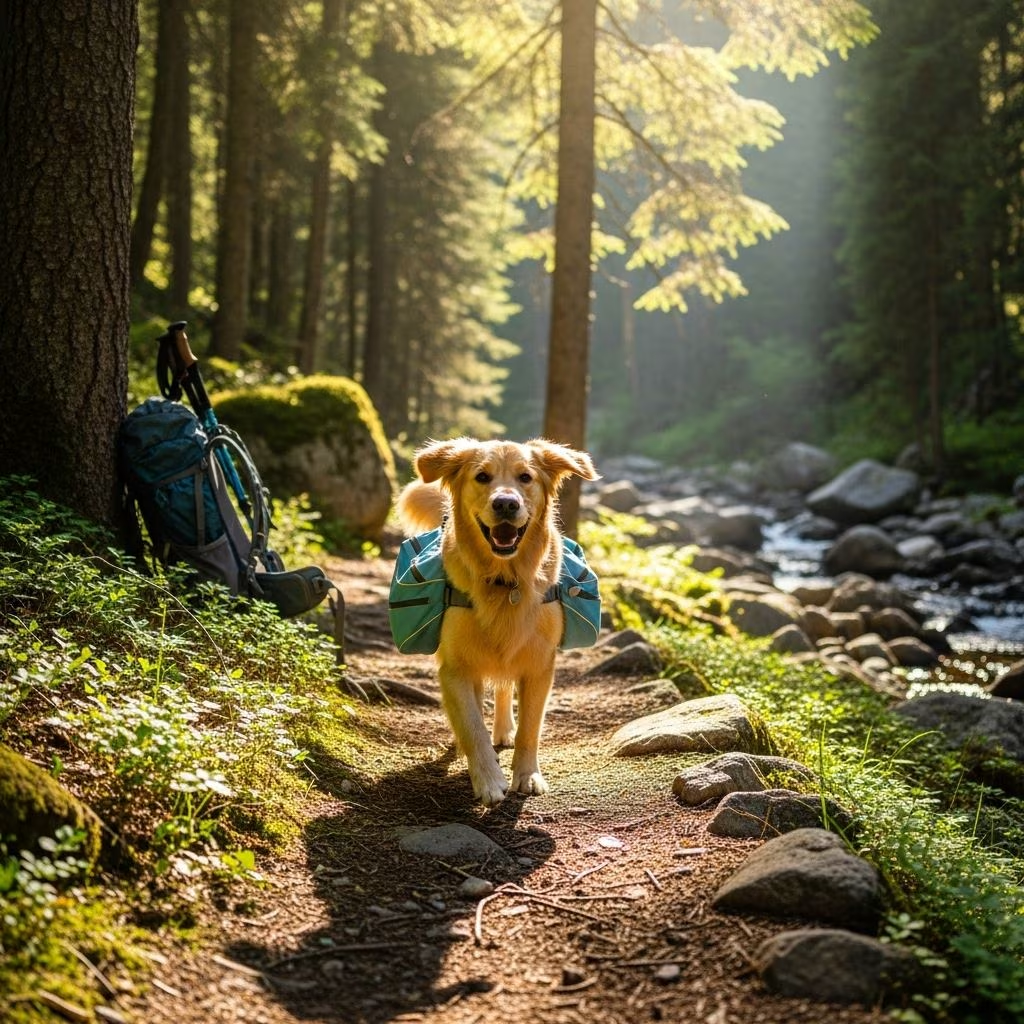
United States national forests span 154 locations covering 190 million acres, offering vast opportunities for outdoor recreation. Pet owners often wonder if their dogs can participate in these excursions. The answer is yes—dogs are permitted throughout national forests, provided owners adhere to specific regulations designed to protect wildlife, visitors, and the environment.
Understanding National Forest Access for Pets
The U.S. Forest Service oversees these public lands, and their policies generally welcome dogs with clear guidelines. Unlike national parks, which impose stricter limitations, national forests prioritize accessibility while emphasizing responsible ownership. Dogs must remain under control at all times, typically via leash or voice command, to ensure harmonious experiences for all users.
In most undeveloped areas, leashes are not mandatory, allowing dogs greater freedom if they reliably obey commands. However, this flexibility comes with responsibilities: owners must prevent disturbances to wildlife or other hikers. National forests differ from state parks or national parks, where dogs face more confinement; here, the focus is on situational control rather than universal leashing.
Leash Requirements: Where and When They Apply
Leash rules vary by location within national forests. In developed recreation areas—such as campgrounds, picnic sites, parking lots, and interpretive trails—dogs must be on a leash no longer than six feet. This standard appears consistently across Forest Service guidelines.
- Developed recreation areas: Leash required at all times.
- Interpretive trails: Leash mandatory due to educational features and higher visitor traffic.
- Undeveloped trails and backcountry: Voice control suffices if the dog responds reliably.
Even in off-leash zones, switch to a leash if encountering horses, children, or other pets to avoid conflicts. Some specific forests, like Gifford Pinchot, enforce leashes in all developed zones and certain trails. Always verify local rules via the Forest Service website for your destination.
Differences from National Parks and State Parks
National forests contrast sharply with other protected lands. National parks often restrict dogs to paved areas, roadsides, and campgrounds, prohibiting them on most trails to safeguard sensitive ecosystems. State parks exhibit even greater variability; for instance, many California state parks ban dogs from trails, backcountry, and beaches, confining them to developed zones on six-foot leashes.
| Land Type | Dog Access | Leash Rules |
|---|---|---|
| National Forests | Most areas, including trails | 6-ft leash in developed areas; voice control elsewhere |
| National Parks | Developed areas only | 6-ft leash everywhere allowed |
| State Parks (e.g., CA) | Campgrounds, paved paths | 6-ft leash; trails often prohibited |
This table highlights why national forests appeal to dog owners seeking expansive adventures without the rigid constraints of parks.
Essential Preparation for Dog-Friendly Forest Trips
Planning elevates a hike from enjoyable to exceptional. Start by researching your target forest on the USDA Forest Service site, which lists 154 forests by state with pet-specific details. Confirm leash mandates, trail restrictions, and seasonal closures.
Pack accordingly:
- Essentials kit: Leash (6-ft max), collar with ID, water bowls, portable food/water.
- Health prep: Up-to-date vaccinations, flea/tick preventives, first-aid supplies for paws and injuries.
- Comfort items: Booties for rough terrain, life jacket for water crossings.
Assess your dog’s fitness: Begin with short hikes to build stamina. Senior or small breeds may need carriers for steep sections. Train recall commands rigorously—voice control is non-negotiable in off-leash zones.
Wildlife Encounters: Protecting Nature and Your Pet
National forests teem with wildlife, creating both wonders and hazards for dogs. Bears, mountain lions, moose, and snakes inhabit many areas; unleashed dogs can provoke defensive reactions, endangering all parties. Keep dogs close to deter chases that stress wildlife or lead to lost pets.
Common risks include:
- Predators drawn to barking or chasing.
- Toxins like foxtails, poisonous plants, or contaminated water.
- Seasonal threats: Ticks in spring, rattlesnakes in summer.
Prevent issues by sticking to paths, avoiding dusk/dawn wildlife peaks, and carrying bear spray. If wildlife approaches, leash immediately and retreat calmly.
Camping with Canines: Campground Protocols
Many national forests feature dog-friendly campgrounds where leashes are required. Never leave dogs unattended—tie them in tents or vehicles only briefer than 30 minutes. Clean up waste promptly to avoid attracting pests.
Opt for dispersed camping in remote spots for more freedom, but maintain control. Fire rings and picnic tables often fall under developed area rules, mandating leashes.
Health and Safety Best Practices on the Trail
Vigilance ensures safe returns. Monitor for heat exhaustion (panting, lethargy), dehydration, or injuries from thorns/rocks. Provide frequent water breaks and shaded rests. In winter, paw protection prevents ice balling and frostbite.
Legal compliance avoids fines: Voice control means immediate response, not mere proximity. Confident handlers thrive; hesitant owners should leash universally.
Top Dog-Friendly National Forests to Explore
Certain forests shine for pet adventures:
- Gila National Forest: Welcoming trails and campgrounds with minimal restrictions.
- Mendocino National Forest: Off-leash options in wilderness areas like Snow Mountain.
- Gifford Pinchot: Clear guidelines for leashed hikes in developed zones.
These exemplify the system’s flexibility.
Frequently Asked Questions (FAQs)
Are dogs allowed off-leash in national forests?
Yes, in most undeveloped areas if under voice control. Leash required in campgrounds and interpretive trails.
What’s the maximum leash length?
Six feet in mandatory zones.
Can dogs swim in forest lakes or rivers?
Generally yes, but leash if adjacent to developed areas. Check for water quality alerts.
Do service dogs have exceptions?
Service animals follow fewer restrictions but must remain under control.
What if my dog chases wildlife?
Leash immediately; repeated issues may warrant leaving the dog home.
Environmental Stewardship: Leave No Trace with Pets
Adopt Leave No Trace principles: Bury waste 6-8 inches deep, away from water. Prevent erosion by keeping dogs on trails. Your actions preserve these lands for future visits.
References
- Exploring Dogs in National Forests — Rex Specs. 2023. https://www.rexspecs.com/blogs/news/wilderness-wanderers-exploring-the-impact-of-dogs-in-national-forests
- Dogs in the National Forest — USDA Forest Service (Gifford Pinchot). Accessed 2026. https://www.fs.usda.gov/r06/giffordpinchot/safety-ethics/dogs-national-forest
- Visiting State Parks With Your Dog — California State Parks. Accessed 2026. https://www.parks.ca.gov/Dogs
- Are Dogs Allowed in National Forests? — Dogster. 2026. https://www.dogster.com/lifestyle/are-dogs-allowed-in-national-forests
- Canine Campers: Bringing Dogs to the National Forest — USDA Forest Service (Gila). Accessed 2026. https://www.fs.usda.gov/r03/gila/safety-ethics/canine-campers-bringing-dogs-national-forest



