

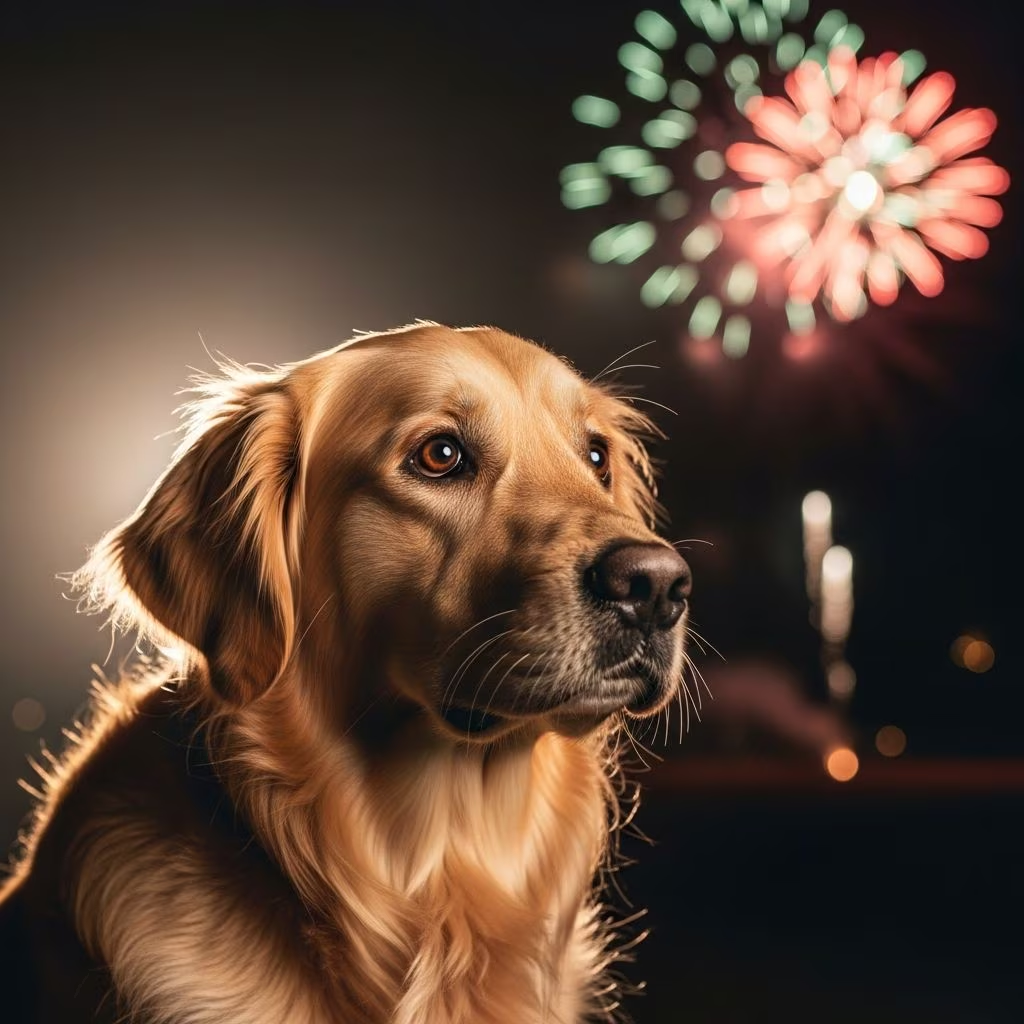
Fireworks displays bring joy to many during holidays, but for countless dogs, these events trigger overwhelming terror due to explosive noises and erratic lights. Up to half of dogs experience significant distress from such sounds, manifesting as panic akin to a human anxiety attack, with elevated heart rates and desperate escape attempts.
The Science Behind Canine Noise Sensitivity
Dogs possess far superior hearing compared to humans, detecting frequencies up to 65,000 Hz versus our 20,000 Hz limit, making fireworks booms excruciatingly loud and disorienting. This heightened auditory perception, combined with an inability to contextualize celebratory explosions—unlike predictable thunder—amplifies fear responses rooted in evolutionary survival instincts.
Noise aversion, often termed noise phobia, affects at least one-third of dogs, leading to physiological stress like increased cortisol levels and behavioral upheaval. Unlike mild startles, this condition escalates into chronic anxiety if unaddressed, potentially worsening with age due to brain chemistry shifts.
Common Indicators of Fireworks-Related Distress
Recognizing early signs is crucial for timely intervention. Dogs under duress exhibit a spectrum of reactions, from subtle cues to extreme behaviors.
- Trembling or shaking: Involuntary muscle quivers signal acute fear.
- Panting and drooling: Excessive breathing and salivation indicate stress overload.
- Pacing or restlessness: Constant movement reflects inability to settle.
- Hiding or cowering: Seeking dark, enclosed spots for safety.
- Vocalizing: Whining, barking, or howling to express panic.
- Escape attempts: Digging, scratching doors, or bolting, risking injury or loss.
- Appetite loss or elimination issues: Refusing food or indoor accidents from heightened stress.
These symptoms mirror a fight-or-flight response, where the dog’s body prepares for perceived mortal danger, often resulting in self-harm or property damage if unchecked.
Factors Contributing to Fireworks Phobia
Several elements converge to instill this fear, blending genetics, environment, and physiology.
Genetic Predispositions
Certain breeds show heightened vulnerability. Studies of over 5,000 dogs reveal Shiba Inus and Border Collies react more intensely than larger breeds like Great Danes or Boxers. Norwegian Buhunds, Lagotto Romagnolos, and Wheaten Terriers also rank high in noise sensitivity, with mixed breeds frequently affected.
| Breed | Noise Sensitivity Level | Notes |
|---|---|---|
| Shiba Inu | High | Intense fear responses in studies |
| Border Collie | High | Genetic proneness to anxiety |
| Norwegian Buhund | High | Common in breed surveys |
| Great Dane | Low | More resilient to loud noises |
| Boxer | Low | Lower fear intensity |
Early Life and Traumatic Experiences
Puppies lacking exposure to varied noises during the critical 3-12 week socialization window develop exaggerated fears later. A single traumatic event, like a loud bang during vulnerability, can imprint lasting phobia via classical conditioning. Observing fearful reactions in other dogs socially transmits anxiety.
Age and Health Influences
Senior dogs face amplified risks as cognitive decline alters fear processing. Underlying conditions like pain or illness lower tolerance thresholds, mistaking noises for threats.
Proven Strategies to Alleviate Anxiety
Preparation trumps reaction; proactive measures yield best outcomes. Combine environmental tweaks, behavioral training, and vet guidance for comprehensive relief.
Creating a Secure Sanctuary
Designate a quiet, fortified room with familiar bedding, toys, and your scent. Cover windows to block flashes, play white noise or calming music, and ensure all exits are secured. This mimics a den, reducing perceived exposure.
Desensitization and Counterconditioning
Gradually introduce recorded fireworks sounds at low volumes paired with rewards like treats or play. Systematic desensitization builds tolerance over weeks, while counterconditioning reshapes associations from fear to positivity. Veterinary behaviorists recommend this, achieving success in over 70% of cases when started pre-event.
Relaxation protocols, involving massage or pheromone diffusers, complement at 69% efficacy.
Calming Aids and Products
- Anxiety wraps: Pressure garments like ThunderShirts provide soothing compression.
- Pheromone products: Adaptil collars or diffusers mimic maternal calming signals.
- Natural supplements: CBD oils or chamomile, vet-approved for mild cases.
Medical Interventions
For severe cases, consult vets for short-term anxiolytics like trazodone or gabapentin, safe for holiday use. Only 40% of affected owners seek help, yet treatment transforms lives. Avoid self-medicating; professional assessment rules out comorbidities.
Pre-Fireworks Preparation Timeline
| Timeframe | Actions |
|---|---|
| 4-6 Weeks Before | Start desensitization recordings; consult vet for behaviorist referral |
| 2 Weeks Before | Test anxiety aids; ID/microchip check; stock safe room |
| Day Before | Tire dog with exercise; final low-volume exposure |
| Event Night | Administer meds if prescribed; monitor in sanctuary |
Debunking Common Myths
Myth 1: Comforting reinforces fear. Science disproves this; responsive reassurance buffers stress without worsening phobia.
Myth 2: Dogs outgrow it. Untreated noise aversion persists or intensifies; intervention is essential.
Myth 3: All dogs adapt equally. Breed, age, and history dictate needs; personalized plans outperform generics.
Long-Term Management for Recurrent Events
Holidays like July 4th or New Year’s recur annually. Track triggers via journals to refine strategies yearly. Enroll in ongoing training classes fostering confidence. Monitor for generalized anxiety signaling deeper issues.
Annual vet checkups catch age-related escalations early. Community fireworks bans in pet-friendly areas offer external relief where possible.
Frequently Asked Questions
Why do some dogs handle fireworks fine while others panic?
Genetic makeup, socialization history, and past exposures determine resilience. Herding breeds often fare worse due to sensitivity.
Can medication make my dog sleep through fireworks?
Vet-prescribed options calm without full sedation, preserving alertness while curbing panic.
Is it safe to leave a fearful dog alone during displays?
No—escape risks peak; supervised sanctuary is safest.
How long does desensitization take?
Weeks to months with consistency; pre-event starts optimize results.
What if my dog escapes despite precautions?
Updated microchips and IDs aid recovery; avoid chases, use treats to lure back.
References
- Fear of fireworks and thunderstorms — Cornell University College of Veterinary Medicine. Accessed 2026. https://www.vet.cornell.edu/departments-centers-and-institutes/riney-canine-health-center/canine-health-topics/fear-fireworks-and-thunderstorms
- Is Your Dog Scared of Fireworks? Here’s What to Do — Zoetis Petcare. Accessed 2026. https://www.zoetispetcare.com/blog/article/dog-scared-fireworks
- Dog Fireworks Anxiety: 3 Big Mistakes (And 4 Proven Fixes) — Positive Animal Wellness. Accessed 2026. https://positiveanimalwellness.com/dog-noise-anxiety-calming-methods/
- How to Calm Your Dog During Holiday Fireworks — GoodRx. Accessed 2026. https://www.goodrx.com/pet-health/dog/dogs-and-fireworks
- Helping Your Pet Cope with Fireworks Anxiety in New England — Mass Riveter. Accessed 2026. https://massriveter.com/blog/helping-your-pet-cope-with-fireworks-anxiety-in-new-england/
- Stress, Anxiety, Fireworks, & the Fourth of July — Craig R. D. Accessed 2026. https://craigrd.com/stress-anxiety-fireworks-fourth-july-2/
- Why Dogs Are Afraid Of Fireworks & How To Calm Them — Pawlicy Advisor. Accessed 2026. https://www.pawlicy.com/blog/fear-of-fireworks-in-dogs/



