

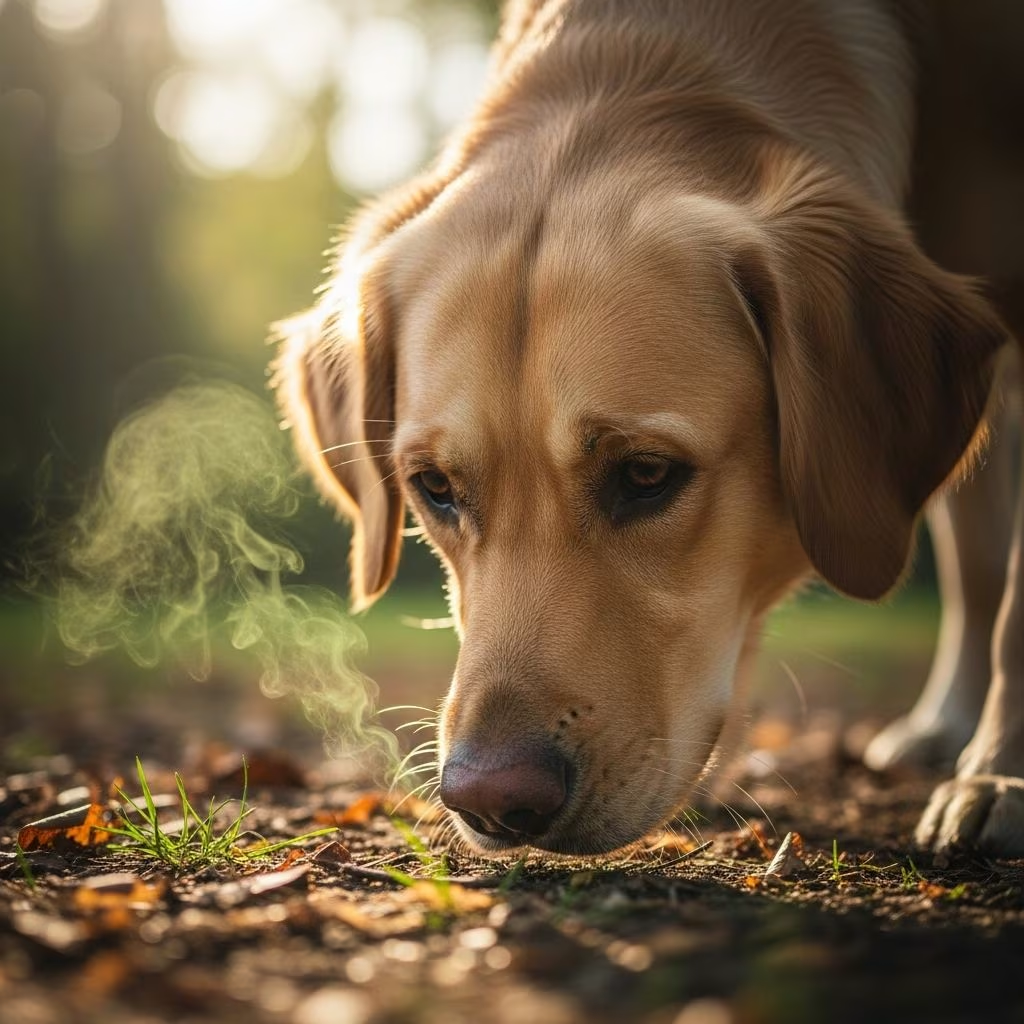
Dogs possess an extraordinary olfactory system that draws them irresistibly to scents humans find repulsive, such as decaying matter, feces, and garbage. This behavior stems from their evolutionary history as scavengers and hunters, where strong odors signaled vital information about food, territory, and communication.
The Power of a Dog’s Nose: A Sensory Marvel
A dog’s sense of smell is monumental compared to humans, equipped with up to 300 million olfactory receptors versus our mere 6 million. This allows them to detect odors at concentrations 100,000 times lower than we can, processing scents through a specialized organ called the vomeronasal organ for pheromones and social cues.
In practical terms, this means a dog can differentiate between identical twins or track a trail days old. Foul smells, rich in volatile compounds, provide a wealth of data—indicating prey, danger, or mating opportunities—that their brains prioritize over visual or auditory input.
Evolutionary Roots of Stinky Preferences
Domesticated from wolves over 15,000 years ago, dogs inherited a scavenger’s palette. Ancestral wolves rolled in carrion not just for nutrition but to mask their scent from predators while approaching kills. Modern dogs retain this instinct, viewing pungent odors as survival tools rather than nuisances.
- Scavenging heritage: Rotten meat and feces contain nutrients undetectable to humans but signaling edible resources to dogs.
- Hunting signals: The ‘dead body smell’ from volatile fatty acids attracts dogs to potential meals or kills.
- Territorial marking: Covering themselves in strong scents advertises prowess to pack mates.
Common Stinky Attractions and Their Appeals
Dogs target specific foul sources with enthusiasm. Dead animals top the list, offering complex odor profiles from decomposition bacteria. Feces from herbivores or other animals provide dietary insights via undigested matter. Wet fur post-swim releases microbial byproducts, amplifying the allure.
| Odor Source | Why Dogs Love It | Human Reaction |
|---|---|---|
| Dead animals/carrion | Signals food; volatile compounds mimic prey | Repulsive decay smell |
| Feces/manure | Nutrient clues; social/territorial info | Overpowering stench |
| Wet dog fur | Microbial volatiles released by water | Musty, unpleasant fog |
| Garbage/rotting food | High-calorie potential | Foul and hazardous |
Scientific Insights into Canine Scent Choices
Research confirms dogs’ preferences aren’t random. A study observing dogs in odor zones found heightened interaction with food and castoreum (beaver-derived scent), alongside surprising affinities for blueberry, mint, rose, lavender, and linalool—suggesting a nuanced palette beyond just ‘bad’ smells.
Dogs spent more time sniffing and even licking these attractive scents, with statistical models showing significant odds ratios for engagement (e.g., OR >1 for preferred odors vs. controls). Food odors dominated, but natural fragrances like rose elicited prolonged exploration, possibly due to pollinator associations or component detection.
Positive controls like sausage and castoreum validated the setup, with 87-89% contact rates, while lavender and blueberries prompted similar interest.
Behavioral Drives: Rolling, Sniffing, and Eating Gross Stuff
Iconic behaviors like rolling in poop or manure serve multiple purposes. Primarily, it’s scent camouflage for hunting, blending into environments to sneak up on prey. Secondarily, it’s social signaling—donning a ‘designer scent’ to impress peers, akin to a status symbol.
Eating foul items, or coprophagia, may stem from nutritional deficiencies, boredom, or instinctual cleanup of vulnerable young’s waste to avoid predators. However, preference for revolting smells underscores their divergent aesthetics: what we call rank, they call rewarding.
Health Risks of Stinky Obsessions
While instinctual, indulgence in foul odors poses dangers. Pathogens in feces and carrion risk bacterial infections like salmonella or parasites. Skunk spray causes dermatitis; wet-dog volatiles indicate yeast overgrowth needing veterinary check.
- Bacterial exposure from rolling in waste.
- Parasitic worms from scavenged matter.
- Respiratory irritation from chemical sprays.
Safe Ways to Satisfy a Dog’s Scent Cravings
Channel instincts constructively with scent games. Hide treats in boxes, use puzzle toys with food odors, or enroll in nosework classes mimicking search-and-rescue tasks. Natural chews like bully sticks offer meaty smells without rot risks.
For rolling urges, provide safe alternatives like faux-fur mats or approved scent cloths. Regular baths with oatmeal shampoos neutralize wet-dog smells post-play.
Breed Variations in Odor Obsession
Not all dogs are equal stink-lovers. Scent hounds (Bloodhounds, Beagles) lead with 230+ million receptors, bred for tracking. Sporting breeds chase game scents, while urban pets may fixate on city garbage. Studies show hunting dogs explore novel odors comparably across breeds.
Human-Dog Scent Disconnect
Humans favor clean, floral notes; dogs thrive on organic decay. This mismatch explains frustration when Fido fetches roadkill. Understanding bridges the gap—appreciate their nose as a superpower, not a flaw.
FAQs
Why do dogs sniff everything, especially poop?
Sniffing gathers environmental intel: diet, health, sex of the source. Poop is a social media post for dogs.
Is it normal for dogs to eat gross things?
Occasionally yes, due to instincts or deficiencies. Persistent cases warrant vet visits for underlying issues.
How can I stop my dog from rolling in stink?
Supervise walks, train ‘leave it’ commands, distract with toys. Positive reinforcement works best.
Do all dogs love bad smells equally?
No—breed, age, and experience influence. Puppies explore more; seniors may tire faster.
Can pleasant scents replace foul ones?
Partially; dogs enjoy mint, lavender too, but evolutionary drives favor pungent survival cues.
References
- Canine Smell Preferences—Do Dogs Have Their Favorite Scents? — PMC/NCBI. 2022-06-22. https://pmc.ncbi.nlm.nih.gov/articles/PMC9219509/
- Why Wet Dogs Smell Bad — Business Insider. 2015-06. https://www.businessinsider.com/why-wet-dogs-smell-bad-2015-6
- The Smell of Happiness: Why Dogs Like Things That Stink — Vetstreet/Dr. Marty Becker. N/A. https://www.vetstreet.com/dr-marty-becker/the-smell-of-happiness-why-dogs-like-things-that-stink
- Why do dogs roll in garbage, manure, or other smelly stuff? — Psychology Today. 2009-07. https://www.psychologytoday.com/us/blog/canine-corner/200907/why-do-dogs-roll-in-garbage-manure-or-other-smelly-stuff



