

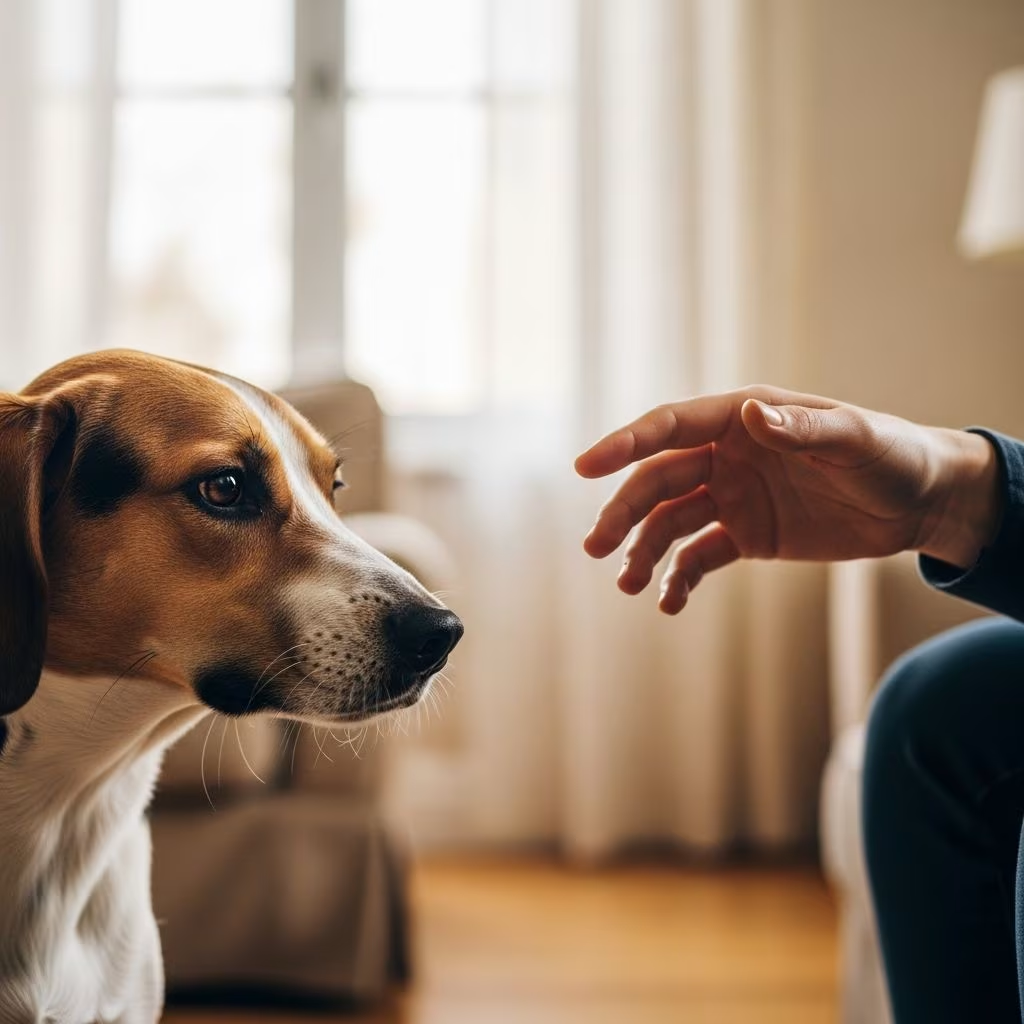
Many dogs display discomfort or outright avoidance when handled, turning what should be a bonding moment into a tense encounter. This behavior often stems from underlying fears or physical issues, but with systematic training approaches like counter-conditioning and desensitization, owners can transform their dog’s response to touch into one of enjoyment and relaxation.
Understanding Why Dogs Avoid Physical Contact
Dogs’ reluctance to be touched frequently arises from negative past experiences that create strong emotional associations. For instance, painful grooming sessions where nails were trimmed too short can lead to anticipatory flinching whenever paws are approached. Similarly, matted fur pulling during overdue haircuts imprints discomfort on handling, making future interactions dreaded.
Lack of early socialization plays a significant role too. Puppies not regularly exposed to gentle human contact miss the window to normalize touch, resulting in adult dogs who view petting as intrusive. Fearful events, such as rough handling or punishment, further entrench this aversion, programming the dog’s brain to equate contact with threat via classical conditioning.
Sudden changes in a previously tolerant dog signal potential health problems. Pain from injuries, arthritis, or infections can cause defensive reactions, underscoring the need for veterinary evaluation before behavioral interventions.
Health Checks: Ruling Out Pain First
Before embarking on any training, a thorough veterinary examination is essential. Undiagnosed pain amplifies touch sensitivity, rendering conditioning efforts futile until addressed. Conditions like joint inflammation, skin allergies, or neurological issues may lurk beneath the surface.
Consult a vet for a full physical, including bloodwork if chronic issues are suspected. Complementary therapies, such as chiropractic adjustments, can alleviate musculoskeletal discomfort contributing to aversion. For dogs too reactive for standard exams, sedation may be necessary initially, allowing safe diagnosis.
Classical Conditioning: The Root of Aversion
Touch sensitivity typically manifests as an automatic, involuntary response governed by classical conditioning, distinct from deliberate choices in operant conditioning. In classical terms, the dog’s neural pathways link touch directly to negativity—perhaps from past pain or fear—triggering growls, snaps, or retreats without conscious decision.
This differs from operant scenarios, where dogs perform actions like sitting for rewards. Here, the reaction bypasses thought; it simply “happens.” Recognizing this helps owners avoid blame and focus on reprogramming.
Counter-Conditioning and Desensitization Basics
The gold-standard solution combines counter-conditioning (CC) and desensitization (DS). CC pairs touch with high-value rewards, reshaping emotional associations. DS gradually exposes the dog to increasing touch intensities at tolerable thresholds, preventing overwhelm.
Start with areas of least resistance, using tiny, irresistible treats like chicken bits. Touch precedes treat delivery to forge the link: touch predicts good things. Progress demands patience; rushing invites setbacks.
Step-by-Step Training Protocol
Implement short, daily sessions of 5-10 minutes for optimal results. Consistency accelerates change.
- Baseline Assessment: Identify tolerant zones (e.g., head top) and avoidance areas (e.g., paws, tail). Note reactions like lip-licking or stiffening as early warnings.
- Initial Pairing: Lightly touch the safe spot for 1 second, immediately follow with treat. Repeat until anticipation appears—eyes brighten, dog leans in.
- Build Duration: Extend contact to 5-10 seconds with steady pressure, maintaining treat reinforcement. Achieve reliable happiness before advancing.
- Expand Areas: Shift to sensitive regions (e.g., shoulders), regressing duration/pressure initially. Gradually equate across body parts.
- Incorporate Movement: Add handling motions mimicking grooming or exams, always rewarding profusely.
- Generalize: Practice with household members and strangers to broaden comfort.
Track progress in a journal, noting session details and responses for adjustments.
Factors Affecting Training Success
Progress varies based on multiple elements.
| Factor | Impact on Speed | Tips |
|---|---|---|
| Age and Duration of Issue | Older habits slower to change | Younger dogs adapt faster; persistence key for seniors |
| Negative Intensity | Severe trauma prolongs process | Address root causes like pain first |
| Physical Health | Ongoing pain hinders gains | Regular vet monitoring |
| Owner Consistency | Daily shorts outperform sporadic longs | Multiple 5-min sessions daily |
Prior harsh human interactions compound challenges beyond mere touch. Allergies irritating paws exemplify physical barriers slowing advancement.
Common Mistakes to Avoid
- Forcing Compliance: Pushing boundaries triggers bites; respect signals.
- Punishing Warnings: Growls communicate—suppressing them raises silent bite risk.
- Treat Timing Errors: Reward after touch only; pre-touch luring confuses association.
- Inadequate Value: Use top-tier treats; kibble won’t counter strong aversions.
- Skipping Vet: Behavioral fixes fail without health clearance.
Real-World Applications: Grooming and Vet Visits
Training directly translates to practical needs. Condition nail trims by pairing clipper sounds and paw holds with treats, starting sans blades. For baths, desensitize to water sprays and towel rubs incrementally.
Vet prep involves simulating exams: ear lifts, mouth opens, temp checks—all rewarded. Invite friends weekly for stranger exposure, building social confidence. Success stories abound, like skittish rescues warming to pets in minutes with proper CC.
Advanced Techniques for Stubborn Cases
For profound sensitivities, tools like clickers sharpen timing, marking exact touch-treat moments. Tellington T Touch—gentle circular massages—offers alternative pressure soothing nerves.
Professional help from certified trainers accelerates tough cases, especially aggression-linked ones. Group classes expose dogs to varied handling positively.
Prevention for Puppies and New Dogs
Proactive handling from 3-12 weeks imprints touch positivity. Daily gentle massages, paw plays, and varied exposures prevent issues. Rescue adults benefit from immediate, fun routines establishing trust.
Frequently Asked Questions
Why does my dog suddenly hate touch?
Often pain or injury; vet check mandatory.
How long until improvement?
Weeks to months, depending on factors; daily practice hastens results.
What if my dog growls during training?
Reduce intensity; never punish—back up and rebuild.
Can all dogs be fixed?
Most improve significantly with health resolution and commitment.
Stranger touch aversion?
Generalize training via controlled visitor sessions.
Long-Term Maintenance
Sustained comfort requires ongoing reinforcement. Randomly reward voluntary contact, varying treats to keep engagement high. Monitor for regressions signaling health changes.
Ultimately, patient CC&DS empowers deeper bonds, turning wary dogs into cuddle enthusiasts. Owners gain confidence handling necessities safely.
References
- When Your Dog Hates Being Touched — Whole Dog Journal. 2023. https://www.whole-dog-journal.com/behavior/when-your-dog-hates-being-touched/
- How to Help a Dog Sensitive to Touch — Best Friends Animal Society. 2024. https://bestfriends.org/pet-care-resources/how-help-dog-sensitive-touch
- Dog Behaviour Guide Touch Sensitivity — Edmonton Humane Society. 2020-05-01. https://www.edmontonhumanesociety.com/wp-content/uploads/2024/05/2020-Touch-Sensitivity-Canine.pdf
- Touch Sensitivity — Wisconsin Humane Society. 2023. https://www.wihumane.org/touch-sensitivity
- How 2 Dogs Overcome Their Fear of Being Touched by Strangers — Dog Gone Problems. 2022. https://www.doggoneproblems.com/remy-quinn-fear-of-being-touched/



