

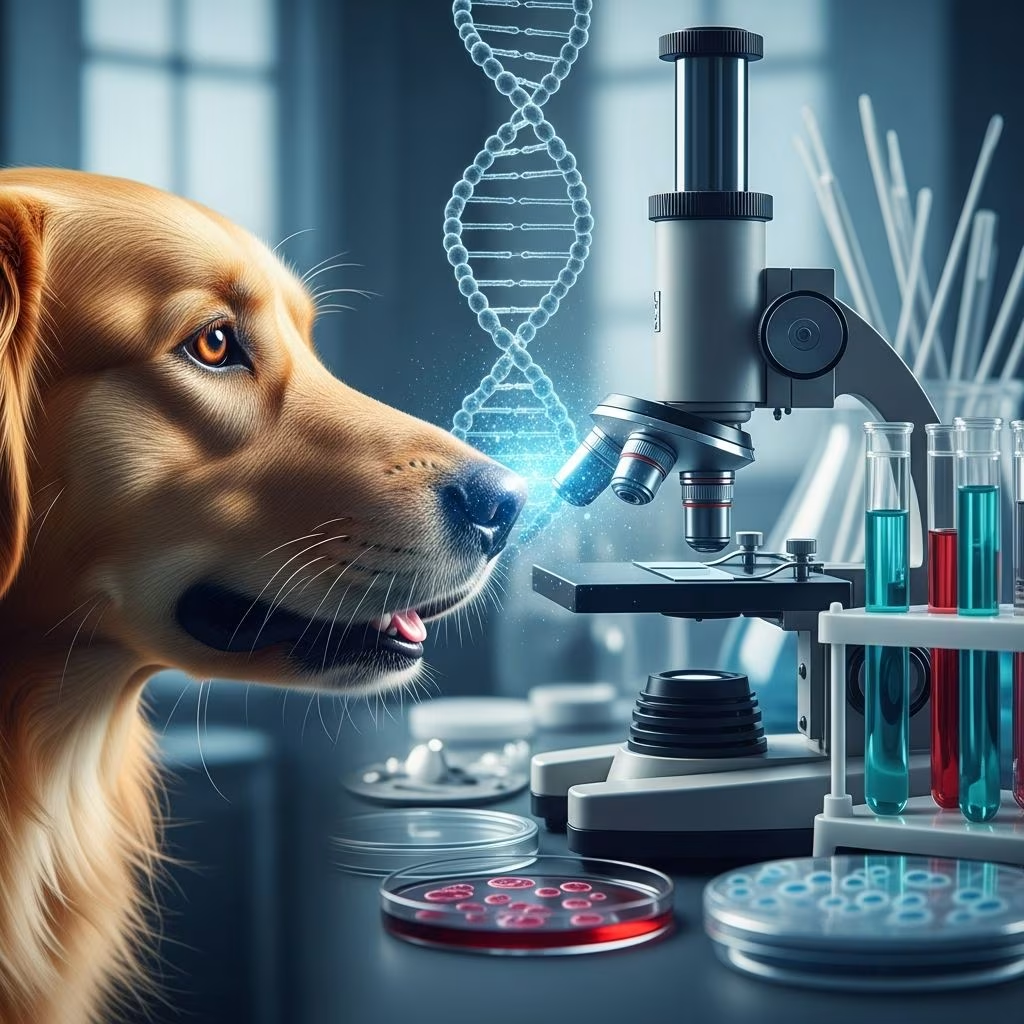
Dogs possess an extraordinary olfactory capability that surpasses human senses by millions of times, enabling them to identify subtle chemical changes associated with cancer. This innate talent has sparked scientific interest, leading to studies confirming their ability to detect various cancers through scents in breath, urine, stool, and even tumors.
The Power of a Dog’s Nose in Medical Detection
A dog’s nose contains up to 300 million olfactory receptors, compared to humans’ mere 6 million, allowing detection of odors at concentrations as low as parts per trillion. This superior sense has been harnessed for detecting explosives, drugs, and now diseases like cancer, where tumors release distinct volatile organic compounds (VOCs)—chemical byproducts from chaotic cell metabolism.
Research demonstrates that these VOCs create unique “odor signatures” that trained dogs can differentiate from healthy samples. For instance, dogs have shown high accuracy in identifying lung cancer from exhaled breath, with sensitivity rates up to 97.6% and low false positives around 7.6% on average. This precision stems from dogs’ ability to process complex scent profiles that electronic devices struggle to replicate.
Scientific Evidence from Key Studies
Landmark research began in 1989 when a dog persistently sniffed a mole that proved to be malignant melanoma, prompting medical attention. Subsequent controlled studies expanded this observation:
- Trained dogs distinguished breast and lung cancer in breath samples with near-perfect sensitivity and specificity.
- In bladder cancer trials, dogs identified affected urine nearly three times better than chance, even in early stages.
- Colorectal cancer detection via breath and stool achieved over 80% accuracy across species, including dogs and rodents.
A study at Pingtung University trained six dogs on lung cancer tissues, breath, and urine, finding breath samples yielded the highest diagnostic rates (71.3%-97.6%) compared to urine (5%-30%). Similarly, University of Wisconsin research showed dogs detecting cancer in other dogs with high sensitivity and specificity, missing only a few cases among samples.
| Cancer Type | Detection Method | Accuracy Highlights |
|---|---|---|
| Lung | Breath | 83.9% sensitivity, 7.6% false positive |
| Breast | Breath | 0.99 sensitivity |
| Bladder | Urine | 3x chance rate |
| Ovarian | Tissue/Breath | High accuracy in trials |
| Colorectal | Breath/Stool | >80% success |
These results highlight breath as the most reliable medium, unaffected by factors like cancer stage or histology. Dogs also ignore non-cancerous conditions like gut inflammation in colorectal detection.
How Dogs Identify Cancer Scents
Cancer disrupts normal cell function, leading to elevated VOCs from decomposing tissue and metabolic shifts. These compounds, imperceptible to humans, form a distinct bouquet that dogs classify through training. In spontaneous cases, dogs nudge, lick, or fixate on lesions, even through clothing, signaling potential issues.
Training involves positive reinforcement: dogs learn to alert (sit, bark) on cancer samples versus controls. Protocols progress from known odors to blind tests, achieving reliability comparable to lab diagnostics. Breeds like German Shepherds, Labradors, and Australian Shepherds excel due to strong noses and trainability.
Anecdotal Alerts and Real-World Impact
Beyond labs, pet dogs have alerted owners to undiagnosed cancers by obsessive sniffing. A notable case involved a Labrador fixating on a leg lump later confirmed as cancerous. Such behaviors often lead to early interventions, improving outcomes.
In veterinary settings, dogs detect canine cancers like hemangiosarcoma, a aggressive blood vessel tumor, with promising accuracy. This could transform pet health monitoring, where early detection is crucial.
Challenges in Canine Cancer Detection
Despite successes, limitations persist. Dogs cannot verbalize findings, requiring handler interpretation. Variability in training, sample quality, and individual dog performance affects consistency. Urine samples, for example, showed lower response rates (5-30%) than breath.
Scalability poses issues: training and maintaining dogs is resource-intensive, unsuitable for mass screening. Ethical concerns include animal welfare during rigorous training. False negatives, though rare, occurred in preliminary dog-cancer studies, underscoring need for larger trials.
From Dog Noses to Diagnostic Tech
Dogs’ feats inspire bioengineered solutions. At Penn Vet’s Working Dog Center, physicists and gynecologists analyze VOCs from ovarian cancer to build “electronic noses”. Identifying exact biomarkers could yield breath analyzers rivaling canine sensitivity without biological limitations.
Nanotechnology and chemical analysis target these VOCs for blood or breath tests. If realized, such devices could screen for hard-to-detect cancers like ovarian, where no reliable early test exists.
Training Dogs for Cancer Detection
Programs pair dogs with handlers in controlled environments. Initial phases use pure cancer scents; advanced stages involve blinded human samples. Success metrics include sensitivity (true positives) and specificity (true negatives).
Institutions like Roswell Park and University of Pennsylvania pioneer these efforts, collaborating across disciplines. Future expansions may include feline cancers and broader diseases.
Future Prospects for Scent-Based Diagnostics
Canine detection holds transformative potential for early cancer screening, especially in resource-limited areas. Combined with AI and sensors, it could democratize access to diagnostics. Ongoing trials refine protocols, aiming for clinical integration.
While not yet standard, dogs complement imaging and biopsies, offering non-invasive, rapid checks. Veterinary applications could extend lifespans for pets.
Frequently Asked Questions
Can any dog be trained to smell cancer?
Breeds with strong olfactory skills, like hounds and shepherds, are preferred, but many succeed with proper training.
How accurate are cancer-sniffing dogs?
Studies report 70-98% sensitivity for breath-based detection, with low false positives.
What cancers can dogs detect?
Lung, breast, prostate, bladder, colorectal, ovarian, and skin cancers via breath, urine, or tissue.
Is dog detection used in hospitals?
Currently research-focused, but pilots explore clinical use.
Can my pet dog detect my cancer?
Anecdotes suggest yes; unusual fixation warrants medical checks.
References
- Can Dogs Smell Cancer? — Roswell Park Comprehensive Cancer Center. 2020-08. https://www.roswellpark.org/cancertalk/202008/can-dogs-smell-cancer
- Studies say dogs could be trained to sniff out cancer — Cancer Council Australia. Accessed 2026. https://www.cancer.org.au/iheard/can-animals-sniff-out-cancer
- Can dogs smell cancer in humans? — Medical News Today. 2019-04-12. https://www.medicalnewstoday.com/articles/323620
- Sniffer Dogs Diagnose Lung Cancer by Recognition of Exhaled Gases — PMC/NCBI. 2023. https://pmc.ncbi.nlm.nih.gov/articles/PMC9954099/
- Research Suggests Dogs Can Be Trained to Sniff Out Cancer in Other Dogs — University of Wisconsin School of Veterinary Medicine. Accessed 2026. https://www.vetmed.wisc.edu/research-suggests-dogs-can-be-trained-to-sniff-out-cancer-in-other-dogs/
- Dogs Detecting Cancer — International Myeloma Foundation. Accessed 2026. https://www.myeloma.org/blog/dr-duries/mans-best-friend-potent-medical-ally



