

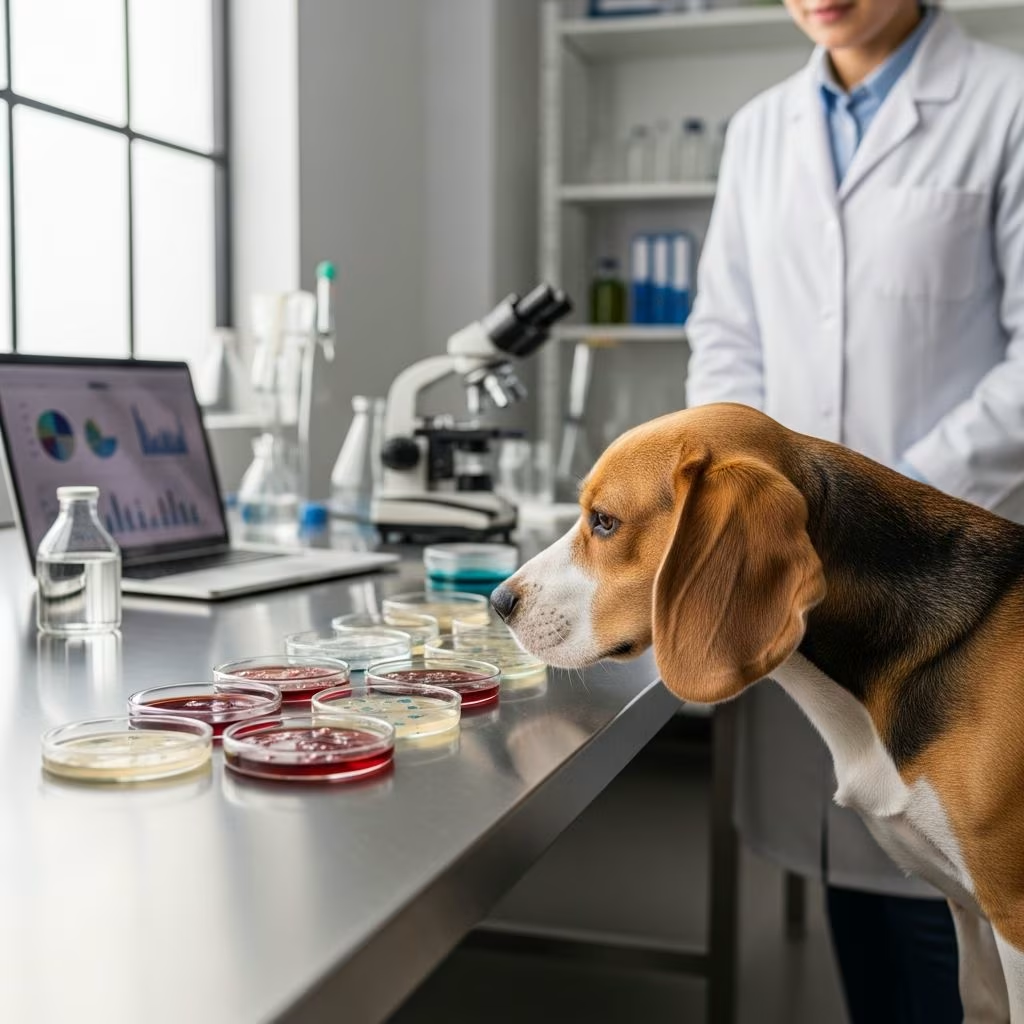
Dogs possess an extraordinary olfactory system that allows them to detect cancer through volatile organic compounds (VOCs) emitted by tumors, often exhibiting specific behaviors like persistent sniffing, pawing, or vocalizing when encountering affected individuals or samples.
The Remarkable Olfactory Power of Canines
A dog’s nose contains up to 300 million olfactory receptors, compared to humans’ mere 6 million, enabling them to discern scents at concentrations as low as parts per trillion. This heightened sensitivity positions them to pick up subtle VOC changes associated with cellular abnormalities in cancerous growths.
These VOCs arise from metabolic alterations in tumor cells, creating distinct “odor signatures” in breath, urine, sweat, blood, and saliva. Early research from 1989 documented spontaneous alerts by pet dogs to their owners’ melanomas, sparking systematic studies on canine olfactory diagnostics.
Common Behavioral Responses to Cancer Scents
When dogs encounter cancer-related odors, they display instinctive reactions shaped by their training or natural curiosity:
- Intense Sniffing: Prolonged nasal investigation of affected body parts, breath, or samples, often refusing to disengage.
- Pawing or Nudging: Gentle prodding at the scent source to signal discovery, a common trained response.
- Barking or Whining: Vocal alerts to draw attention, especially in untrained dogs reacting to owners.
- Sitting or Lying Down: “Passive alert” where the dog positions itself calmly near the positive sample.
- Refusal to Leave: Staring or hovering obsessively, indicating anomaly detection.
These behaviors stem from positive reinforcement training, where dogs associate target odors with rewards like toys or treats, generalizing to novel cancer samples.
Scientific Evidence: Dogs Detecting Human Cancers
Numerous peer-reviewed studies affirm dogs’ proficiency across cancer types. For instance, dogs trained on blood samples distinguished lung cancer with high accuracy, as shown in a study by the Lake Erie College of Osteopathic Medicine published in the Journal of the American Osteopathic Association.
In breast cancer research, the KDOG1 clinical trial at Institut Curie tested dogs on sweat samples from affected women. While initial proof-of-concept reached 90% detection, the full trial achieved 80% by at least one dog, highlighting potential but underscoring needs for refined protocols.
| Study Focus | Sample Type | Detection Rate | Source |
|---|---|---|---|
| Lung Cancer | Blood | High Accuracy (3 dogs trained) | |
| Breast Cancer | Sweat | 80% (at least one dog) | |
| Multiple Cancers | Breath/Urine | Up to 90% in early tests |
Breakthroughs in Canine-to-Canine Cancer Detection
Emerging research extends this capability to veterinary medicine. A University of Wisconsin study led by oncologist Mackenzie Pellin, DVM, trained six dogs on saliva samples from 139 dogs with malignant tumors versus 161 healthy controls. The dogs achieved high sensitivity and specificity, missing only a few true positives, marking the first proof-of-concept for non-invasive canine cancer screening.
Pellin emphasized the significance, noting cancer as a top killer in dogs due to late detection: “Dogs can’t tell us when something feels different… this brings us closer to reliable screening.” Future expansions aim at larger cohorts, tumor differentiation, and feline applications.
Prior feasibility work on transitional cell carcinoma (TCC) in urine showed variable success among four dogs, with one excelling in training but faltering in blind tests due to olfactory memory or confounders like storage odors. This underscores rigorous double-blind methodologies.
Training Protocols for Medical Detection Dogs
Training leverages operant conditioning:
- Imprinting: Expose puppy or adult dog to baseline healthy samples, then introduce cancer positives with rewards.
- Discrimination: Mix controls and positives, reinforcing only correct identifications.
- Generalization: Test on novel samples from diverse patients to build category recognition.
- Blind Testing: Handlers unaware of sample status to prevent cueing.
Breeds like Labrador Retrievers, German Shepherds, and Beagles excel due to scent drive and focus. Sessions last 10-20 minutes to avoid fatigue, with ongoing maintenance.
Challenges and Limitations in Scent Detection
Despite promise, hurdles persist:
- Consistency: Individual dog performance varies; not all achieve clinical thresholds.
- Confounders: Diet, medications, or infections can mimic VOCs, requiring robust controls.
- Scalability: Training is resource-intensive; electronic noses aim to replicate via identified VOCs.
- Validation: Larger trials needed for FDA/veterinary approval.
Recent analyses stress distinguishing cancer from benign diseases and generalizing across demographics.
Real-Life Anecdotes and Spontaneous Alerts
Beyond labs, pet dogs have spontaneously alerted owners. Cases include dogs fixating on skin lesions later biopsied as melanomas or lung tumors via breath sniffing. These anecdotes, while not controlled, fueled research and highlight untapped potential in homes.
Future Prospects: From Dogs to Tech Integration
Canine detection paves the way for hybrid solutions. Identifying VOC profiles could yield portable biosensors for clinics. In veterinary care, saliva-based dog screening might enable annual checks, improving outcomes for cancers mirroring human types like lymphoma and osteosarcoma.
Ongoing trials explore multi-cancer panels, enhancing early intervention where traditional diagnostics lag.
Frequently Asked Questions
Can any dog be trained to smell cancer?
Not all dogs succeed; those with strong scent drives and trainability fare best. Professional programs select candidates rigorously.
How accurate are dogs at detecting cancer?
Studies report 80-95% sensitivity/specificity in controlled settings, though real-world varies.
Can dogs detect cancer in other dogs?
Yes, preliminary research on saliva and urine shows promise for non-invasive screening.
Is dog cancer detection used in hospitals?
Not routinely yet; it’s experimental, but trials advance toward clinical tools.
What cancers can dogs smell?
Lung, breast, prostate, ovarian, bladder, and skin cancers, among others, via breath, urine, or sweat.
References
- Research Suggests Dogs Can Be Trained to Sniff Out Cancer in Other Dogs — University of Wisconsin School of Veterinary Medicine. 2025 (approx., recent publication). https://www.vetmed.wisc.edu/research-suggests-dogs-can-be-trained-to-sniff-out-cancer-in-other-dogs/
- Canine scent detection of canine cancer: a feasibility study — National Institutes of Health (PMC). 2018-07-26. https://pmc.ncbi.nlm.nih.gov/articles/PMC6042482/
- From canine odorology to electronic noses: a new way to detect breast cancer — Institut Curie. 2025-11-27. https://institut-curie.org/news/canine-odorology-electronic-noses-new-way-detect-breast-cancer
- Can dogs sniff out cancer? Exploring the role of medical detection dogs — Frontiers in Medicine. 2025. https://www.frontiersin.org/journals/medicine/articles/10.3389/fmed.2025.1644112/full
- Can Dogs Sniff Out Lung Cancer? — American Lung Association. Recent (2020s). https://www.lung.org/blog/can-dogs-sniff-out-lung-cancer
- Can Dogs Smell Cancer? — Roswell Park Comprehensive Cancer Center. 2020-08. https://www.roswellpark.org/cancertalk/202008/can-dogs-smell-cancer
- Cancer Screenings for Dogs: Understanding Why Early Detection Matters — PetMD (veterinary source). Recent. https://www.petmd.com/dog/general-health/cancer-screenings-for-dogs



