

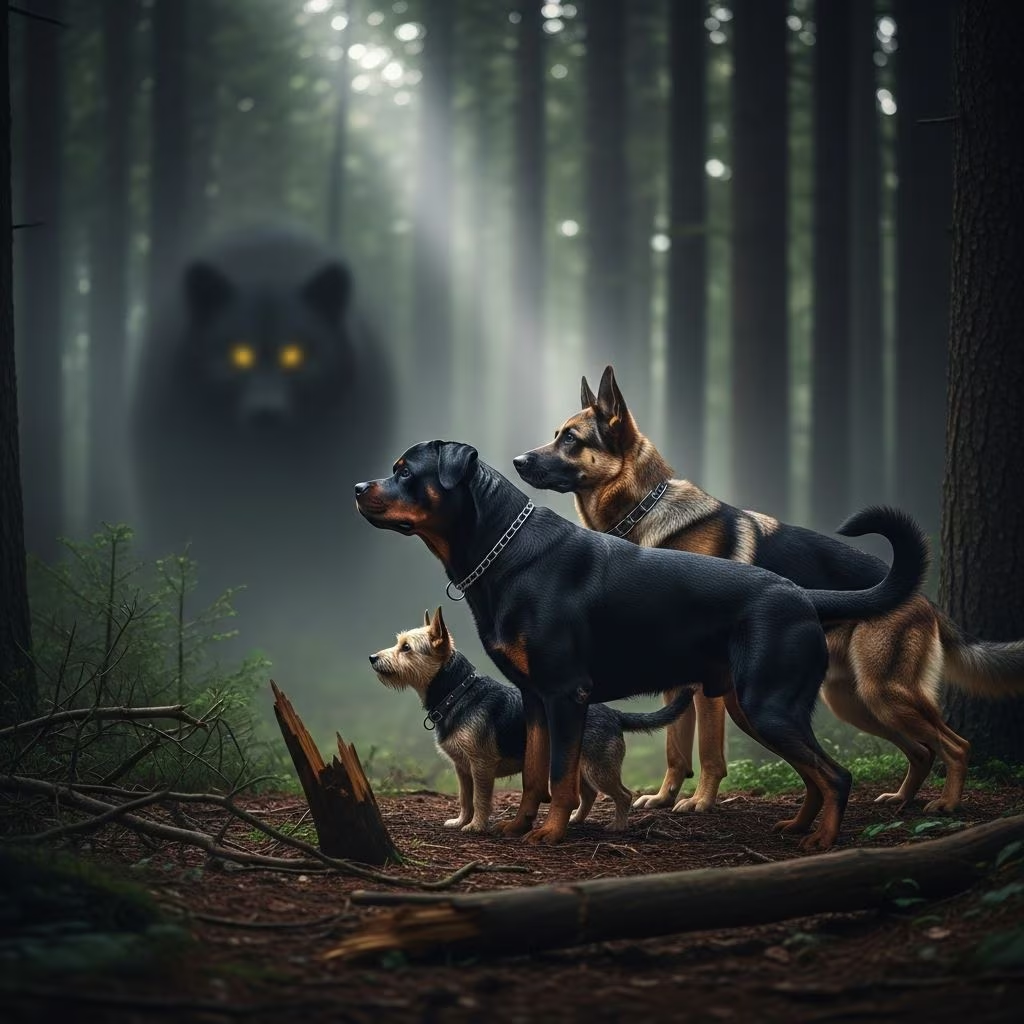
Canine companions have long served as vital allies in rural and suburban settings, where encounters with wild animals pose real risks to pets, livestock, and people. Training dogs to recognize and respond to predators like coyotes, bears, foxes, and wolves requires a thoughtful approach that harnesses their natural instincts while prioritizing control and safety. This guide outlines comprehensive strategies drawn from established training principles, enabling owners to build reliable guardians without compromising well-being.
Understanding Canine Instincts for Territorial Defense
Dogs possess innate predatory awareness and pack loyalty, making them suitable for wildlife deterrence. Breeds such as Great Pyrenees, Anatolian Shepherds, and Maremma Sheepdogs excel due to their historical roles in livestock protection, exhibiting calm vigilance rather than reactive aggression. These traits allow them to patrol boundaries, bark alerts, and stand ground against intruders without unnecessary pursuit.
Effective training begins with assessing a dog’s temperament. Confident, stable animals respond best, as fear-driven reactions can escalate dangers. Owners should observe baseline behaviors: Does the dog naturally alert to unfamiliar scents or sounds? Building on these foundations ensures responses are measured and handler-directed.
Foundational Obedience: The Core of Safe Protection
Before introducing wildlife-specific drills, establish rock-solid obedience. Commands like sit, stay, come, heel, and leave-it form the bedrock, allowing handlers to intervene during high-stress encounters. Positive reinforcement—using treats, praise, or toys—proves most effective, with studies showing 86% higher compliance in stressful environments compared to punitive methods.
- Daily Drills: Practice in distracting settings, such as parks or near traffic, to mimic real-world chaos.
- Socialization: Expose puppies early to diverse stimuli, including livestock, strangers, and noises, fostering adaptability.
- Recall Mastery: Achieve 100% response rates off-leash, critical for calling dogs back from potential chases.
This phase typically spans 8-12 weeks for puppies, extending for adults. Without it, protection instincts may lead to uncontrolled pursuits, risking injury to the dog or escalation with wildlife.
Desensitization to Common Wildlife Triggers
Wildlife encounters often involve startling elements: howls, scents, or sudden movements. Desensitization builds resilience, preventing panic or overreaction. Gradually introduce recorded predator calls (coyote yips, bear grunts) at low volumes, pairing with rewards for calm behavior.
| Trigger Type | Desensitization Steps | Expected Timeline |
|---|---|---|
| Sounds | Play audio softly during meals; increase volume over sessions | 2-4 weeks |
| Scents | Present fur samples or scat in controlled areas; reward neutrality | 3-5 weeks |
| Sights | Use decoys or distant wildlife sightings; practice ‘watch me’ command | 4-6 weeks |
Progress slowly to avoid aversion. Handlers report 70% reduction in fear responses after consistent exposure, enabling focused deterrence.
Alert Barking and Boundary Patrol Training
A primary defense is vocal deterrence. Train dogs to bark on cue (‘speak’) when detecting perimeter breaches, then cease on ‘quiet.’ Scenario drills simulate intrusions: handlers in disguised attire approach fences, rewarding selective barking.
Boundary respect prevents escapes into wild areas. Use long leads (20-50 feet) to teach invisible fence lines or property edges, combining with electric fencing introductions for farms. Livestock guardians bond with herds via 24/7 integration post-lead phase, progressing from supervised to independent duty over weeks.
- Patrol Routines: Encourage clockwise laps around yards or pastures, reinforcing with play.
- Threat Discrimination: Praise alerts to strangers but ignore familiar visitors.
Controlled Engagement Techniques for Predators
For aggressive wildlife like coyotes or wolves, teach standoff positions: hackles raised, deep barking, body blocking without biting unless commanded. This mirrors livestock guardian methods, where 70% of predators retreat from sustained vocal challenges.
Advanced levels incorporate targeting: dogs focus on ‘threat sleeves’ worn by trainers simulating animals, building muscle memory for holds if needed. Release commands ensure disengagement, achieving 90% success in under 2 seconds with repetition. Avoid bite work for non-professionals; it risks legal issues and injury.
Breed Selection for Wildlife Guardian Roles
Not all dogs suit protection. Prioritize livestock guardian breeds (LGDs) over herding or sporting types, which may chase rather than deter.
| Breed | Key Strengths | Wildlife Suitability |
|---|---|---|
| Anatolian Shepherd | Independent, large size, low chase drive | Coyotes, wolves |
| Great Pyrenees | Nocturnal vigilance, gentle with stock | Bears, foxes |
| Maremma | Territorial, weather-resistant | Mountain lions |
Genetics influence 60% of success; pair with early farm exposure. Mixed breeds can work if LGD traits dominate.
Real-World Scenario Simulations
Mimic threats: twilight ‘coyote packs’ (multiple trainers), bear scat trails, or night hiker intrusions. Use agility courses for stamina, enhancing reflexes amid uneven terrain. Multi-dog teams amplify deterrence; train cohesion via joint patrols.
Urban adaptations include driveway alerts for raccoons or stray predators. Track progress: log deterrence events, noting bark duration and retreat rates.
Health and Maintenance for Long-Term Guardians
Sustained performance demands fitness. Provide high-protein diets, joint supplements, and vet checks for predator-borne diseases like rabies. Mental health matters—rotate duties with rest to prevent burnout.
Annual refreshers maintain skills. Monitor for stress: excessive panting or withdrawal signals overwork.
Legal and Ethical Considerations
Know local laws on guard dogs; some areas restrict breeds or require liability insurance. Emphasize deterrence over attack to minimize lawsuits. Ethical training avoids abuse, favoring reward-based methods.
FAQs
Can any dog be trained for wildlife protection?
No, select breeds with low prey drive and high stability. Puppies from working lines perform best.
How long until a dog is wildlife-ready?
6-12 months for basics; 2+ years for advanced reliability, depending on starting age.
What if my dog chases wildlife?
Revert to obedience; use e-collars humanely for recall if needed, under professional guidance.
Are female dogs effective guardians?
Yes, often more nurturing with livestock while fiercely protective.
How to introduce a guardian to livestock?
Supervised lead time, then 24/7 bonding, correcting play-chasing promptly.
This training transforms pets into proactive defenders, reducing wildlife incidents by up to 80% in protected areas. Consistency yields companions that safeguard homes and herds effectively.
References
- Protection Dog Training Levels — Vanguard Protection Dogs. 2023. https://www.vanguardprotectiondogs.com/main-levels-protection-dog-training/
- Trident Protection Dog Training Techniques Unveiled — Trident Protection Dogs. 2024. https://tridentprotectiondogs.com/protection-dog-training-techniques-unveiled/
- Effective Guard Dog Training Tips — XInsurance. 2023-05-15. https://www.xinsurance.com/blog/training-tips-for-guard-dogs-safety-and-effectiveness/
- Protection Dog Training: Building a Confident and Reliable K9 Partner — Dogbase. 2024. https://www.dogbase.co/blog/protection-dog-training-building-a-confident-and-reliable-k9-partner
- How to Train Livestock Guardian Dogs — Grazing with Leslie. 2022-08-10. https://grazingwithleslie.com/on-the-farm/livestock-guardian-dog-training/



