

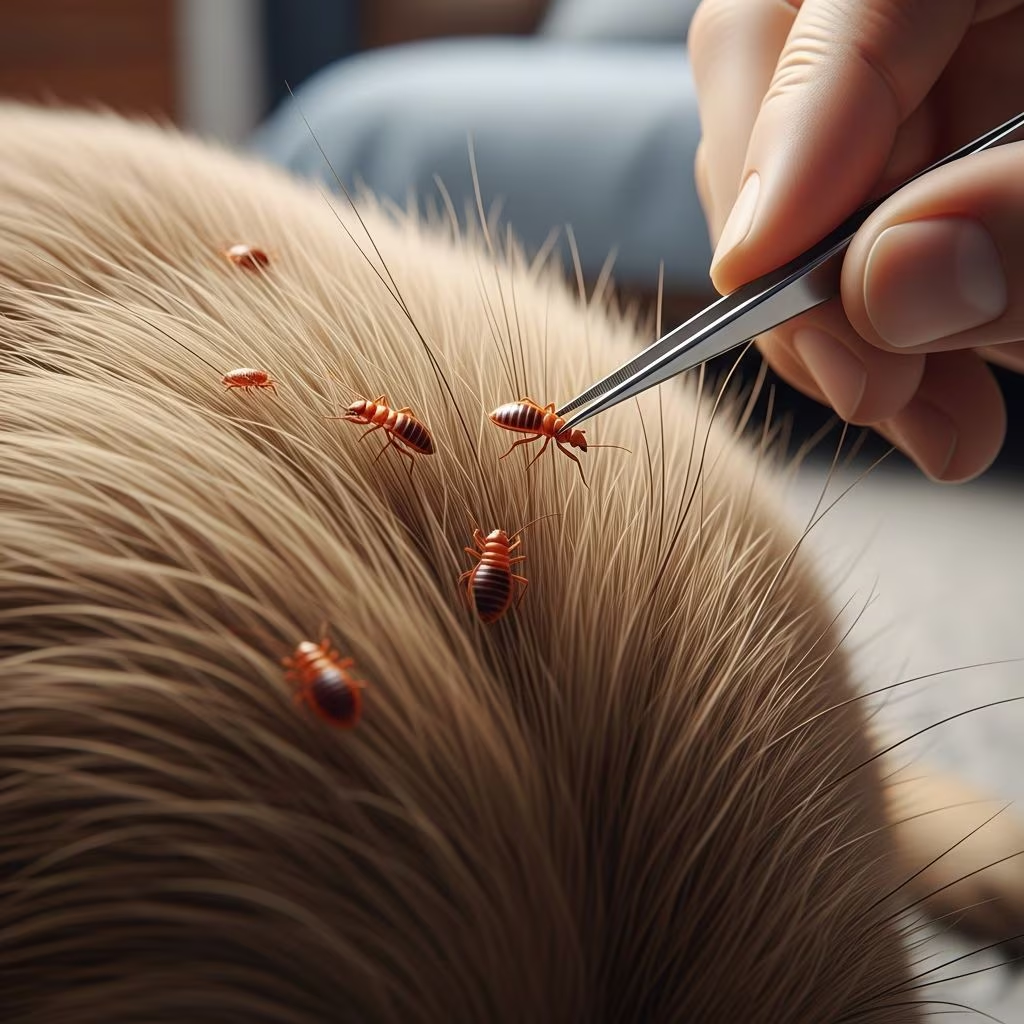
Bed bug infestations are a common concern for homeowners, and pet owners often wonder whether their dogs could be vectors for these troublesome parasites. The straightforward answer is that dogs do not typically spread bed bugs in the way they might transmit fleas or ticks. However, understanding the nuances of how bed bugs interact with pets, their behavior patterns, and prevention strategies is essential for maintaining a pest-free household.
Understanding Bed Bug Biology and Host Preferences
Bed bugs, scientifically known as Cimex lectularius, exhibit very specific host preferences that fundamentally differ from other common parasites. Unlike fleas and ticks that have evolved to thrive on animals, bed bugs have specialized exclusively to feed on human blood. This preference is not arbitrary—it reflects millions of years of evolutionary adaptation to human hosts specifically.
The biology of bed bugs explains why they rarely establish populations on dogs or cats. These insects are crawlers that navigate by seeking out accessible skin surfaces. A dog’s thick fur coat presents a significant physical barrier that bed bugs cannot easily penetrate. Additionally, bed bugs lack the anatomical structures that fleas and ticks possess for clinging to fur and navigating through dense hair. Their bodies are adapted for moving across smooth surfaces like mattresses and furniture, not for gripping animal fur.
Can Bed Bugs Actually Bite Dogs?
While bed bugs strongly prefer human hosts, they are occasionally capable of biting dogs and other animals. However, these incidents remain exceptionally rare. When bed bugs do bite pets, they typically target areas with less hair coverage, such as the belly or limbs. The frequency of such bites is negligible compared to the likelihood of bed bugs feeding on human household members.
Pet owners who notice small red bumps on their dog’s skin in areas with minimal hair should investigate whether bed bugs might be present in the home. However, itching or scratching in dogs is far more likely to be caused by fleas, allergies, or dermatological conditions rather than bed bug bites.
How Dogs Differ from Other Common Parasites
The distinction between bed bugs and other parasites is crucial for understanding transmission risks. Fleas and ticks are specially adapted to live on animals, embedding themselves in fur and spending extended periods on their hosts. Bed bugs operate under an entirely different model:
- Fleas and ticks: Live on animals, feed regularly, and reproduce on the host
- Bed bugs: Visit hosts only to feed, then retreat to hiding spaces within the environment
- Duration of contact: Bed bugs remain on a host for mere minutes during feeding before returning to cracks, crevices, or furniture
- Reproduction sites: Bed bugs lay eggs only in stationary, protected environments—never on animal fur
This fundamental difference in behavior means that even if a bed bug did land on a dog, it would not establish a population there. The bug would quickly abandon the unsuitable host and seek proper shelter and a more accessible food source.
Can Dogs Indirectly Transport Bed Bugs?
While dogs themselves do not carry bed bugs on their bodies, there is a theoretical possibility that bed bugs could hitch rides on items associated with dogs. Pet bedding, collars, leashes, and toys could potentially harbor bed bugs if they were exposed to an infested environment. Additionally, if a dog visits an infested location—such as a friend’s home or a boarding facility with an infestation—bed bugs might attach to these items temporarily.
However, bed bugs do not cling to fabrics the way fleas cling to fur. They prefer to hide within seams, creases, and enclosed spaces rather than remain exposed on surfaces. This means the risk of inadvertent transportation through pet items is substantially lower than through other common vectors like luggage, secondhand furniture, or bedding.
Bed Bug Exposure in Outdoor Environments
Pet owners often worry about their dogs picking up bed bugs during outdoor activities such as walks or time in the backyard. Fortunately, this concern is largely unfounded. Bed bugs are strictly indoor pests that cannot survive in outdoor environments. Unlike fleas and ticks, which thrive in grass, soil, and wildlife habitats, bed bugs require the controlled temperature and humidity of indoor spaces to survive and reproduce.
Even if a neighbor has an active bed bug infestation, a dog cannot contract or carry bed bugs from outdoor proximity. This fundamental difference between bed bugs and other parasites is one of the few advantages of dealing with bed bugs rather than fleas or ticks.
Protecting Your Dog and Home from Bed Bugs
While dogs cannot spread bed bugs, pet owners should still implement preventive measures to protect their households:
- Regular inspection of pet bedding: Bed bugs readily infest pet beds if they are in close proximity to infested furniture or bedding. Wash pet bedding regularly in hot water and inspect for signs of bed bugs
- Monitor pet sleeping areas: Check for shed exoskeletons, dark fecal spots, or live insects in and around where your dog sleeps
- Limit exposure to infested spaces: Avoid visiting homes known to have bed bug infestations, or exercise extra caution with belongings if you must visit
- Inspect secondhand items: Before bringing used furniture, bedding, or other items into your home, thoroughly inspect them for bed bugs
- Maintain cleanliness: Regular vacuuming and decluttering reduce hiding spaces for bed bugs
Recognizing Bed Bug Infestations in Your Home
Pet owners should be aware of the warning signs of bed bug infestations, independent of whether their dog shows symptoms:
- Unexplained bite marks on human family members, typically in lines or clusters
- Dark brown or reddish stains on bedding from crushed bugs
- Small dark spots that represent bed bug fecal matter
- Musty odors in sleeping areas
- Shed bed bug exoskeletons in mattress seams and furniture crevices
If you suspect a bed bug infestation, contacting a professional pest control service is essential. These services can safely eliminate infestations while protecting pets from harmful treatments.
The Unique Role of Dogs in Bed Bug Detection
While dogs cannot spread bed bugs, they play a remarkably valuable role in identifying infestations. Specially trained detection dogs have become increasingly popular in the pest control industry. These canines possess an extraordinary sense of smell that allows them to locate bed bug infestations with impressive accuracy.
Research demonstrates that trained bed bug detection dogs can identify infestations with 98-percent accuracy and can detect as few as one live bed bug or egg in less than two minutes. Additionally, these dogs can distinguish between living bed bugs and dead ones, which is particularly valuable after pest control treatments have been applied. This capability helps pest control professionals determine whether treatment was successful.
However, it is important to note that not all bed bug detection dogs are equally reliable. A peer-reviewed study evaluating 11 canine detection teams found that their detection rates varied considerably, with a mean accuracy of 44 percent and false-positive rates as high as 57 percent in some cases. This variation suggests that training quality, handler experience, and other factors significantly impact detection reliability.
Safety Considerations When Treating Bed Bugs
When addressing a bed bug infestation in a home with pets, special precautions are necessary. Many common insecticides and bug bombs designed for flea control are ineffective against bed bugs. Pet owners should never apply pest control treatments designed for other insects without confirming that the product specifically targets bed bugs.
Professional pest control services are particularly important in homes with pets because they can select treatments and application methods that are safe for dogs and cats while effectively eliminating bed bugs. Pest control professionals understand how to protect pets during and after treatment and can provide guidance on when it is safe for pets to return to treated areas.
Health Risks and Disease Transmission
One concern pet owners might have relates to disease transmission through bed bugs. Fortunately, bed bugs are not known to transmit diseases to humans or animals. While bed bug bites can cause red welts, itching, and in some cases severe allergic reactions, they do not serve as vectors for infectious diseases.
This distinction is important because it means that even if a dog were bitten by bed bugs, the primary concern would be discomfort rather than disease transmission. However, infected bite wounds from excessive scratching could potentially become problematic, so monitoring any bites on pets remains advisable.
Common Misconceptions About Dogs and Bed Bugs
Several myths persist about dogs and bed bugs that warrant clarification. One widespread misconception is that dogs can carry bed bugs home from outdoor locations. In reality, bed bugs cannot survive outdoors and do not infest wild animals, making outdoor transmission impossible. Another myth suggests that dogs are frequent bed bug hosts. The reality is that bed bugs have virtually no interest in establishing populations on dogs due to their biological specialization for human hosts.
Some people also believe that all pet insecticides and treatments are equally effective against bed bugs. This is false—most flea and tick treatments do not work against bed bugs, and pet owners should not assume that treating a dog for other parasites will address a bed bug problem.
Frequently Asked Questions
Can my dog get bed bugs from other dogs?
No. Bed bugs do not live on dogs or transfer between them. They are not transmitted through direct contact between animals.
Will bed bugs lay eggs on my dog?
No. Bed bugs require stationary, protected environments like mattress seams to lay eggs. A dog’s moving body and fur make it an unsuitable environment for reproduction.
What should I do if I notice bites on my dog?
If you observe unexplained bite marks or bumps on your dog, especially in areas with less hair, inspect the surrounding environment for bed bugs. If you find evidence of bed bugs, contact a pest control professional and consult your veterinarian about your dog’s symptoms.
How do I prevent bed bugs from infesting my pet’s bed?
Regularly wash pet bedding in hot water, inspect it frequently for signs of bed bugs, keep the pet bed away from infested furniture, and maintain overall home cleanliness and organization.
Are bed bug detection dogs reliable?
Well-trained detection dogs can be very accurate, achieving up to 98 percent accuracy in controlled settings. However, real-world performance varies, with some teams showing significantly lower reliability. Choose services that can demonstrate their training and track record.
Conclusion: Maintaining a Pest-Free Home
Dogs do not spread bed bugs and are unlikely to be affected by them due to their fur and the biological preferences of these pests. However, pet owners should remain vigilant about protecting their homes and pets from infestations through awareness, prevention, and prompt professional intervention if problems arise. By understanding how bed bugs behave and what role dogs do and do not play in their transmission, pet owners can approach this issue with knowledge and confidence.
References
- Can Pets Spread Bed Bugs? | Dogs & Cats — Active Pest Control. https://activepestcontrol.com/bed-bugs/prevention/can-pets-spread-bed-bugs/
- Accuracy of Trained Canines for Detecting Bed Bugs (Hemiptera: Cimicidae) — Journal of Medical Entomology, National Center for Biotechnology Information. 2015. https://pubmed.ncbi.nlm.nih.gov/26470083/
- Can Pets Spread Bed Bugs? | Do Bed Bugs Bite Dogs or Cats? — Trust Springer. https://trustspringer.com/bed-bugs/prevention/can-pets-spread-bed-bugs/
- Sleep Tight? Bed Bugs and Canine Detection — University of Florida Office of Research. 2011. https://research.ufl.edu/publications/explore/past/spring2011/story_4/index.html
- Can Dogs Get Bed Bugs? — Wag! https://wagwalking.com/wellness/can-dogs-get-bed-bugs
- Bad Bed Bugs — United States Department of Agriculture. https://www.usda.gov/about-usda/news/blog/bad-bed-bugs
- Bed Bugs – Companion Animal Parasite Council — Companion Animal Parasite Council. https://capcvet.org/guidelines/bed-bugs/
- Bedbugs and Pets — The Animal Medical Center. 2010. https://www.amcny.org/blog/2010/11/01/bedbugs-and-pets/
- Getting Rid of Bedbugs When You Have Pets in the Home — PetMD. https://www.petmd.com/dog/pets-and-bedbugs-how-safely-get-rid-bedbugs



