

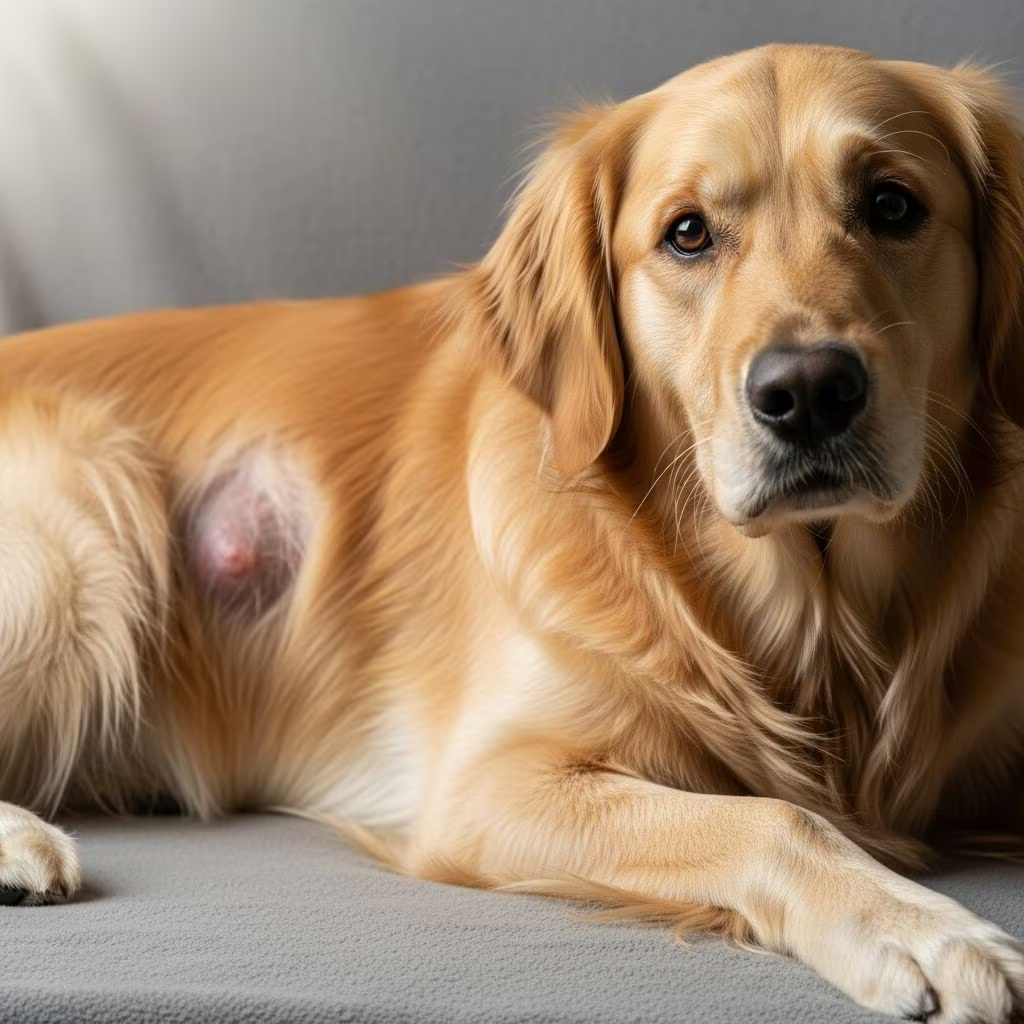
Lipomas are benign fatty tumors that are among the most common non-cancerous growths found in dogs, particularly as they age. These soft, movable lumps develop under the skin and are usually harmless, though monitoring and occasional intervention may be necessary.
What Are Lipomas?
Lipomas consist of adipose (fat) tissue and form when fat cells multiply abnormally beneath the skin. They are typically slow-growing, round or oval-shaped, and feel soft and squishy to the touch, often moving freely when gently pushed. In dogs, lipomas are frequently diagnosed in primary veterinary care, with a one-year prevalence of about 1.94% in UK studies. Unlike malignant tumors, lipomas do not invade surrounding tissues or spread (metastasize), making them a relatively benign concern for most pet owners.
These tumors can appear anywhere on the body but are most common on the trunk, limbs, chest, or abdomen. Smaller lipomas may go unnoticed, while larger ones can grow to several inches in diameter. Although generally painless, very large lipomas might cause discomfort if they interfere with movement or press on nerves.
Causes and Risk Factors
The exact cause of lipomas remains unclear, but several risk factors have been identified through large-scale epidemiological studies. Aging is the strongest predictor; dogs become significantly more likely to develop lipomas as they get older, with odds increasing steadily with age.
Other key risk factors include:
- Body weight: Heavier dogs, especially those at or above their breed’s mean adult bodyweight, have nearly twice the odds (OR: 1.96) of developing lipomas compared to leaner counterparts. Overweight and obese dogs are particularly predisposed, highlighting the role of excess adipose tissue.
- Neutering status: Neutered males and females show higher risk than intact females, possibly due to hormonal changes affecting fat metabolism.
- Breed predisposition: Purebred dogs have 1.16 times higher odds than crossbreds. Specific breeds at elevated risk include those in the Kennel Club Gundog Group.
- Insurance status: Insured dogs are almost twice as likely (OR: 1.78) to be diagnosed, likely due to more frequent veterinary visits.
- Genetics and trauma: Hereditary factors may play a role, and lipomas sometimes develop at sites of previous injury.
Breeds Predisposed to Lipomas
Certain breeds show remarkably high prevalence. A major UK study of over 300,000 dogs identified eight breeds with significantly increased odds compared to crossbreds after adjusting for confounders like age and weight.
| Breed | Prevalence (%) | Odds Ratio (OR) |
|---|---|---|
| Weimaraner | 7.84 | 3.16 |
| Dobermann Pinscher | 6.96 | 3.55 |
| Labrador Retriever | 5.15 | 2.19 |
| Springer Spaniel | 5.19 | 2.15 |
| German Pointer | 5.23 | Increased |
| Beagle | – | Increased |
| Miniature Schnauzer | – | Increased |
| Cocker Spaniel | – | Increased |
Notably, five of these (Weimaraner, Labrador Retriever, Springer Spaniel, German Pointer, Cocker Spaniel) belong to the Gundog Group, which overall has 2.08 times higher odds. This may relate to historical selection for body conformation combined with modern sedentary lifestyles promoting fat accumulation.
Breeds with Reduced Risk
Conversely, 11 breeds, often smaller or with different body types, have lower odds: Yorkshire Terrier, Lhasa Apso, German Shepherd Dog, Shih Tzu, Chihuahua, Cavalier King Charles Spaniel, West Highland White Terrier, Bichon Frise, Jack Russell Terrier, Staffordshire Bull Terrier, and Boxer. These include no Gundog breeds and tend toward slimmer builds.
Symptoms and Signs
Lipomas present as soft, lobulated lumps under the skin that are usually painless and freely movable. They grow slowly over months or years and may fluctuate slightly in size. Owners often discover them during grooming or petting.
Key characteristics include:
- Soft, doughy texture.
- Well-defined borders.
- No hair loss or skin ulceration (unless very large).
- Typically multiple; dogs may develop several over time.
Any new lump warrants a vet visit, as lipomas must be differentiated from more serious conditions.
Diagnosis
Veterinarians diagnose lipomas through a combination of physical exam, history, and diagnostics. Fine-needle aspiration (FNA) cytology is the first-line test, where cells are extracted and examined under a microscope; most lipomas show mature fat cells.
If FNA is inconclusive, surgical biopsy or excisional biopsy provides definitive diagnosis. Imaging like ultrasound or X-rays assesses deeper involvement, especially for infiltrative lipomas that grow into muscle. Advanced cases may require CT or MRI.
Treatment Options
Many lipomas require no treatment if asymptomatic and not interfering with quality of life. “Watchful waiting” with regular monitoring is common.
Surgical Removal: Indicated for rapidly growing, painful, or mobility-impairing lipomas. Complete excision is curative for most, though recurrence is possible if not fully removed.
Other Methods:
- Liposuction: Minimally invasive suction of fat cells; suitable for small, accessible lipomas but higher recurrence risk.
- Focused Ultrasound: Emerging non-invasive trial treatment using histotripsy to destroy lipoma tissue without incision.
- Medication: No proven drugs dissolve lipomas, though weight loss may slow growth.
Infiltrative lipomas, rarer and more aggressive, often require wide surgical margins and possibly radiation.
When to Worry: Liposarcoma vs. Lipoma
While most are benign, a small percentage (under 5%) are malignant liposarcomas, which grow faster, are firmer, fixed to tissues, and may ulcerate or metastasize to lungs. Risk factors include rapid growth or attachment to underlying structures. Always pursue biopsy if suspicious.
Prevention and Management
No guaranteed prevention exists, but strategies include:
- Maintaining ideal body weight through diet and exercise; obesity is a modifiable risk.
- Regular vet check-ups for early detection, especially in high-risk breeds.
- Neutering decisions weighed against risks, though benefits often outweigh.
Breeders of predisposed lines should prioritize health testing. Owners of Gundogs and similar breeds should be vigilant.
Frequently Asked Questions (FAQs)
Are lipomas painful for dogs?
Typically no, unless very large and pressing on nerves or joints.
Do all fatty lumps in dogs need removal?
No, only if growing rapidly, causing issues, or suspicious for malignancy.
Can lipomas turn cancerous?
Rarely; liposarcomas mimic lipomas initially but are firmer and invasive. Biopsy confirms.
How common are lipomas in dogs?
Very common; 1.94% one-year prevalence in UK vets, higher in older dogs.
Is diet important for preventing lipomas?
Yes, weight management reduces risk in predisposed dogs.
References
- Lipoma in dogs under primary veterinary care in the UK: prevalence and breed predisposition — PMC/NIH. 2018-09-07. https://pmc.ncbi.nlm.nih.gov/articles/PMC6161450/
- Lipoma in dogs: how common are they and what breeds are affected? — Veterinary Ireland Journal. 2018. https://www.veterinaryirelandjournal.com/small-animal/79-lipoma-in-dogs-how-common-are-they-and-what-breeds-are-affected
- Lipomas in Dogs: Causes, Symptoms and Treatment of Fatty Tumors — Kinship. Accessed 2026. https://www.kinship.com/dog-health/dogs-and-lipomas
- Lipoma in Dogs: Everything a Pet Parent Needs To Know — PetMD. Accessed 2026. https://www.petmd.com/dog/condition/skin/lipoma-in-dogs
- Lipomas in dogs — Cornell University College of Veterinary Medicine. Accessed 2026. https://www.vet.cornell.edu/departments-centers-and-institutes/riney-canine-health-center/canine-health-information/lipomas-dogs
- Lipomas in Dogs: Causes, Symptoms and Treatment of Fatty Tumors — Kinship (Author page). Accessed 2026. https://www.kinship.com/author/nancy-kay-dvm
- Veterinary Lipoma: First Dog Treated in Focused Ultrasound Clinical Trial — Focused Ultrasound Foundation. Accessed 2026. https://www.fusfoundation.org/posts/veterinary-lipoma-first-dog-treated-in-focused-ultrasound-clinical-trial/



