

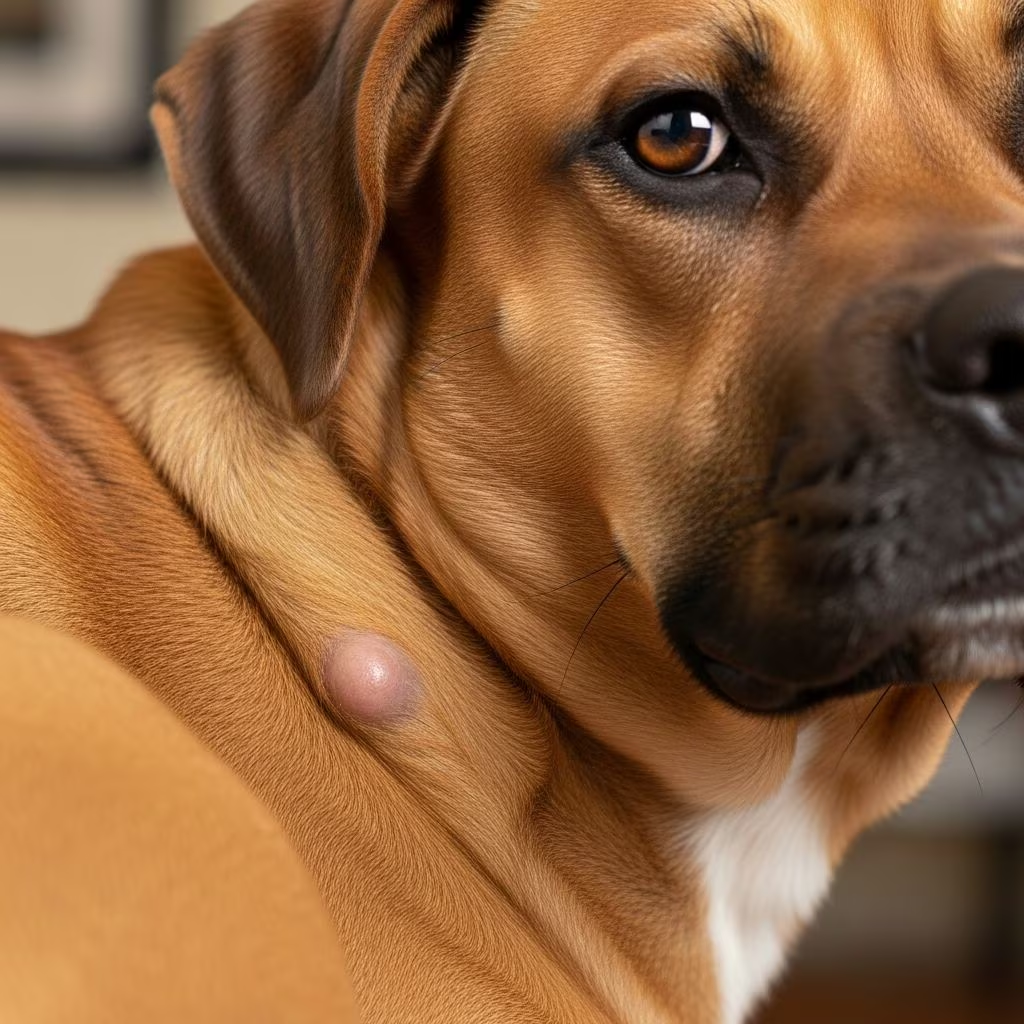
Lipomas are among the most common benign tumors found in dogs, particularly in middle-aged and senior pets. These soft, fatty lumps form under the skin and are typically harmless, but understanding them is crucial for responsible pet ownership. This comprehensive guide covers what lipomas are, their causes, diagnosis, treatment options, and when to consult a veterinarian.
What Are Lipomas in Dogs?
Lipomas are benign tumors composed of fat cells (adipocytes) that grow slowly under the skin. They feel soft, rubbery, and movable, often described as feeling like a grape or small water balloon beneath the surface. In dogs, lipomas are usually painless and asymptomatic unless they grow large or interfere with movement.
These tumors are encapsulated, meaning they have a fibrous capsule that keeps the fat cells contained. While most are subcutaneous (under the skin), some can be infiltrative, growing between muscle layers or invading surrounding tissues, which makes them more challenging to treat.
Lipomas are extremely common, especially in overweight or older dogs. They rarely metastasize but can cause issues if located in areas like the armpit, groin, or limbs, potentially restricting mobility.
Types of Lipomas in Dogs
- Simple (Subcutaneous) Lipomas: The most common type, located just under the skin. They are well-defined, soft, and easily movable. These rarely cause problems and often require no treatment.
- Infiltrative Lipomas: These grow into muscle or connective tissue, making them firmer and harder to remove surgically. They may cause discomfort or lameness if pressing on nerves.
- Intermuscular Lipomas: Found between muscle layers, these can be deeper and may not be noticeable until they grow large.
- Liposarcomas: Rare malignant versions that are more aggressive. They feel firmer, grow faster, and may ulcerate. Veterinary evaluation is essential to rule these out.
Causes and Risk Factors for Lipomas
The exact cause of lipomas in dogs remains unknown, but several risk factors have been identified through veterinary research.
- Age: Lipomas are far more common in dogs over 7 years old, with prevalence increasing in seniors.
- Obesity: Overweight dogs have higher rates of lipoma development, likely due to excess fat cells.
- Genetics/Breed Predisposition: Certain breeds like Labrador Retrievers, Doberman Pinschers, Weimaraners, and older mixed breeds are more prone. Genetics play a key role.
- Hormonal or Metabolic Factors: While not fully proven, imbalances may contribute, similar to observations in humans.
Maintaining a healthy weight through diet and exercise can reduce risk, though genetics cannot be controlled.
Symptoms and Signs of Lipomas
Lipomas typically present as:
- Soft, round or oval lumps under the skin, movable when pushed.
- Slow-growing over months or years.
- Painless—no itching, redness, or ulceration unless irritated.
- Common locations: trunk, chest, abdomen, limbs, armpits, or groin.
Watch for problematic signs:
- Rapid growth or firmness change.
- Interference with walking, lying down, or movement.
- Lameness, discomfort, or reluctance to exercise.
- Multiple lumps or new growths.
Early detection through regular grooming and petting helps identify them promptly.
How Are Lipomas Diagnosed?
Veterinarians diagnose lipomas through a multi-step process:
- Physical Exam: Assessing size, shape, mobility, and feel.
- Fine Needle Aspiration (FNA): A needle extracts cells for cytology; fat cells confirm lipoma (quick, minimally invasive).
- Ultrasound: Reveals homogeneous, striped patterns and capsule, distinguishing from malignant tumors.
- Biopsy or Full Excision: For suspicious cases, especially infiltrative types.
Differentiating from liposarcomas is critical, as the latter requires aggressive treatment.
Treatment Options for Lipomas in Dogs
Many lipomas need no treatment if small and asymptomatic. Options include:
Watchful Waiting
Regular monitoring for growth or changes. Ideal for simple lipomas.
Surgical Removal
The gold standard for problematic lipomas. Curative for simple types, but infiltrative ones may recur. Performed under anesthesia; recovery involves monitoring for seroma or infection.
Steroid Injections
Ultrasound-guided triamcinolone acetonide injections (e.g., 40 mg/mL) shrink small lipomas (<3 cm). In one study of 15 dogs, 9 had complete regression; others reduced in size with minimal side effects like temporary polyuria/polydipsia.
Safe for seniors avoiding anesthesia; multiple sessions may be needed.
Other Minimally Invasive Treatments
- Liposuction: Effective for small, simple lipomas; regrowth possible in 28%.
- Deoxycholate Injections: Dissolves fat; promising but needs more research.
- Laser Therapy: Nd:YAG laser for subdermal removal.
- Focused Ultrasound: Emerging for complex cases.
| Treatment | Best For | Pros | Cons |
|---|---|---|---|
| Surgery | Large/inconvenient locations | Curative, quick | Anesthesia risks, recovery time |
| Steroid Injection | Small lipomas, seniors | Non-surgical, outpatient | Multiple treatments, side effects |
| Liposuction | Simple, medium size | Minimally invasive | Regrowth risk |
When Should You See a Vet?
Consult a vet immediately if you notice:
- A new lump or rapid growth.
- Hardening, ulceration, or bleeding.
- Mobility issues or pain.
- Multiple lumps.
Routine check-ups aid early detection.
Prevention and Management Tips
- Keep your dog at a healthy weight with balanced diet and exercise.
- Perform monthly skin checks during grooming.
- Spay/neuter may influence, but evidence is limited.
- Avoid trauma to lumps to prevent inflammation.
Weight management is key, as obesity correlates strongly with lipoma incidence.
Frequently Asked Questions (FAQs)
Are lipomas in dogs cancerous?
No, most are benign. Liposarcomas are rare malignant variants; cytology confirms.
Do lipomas go away on their own?
Rarely; they usually grow slowly but don’t regress without intervention.
Can diet prevent lipomas?
No direct link, but weight control reduces risk.
Is surgery the only option?
No—injections and monitoring work for many cases.
How fast do lipomas grow?
Slowly, over months; rapid growth warrants vet visit.
Can multiple lipomas occur?
Yes, common in predisposed dogs.
References
- Canine Lipomas Treated with Steroid Injections: Clinical Findings — PMC/NCBI. 2012-10-26. https://pmc.ncbi.nlm.nih.gov/articles/PMC3511498/
- Lipomas in Dogs: Is That Fatty Lump on Your Dog Dangerous? — Embrace Pet Insurance. Recent. https://www.embracepetinsurance.com/health/lipoma
- Lipoma in Dogs: Everything a Pet Parent Needs To Know — PetMD. Recent. https://www.petmd.com/dog/condition/skin/lipoma-in-dogs
- Understanding Dog Lipomas: Causes, Symptoms, and Treatment — Chino Valley Animal Hospital. Recent. https://chinovalleyanimalhospital.com/blog/dog-lipomas/
- Lipomas and Liposarcomas (Adipose Tumors) — VCA Animal Hospitals. Recent. https://vcahospitals.com/know-your-pet/adipose-lipoma-tumors
- Lipoma in Dogs: Symptoms, Causes, and Treatment — GoodRx. Recent. https://www.goodrx.com/pet-health/dog/lipoma-in-dogs



