

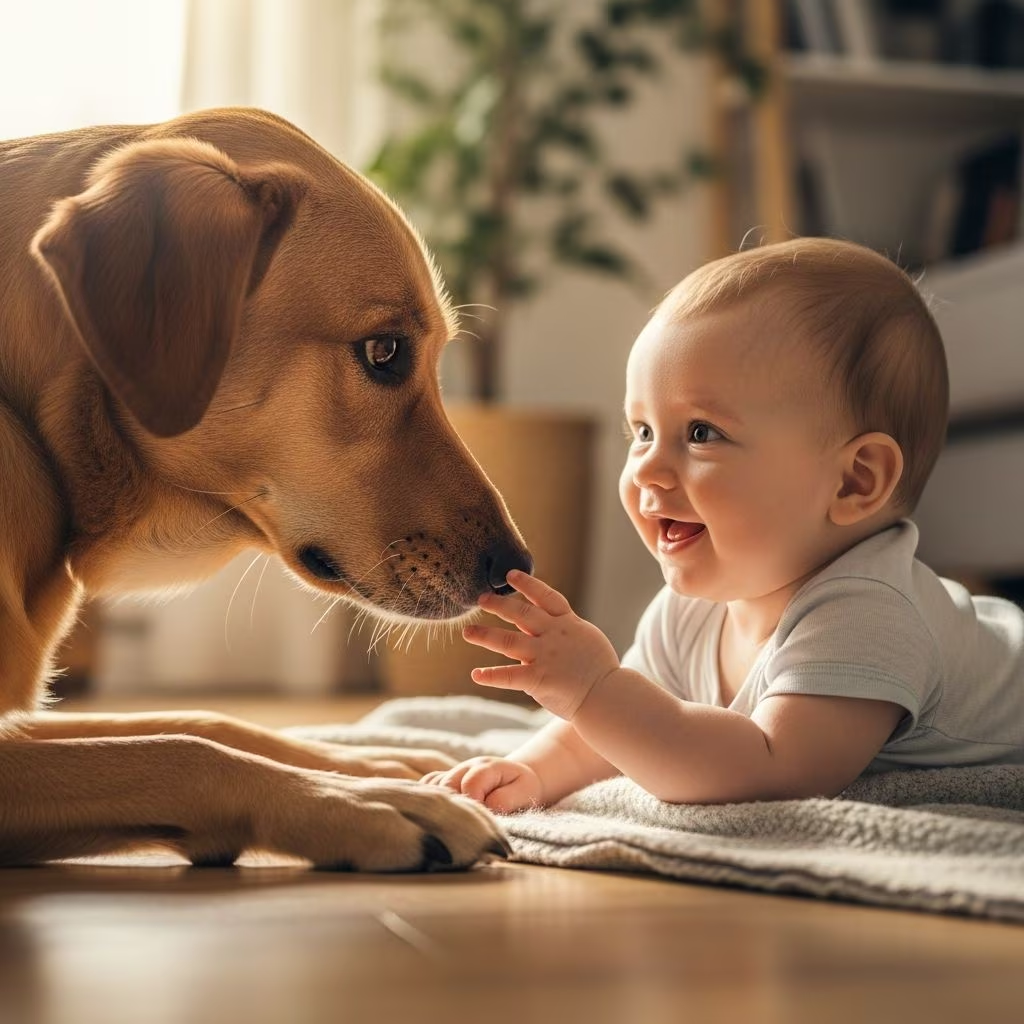
Bringing a new baby into a home with a dog requires careful planning to ensure the safety of both the infant and the pet. With proper preparation, training, and management, dogs and babies can coexist peacefully, fostering a loving family environment. This guide covers essential steps from pregnancy preparation to long-term coexistence, drawing on expert recommendations for positive outcomes.
Preparing for the Baby
Start preparing your dog well before the baby’s arrival to minimize stress and establish new routines. During pregnancy, maintain your dog’s daily exercise and attention levels to prevent jealousy or anxiety when the baby comes home.
- Gradually adjust your dog’s schedule to include shorter play sessions, mimicking post-baby availability.
- Introduce baby-related sounds, such as crying recordings, at low volumes and increase gradually while rewarding calm behavior.
- Bring home baby-scented items like blankets or lotions for your dog to sniff, associating them with positive reinforcement like treats.
- Set up baby gates or restrict access to the nursery early, training your dog to stay out of these areas.
Enroll in obedience training if needed, focusing on commands like ‘sit,’ ‘stay,’ and ‘leave it’ to ensure reliable responses around the baby.
The Introduction
The first meeting between your dog and baby sets the tone for their relationship. Keep it calm, controlled, and positive to build good associations from the start.
- Have a helper hold the baby while you greet your dog first upon returning home, offering praise and treats to reaffirm your bond.
- Keep the dog on a leash initially, allowing supervised sniffs from a distance; reward calm behavior lavishly.
- Position the baby in a secure carrier or crib, never holding them at the dog’s level during introductions.
- Limit sessions to a few minutes, gradually increasing time as your dog remains relaxed.
Avoid overwhelming your dog; if signs of stress appear, such as yawning, lip licking, or stiffening, separate them immediately and try again later.
Supervising and Managing Interactions
Never leave your dog and baby unsupervised, even for a moment, regardless of how gentle your dog is. Constant vigilance prevents accidents and builds trust over time.
- Use baby gates, crates, or tethers to create safe barriers during play or naps.
- Teach family members and visitors to intervene if the dog shows discomfort around the baby.
- Provide your dog with a designated ‘safe haven’—a quiet space with toys and bedding—where they can retreat if overwhelmed.
- During baby care routines like feeding or diapering, give your dog a stuffed Kong or chew toy to keep them occupied positively.
Monitor body language closely: relaxed dogs have loose postures, wagging tails, and soft eyes, while stress signals include tense muscles, averted gaze, or growling.
Dog Training Tips
Reinforce training to prioritize the baby’s safety. Professional help from a certified trainer can address specific issues like jumping or resource guarding.
| Command | Purpose | Training Tip |
|---|---|---|
| Sit/Stay | Prevents jumping on baby | Practice daily with high-value treats; increase duration gradually. |
| Leave It | Stops unwanted sniffing/licking | Use for baby items; reward heavily for compliance. |
| Go to Bed | Sends dog to safe space | Designate a mat; cue during baby interactions. |
| Quiet | Manages barking | Interrupt with a cue, then reward silence. |
Consistency is key—everyone in the household must enforce rules uniformly for effective results.
Recognizing Stress Signals
Dogs communicate discomfort through subtle cues. Learning these helps you intervene early, preventing bites or escalation.
- Displacement behaviors: Yawning, lip licking, sniffing the ground excessively.
- Body tension: Stiff posture, raised hackles, frozen stare, or whale eye (whites visible).
- Auditory cues: Low growls, whining, or sudden silence.
- Escape attempts: Pawing at doors, hiding, or backing away.
If multiple signals appear, calmly separate the dog and baby, then desensitize through counter-conditioning with rewards in controlled settings.
Resource Guarding
Some dogs guard food, toys, or beds aggressively. Address this proactively to avoid incidents around baby items.
- Test by approaching your dog’s resources calmly; if stiffening occurs, consult a behaviorist.
- Trade-up technique: Offer higher-value treats to voluntarily give up items, building positive associations.
- Feed dogs in crates or behind closed doors initially, gradually allowing proximity to baby activities.
- Remove high-value items when unsupervised.
Serious guarding warrants professional intervention from a Certified Applied Animal Behaviorist.
Play and Exercise
A tired dog is a good dog. Maintain or increase exercise to burn energy, reducing frustration around the baby’s schedule.
- Aim for 30-60 minutes daily of walks, fetch, or runs, adjusting for your post-baby energy.
- Incorporate mental stimulation like puzzle toys or training games.
- Enroll in doggy daycare or hire walkers if needed during nap times.
- Teach gentle play rules: no roughhousing near baby areas.
Family walks with stroller training promote bonding and routine.
Safe Touch and Handling
Teach children (and adults) proper petting to avoid startling the dog. Focus on safe zones to prevent bites.
- Pet sides, back, and behind ears; avoid face, paws, tail, and belly.
- Use gentle strokes; stop if dog moves away or signals discomfort.
- Model correct interactions for older siblings.
- Never allow hugging or picking up the dog.
For toddlers, supervise all contact and use leashes indoors if necessary.
Long-Term Success
As the baby grows into a toddler, vigilance remains crucial. Update training for new behaviors like pulling ears or tails.
- Involve the child in feeding or walking the dog under supervision to build respect.
- Continue providing the dog with undivided attention daily.
- Reassess periodically; seek help if dynamics shift.
- Consider spaying/neutering if not done, as it reduces certain behaviors per ASPCA guidelines.
With patience, most dogs adapt well, becoming protective family members.
Frequently Asked Questions (FAQs)
Q: Can all dogs be trusted around babies?
A: No dog is 100% predictable; always supervise, even with the most gentle breeds.
Q: What if my dog shows aggression?
A: Separate immediately and consult a certified professional trainer or behaviorist.
Q: How do I baby-proof for my dog?
A: Provide safe spaces, maintain routines, and use gates to manage access.
Q: Is crate training helpful?
A: Yes, it offers a secure retreat and aids in management during baby care.
Q: When should I seek professional help?
A: At signs of stress, guarding, or if introductions don’t go smoothly.
References
- General Dog Care — ASPCA. 2023-01-01. https://www.aspca.org/pet-care/dog-care/general-dog-care
- Pets and Your New Baby — SPCA. 2022-06-15. https://spca.org/file/Pets–Your-New-Baby.pdf
- Dogs and Babies/Children — Give Shelter. 2021-09-20. https://www.giveshelter.org/assets/site-images/documents/Dogs_and_Babies.pdf
- Dog and Babies – What You Need to Keep in Mind — CC SPCA. 2024-03-10. https://ccspca.com/blog-spca/education/dogs-and-babies/
- Understanding Animal Behavior: Teaching Kids Pet Safety Cues — Lifeline Animal Project. 2023-08-05. https://lifelineanimal.org/understanding-animal-behavior-teaching-kids-pet-safety-cues/



