

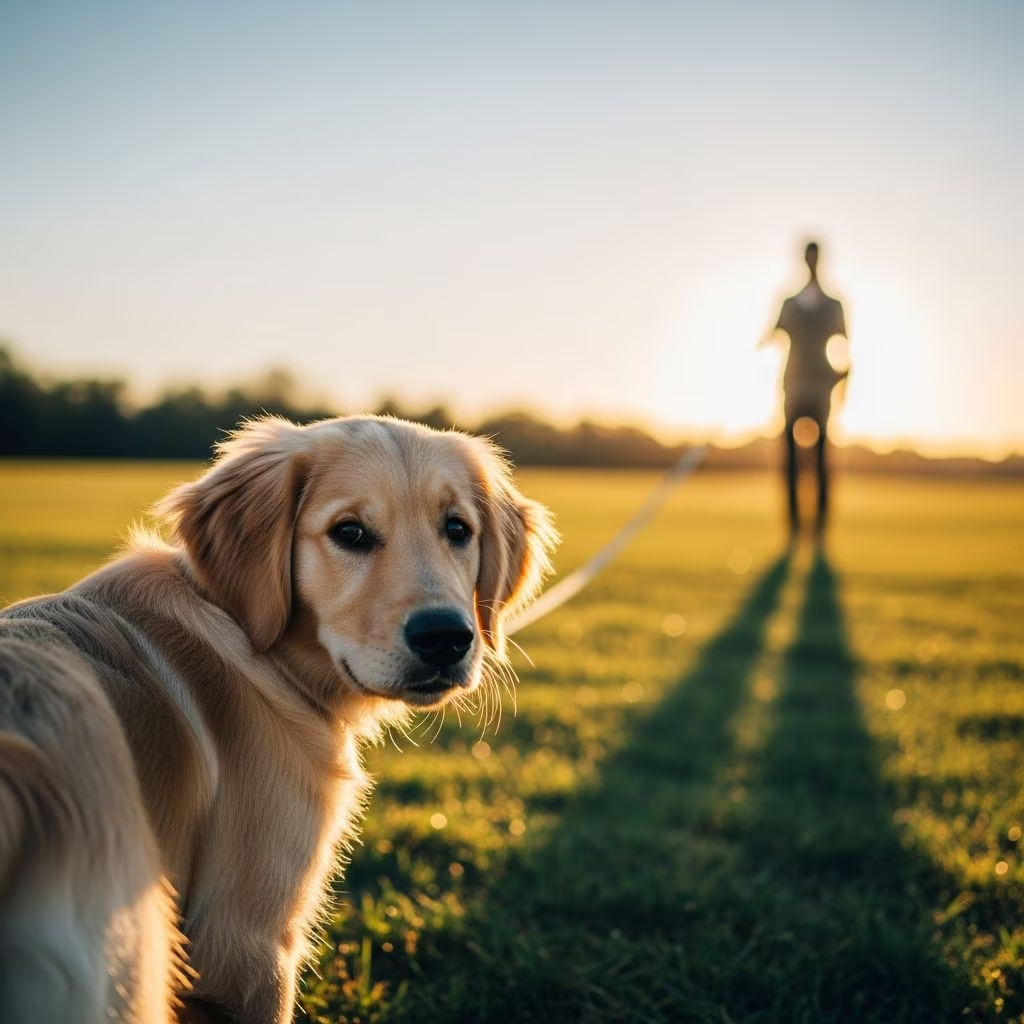
Few things are more frustrating (or scary) than a dog that ignores you when you call them, especially near roads, wildlife, or other dogs. A strong recall—your dog coming when called—is one of the most important safety skills you can teach, but it is also one of the easiest to accidentally damage.
This guide explains why your dog might not come when called, how to avoid common training mistakes, and how to rebuild a reliable recall with simple, reward‑based steps supported by modern behavior science.
Why Your Dog Doesn’t Come When Called
Dogs are not being stubborn or spiteful when they ignore recall; they are simply doing what has been most rewarding in the past. Understanding the real reasons behind poor recall helps you create a more effective training plan.
1. The Recall Cue Isn’t Fully Learned
Many dogs have only a vague understanding of what “come” means. They may have heard the word in different contexts, with inconsistent follow‑through, or only in easy environments like the living room.
- Your dog was never systematically taught “come” with gradual increases in distance and distractions.
- You only practiced indoors or in quiet spaces, so the cue collapses in busy, exciting places.
- Multiple family members use different words or tones, confusing the dog.
According to professional training guidelines, dogs need many successful, reinforced repetitions in progressively more distracting environments before recall is considered reliable.
2. Competing Rewards Beat You
Dogs freely choose what is most rewarding in that moment. Smells, squirrels, other dogs, or leftover food on the ground often outrank a routine “Good dog” from their person.
- Sniffing, chasing, and playing offer powerful natural reinforcement.
- If coming to you usually ends the fun, your dog learns that staying away is more rewarding.
- For some dogs, simply exploring the environment is more motivating than treats—unless you use very high‑value rewards.
3. The Name Cue Is Weak
Some dogs do not reliably respond to their name. If your dog does not at least look at you when you say their name, asking them to come is unlikely to work.
- The dog hears their name all day with no consequence (no reward, no cue to act).
- The name is only used in negative moments (scolding, nail trims, leaving the park).
Teaching your dog that their name predicts something good is an essential first step toward a stronger recall response.
4. History of Punishment After Coming
If returning to you often leads to unpleasant outcomes, your dog may avoid you when called. Dogs remember patterns; they do what predicts good things and avoid what predicts bad things.
- Your dog is scolded when they finally come, especially after a delay.
- Recall always means: leash on, fun is over, you go home immediately.
- You grab their collar roughly or restrain them as soon as they arrive.
Evidence‑based training organizations emphasize that using aversive methods can damage trust and increase fear or avoidance, which undermines recall reliability.
Common Mistakes That Sabotage Recall
Even well‑intentioned owners often teach their dog not to come by pairing the recall cue with experiences the dog naturally wants to avoid.
- Calling only to do something unpleasant: bath time, ear drops, nail trims, or going into the crate.
- Calling when you cannot enforce it: yelling “come” repeatedly at the park while your dog keeps playing.
- Repeating the cue many times: saying “come, come, COME!” teaches the dog that the first few calls are optional.
- Scolding when they arrive: even if you are upset, punishing a dog for eventually coming makes them slower next time.
- Using a boring or low‑value reward: dry kibble in a busy park cannot compete with other dogs and wildlife.
Setting Up for Success: Management and Safety
Before rebuilding recall, protect your dog and the training process by preventing situations where ignoring you becomes a habit.
- Use a long line or leash outdoors so you can gently guide your dog if needed while they still have room to explore.
- Avoid off‑leash freedom in unsecured areas until recall is reliable around moderate distractions.
- Practice in easy environments first, such as inside the house or a quiet yard.
- Control the environment as much as possible—start with low distractions and build up gradually.
Step‑by‑Step: How to Teach a Dog to Come When Called
The following plan is based on reward‑based methods recommended by major training organizations and pet‑care experts. Move at your dog’s pace and only increase difficulty when they are succeeding most of the time at the current level.
Step 1: Build a Positive Association with Their Name
This step lays the foundation for attention, which is required before a reliable recall can develop.
- Say your dog’s name once in a cheerful tone.
- As soon as they glance at you or move toward you, mark the behavior (say “Yes!” or use a clicker).
- Immediately give a small, tasty treat.
- Repeat 10–15 times in short sessions across the day.
Your goal is for your dog to quickly look at you whenever they hear their name, even around mild distractions.
Step 2: Teach the Recall Cue Indoors
Choose a specific recall word, such as “Come!” or “Here!”, and make sure everyone in the household uses the same cue consistently.
- Start in a quiet room. Stand a few feet from your dog.
- Say their name, pause one second, then say your recall word in a happy voice.
- Open your arms, crouch, or move backward to encourage them to follow.
- When they begin moving toward you, mark (“Yes!”) and reward generously when they arrive—give several treats in a row and praise.
- Take a few steps away and repeat 5–10 times per session.
At this stage, your dog should succeed about 95% of the time before you increase difficulty.
Step 3: Add Distance Gradually
Once your dog eagerly comes from a few feet away, slowly increase the distance.
- Move to a larger room or hallway.
- Allow your dog to wander 10–15 feet away.
- Call them once with name + recall cue.
- Reward with extra‑high‑value treats or a short play session when they reach you.
If they do not respond, decrease the distance by half and try again. Avoid repeating the cue over and over.
Step 4: Introduce Mild Distractions
Real life is full of distractions. To make recall work outside, you must slowly add competing interests while keeping the success rate high.
- Practice in your yard or a quiet outdoor space on a long line.
- Start when your dog is only mildly engaged with their environment (sniffing lightly, not mid‑chase).
- Call once. If they start moving to you, mark and reward heavily—this is where you bring out special rewards they never get at other times.
- If they ignore you, do not yell. Use the long line to gently guide them toward you, then reward when they arrive so that coming to you is still associated with good outcomes.
Step 5: Practice in Different Locations
Dogs do not automatically generalize training from one place to another. You must rehearse recall in multiple contexts.
- Practice in different rooms of your home.
- Use fenced fields, quiet parks, or friends’ yards while still on a long line.
- Gradually work closer to moderate distractions: people walking by, distant dogs, mild traffic sounds.
Each new location is like starting a simpler version of the exercise again—go back a step in difficulty and rebuild.
Reward Strategies That Make Recall Irresistible
Because recall must compete with powerful natural rewards, the reinforcement you offer should be especially valuable and varied.
Use High‑Value Food
Many behavior experts note that food is often the easiest and most effective reward for recall training, especially in distracting environments. Reserve your dog’s very best treats for come‑when‑called practice.
- Soft, smelly treats (e.g., small pieces of cooked chicken or cheese).
- Variety to keep your dog interested and motivated.
- Occasional “jackpot” rewards: several treats in a row for especially fast responses.
Incorporate Play and Other Rewards
Some dogs are more motivated by play, running, or access to the environment than by food.
- Reward with a quick game of tug or fetch when they come.
- Release them back to their fun after a brief reward, so recall does not always mean the fun ends.
- Use praise and affection if your dog truly enjoys touch and attention.
Make Coming to You Predictably Wonderful
To build a dog that chooses to come, ensure that coming when called almost always leads to good things.
- Call your dog randomly during the day, reward, then let them go back to what they were doing.
- Mix in “surprise bonuses,” such as a longer walk or a special chew after an especially quick recall.
What to Do When Your Dog Ignores You
Even with great training, no dog is perfect. How you respond when your dog does not come has a big impact on future behavior.
| Situation | Recommended Response | What to Avoid |
|---|---|---|
| Dog does not respond the first time | Get closer, reduce distractions, or gently guide with a long line; then reward when they come. | Repeating the cue many times, yelling, or chasing. |
| Dog eventually comes after a delay | Still reward. You are reinforcing the act of coming, not the delay. | Scolding, grabbing harshly, or punishing when they arrive. |
| Dog is fixated on a distraction | Move farther away; practice at a distance where they can still respond, then slowly close the gap over sessions. | Calling in situations that are currently beyond their skill level. |
Special Considerations: Temperament, Age, and Health
Some dogs need modified recall strategies because of their personality, age, or physical condition.
- Very enthusiastic, social dogs: Often respond well to play‑based rewards and running games, but need extra practice resisting distractions like other dogs.
- More independent or scent‑driven dogs: Require exceptionally high‑value rewards and careful management of off‑leash time.
- Senior dogs or those with health issues: May have hearing loss, pain, or reduced stamina. Always rule out medical concerns with a veterinarian if recall suddenly worsens.
When to Seek Professional Help
If your dog consistently ignores you, has a strong chase drive, or shows fear or aggression when you attempt to handle them, working with a qualified professional can help keep everyone safe.
- Look for trainers or behavior consultants who use reward‑based, humane methods.
- Ask about their experience teaching reliable recalls in high‑distraction environments.
- Discuss safety tools (long lines, secure fields) tailored to your dog and environment.
Frequently Asked Questions (FAQs)
Q: How long does it take to train a reliable recall?
A: It varies by dog, but with daily short sessions, many dogs show strong improvement in a few weeks; building truly reliable recall around heavy distractions can take several months of consistent practice.
Q: Should I ever punish my dog for not coming when called?
A: No. Punishing a dog when they finally come to you teaches them that approaching you is unsafe, which makes them less likely to respond next time.
Q: Can I still call my dog to end playtime or go home?
A: Yes, but balance those moments by frequently calling your dog, rewarding them, and then releasing them back to play so that recall does not always predict the end of fun.
Q: Is it ever safe to let my dog off leash if recall isn’t perfect?
A: Only in securely fenced areas or enclosed fields while you are still training. In unfenced public spaces, use a long line until recall is reliable around common distractions.
Q: What if my dog seems more interested in smells than in treats?
A: Use higher‑value food rewards, incorporate games, and sometimes let your dog return to sniffing as part of the reward; for many scent‑driven dogs, access to continue sniffing is a powerful motivator.
References
- Dog Training: How to Teach a Dog to Come When Called — Purina. 2023-05-01. https://www.purina.com/articles/dog/behavior/training/how-to-teach-dog-to-come
- Reliable Recalls: How to Train Your Dog to Come When Called — American Kennel Club (AKC). 2022-08-15. https://www.akc.org/expert-advice/training/reliable-recalls-how-to-train-your-dog-to-come-when-called/
- Does Your Dog Struggle to Come When Called? Reluctant Recall Training Tips — Instinct Dog Behavior & Training. 2023-02-10. https://www.instinctdogtraining.com/reluctant-recall-training-tips/
- My Dog Won’t Come When Called — Kasten’s Dog Training. 2021-04-20. https://kastensdogtraining.com/getting-your-dog-to-come-when-called/
- Is It Time to See the Vet? — American Veterinary Medical Association (AVMA). 2021-06-01. https://www.avma.org/resources/pet-owners/petcare/your-most-important-appointment-veterinarian



