

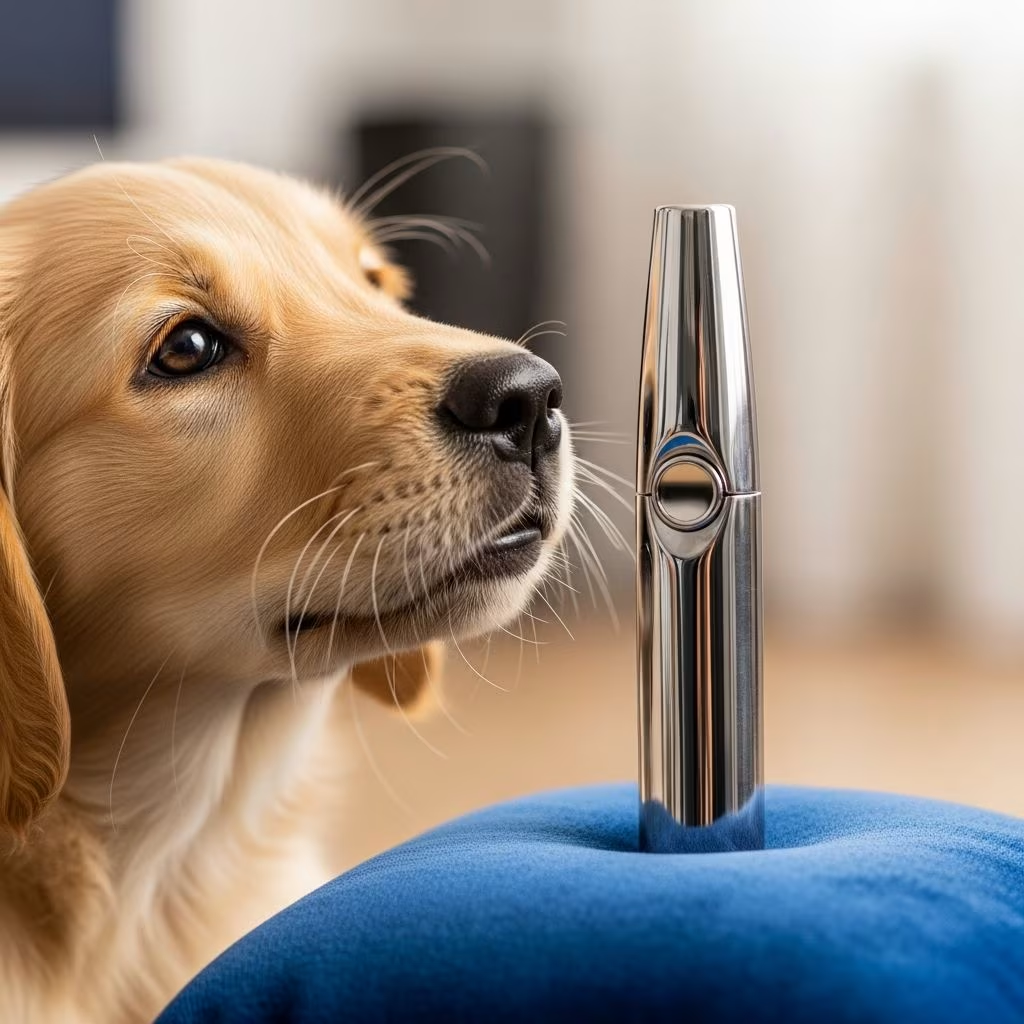
Dog whistles emit high-frequency sounds that dogs hear clearly while often remaining inaudible to humans, making them popular for training without disturbing neighbors. When used properly, these tools pose no harm to a dog’s hearing and serve as effective aids for recall and behavior modification.
Understanding the Science of Dog Hearing and Whistles
Dogs possess superior hearing capabilities compared to humans, detecting frequencies up to 65,000 Hz, whereas human hearing tops out at around 20,000 Hz. This sensitivity allows dog whistles, typically operating between 23,000 and 54,000 Hz, to communicate commands over distances where voices fail.
Ultrasonic whistles produce sounds beyond human perception, ideal for quiet training sessions. Conventional whistles, audible to people, offer versatility for multiple cues like short blasts for recall or prolonged tones for staying put.
The piercing tone cuts through environmental noise, such as wind or traffic, ensuring reliability in outdoor settings. Professional trainers highlight this as a key advantage for sports, hunting, or everyday walks.
Are Dog Whistles Harmful to Dogs?
Concerns about hearing damage stem from the high pitch, but evidence shows no long-term risks when whistles are used correctly. Avoid blowing directly into a dog’s ears or at excessive volume, as proximity can cause temporary discomfort similar to loud human noises.
Veterinarians endorse whistles for all breeds, including those with partial hearing loss, since the frequency targets residual sensitivity. No studies link proper whistle use to auditory harm; instead, they emphasize benefits for safety and control.
- Key Safety Rule: Maintain distance and moderate blowing strength.
- Myth Busted: Whistles do not inherently stop barking; dogs habituate quickly without training.
- Volume Awareness: Sound intensity feels louder to dogs, so gentle puffs suffice.
Key Benefits of Incorporating Dog Whistles in Training
Dog whistles excel in recall training, fostering immediate responses that prevent dangers like chasing traffic. Their consistent pitch eliminates vocal tone variations, providing clear, emotion-free signals.
| Benefit | Description | Ideal Use Case |
|---|---|---|
| Long-Range Reach | Travels farther than voice, penetrates noise | Outdoor hikes, parks |
| Consistency | No emotional inflection in sound | Calm command delivery |
| Versatility | Customizable patterns for commands | Recall, stay, interrupt |
| Safety Focus | Emergency stops for hazards | Prevent accidents |
Beyond recall, whistles deter unwanted actions like digging or excessive barking by pairing with corrections or rewards. Positive association builds compliance, enhancing the owner-pet bond.
Choosing the Right Dog Whistle for Your Needs
Select based on material, portability, and sound profile. Metal whistles offer durability for active use, while plastic ones are lightweight and affordable. Pea-less designs prevent choking hazards and produce shrill tones.
Test for pitch consistency; adjustable models allow fine-tuning. For silent operation, opt for ultrasonic versions, though audible ones aid in multi-cue training.
- Durability: Metal for rugged environments
- Portability: Clip-on for leashes
- Sound Quality: Clear, far-reaching tone
Step-by-Step Guide to Whistle Training Success
Begin in low-distraction areas, associating the whistle with rewards. Patience and regularity yield reliable results across ages and breeds.
- Introduce the Sound: Blow softly indoors, pair with treats/praise for positive link.
- Short Distances: Call from 5-10 feet, reward immediate returns.
- Increase Distance: Gradually extend range, add mild distractions.
- Proofing: Practice in varied locations; use for real-life scenarios.
- Emergency Cue: Reserve a unique pattern for life-saving recalls.
Daily 5-10 minute sessions prevent overload. Consistency across family members reinforces learning.
Avoiding Common Pitfalls in Whistle Training
Mistakes undermine progress; address them proactively for frustration-free sessions.
| Mistake | Impact | Fix |
|---|---|---|
| Inconsistent Use | Confuses dog | Single handler initially, same pattern always |
| Overuse | Desensitizes response | Reserve for key moments |
| No Rewards | Lacks motivation | High-value treats every success |
| Skipping Practice | Poor retention | Short daily drills |
Frustration transfers to the dog; stay calm and reset as needed.
Expert Perspectives on Whistle Effectiveness
Trainers like those at ACME Kennels praise whistles for stress-free adventures, stressing commitment. AKC experts note their role in sports and hunting, debunking myths. Vets highlight breed-agnostic utility, especially for energetic dogs.
Integrate with verbal cues and leash work for comprehensive obedience. High-energy breeds benefit most from the clear, distant signal.
FAQs on Dog Whistles and Training
Can puppies use dog whistles?
Yes, start young for best results, using gentle volumes.
Do silent whistles work better?
They suit quiet areas; audible ones allow cue verification.
How long until recall is reliable?
Weeks to months with consistent practice.
Will my dog respond to others’ whistles?
Unlikely with unique patterns.
Are whistles breed-specific?
No, effective universally.
Long-Term Advantages for Dog Owners
Mastered whistle training grants peace of mind, enabling off-leash freedom safely. It strengthens communication, reduces stress, and prevents mishaps. Regular use maintains sharpness, adapting to life changes.
For multi-dog homes, distinct tones per pet streamline management. Overall, whistles transform training from voice-dependent to reliable signaling.
References
- The dog whistle – your perfect training tool — Sprenger. 2023. https://www.sprenger.de/en/blogs/magazin/dogwhistle
- Do You Need a Whistle for Dog Recall Training? — The Online Dog Trainer. 2024. https://theonlinedogtrainer.com/effective-recall-whistle-for-recall-training/
- The top six mistakes dog owners make during whistle training — Purrfectly Yappy. 2024. https://purrfectlyyappy.com/blogs/blog/the-top-six-mistakes-dog-owners-make-during-whistle-training-and-how-to-fix-them
- A Close Look At The Benefits Of Dog Whistles — PetScanner. 2024-03-22. https://petscanner.com/index.php/2024/03/22/a-close-look-at-the-benefits-of-dog-whistles/
- How Do I Train My Dog to Respond to a Whistle? — American Breeder. 2024. https://www.americanbreeder.com/resources/american-breeder-blog/dogs/whistle-training-for-dogs-reliable-recall-guide
- Dog Whistles for Training: How and When to Use Them — American Kennel Club (AKC). 2024. https://www.akc.org/expert-advice/training/dog-whistles-for-training/
- Dog Whistles: Everything You Need to Know — Hill’s Pet Nutrition. 2024. https://www.hillspet.com/dog-care/training/everything-about-dog-whistles



