

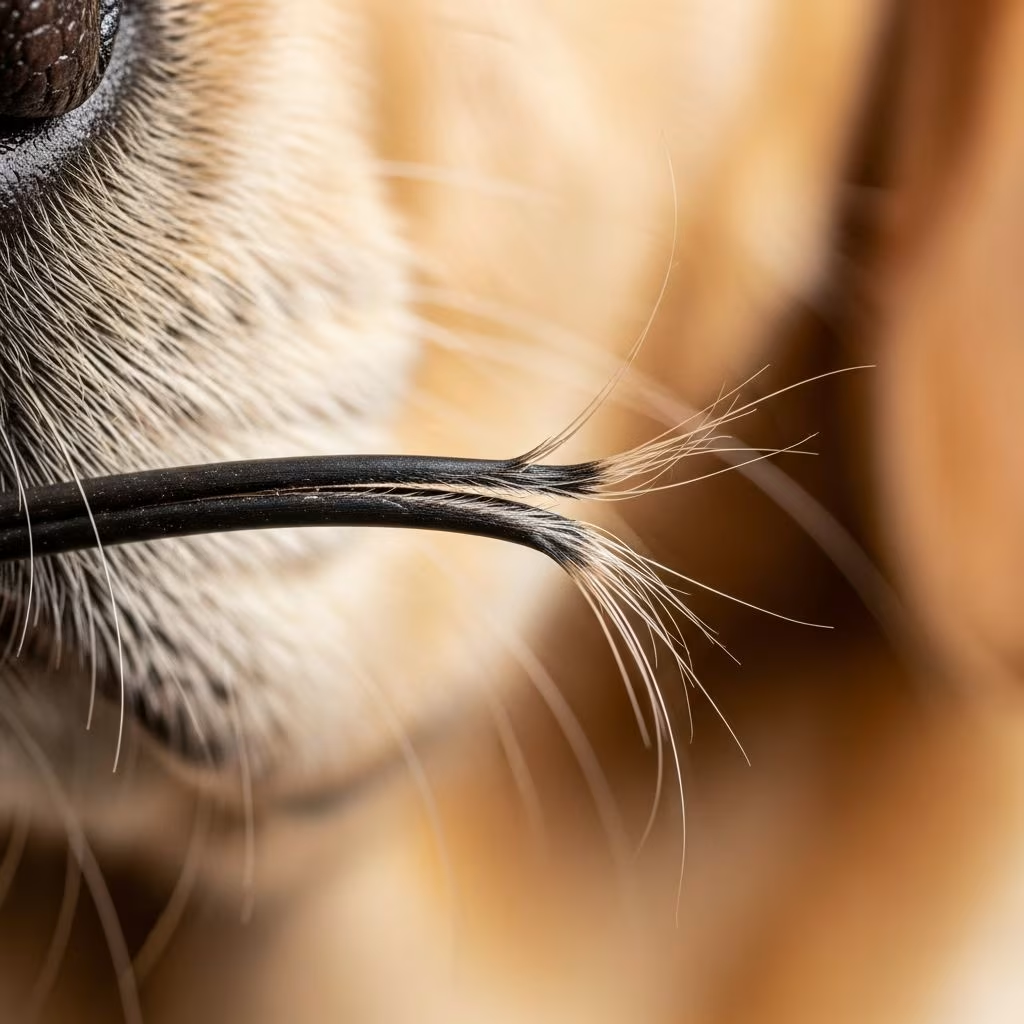
Dog whiskers, known scientifically as vibrissae, can sometimes appear frayed or split at the tips, raising concerns among pet owners about their health and function. These specialized hairs play a critical role in a dog’s sensory perception, and understanding why they fray helps ensure proper care.
The Unique Anatomy of Canine Vibrissae
Whiskers differ significantly from regular fur. They consist of keratin, the same protein in nails and typical hair, but are thicker, more rigid, and embedded much deeper into the skin—up to three times deeper than ordinary follicles. This deep follicle, called a follicle-sinus complex, includes a blood-filled sinus that amplifies tiny movements, transmitting signals via abundant nerve endings directly to the brain’s trigeminal nerve and barrel cortex.
Each whisker follicle houses Merkel cells, specialized receptors sensitive to pressure, texture, and vibrations from air currents. Dogs process whisker data 40% faster than visual cues, making them essential for navigation and threat detection. Unlike regular hair with 10-20 nerve endings, whiskers have up to 200, enhancing their role as tactile sensors akin to human fingertips.
| Feature | Dog Whiskers | Regular Fur |
|---|---|---|
| Follicle Depth | 3x deeper | Shallow |
| Nerve Endings | 100-200 per follicle | 10-20 per follicle |
| Blood Sinus | Present (amplifies signals) | Absent |
| Sensitivity | Detects air vibrations | Basic touch |
Primary Locations and Specialized Roles
Dogs feature whiskers in key areas, each tailored for specific tasks. Mystacial whiskers line the muzzle, aiding in object detection and spatial awareness. Supraorbital whiskers above the eyes act as protectors, triggering blinks against threats. Genal whiskers on cheeks support balance during movement or swimming, while interramal tufts under the chin sense ground-level items like food.
- Muzzle (Mystacial): Detect size, shape, and proximity of objects via air currents.
- Eye Area (Supraorbital): Prevent injuries by eliciting rapid eyelid closure.
- Cheeks (Genal): Assist in tight-space navigation and posture.
- Chin (Interramal): Locate hidden items below line of sight.
Why Do Dog Whiskers Develop Frayed or Split Ends?
Frayed ends on whiskers occur naturally due to their constant use in sensory tasks, exposure to elements, and mechanical stress. Unlike fur, whiskers endure bending, rubbing against surfaces, and air pressure changes, leading to tip wear over time. Environmental factors like wind, rough terrain, or swimming accelerate this fraying, as whiskers flex repeatedly without the protective cuticle of regular hair.
Nutritional deficiencies, such as inadequate protein or omega fatty acids, can weaken whisker structure, promoting splits. Age-related changes in older dogs may also cause brittle tips. Importantly, whiskers naturally shed and regrow every few months, but fraying signals heavy use rather than disease unless accompanied by hair loss elsewhere. Research confirms vibrissae differ anatomically from body fur, enduring more wear as sensory tools.
Sensory Superpowers: How Whiskers Guide Daily Life
Whiskers enable dogs to “see” without sight. As a dog moves, it stirs air currents that bounce off walls or objects, vibrating whiskers to signal proximity—preventing collisions even in darkness. During eating, chin whiskers gauge bowl depth, avoiding spills or face bumps. In low light, where canine vision falters, whiskers compensate by mapping surroundings.
They also convey emotions: relaxed dogs hold whiskers flat, while alert ones flare them outward. Anxious pets twitch muzzle whiskers downward toward threats, aiding communication. Swimming dogs rely on cheek whiskers for head alignment and balance.
Common Myths About Frayed Whiskers Debunked
- Myth: Frayed whiskers mean poor health. Fact: Often just wear from sensory duties; monitor for broader symptoms.
- Myth: Trimming whiskers is harmless. Fact: Severely impairs navigation; they regrow but cause temporary disorientation.
- Myth: All dogs have identical whiskers. Fact: Breed variations exist; short-nosed dogs have shorter but denser sets.
Safe Grooming Practices to Protect Whiskers
Avoid trimming whiskers during grooming—use scissors only for mats around them, never the vibrissae themselves. If frayed, let them shed naturally; forced removal stresses follicles. Brush gently with soft tools to prevent breakage. Regular baths with mild shampoos maintain follicle health without stripping oils.
For split ends, apply pet-safe conditioners sparingly to tips, but prioritize diet: high-quality food with biotin, zinc, and fish oils strengthens keratin. Consult vets for supplements if fraying persists alongside dull coat or skin issues.
When Frayed Whiskers Signal Health Concerns
Occasional fraying is normal, but excessive splitting with bald patches, inflammation, or behavioral changes (e.g., bumping into objects) warrants a vet visit. Potential causes include allergies, fungal infections, or hormonal imbalances affecting follicles. Demodicosis or hypothyroidism can target whisker areas first. Early detection preserves sensory function.
Enhancing Whisker Health Through Nutrition
A balanced diet supports robust whiskers. Key nutrients include:
- Protein (keratin building block).
- Omega-3s (for flexibility).
- Vitamins A, E (follicle protection).
- Zinc (growth promotion).
Studies link nutrient-rich diets to healthier vibrissae, reducing brittleness. Hydration also prevents dryness-induced splits.
Breed-Specific Whisker Considerations
Breeds vary: Long-nosed dogs like Collies have extended whiskers for wide-range sensing, prone to environmental fraying. Brachycephalic breeds (Pugs) have compact sets, more vulnerable to grooming errors. Tailor care to breed traits for optimal health.
FAQs on Dog Whiskers and Frayed Ends
Do frayed whiskers hurt my dog?
No, whiskers lack pain receptors at tips, but follicle damage does hurt. Fraying is painless wear.
Should I trim split whisker ends?
Never trim; allow natural shedding. Trimming disrupts senses for weeks.
How long do dog whiskers take to regrow?
4-6 weeks, depending on age and health. Full sensory restoration follows.
Can diet fix frayed whiskers?
Yes, nutrient boosts like omegas improve strength over time.
Do all dogs get frayed whiskers?
Most active dogs do from use; indoor pets less so.
Maintaining Your Dog’s Sensory Edge
Respecting whiskers ensures confident navigation. Regular checks, nutrition, and gentle care prevent issues from frayed ends, keeping your dog alert and happy.
References
- Dog Whisker Facts: 7 Essential Things Every Owner Needs — Rubyloo. 2023. https://rubyloo.co/blogs/news/dog-whisker
- Structure and Function of the Whiskers in Dogs — PetPlace.com. 2022-10-15. https://www.petplace.com/article/dogs/pet-health/structure-and-function-of-the-whiskers-in-dogs
- Why Do Dogs Have Whiskers? — PetMD. 2024-01-12. https://www.petmd.com/dog/general-health/why-do-dogs-have-whiskers
- What to Know About a Dog’s Whiskers — WebMD. 2023-05-20. https://www.webmd.com/pets/dogs/what-to-know-dogs-whiskers
- Functions of a Dog’s Whiskers — PetDelux. 2023. https://petdelux.com/blogs/guide/%F0%9F%94%8D-functions-of-a-dogs-whiskers
- Why Do Dogs Have Whiskers? — American Kennel Club. 2024-03-08. https://www.akc.org/expert-advice/family-dog/why-do-dogs-have-whiskers/
- Why Do Dogs Have Whiskers? — Psychology Today. 2011-09-15. https://www.psychologytoday.com/us/blog/canine-corner/201109/why-do-dogs-have-whiskers
- The importance of the tactile hairs in domestic dogs — PubMed (Peer-reviewed). 2020-06-18. https://pubmed.ncbi.nlm.nih.gov/32557495/



