

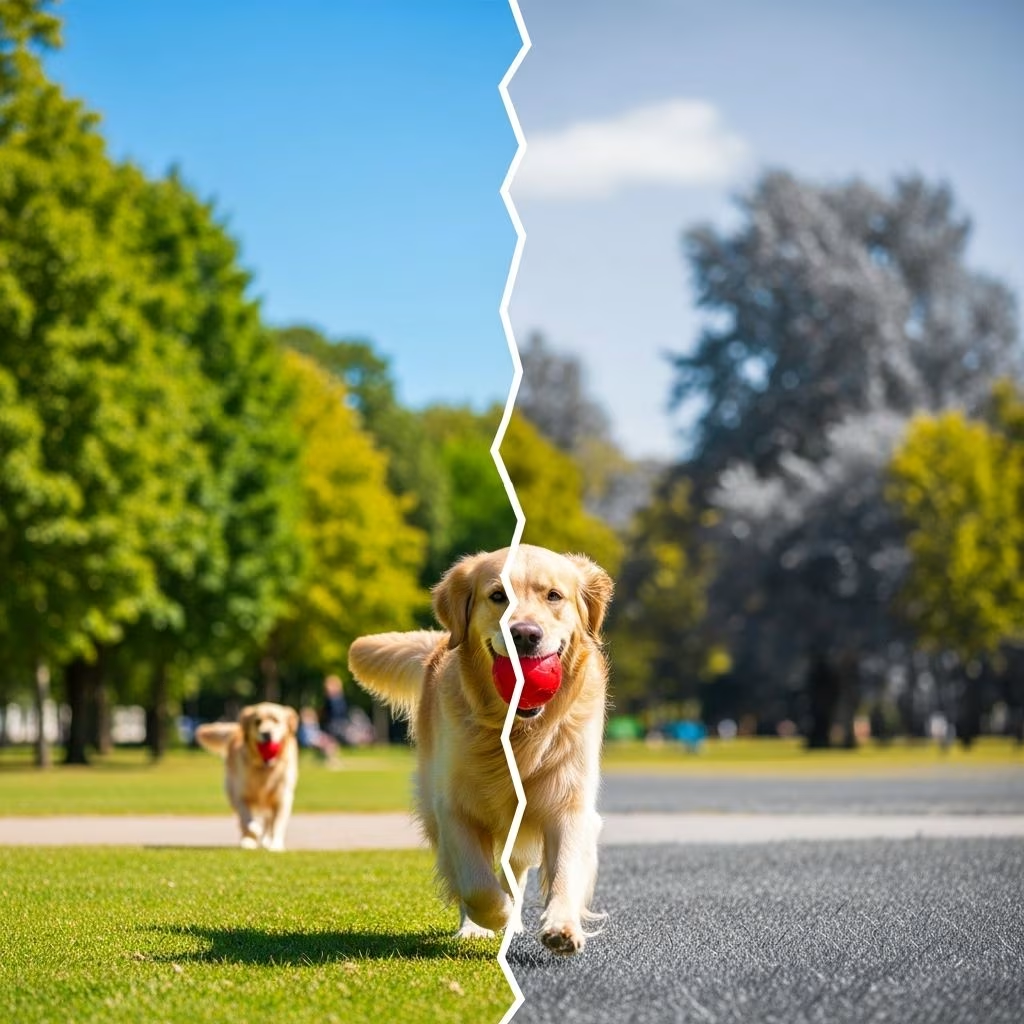
Dogs perceive the world through a unique visual system adapted for survival, excelling in motion detection and low-light conditions but differing significantly from human eyesight. Their vision prioritizes detecting prey and navigating in dim environments over fine detail or color richness.
How Do Dogs See?
Dogs have a visual acuity of approximately 20/75, meaning they must be 20 feet from an object to see it as clearly as a human at 75 feet. Breeds like Labrador Retrievers may approach 20/20 vision, aiding their role as guide dogs. Unlike humans with three color receptors (trichromatic vision), dogs possess two (dichromatic), seeing blues and yellows but struggling with red-green distinctions.
The canine retina features more rods for low-light sensitivity and a reflective tapetum lucidum layer that enhances night vision by bouncing light back through photoreceptors. Larger pupils and a lens positioned closer to the retina further amplify light intake, making dogs superior in dim conditions.
Dog Color Vision and Perception
Dogs distinguish blue from yellow but perceive reds and greens as shades of yellow or gray, confirmed by behavioral studies where dogs differentiate blue-yellow stimuli but not red-green. This limited palette suits their ancestral hunting needs, focusing on movement over hue.
Night Vision in Dogs
- More rods: Rod cells in the retina excel in dim light, outnumbered in humans.
- Larger pupils: Allow greater light entry.
- Tapetum lucidum: Reflective layer boosts photon capture.
- Proximal lens: Creates brighter retinal images.
These adaptations enable dogs to see in light levels six times dimmer than humans tolerate.
Field of View and Motion Detection
Dogs boast a 240-250 degree field of view versus humans’ 180 degrees, thanks to eye positioning favoring peripheral vision. They detect motion at speeds up to 80 Hz compared to humans’ 50-60 Hz, ideal for tracking fast-moving objects.
Common Dog Eye Problems
Various conditions threaten canine vision, from congenital issues to age-related degeneration. Early detection preserves quality of life.
Cataracts
Cataracts cloud the lens, obstructing light to the retina and causing vision impairment. Common in aging dogs or breeds like Poodles and Labrador Retrievers, they manifest as a white pupil film. Surgery can restore sight if addressed early.
Glaucoma
Fluid buildup elevates intraocular pressure, damaging the optic nerve. Breeds like Cocker Spaniels and Basset Hounds are prone. Symptoms include squinting, tearing, and eye swelling; emergency treatment with drops or surgery prevents blindness.
Progressive Retinal Atrophy (PRA)
This hereditary degeneration destroys retinal cells, leading to gradual blindness. Dogs dilate pupils, hesitate in dark areas, and bump objects. No cure exists, but dogs adapt using smell and hearing.
Sudden Acquired Retinal Degeneration Syndrome (SARDS)
SARDS induces rapid bilateral blindness within days or weeks, unlike PRA’s slow progression. Affected dogs show normal eye appearances initially but lose sight suddenly.
Dry Eye (Keratoconjunctivitis Sicca)
Insufficient tear production dries the cornea, causing mucus buildup, ulcers, and potential blindness. Topical medications stimulate glands.
Pannus
An immune condition pigments and clouds the cornea bilaterally. UV exposure worsens it; anti-inflammatory drops manage progression.
Untreated Infections
Conjunctivitis, keratitis, or uveitis untreated leads to scarring and vision loss. Prompt antibiotics or anti-inflammatories are essential.
Signs of Vision Loss in Dogs
Dogs mask vision decline using other senses, but watch for:
- Cloudy eyes or pupil opacity.
- Squinting, pawing, or redness.
- Bumping furniture or hesitation on stairs.
- Reduced play or eye contact.
- Fixed pupils unresponsive to light.
Acute loss causes confusion; gradual allows adaptation.
How Vets Diagnose Dog Vision Issues
Veterinary ophthalmologists assess via:
- Menace response: Blink to approaching threat.
- Obstacle course: Navigation in light/dark.
- Tear production (Schirmer test).
- Intraocular pressure (tonometry).
- Fluorescein staining for ulcers.
- Fundoscopy post-dilation..
Treatment Options for Dog Eye Conditions
| Condition | Treatment | Prognosis |
|---|---|---|
| Cataracts | Surgical lens removal/replacement | Excellent if early |
| Glaucoma | Drops, laser, surgery | Guarded; pain management key |
| PRA/SARDS | Supportive care | Blindness inevitable; adaptation good |
| Dry Eye | Immunosuppressant drops | Managed lifelong |
| Pannus | Topical steroids, UV protection | Controlled, not cured |
Surgery restores function in cataracts; medications control others. Blind dogs thrive with consistency.
Routine Eye Care for Dogs
Prevent issues with:
- Baseline photos of clear eyes.
- Daily checks: equal dark pupils, no discharge, bright corneas.
- Gentle cleaning with saline.
- UV-protective goggles outdoors.
- Annual vet ophthalmology exams[10].
Helping Dogs with Vision Loss
Maintain layouts, use verbal cues, scent markers, and textured paths. Most blind dogs lead full lives.
Frequently Asked Questions (FAQs)
Can dogs see color?
Yes, but limited to blues, yellows; reds/greens appear similar.
Do dogs have better night vision?
Yes, due to rods, tapetum, and pupil size.
How do I know if my dog is going blind?
Look for bumping, cloudy eyes, hesitation.
Can cataracts in dogs be treated?
Yes, surgery often restores vision.
Do blind dogs live happy lives?
Absolutely; they rely on smell, hearing, memory.
References
- Dog Vision Loss: A Comprehensive Guide — Northwest Animal Eye Specialists. 2024-03-29. https://www.northwestanimaleye.com/site/blog/2024/03/29/dog-vision-loss
- Dog Vision and Eye Anatomy: How Dogs See — PetMD. Recent (post-2024). https://www.petmd.com/dog/general-health/how-do-dogs-see-world
- A Guide to Eye Care for Dogs — NVISION Centers. Recent. https://www.nvisioncenters.com/eye-care-for-dogs-guide/
- An Owner’s Guide to Dog Eye Problems — Pet Assure. Recent. https://www.petassure.com/maxscorner/a-guide-to-dog-eye-problems-signs-symptoms-treatments/
- A Guide to Common Eye Problems — Calder Vets. Recent. https://www.caldervets.co.uk/pet-help-advice/dogs/eye-care-for-dogs/55-a-guide-to-common-eye-problems
- A Guide to Dog Eye Health Issues — Pumpkin Pet Insurance. Recent. https://www.pumpkin.care/post/dog-eye-health-issues
- Your Pet’s Eye Health: A Guide to Eye Exams — MedVet. Recent. https://www.medvet.com/what-to-expect-during-your-pets-eye-exam/



