

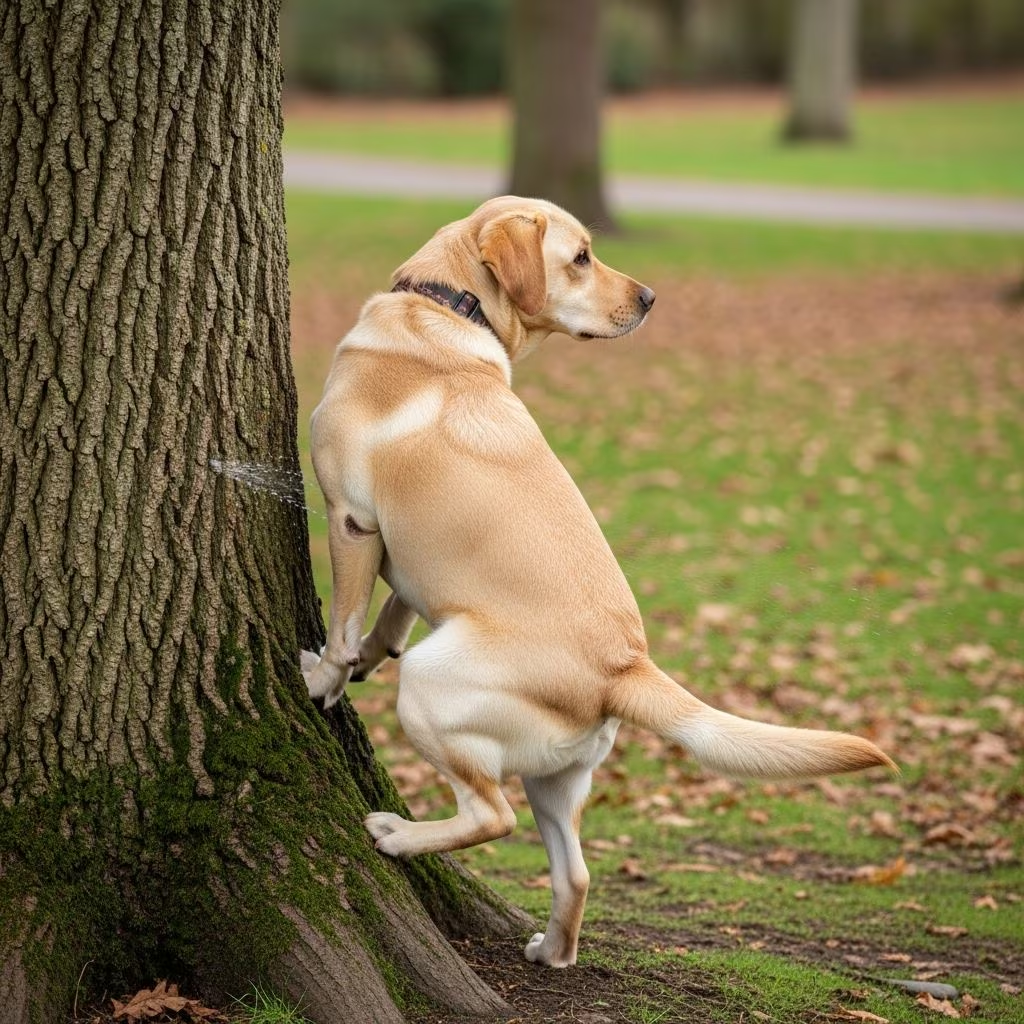
Dogs deposit small amounts of urine on vertical surfaces or objects as a natural communication method, distinct from full bladder emptying, to convey identity, status, and reproductive information to other dogs.
The Science of Scent Communication in Dogs
Canine urine contains pheromones—chemical signals that carry detailed information about the marker’s sex, reproductive status, health, stress levels, and social standing. Other dogs investigate these \”pee mail\” spots by sniffing to gather intelligence on recent visitors, detect females in estrus, or assess potential rivals.
This olfactory exchange enables dogs to navigate social landscapes without direct confrontation. Research from a 2011 study documented dogs at park entrances, revealing how they strategically sniff and respond to existing marks, prioritizing scents from same-sex or unfamiliar individuals.
Territorial Instincts Driving Marking Behavior
Marking primarily serves to claim and advertise territory. Dogs lift a leg to target upright objects like trees, furniture legs, or walls, depositing just enough urine to leave a scent signature without fully voiding the bladder.
In multi-dog environments or novel areas, overmarking—urinating directly atop another dog’s scent—asserts dominance, particularly among intact males of high social rank. Adjacent marking, placing urine nearby rather than on top, is a subtler tactic often seen in females.
- Key territorial triggers: New pets, visitors, or neighborhood dogs entering the yard.
- Unfamiliar scents from luggage, guests’ belongings, or rearranged furniture.
- Outdoor hotspots like dog parks or walks where multiple scents converge.
Anxiety and Stress as Hidden Culprits
Beyond territory, marking signals underlying emotional distress. Household upheavals—such as schedule changes, moves, or owner absences—prompt anxious dogs to remark familiar spots for reassurance.
Separation anxiety manifests in repeated indoor marking on owner-scented items like beds or shoes. Conflicts with household pets or exposure to strange dogs through fences can heighten insecurity, leading to defensive scenting.
| Trigger Type | Examples | Behavioral Signs |
|---|---|---|
| Territorial | New animals in home, yard intruders | Leg-lifting on boundaries, overmarking |
| Anxiety-Related | Routine changes, isolation | Indoor marking on personal items |
| Social | Females in heat nearby, rival males | Increased frequency outdoors |
Gender Differences in Marking Patterns
Contrary to common belief, both sexes mark, though styles differ. Males urinate more often upon entering new spaces and favor overmarking rivals’ scents. Females investigate diverse urine sources extensively but prefer adjacent placement.
Intact dogs exhibit stronger tendencies; neutering/spaying reduces but doesn’t eliminate the behavior in 20-50% of cases, per veterinary observations.
- Males: Focus on male urine, frequent in competitive settings.
- Females: Broader sniffing interests, competitive adjacent marks.
Developmental Timeline and When to Worry
Marking emerges post-sexual maturity, around 6-12 months, with 70% of dogs starting by 18 months and 90% by age 2. This milestone aligns with hormonal surges and social awareness growth.
Indoor persistence past puppyhood warrants intervention. Rule out medical issues like urinary infections first via vet exam—frequent small voids mimic marking but stem from health problems.
Effective Strategies to Curb Indoor Marking
Management combines prevention, training, and root-cause resolution. Punishment fails, as dogs link scolding to the act’s aftermath, not intent.
- Constant supervision: Tether dog to you indoors; crate or confine when unsupervised.
- Clean thoroughly: Use enzymatic cleaners to erase scents completely—residual odors invite remarking.
- Scheduled outings: Frequent potty breaks reduce bladder opportunities for mischief.
- Positive reinforcement: Reward outdoor elimination; interrupt indoor attempts with a cue and redirect outside.
For persistent cases, consult certified behaviorists. Counter-conditioning pairs marking triggers with treats, while desensitization gradually exposes dogs to stressors.
Role of Spaying and Neutering
Surgical sterilization curbs marking in 50-90% of cases, especially if performed pre-maturity. Hormonal reduction diminishes drive, though learned habits may linger.
Weigh benefits against health risks with your vet; combine with behavior mods for best outcomes.
Environmental Modifications for Success
Alter your home to discourage marking:
- Block access to favorite spots with baby gates or furniture rearrangement.
- Provide ample outdoor marking opportunities during walks.
- Incorporate pheromone diffusers mimicking calming maternal scents.
- Maintain consistent routines to minimize anxiety spikes.
Common Myths Debunked
Myth: Only males mark. Females do too, with distinct patterns.
Myth: It’s spiteful revenge. Instinct drives it, not emotion toward owners.
Myth: Scolding stops it. It amplifies fear-based marking.
Frequently Asked Questions
Why does my neutered dog still mark indoors?
Habit or anxiety persists post-surgery; address triggers via training and environment changes.
Is marking the same as house soiling?
No—marking uses tiny urine volumes on verticals; soiling is larger puddles anywhere.
How do I know if it’s medical?
Vet check for UTIs or diabetes if volume or frequency seems off.
Will my puppy outgrow marking?
Most refine it outdoors post-maturity, but intervention prevents indoor entrenchment.
Can training eliminate it completely?
Management achieves 80-90% success; full elimination varies by cause.
Understanding marking empowers owners to respond compassionately, transforming frustration into effective solutions for harmonious living.
References
- Canine Scent Marking: What, Why, and Next Steps — Embrace Pet Insurance. 2023. https://www.embracepetinsurance.com/waterbowl/article/canine-scent-marking
- Canine Scent Marking: Who’s Peeing Where – and Why? — PetPlace. 2023. https://www.petplace.com/article/dogs/pet-behavior-training/canine-scent-marking-whos-peeing-where-and-why
- Dog Behavioral Problems: Marking — VCA Animal Hospitals. 2024-01-15. https://vcahospitals.com/know-your-pet/dog-behavior-problems-marking-behavior
- Dog Behavior Problems: Marking Behavior — Arch Animal Hospital West. 2023. https://archanimalhospitalwest.com/dog-behavior-problems-marking-behavior/



