

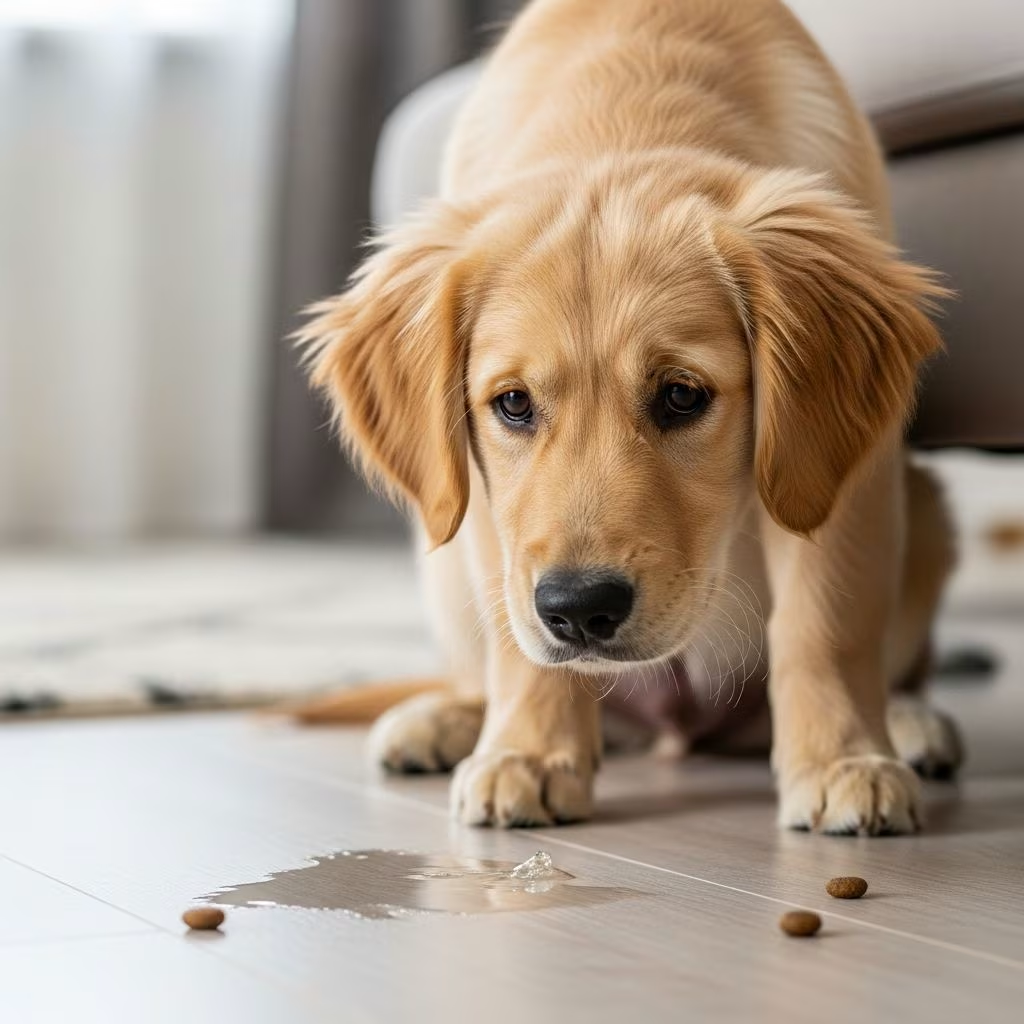
Many dog owners encounter unexpected puddles inside the home, often linked to submissive or excitement urination. These involuntary behaviors stem from emotional responses rather than poor housetraining, affecting puppies and young dogs most frequently. Recognizing the difference allows for targeted solutions that promote confidence and control.
Defining the Two Main Types of Involuntary Urination
Submissive urination occurs when a dog feels intimidated or deferential, releasing small amounts of urine to signal non-threat. This typically happens during greetings from owners or strangers, scolding, or loud environments, accompanied by cowering, tail tucking, or rolling over. Excitement urination, by contrast, arises from overwhelming joy, such as during reunions after absences or play sessions, where the dog leaks urine due to loss of bladder control amid high arousal.
Both are common in females and puppies under one year, with males less affected due to anatomical differences like longer urethras. Most dogs naturally mature out of these patterns by gaining emotional maturity and better sphincter control.
Spotting the Signs: Behaviors and Triggers
Observe your dog’s body language to pinpoint the type. For **submissive urination**:
- Ears pinned back, avoidance of eye contact.
- Low body posture, trembling, or exposing the belly.
- Triggers: Approaching from above, direct stares, raised voices, or new people.
For **excitement urination**:
- Wagging tail, jumping, playful whining.
- Triggers: Owner’s return home, guests arriving, or vigorous petting.
A table comparing the two can clarify distinctions:
| Aspect | Submissive Urination | Excitement Urination |
|---|---|---|
| Body Language | Fearful, cowering | Playful, energetic |
| Triggers | Intimidation, scolding | Reunions, play |
| Amount of Urine | Small dribbles | Larger leaks |
| Age Group | Puppies, shy adults | Young puppies |
These cues guide appropriate responses, preventing escalation.
Medical Checks: Ruling Out Health Problems First
Before behavioral fixes, consult a veterinarian to exclude issues like urinary tract infections (UTIs), incontinence, or dietary shifts causing frequent urges. Symptoms overlapping with emotional urination include dribbling without awareness or sudden changes in habits. A full exam, including urinalysis, ensures no underlying conditions mimic these behaviors. VCA Hospitals recommends this as step one, noting infections can weaken bladder control.
Everyday Management Strategies for Quick Relief
Immediate changes reduce incidents while long-term training builds skills. Key tactics include:
- Calm Interactions: Greet quietly without bending over, eye contact, or overhead pats, which dogs perceive as dominant.
- Ignore Episodes: Clean silently with enzymatic cleaners to erase scents; never scold, as it heightens anxiety.
- Scheduled Potty Breaks: Frequent outdoor trips link relief to appropriate spots, especially post-excitement.
- Low-Key Environment: Minimize loud noises, sudden movements; maintain routines for security.
For greetings, ask visitors to stand still and toss treats on the floor, redirecting focus positively.
Building Lasting Confidence Through Training
Positive reinforcement fosters self-assurance, reducing submissive tendencies. Start with simple commands:
- Teach “sit” for greetings: Reward calm sitting before attention.
- Use treats/l praise for desired behaviors, avoiding physical corrections.
- Gradual desensitization: Expose to triggers at low intensity, pairing with rewards.
- Socialization: Controlled meets with people/dogs to normalize interactions.
End sessions successfully to boost morale. Over weeks, dogs learn composed responses replace leaks.
Advanced Techniques for Stubborn Cases
If basics fail, consider professional input. Behaviorists tailor plans, sometimes adding pheromone diffusers like Adaptil for anxiety relief or medications enhancing bladder tone. Track incidents in a journal noting triggers, aiding pattern identification. Consistency across household members prevents mixed signals.
Common Myths and Proven Realities
Myth: It’s defiance or poor training.
Reality: Purely involuntary reflex; punishment worsens it.
Myth: Only puppies do this.
Reality: Adults with anxiety histories may persist; early intervention helps.
FAQs on Dog Urination Challenges
Will my dog outgrow this?
Yes, most do by 1-2 years as maturity improves control, aided by training.
Is it separation anxiety?
Possibly linked; excited peeing on returns signals distress. Address with alone-time prep.
How long until improvement?
Weeks to months with consistency; track progress.
Should I neuter/spay?
Not directly related, but consult vet for overall behavior benefits.
What cleaners work best?
Enzyme-based to fully break down scents.
Long-Term Prevention for a Happy Home
Sustained calm routines, ongoing training, and confidence-building ensure issues fade. Celebrate small wins; patience yields a secure, dry household. If progress stalls, professional guidance accelerates success.
References
- Training to Stop Submissive Urination in Dogs — WebMD. Accessed 2026. https://www.webmd.com/pets/dogs/submissive-urination
- Submissive Urination in Dogs — Morris Veterinary Center. Accessed 2026. https://morrisvetcenter.com/companion-animal/behavior-issues/-submissive-urination-in-dogs.html
- Dog Behavior Problems – Submissive, Excitement, and Conflict Urination — VCA Animal Hospitals. Accessed 2026. https://vcahospitals.com/know-your-pet/dog-behavior-problems–submissive-excitement-and-conflict-urination
- Submissive Urination — SPCA of Wake County. Accessed 2026. https://spcawake.org/services/pet-behavior/submissive-urination/
- How to Stop Dog Submissive Urination and Excited Peeing — Best Friends Animal Society. Accessed 2026. https://bestfriends.org/pet-care-resources/how-stop-dog-submissive-urination-and-excited-peeing
- Submissive and Excitement Urination — San Francisco SPCA. Accessed 2026. https://www.sfspca.org/resource/submissive-and-excitement-urination/



