

Urinary stones, medically known as uroliths, represent one of the most common urinary complications affecting dogs today. These mineral deposits can form in the bladder or kidneys, potentially causing discomfort, infection, and serious complications if left untreated. While surgical removal remains the definitive treatment when stones have already developed, the focus for responsible dog owners should center on prevention strategies that minimize formation risk.
Understanding Urinary Stone Formation in Dogs
Urinary stones develop when minerals accumulate and crystallize in concentrated urine. Several factors contribute to this process, including dietary composition, urinary pH levels, hydration status, and genetic predisposition. Different dog breeds show varying susceptibilities to specific stone types, making individualized prevention approaches essential.
The most common stone types affecting dogs include calcium oxalate (CaOx) stones, struvite stones, and urate stones. Each type requires distinct prevention strategies because the mineral composition and formation triggers differ significantly. Understanding which stone type your dog is prone to developing allows veterinarians to recommend targeted interventions.
The Critical Role of Hydration in Stone Prevention
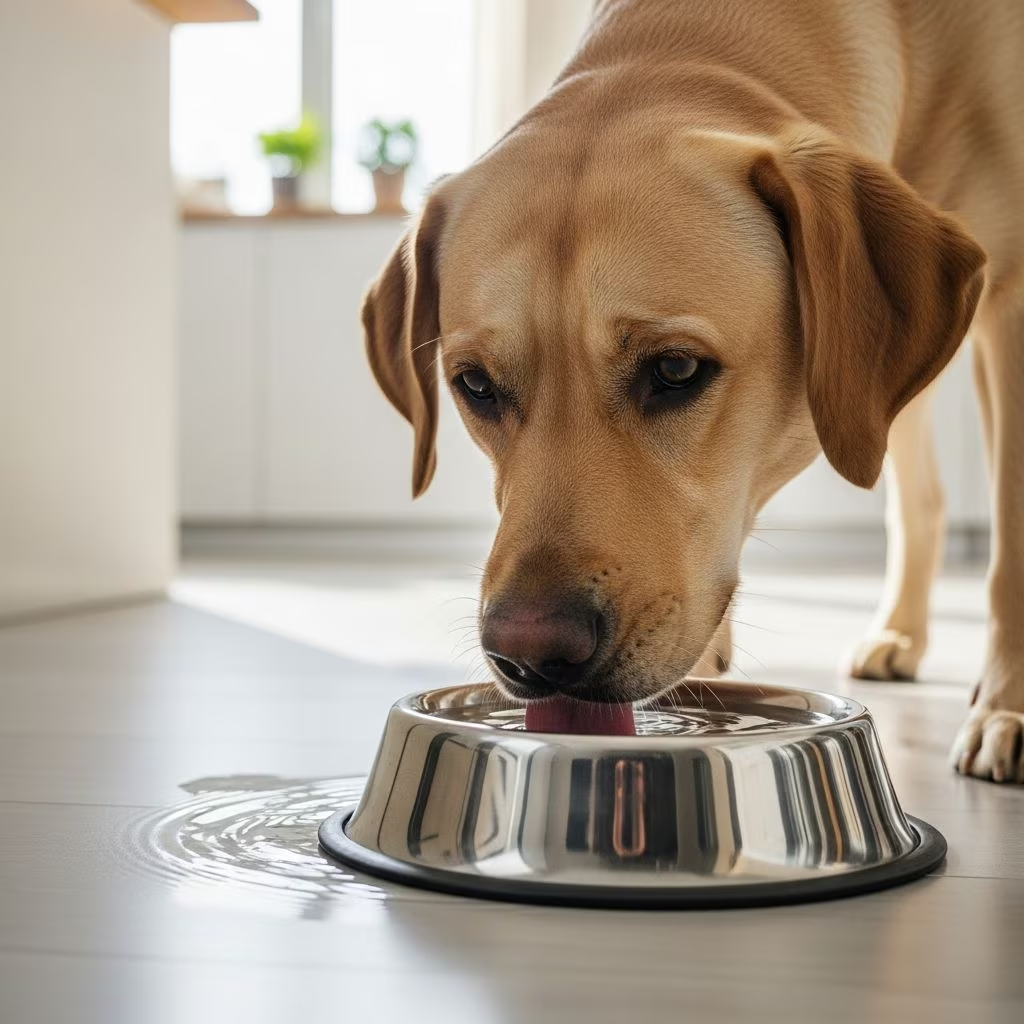
Adequate water consumption stands as the foundational element in urinary stone prevention. When dogs consume insufficient fluids, their urine becomes increasingly concentrated, creating an environment where minerals more readily precipitate into crystal formations that eventually develop into stones. Conversely, well-hydrated dogs produce dilute urine that makes stone formation considerably less likely.
To maximize your dog’s fluid intake, consider these practical approaches:
- Provide constant access to fresh, clean water throughout the day and night
- Add water to dry kibble during feeding to increase moisture content
- Transition partially or completely to canned food formulations that contain significantly higher moisture levels
- Use water fountains designed for pets to encourage increased drinking through moving water appeal
- Monitor urine specific gravity during veterinary visits, aiming for values near 1.018 to ensure adequate hydration
The goal of increased hydration is to produce urine with appropriate dilution levels that discourage mineral supersaturation. Studies consistently demonstrate that dogs maintaining higher urine output experience substantially reduced stone recurrence rates.
Dietary Management Strategies for Different Stone Types
Calcium Oxalate Stone Prevention Through Diet
Calcium oxalate stones present particular challenges because conventional veterinary practice traditionally viewed them as irreversible and unresponsive to dietary modification. However, emerging research contradicts this perspective. Recent studies indicate that canned diets containing adequate protein, fat, and mineral content while maintaining low carbohydrate levels may effectively minimize calcium oxalate stone formation risks.
Key dietary modifications for calcium oxalate prevention include:
- Reducing sodium intake to decrease urinary calcium excretion
- Moderating protein levels while ensuring nutritional completeness
- Limiting supplemental vitamins C and D, which contribute to oxalate formation
- Choosing high-moisture canned formulations over dry kibble
- Avoiding excessive mineral supplementation unless specifically recommended by your veterinarian
Struvite Stone Prevention Approach
Struvite stones form differently from calcium oxalate stones and respond well to targeted dietary intervention. These stones frequently develop secondary to urinary tract infections, making infection prevention integral to stone prevention strategies.
Therapeutic diets designed for struvite stone prevention typically feature:
- Acidified urine formulations that make the urinary environment inhospitable for struvite precipitation
- Lower protein, phosphorus, and magnesium content to reduce stone-forming minerals
- Increased moisture to promote dilute urine and frequent urination
- Controlled methionine and cystine levels to support acidification
Urate Stone Prevention Methods
Dogs with genetic predisposition to urate stones or those with underlying liver conditions like portosystemic shunts require specific nutritional approaches. Low-purine diets significantly reduce uric acid production, the primary component of urate stones. These diets restrict organ meats, certain legumes, and other high-purine ingredients while maintaining essential amino acid balance.
When dietary management proves insufficient, pharmaceutical interventions become necessary. Allopurinol prevents the conversion of purines to uric acid, substantially reducing urate stone formation risk. This medication typically requires long-term administration and close monitoring.
Optimizing Urinary pH Levels
Urinary pH significantly influences which minerals precipitate and form crystals. Different stone types form preferentially at different pH ranges, making pH adjustment a powerful prevention tool.
For calcium oxalate prevention, maintaining urinary pH between 6.5 and 7.5 helps prevent stone formation. Slightly alkaline urine discourages calcium oxalate crystallization while avoiding excessive alkalinization that could promote calcium phosphate stone development.
Potassium citrate supplementation provides an effective means of achieving target pH levels when dietary measures alone prove insufficient. Citrate additionally functions as a natural calcium chelator, binding calcium ions and reducing their availability for stone formation. Research demonstrates that calcium citrate supplementation with meals helps absorb and bind excess oxalic acid in the gastrointestinal tract, preventing intestinal absorption and subsequent urinary excretion.
For struvite stone prevention, acidic urine pH (4.5 to 6.5) inhibits struvite precipitation, though care must be taken not to promote other stone types through excessive acidification.
Medical Interventions and Pharmaceutical Support
Beyond dietary modifications, several medications support urinary stone prevention in susceptible dogs:
Thiazide Diuretics
Dogs prone to calcium oxalate stones benefit from thiazide-class diuretics like hydrochlorothiazide rather than loop diuretics such as furosemide. Thiazides reduce urinary calcium excretion while promoting increased urine volume, creating a dual benefit for stone prevention.
Mineral Supplementation
Magnesium oxide supplementation combined with pyridoxine (vitamin B6) has demonstrated remarkable efficacy in preventing recurrent calcium oxalate stones. Clinical studies published in peer-reviewed journals documented over 90% reductions in stone formation when dogs received appropriate magnesium and vitamin B6 supplementation for extended periods. This combination increases urine’s ability to maintain calcium oxalate in solution rather than allowing precipitation.
Urinary Alkalinizing Agents
When dietary measures cannot achieve target urinary pH, potassium citrate provides pharmaceutical support. This supplement requires careful dosing (typically 75 mg/kg twice daily, adjusted as needed) and regular monitoring to achieve optimal pH without overcorrection.
Infection Prevention and Monitoring
Urinary tract infections significantly increase struvite stone formation risk and can complicate other stone types. Regular urine monitoring becomes essential for dogs with stone history or predisposition.
Recommended monitoring protocols include:
- Performing urine culture and sensitivity testing every three to six months for dogs with recurrent infection history
- Initiating appropriate antibiotic therapy immediately when infections develop
- Considering long-term low-dose antibiotic prophylaxis for dogs with frequent recurrent infections
- Maintaining adequate hydration to support natural urinary flushing mechanisms
- Ensuring dogs have frequent opportunities to urinate rather than holding urine for extended periods
Breed-Specific Considerations
Certain dog breeds show increased susceptibility to specific stone types due to genetic factors. Dalmatians genetically produce elevated uric acid levels, making them exceptionally prone to urate stone formation. These dogs require lifelong management including purine-restricted diets and often allopurinol supplementation.
Other breeds with documented increased calcium oxalate stone risk require heightened prevention vigilance. Conversely, breeds such as Cocker Spaniels, German Shepherds, Golden Retrievers, and Labrador Retrievers demonstrate reduced calcium oxalate stone formation risk, though individual variation still occurs.
Emergency Interventions When Prevention Fails
Despite comprehensive prevention efforts, some dogs develop urinary stones requiring intervention. Treatment options vary based on stone size, location, type, and symptomatology.
Available treatment approaches include:
- Intravenous fluid administration and diuretic therapy to encourage spontaneous stone passage for small, non-obstructing stones
- Shock wave lithotripsy to fragment stones into smaller pieces that pass through the urinary tract
- Laser lithotripsy for precise stone fragmentation
- Bladder catheter placement to bypass ureteral obstructions
- Surgical stone removal when other options prove ineffective or when stones cause obstruction
- Dietary dissolution therapy for struvite stones using specially formulated therapeutic diets
Complementary Therapeutic Approaches
Veterinary practitioners increasingly incorporate complementary modalities alongside conventional prevention strategies. Veterinary neuroacupuncture (VNA) shows promise as a non-invasive, non-painful technique that stimulates the nervous system to increase blood flow to kidneys and enhance urine output. This approach may help prevent stone recurrence by promoting more dilute urine production.
Creating a Sustainable Prevention Plan
Successful urinary stone prevention requires commitment to consistent, long-term management strategies. Dogs with established stone history or high genetic predisposition often require therapeutic dietary management for their entire lifespan. This commitment involves:
- Maintaining prescribed therapeutic diets exclusively, avoiding commercial treats and human foods unless veterinarian-approved
- Providing access to adequate fresh water at all times and encouraging increased consumption
- Administering prescribed medications and supplements consistently
- Scheduling regular veterinary rechecks and urine monitoring as recommended
- Maintaining detailed records of any urinary symptoms or behavioral changes
- Communicating promptly with your veterinarian about any concerns
The investment in prevention strategies dramatically outweighs the financial and emotional costs of treating recurrent stone formation or managing surgical complications. By understanding your dog’s specific risk factors and implementing targeted prevention protocols, you can substantially reduce the likelihood of debilitating urinary stones while maintaining your pet’s quality of life and urinary health for years to come.
References
- Struvite Bladder Stones in Dogs — College of Veterinary Medicine, Cornell University. https://www.vet.cornell.edu/departments-centers-and-institutes/riney-canine-health-center/canine-health-topics/struvite-bladder-stones-dogs
- Urolithiasis in Dogs – Urinary System — Merck Veterinary Manual. https://www.merckvetmanual.com/urinary-system/urolithiasis-in-small-animals/urolithiasis-in-dogs
- Bladder Stones in Dogs: Causes, Symptoms, & Treatment — Long Beach Animal Hospital. https://lbah.com/canine/dog-bladder-stones/
- Urinary Stones — American College of Veterinary Surgeons. https://www.acvs.org/small-animal/urinary-stones/
- Kidney Stones in Dogs and Cats: Signs, Treatment, and Care — MedVet. https://www.medvet.com/kidney-stones-in-dogs-and-cats/



