

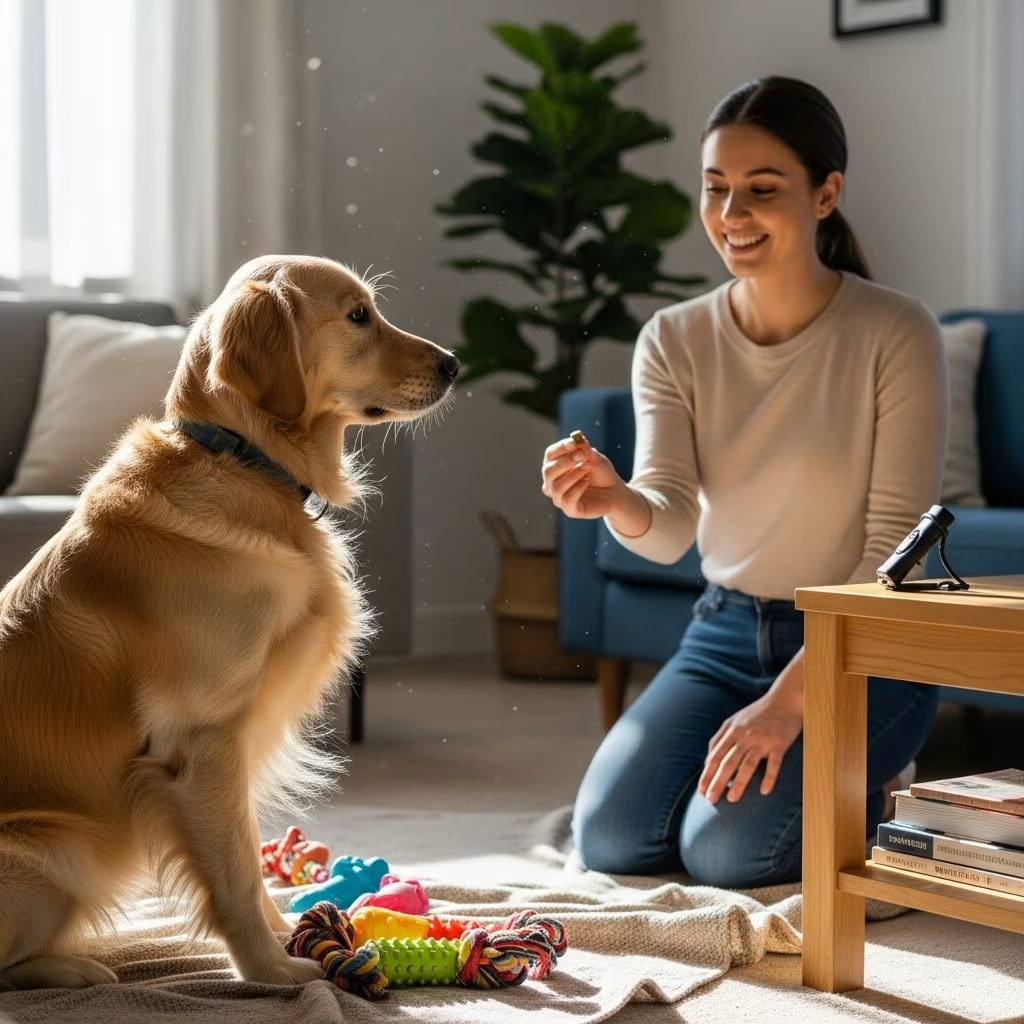
Training Your Dog to Do Tricks Gives You More Than Bragging Rights
While dog tricks might seem like flashy entertainment at talent shows or casual lawn gatherings, they offer far more value than simply impressing friends and family. Teaching your dog tricks provides them with valuable skills, increases their focus and concentration, and strengthens the bond between you and your canine companion. When executed through positive reinforcement methods, trick training becomes a rewarding experience for both dog and owner, creating a foundation of trust and communication that extends into all areas of your shared life.
Why Is Trick-Training Good for Dogs?
According to renowned stunt-dog trainer and trick-dog performer Kyra Sundance, who has entertained and educated thousands of pet parents through her performances, videos, and books, trick training offers multiple developmental benefits. “Teaching tricks not only teaches skills but also teaches focus and establishes a pattern of learning in the dog,” Sundance explains. “Tricks are taught through positive training methods, which promote a bond between canine and human.”
Through consistent trick-training, several key outcomes occur in your dog’s cognitive and emotional development:
- Enhanced Focus: Trick training requires your dog to concentrate on you and the task at hand, improving their ability to filter out distractions and maintain attention on your cues.
- Established Learning Patterns: Regular training sessions create neural pathways that make learning new behaviors easier over time, as your dog becomes accustomed to the learning process itself.
- Strengthened Human-Canine Bond: The collaborative nature of positive reinforcement training builds trust and deepens the emotional connection between you and your dog.
- Mental Stimulation: Trick training provides cognitive engagement that keeps your dog’s mind active and healthy, reducing boredom-related behavioral issues.
- Physical Exercise: Many tricks involve movement and body positioning, providing physical activity that contributes to overall health and fitness.
Dog Trick-Training Is Beneficial for All Ages
One of the most valuable aspects of trick training is its universal applicability across your dog’s entire lifespan. Whether you have a young puppy or a senior dog, trick training offers opportunities for growth, bonding, and enrichment.
Training Puppies
When Kyra Sundance began training her Weimaraner puppy Jadie, she started immediately with fundamental tricks. “We started training right away with simple tricks such as ‘sit,’ ‘shake hands,’ ‘spin a circle,’ and ‘fetch,'” Sundance recalls. “We trained in many five-minute sessions per day and worked on several different tricks per session. We went through a lot of treats!”
The early investment in puppy training pays remarkable dividends. At just four-and-a-half months old, Jadie could perform 50 tricks, including rolling herself in a blanket, getting the newspaper from the mailbox, tidying her toys into a toy box, wiping her paws on a doormat, ringing a bell to go outside, and dropping litter into a step can. “Spending this quality time together while she was a puppy built a bond between us that will last a lifetime,” Sundance notes.
Training Adult and Senior Dogs
If your dog is well beyond the puppy stage, there’s no need to worry. Trick-training is the perfect outlet for dogs of any age, regardless of their previous experience level. You’re guaranteed to have a happier and healthier dog when you teach them tricks, whether they’re in their prime or their golden years. Starting with easy tricks ranging from “sit” and “down” on command to more playful behaviors like “peekaboo” and “take a bow” provides an excellent entry point. Treats serve as wonderful motivators during these sessions.
“Sometimes, we need to remind ourselves that training is fun!” Sundance adds. “This joyful attitude builds a bond that will extend into all areas of your life.” This perspective is particularly important when working with older dogs, as it ensures the experience remains positive and enjoyable for both you and your pet.
Easy Tricks to Teach Your Dog
Getting started with trick training doesn’t require complicated techniques or extensive prior experience. Here are three foundational tricks that work well for dogs of all ages:
Touch
The “touch” command is an excellent starting point for trick training. To teach this behavior, start by placing your hand—palm facing your dog—just a few centimeters from your dog’s nose. Most dogs will naturally want to sniff and touch your hand. When they do, immediately say “good” and give a reward. Repeat this several times over the next few days.
Once your dog consistently touches your hand at close range, increase the difficulty by placing your hand to the side of their face and rewarding when they touch. If your dog paws, licks, or shakes your hand instead of touching it with their nose, simply remove your hand and try again. This behavior, called “offering,” indicates your dog is experimenting with other actions to earn the treat. Avoid rewarding these alternative behaviors.
Once your dog is reliably touching your hand each time, add the verbal cue “touch” when you present your hand. Gradually move your hand further away from your dog. With practice, your dog will soon be running across the room to “touch” your hand on command. This trick is particularly useful for redirecting your dog’s attention away from distractions or other dogs.
Spin in a Circle
Teaching your dog to spin in a circle is not only entertaining but also beneficial for their physical health, as the spinning motion loosens up their body. To teach this trick, hold a treat at nose height and lure your dog in a circle, having them follow the treat. Once your dog completes the full circle, immediately give them the treat.
If your dog isn’t completing full circles initially, break the behavior into smaller sections and reward partial circles. Gradually shape the behavior toward complete rotations. If your dog jumps up toward the treat, your hand is too high; keep the treat at the same level as your dog’s nose to maintain proper form. This trick teaches body awareness and provides gentle exercise.
Shake a Paw
“Shake” is a classic trick that most dogs can learn with patience and consistency. Put a treat in a closed fist and present it to your dog. Leave your hand there and be patient. If your dog licks your hand, simply ignore them. If they paw at your hand, immediately give them a treat. Repeat this several times.
As your dog makes the connection between pawing and receiving a reward, transition to an open hand with your palm facing upward. See if they’ll offer the same paw gesture on the open palm. With continued practice, you’ll successfully be shaking paws with your dog in no time.
Capturing Natural Behaviors as Tricks
One effective training strategy involves identifying and reinforcing behaviors your dog already performs naturally. For best success, capture behaviors that come so naturally to your dog that they perform them frequently. You can then reinforce these behaviors often, potentially fine-tuning them to achieve the perfect trick.
Several natural dog behaviors can easily be transformed into impressive tricks:
- Paw-based behaviors: Dogs who naturally use their paws can learn high-five, wave, or shake variations.
- Crawling: Dogs who tend to creep when lying down are easy to teach to crawl on command.
- Belly up: Dogs who rest on their backs with their legs in the air are already performing a behavior that can be cued as “belly up.”
Advanced Trick Training: The Shell Game
Once your dog has mastered basic tricks, you can progress to more complex behaviors. The shell game represents an intermediate trick that combines multiple skills and cognitive engagement.
Step 1: Introduce the Game
Start with a single pot or cup and place a treat under it. Allow your dog to sniff it and show interest. Once they demonstrate clear interest in the pot, encourage them to paw at it. When they successfully paw at the pot, say “good!” and lift it to reveal their reward. This establishes the basic concept of the game.
Step 2: Encourage Pawing
After your dog catches on to the basic concept, hold the pot in place and continue encouraging them until they paw at it. Reward any paw contact with enthusiasm and lift the pot to confirm their success. This step strengthens their understanding of the required behavior.
Step 3: Add More Pots
Add two more pots and hold them in place so your dog doesn’t knock them over. Use different pitches in your voice to calm your dog as they sniff each pot and to excite them when they show interest in the correct one. If your dog paws at an incorrect pot, do not lift it. Instead, encourage them to keep searching. This teaches discrimination and decision-making.
Step 4: Reward Correct Choices
When your dog indicates the correct pot and paws at it, say “good!” and lift the pot to reveal their reward. Be encouraging throughout the process and avoid saying “no.” Practice only a few times per session and always end with a successful attempt, even if you need to go back to using just one pot to ensure success.
General Tips for Successful Trick Training
Regardless of which tricks you choose to teach, certain principles apply to all successful training sessions:
- Keep sessions short: Five to ten-minute sessions are ideal, as they maintain your dog’s focus and enthusiasm.
- Use high-value treats: Your treats need to be more appealing than environmental distractions. Hot dogs, ham, and cheese work well for most dogs.
- Practice frequently: Multiple short sessions per day are more effective than infrequent longer sessions.
- Be encouraging: Maintain a positive, enthusiastic tone throughout training. Avoid saying “no” or showing frustration.
- End on success: Always conclude training sessions with a successful attempt, no matter how small, to maintain your dog’s confidence and motivation.
- Remember the joy: Approach training with a playful attitude. Your dog will pick up on your energy and enthusiasm.
Frequently Asked Questions
Q: At what age can I start teaching my dog tricks?
A: You can start teaching tricks as early as puppyhood, even as young as a few months old. Simple tricks like “sit” and “shake” can be taught to puppies, while more complex tricks can be introduced as they mature. Adult dogs of any age can also learn tricks effectively.
Q: How long does it take to teach a dog a trick?
A: The time varies depending on the trick’s complexity and your dog’s previous training experience. Simple tricks like “sit” might take just a few days, while more complex tricks could take weeks or months of consistent practice.
Q: Can older dogs learn new tricks?
A: Absolutely. Trick training is beneficial for dogs of all ages. Older dogs can learn new tricks just as well as younger dogs, and the mental stimulation provides wonderful enrichment for their senior years.
Q: What if my dog seems uninterested in training?
A: Try using higher-value treats, keeping sessions shorter, and ensuring the training environment is free from major distractions. Also, make sure you’re maintaining a positive, fun attitude during training sessions.
Q: Can trick training help with behavioral issues?
A: Yes. Tricks like “touch” and “watch” can be used to redirect your dog’s attention away from triggers or distractions, helping to manage certain behavioral challenges through positive engagement.
Q: How many treats should I use during training?
A: Start with at least one to two cups of pea-sized treats for a training session. The exact amount depends on your dog’s size and the length of your session. Ensure treats are small so you can reward frequently without overfeeding.
References
- Training Your Dog to Do Tricks Gives You More Than Bragging Rights — Kinship. 2025. https://www.kinship.com/dog-behavior/dog-trick-training
- What’s the Point of Trick Training? — Kinship. 2025. https://www.kinship.com/dog-behavior/why-trick-training-is-important
- Nine Useful Tricks to Teach Your Dog — Kinship. 2025. https://www.kinship.com/dog-behavior/useful-tricks-teach-your-dog
- Can You Actually Teach an Old Dog New Tricks? — Adopt a Pet. 2024. https://www.adoptapet.com/blog/behavior-training/can-old-dogs-learn-tricks
- AKC Trick Dog Training Classes — Kinship Dog Training. 2025. https://www.kinshipdogs.com/tricks



