

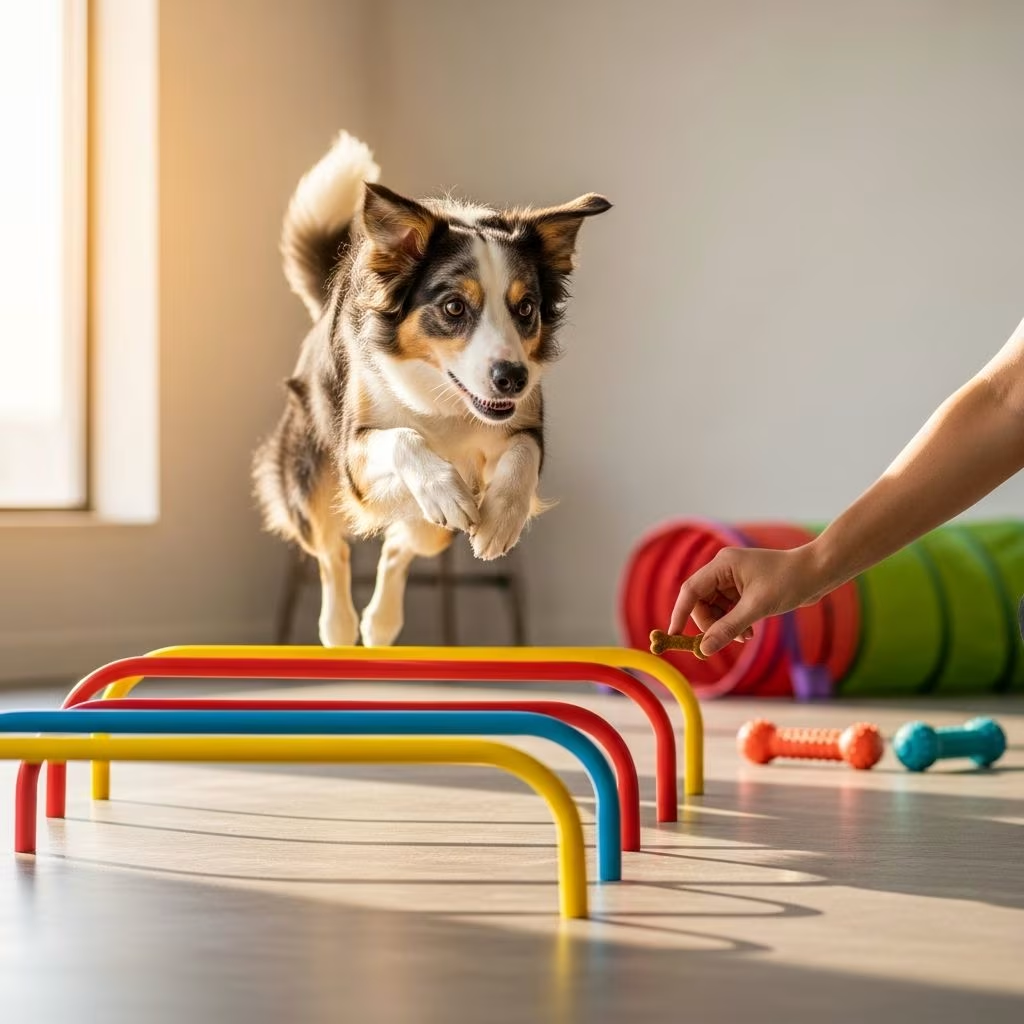
Many dog owners focus solely on teaching their pets basic obedience commands like sit, stay, and down. While these foundational skills remain important, countless benefits emerge when you venture beyond standard obedience into the engaging world of trick training. Teaching your dog specialized tricks represents far more than entertainment—it becomes a comprehensive approach to improving their physical health, mental acuity, emotional well-being, and your relationship together.
Understanding the Scope of Trick Training
Trick training encompasses teaching dogs behaviors beyond basic obedience, such as spin, play bow, high five, rollover, or weave between your legs. These playful yet purposeful activities create an interactive learning experience that differs fundamentally from traditional obedience instruction. The lighthearted nature of trick training encourages a more relaxed atmosphere while still establishing crucial communication patterns between handler and dog.
The practice has gained considerable recognition among professional trainers and behaviorists who recognize its transformative potential. Rather than viewing tricks as mere entertainment, modern dog training specialists understand them as powerful tools for behavioral development and relationship enhancement. This shift in perspective has made trick training increasingly popular among dog owners seeking comprehensive approaches to their pets’ development.
Cultivating Emotional Intelligence and Patience
One of the most underappreciated benefits of trick training involves the personal growth it cultivates in dog handlers. Teaching tricks requires consistency, clear communication, and emotional regulation. When you commit to trick training, you inevitably develop greater patience with your dog as they learn at their own pace.
During the training process, frustration may emerge—a natural human response when progress feels slow. However, successful trick trainers learn to recognize that frustration or irritation directly impacts their dog’s ability to learn and their willingness to engage. Dogs are remarkably perceptive creatures that sense emotional tension and respond by becoming anxious or shutting down.
This dynamic creates a powerful incentive for handlers to develop healthier emotional responses. As you practice managing your frustration and maintaining a positive demeanor, you’re simultaneously creating an environment where your dog feels safe, encouraged, and motivated. This emotional development extends beyond training sessions—many handlers report that the patience cultivated through trick training translates into improved relationships with their dogs in everyday situations.
Enhancing Cognitive Function and Mental Wellness
Dogs require mental stimulation as much as physical exercise, yet many receive insufficient cognitive engagement. Trick training addresses this need directly by presenting novel challenges that activate your dog’s problem-solving abilities and neural pathways.
When your dog learns new tricks, they engage in genuine cognitive work. They must:
- Process your verbal and physical cues
- Connect specific movements to desired outcomes
- Remember learned sequences during future sessions
- Problem-solve when attempting unfamiliar variations
- Maintain focus despite environmental distractions
This mental exercise produces observable changes in canine behavior. Dogs who receive consistent trick training often display improved focus, increased alertness, and greater contentment. The mental engagement prevents the boredom that frequently leads to destructive behaviors like excessive barking, inappropriate chewing, or aggression.
Research on canine cognition demonstrates that mentally stimulated dogs show reduced anxiety and stress markers. The focused attention required during trick training creates a meditative quality for many dogs, resulting in calmer, more balanced temperaments. Following a comprehensive trick training session combined with physical exercise, many previously restless dogs become contentedly calm.
Building Unshakeable Confidence
Observing a shy or anxious dog blossom through trick training represents one of the most rewarding aspects of the practice. Dogs with timid dispositions often lack confidence in their abilities and their place within their social environment. Trick training systematically builds confidence through achievable success experiences.
When a previously nervous dog successfully masters their first trick and receives enthusiastic praise, something shifts internally. They begin to view themselves differently—not as fearful or incapable, but as competent learners worthy of celebration. This psychological transformation manifests in multiple ways:
- Increased willingness to attempt new challenges
- Greater curiosity about their environment
- Improved social interactions with other dogs
- Enhanced responsiveness to handler cues
- Reduced anxiety in novel situations
Group trick training classes amplify this confidence-building benefit. When timid dogs observe other dogs performing tricks with enthusiasm and receiving abundant praise, they experience something powerful—a demonstration that success is possible and rewarding. Many nervous dogs begin expressing interest in participating after witnessing their more confident peers enjoying the experience.
Developing Focus Amid Environmental Distractions
Dogs operating in modern environments face constant distractions—other dogs, interesting scents, moving objects, human activity, and competing sounds. Many owners struggle with dogs who become easily distracted or lose focus during outdoor activities. Trick training directly addresses this challenge by systematically teaching dogs to maintain attention despite environmental stimuli.
During group trick training classes, dogs encounter numerous potential distractions while learning to focus exclusively on their handler. Through consistent reward-based practice, dogs learn that watching their handler and responding to cues yields positive outcomes, while chasing distractions does not. This learned focus proves invaluable in real-world situations.
Dogs trained through trick work demonstrate significantly improved focus during walks near busy streets, in crowded areas, and during outdoor activities. This enhanced attentional control directly improves safety—a dog focused on their handler is far less likely to bolt toward traffic, other animals, or hazardous situations. The practical safety implications make trick training an essential component of responsible dog ownership.
Channeling Excess Energy Productively
Certain breeds, particularly high-energy types like Jack Russell Terriers, Border Collies, and Australian Shepherds, possess seemingly boundless energy. Traditional exercise alone often proves insufficient for these dogs, as they require both physical and mental exertion to achieve genuine contentment.
Trick training serves as an effective energy channel for high-drive dogs. A focused training session engaging both body and mind can tire a dog as thoroughly as an extended physical workout. The mental component makes trick training particularly valuable—it directly addresses the cognitive needs that pure physical exercise cannot fully satisfy.
Handlers frequently report dramatic behavioral improvements after implementing regular trick training with their high-energy dogs. Dogs previously described as chaotic, hyperactive, or difficult often become calm, well-behaved companions. This transformation results directly from finally providing an appropriate outlet for their abundant energy and intelligence.
Reinforcing Obedience Through Positive Association
Trick training strengthens overall obedience and manners through its foundation in positive reinforcement and clear communication. The collaborative nature of trick work establishes stronger handler-dog communication patterns that generalize to all training contexts.
Dogs who regularly participate in trick training develop stronger habits of:
- Responding promptly to handler cues
- Maintaining attention during interactions
- Accepting guidance without resistance
- Anticipating rewards for appropriate behavior
- Seeking handler direction for guidance
These improved obedience patterns naturally extend to everyday situations. A dog who has learned to watch their handler carefully during trick training applies this attentional pattern during walks, visits, and social interactions. The overall effect is a more pleasant, responsive companion in all contexts.
Strengthening the Human-Canine Bond
Perhaps the most profound benefit of trick training involves the relationship enhancement that occurs. Taking intentional time together, communicating clearly, celebrating successes, and working collaboratively toward goals fundamentally strengthens the human-animal bond.
The shared accomplishment of successfully learning a new trick creates meaningful connection moments. These positive shared experiences accumulate over time, building deep trust and affection between handler and dog. Additionally, trick training often involves playful, joyful interactions—a departure from the seriousness of formal obedience work.
Dogs experience and remember these happy training moments. The positive associations formed during trick training sessions create lasting impressions that strengthen emotional bonds. Furthermore, the confidence and contentment that trick training develops in dogs makes them more emotionally available and engaged with their handlers in daily life.
Practical Applications Beyond Entertainment
While entertaining family and friends certainly brings joy, trick training provides functional benefits in numerous real-world scenarios. Handlers can redirect anxious dogs during stressful situations—such as veterinary visits or thunderstorms—by requesting familiar tricks. The mental engagement and positive associations attached to tricks help dogs tolerate challenging circumstances.
Tricks also prove valuable for dogs in specialized roles. Service dogs, therapy dogs, and shelter dogs all benefit tremendously from trick training. A shelter dog displaying multiple tricks becomes far more appealing to potential adopters, who perceive trick-trained dogs as intelligent and well-mannered. This increased adoptability directly impacts outcomes for shelter animals.
Beginning Your Trick Training Journey
Starting trick training requires no special equipment or extensive prior experience. Positive reinforcement remains the foundation—whether using high-value food treats, enthusiastic praise, or favorite toys as rewards. Begin with simple tricks and progress gradually, allowing your dog to experience consistent success.
Many communities offer dedicated trick training classes led by qualified instructors. These classes provide structured learning environments, access to professional guidance, and the additional benefits of group training with other dogs. Online resources and training books also offer valuable guidance for handlers preferring to train independently.
Consistency matters tremendously in trick training. Brief daily sessions prove more effective than sporadic intensive training. Even five to ten minutes daily creates powerful learning and reinforcement patterns.
Recognizing Individual Progress
Every dog learns at their own pace, and recognizing individual progress remains essential for maintaining motivation. One dog might master a new trick in several sessions while another requires weeks of practice. This variation reflects individual learning styles and prior experience, not deficiency or superiority.
Celebrating small victories—partial progress toward a completed trick, improved focus, or increased enthusiasm during sessions—maintains positive momentum. This approach prevents frustration and keeps training enjoyable for both parties.
References
- Why Trick Training Is Good for Dogs and Their People — American Kennel Club. https://www.akc.org/products-services/training-programs/canine-good-citizen/articles/why-trick-training-is-good-for-dogs/
- The Benefits of Teaching Your Dog Tricks — Andrea Arden Dog Training. https://andreaarden.com/dog-training/the-benefits-of-teaching-your-dog-tricks/
- The Surprising Benefits of Teaching Your Dog Tricks — K9 University. https://myk9u.com/surprising-benefits-of-teaching-your-dog-tricks/
- The Power of Trick Training — McCann Professional Dog Trainers. https://www.mccanndogs.com/blogs/articles/the-power-of-trick-training
- 5 Benefits of Trick Training Your Dog — Whole Dog Journal. https://www.whole-dog-journal.com/training/tricks_games_sports/5-benefits-of-trick-training-your-dog/
- Trick Training: Fun, Functional, and Full of Benefits — A Place for Paws. https://aplaceforpaws.com/blogs/news/trick-training-fun-functional-and-full-of-benefits



