

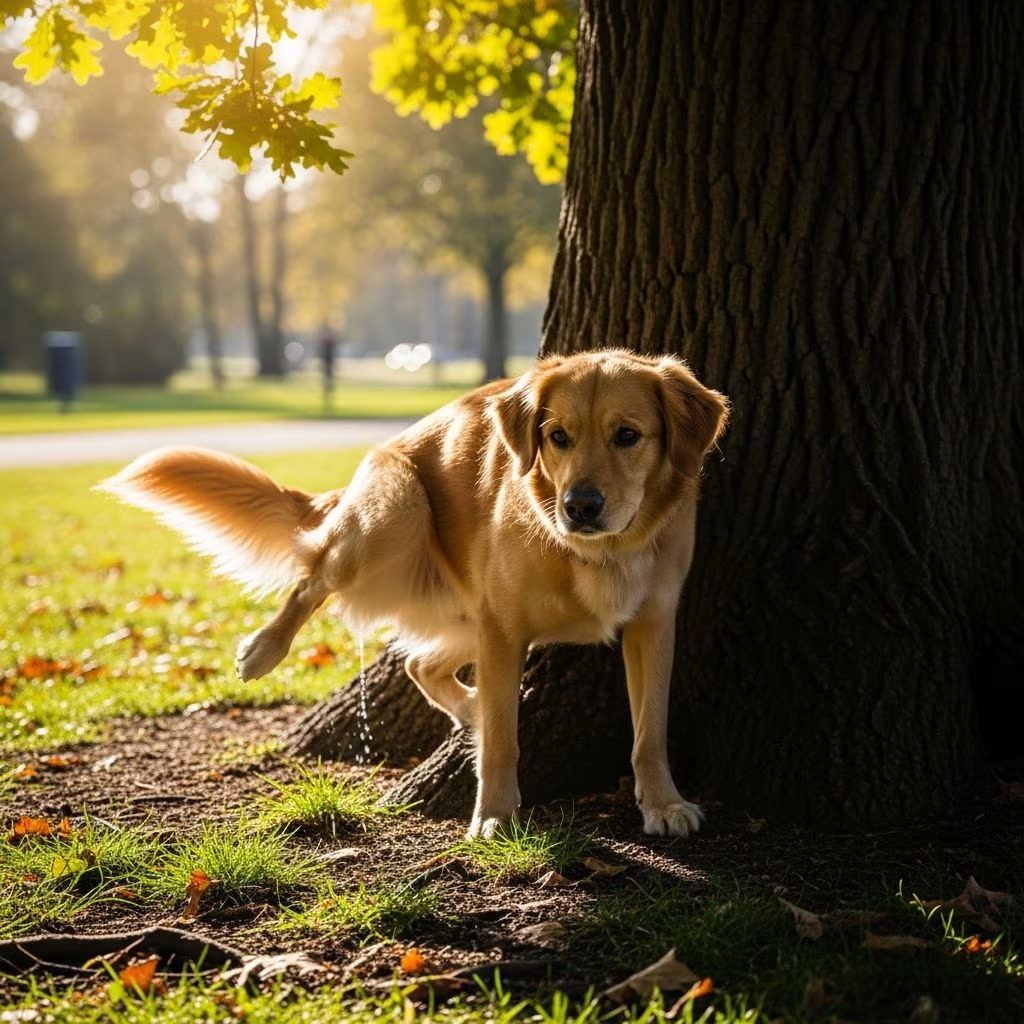
Canines frequently lift their legs against tree trunks during walks or in yards, a behavior rooted in ancestral communication needs. This action serves as a scent-based message to fellow dogs about presence, status, and boundaries, but it poses risks to plant health from chemical buildup.
The Instinctual Drive Behind Canine Tree Marking
Dogs employ urine as a primary tool for social signaling, depositing small quantities on elevated structures like trees to maximize scent dispersal. Vertical surfaces allow pheromones to waft farther than ground-level deposits, creating an airborne ‘signature’ detectable by others from afar. This practice echoes wild pack dynamics where marking delineated safe zones and warned intruders.
Mature dogs, particularly post-sexual maturity around six months, intensify this habit. Intact males often lead in frequency, using it to assert dominance or advertise availability to females. Females in estrus similarly signal receptivity. Even neutered pets retain the impulse, as it’s deeply wired, though spaying/neutering reduces intensity by 50-60% in many cases.
- Territorial assertion: Overmarking rivals’ scents reinforces personal claims on routes or yards.
- Social networking: Urine conveys age, health, diet, and reproductive state, functioning like a communal dispatch board.
- Environmental response: New smells from visitors, rearrangements, or outings prompt renewed marking for reassurance.
Chemical Composition of Dog Urine and Plant Impacts
Dog urine contains urea, which microbes convert to ammonia—a potent bark irritant—and excess nitrogen, disrupting soil balance. Sporadic exposure rarely harms robust trees, but repeated hits concentrate salts, scorching foliage and roots. Grass nearby yellows into barren patches as nitrogen overload mimics fertilizer burn.
Ammonia directly erodes bark, fostering cracks vulnerable to pests and fungi. Soil pH shifts acidic, stunting microbial life essential for nutrient cycling. A single tree targeted by neighborhood packs accumulates damaging levels swiftly, altering growth symmetry.
| Urine Component | Effect on Trees/Grass | Severity Level |
|---|---|---|
| Ammonia | Burns bark, causes discoloration | High (direct contact) |
| Nitrogen | Soil overload, root damage, yellowing | Medium-High (cumulative) |
| Salts | Dehydration of cells, stunted growth | Medium (repeated exposure) |
| Urea | Breaks down to above compounds | Low initially |
Which Trees Face Greatest Risk from Canine Urine
Juvenile trees under 5 years suffer most, as urine blankets a larger bark proportion relative to size. Thin bark amplifies absorption, leading to girdling-like wounds that impede sap flow. Fast-growers recover via dilution across expanding mass, but slow varieties like dwarf fruit trees or certain ornamentals falter longer.
Species vary in resilience:
- Highly susceptible: Maples, birches, young pines—nitrogen-sensitive with delicate bark.
- Moderately tolerant: Oaks, elms—thicker bark buffers initial damage.
- Resistant: Mature evergreens, willows—deep roots evade surface salt buildup.
In high-traffic zones, even stalwarts weaken over seasons. Protect saplings with barriers until established.
Health Conditions Mimicking or Triggering Excessive Marking
Not all tree-targeting stems from behavior; medical issues amplify urination. Urinary tract infections (UTIs) cause frequent small voids with straining or licking. Diabetes elevates thirst/urination via glucose spillover. Kidney disease concentrates urine toxins, irritating bladders.
Senior incontinence arises from sphincter weakness, while endocrine imbalances like Cushing’s flood systems with cortisol-driven output. Orthopedic pain limits squat access, favoring leg-lifts. Rule out via vet urinalysis before behavioral fixes—antibiotics resolve infections rapidly.
- Observe for: Blood in urine, accidents indoors, genital irritation.
- Triggers: Stress from changes (moves, new pets) spikes cortisol, mimicking illness.
Effective Strategies to Redirect Tree Peeing
Positive reinforcement trumps punishment, rewarding designated spots with treats/praise post-potty. Designate a mulch-bed away from trees; its absorbency neutralizes nitrogen. During training, leash-guide to site, ignoring tree pleas.
Environmental tweaks help:
- Install tree guards (plastic wraps) to block access without caging fully.
- Sprinkle baking soda or gypsum on soil to bind excess nitrogen.
- Dilute spots immediately with hose—reduces 70% of salts.
- Rotate walk routes to disrupt ‘hotspot’ memory.
Spay/neuter curtails hormonal drives. Consistency yields results in 2-4 weeks; persistence signals vet needs.
Protecting Your Landscape Long-Term
Mulch rings under trees intercept urine, fostering healthy soil. Plant urine-resistant grasses like fescue blends or install gravel zones. Community education discourages pack piling—portable pee posts lure markings centrally.
For urban walkers, grassy medians beat curbside trees. Homeowners: Fence young plantings. These sustain both pet joy and green spaces.
Frequently Asked Questions
Is occasional tree peeing harmful?
Isolated incidents pose minimal threat; cumulative neighborhood use does.
Can neutering stop marking entirely?
It reduces by half typically, but instinct lingers—training complements.
How to neutralize urine damage quickly?
Flush with water, apply gypsum; reseed tolerant varieties.
Do female dogs mark trees less?
Less dominantly, but estrus boosts it; spaying evens odds.
What’s a good pee post alternative?
Sturdy vertical stakes with synthetic grass toppers attract naturally.
References
- Why Do Dogs Pee on Trees? And How to Stop Them — Dogster. 2023-05-15. https://www.dogster.com/lifestyle/why-do-dogs-pee-on-trees
- 7 Reasons Dogs Are Marking Their Territory & How To Stop It — Rover. 2024-02-10. https://www.rover.com/blog/dog-marking-territory/
- Why Do Dogs Like to Pee on Things (Like Fire Hydrants) — Healthy Solutions for Pets. 2023-11-20. https://healthysolutionsforpets.com/why-does-my-dog-pee-so-much-outside/
- Urine Marking in Dogs — WebMD. 2024-08-05. https://www.webmd.com/pets/dogs/urine-marking-in-dogs
- Dog Behavioral Problems: Marking Behavior — VCA Animal Hospitals. 2023-01-12. https://vcahospitals.com/know-your-pet/dog-behavior-problems-marking-behavior



