

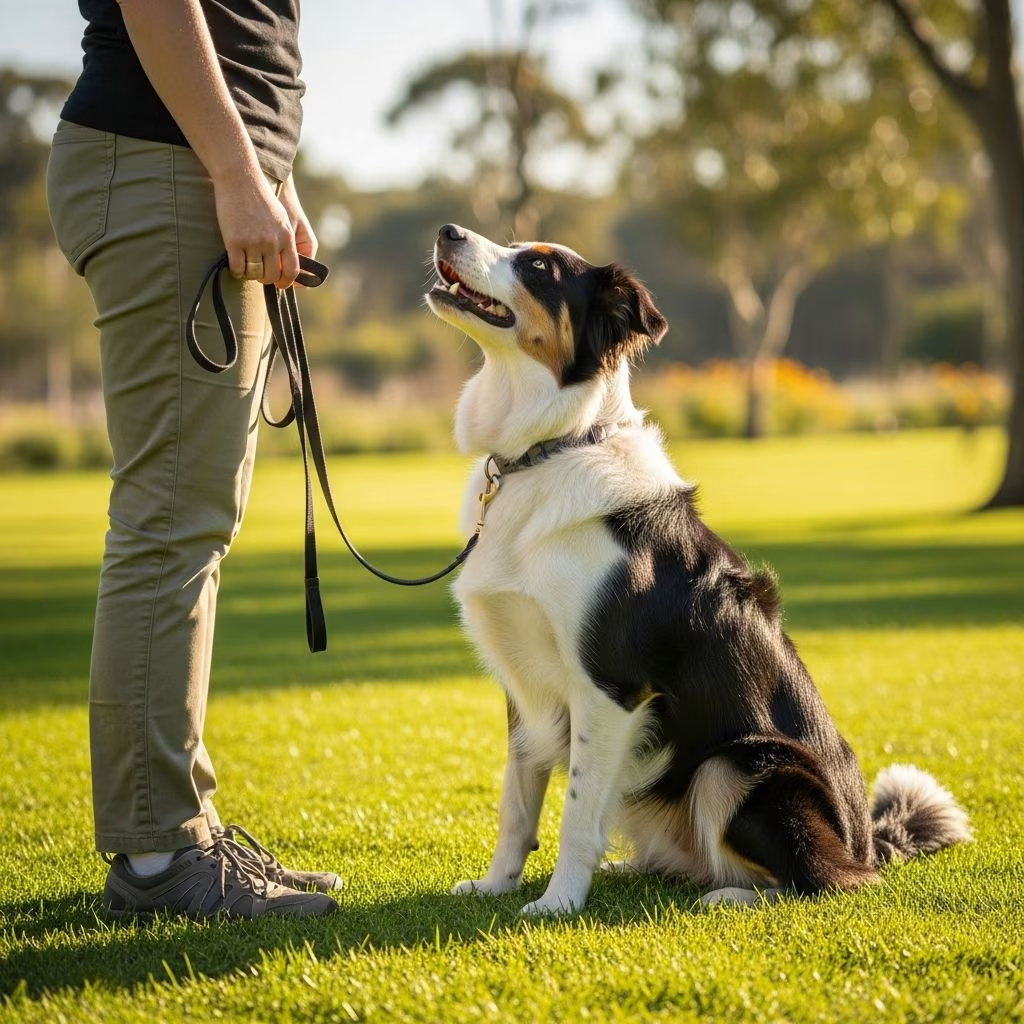
Training your dog is one of the most rewarding aspects of pet ownership. It strengthens the bond between you and your furry companion while ensuring they become a well-mannered member of your household and society. Using positive reinforcement techniques, you can teach essential commands, curb unwanted behaviors, and make learning fun for both of you. This guide covers proven strategies drawn from expert trainers, focusing on reward-based methods that encourage compliance without force or punishment.
Whether you have a playful puppy or an adult rescue dog, consistency, patience, and short, engaging sessions are key. Sessions should last 5-10 minutes, twice daily, always ending on a positive note to keep your dog motivated. Let’s dive into the core elements of effective dog training, starting with the power of positive reinforcement.
How Positive Reinforcement Makes Dog Training Effective and Fun
Positive reinforcement dog training revolves around rewarding desired behaviors to make them more likely to repeat. Unlike punishment-based methods, which can create fear and confusion, this approach builds confidence and enthusiasm. The goal is to pair a cue (verbal or visual signal) with a behavior and immediately reward success, creating a strong association.
Experts emphasize that over-treating can lead to problems, like a dog only responding when food is visible. Instead, follow a structured reward-frequency hierarchy to build reliable habits. This method mimics a slot machine’s unpredictability, keeping your dog engaged and eager to perform.
Step 1: Continuous Reinforcement to Teach New Behaviors
When introducing a new command, use continuous reinforcement: reward every successful trial. For example, teaching “sit”? Lure your dog into position with a treat above their nose, say “sit,” and reward immediately upon success. Repeat 10-20 times per session. This quickly teaches the cue-behavior link. Soft, pocket-friendly treats work best to avoid crumbs everywhere.
- Focus: Pair verbal cue + hand signal with action.
- Duration: 2-5 minutes per session.
- Tip: Praise enthusiastically alongside treats for emotional rewards.
Step 2: Variable Ratio Reinforcement for Reliability
Once your dog grasps the behavior, switch to variable ratio scheduling: reward randomly to mimic gambling excitement, boosting compliance. Start with 1 reward every 3 trials, gradually stretching to 1 in 10. Example sequence for sit: reward on trials 2, 7, 9, 15, etc. This unpredictability prevents treat-dependency and makes commands habitual.
Over time, your dog will respond reliably even without rewards, but occasionally “jackpot” with extra treats or play to maintain enthusiasm. Never go cold turkey—intermittent rewards keep behaviors fresh lifelong.
Step 3: Differential Reinforcement of Excellent Behavior (DRE)
Advanced polish comes from DRE: Judge performances like a referee and reward only the best. A perfect sit (instant, steady) gets a big reward; mediocre ones get nothing. This elevates skills, turning good behaviors into exceptional ones. Combine with play post-session—studies show it extends memory of learned behaviors up to a year.
Eight Basic Training Cues Every Dog Should Master
Mastering these foundational commands promotes safety, self-control, and social harmony. Prioritize one at a time, using positive reinforcement. No dog is too old; adults learn quickly with consistency.
| Command | Description | Why It Matters | Training Tip |
|---|---|---|---|
| Watch | Look at my face. | Distracts from distractions like other dogs. | Hold treat near eyes, reward eye contact. |
| Sit | Butt on ground. | Calms excitement; incompatible with jumping. | Lure with treat over nose; fade lure. |
| Stay | Remain in place until released. | Builds impulse control for safety. | Start close, add distance/duration gradually. |
| Come (Recall) | Run directly to me. | Essential for off-leash freedom. | Practice in low-distraction areas first. |
| Greeting | Hello without jumping. | Polite social skills impress guests. | Cue on approach; reward four paws down. |
| Leash Manners | Walk without pulling. | Enjoyable walks for both. | Stop walking when pulling; reward slack leash. |
| Leave It | Ignore tempting items. | Prevents eating hazards. | Place treat in fist; reward from other hand. |
| A Trick (e.g., High-Five) | Fun performance on cue. | Shows off training; boosts bond. | Build on sit; shape paw lift. |
Progress from home to distracting environments. Reliability in high-stimulation areas (parks) ensures real-world success.
Teaching Your Dog to Take Treats Gently
Mouthy grabbing during training frustrates everyone and risks bites. Teach “gentle” as a standalone cue using positive reinforcement.
- Closed Hand Start: Show closed fist with treat inside. Let dog sniff/paw, but only open and say “yes” for calm nose-touch or lick. Reward gently.
- Mark and Release: Use a marker word like “yes” to bridge calm behavior to treat. Never reward grabbing—wait patiently.
- Open Hand Practice: Flat palm with treat; reinforce soft mouthing. Practice during walks or sessions for context.
- Integrate Everywhere: Apply during all training to build habit. Consistency prevents escalation.
Certified trainer Robert Haussmann demonstrates: Dogs learn quickly when bad attempts (nipping) yield nothing, while gentle ones pay off. This skill enhances safety around kids and strangers.
Advanced Tips: Leash Training and Crate Training Essentials
Leash Training: Pulling turns walks into battles. Use simple tricks: Reward slack leash walking; stop dead for pulls. Add turns or speed changes to keep dogs attentive. Short, fun sessions yield results.
Crate Training: Make it a positive den. Start with treats/toys inside, feed meals there, and gradually close door. Never force—pair with comforts for stress-free alone time.
Common Mistakes and How to Avoid Them
- Over-Treating: Leads to lure-dependency. Transition to variable rewards early.
- Inconsistent Cues: Use same word/gesture always.
- Long Sessions: Dogs tune out; keep brief.
- No Life Rewards: Praise, play, or freedom reinforce naturally.
Tools for Success: Clickers and More
Clickers provide precise timing for rewards, marking exact success moments—ideal for shaping behaviors. Pair click with treat; phase out later. Fear-free methods reduce stress, per Dr. Marty Becker.
Frequently Asked Questions (FAQs)
What is the best age to start dog training?
Puppies as young as 8 weeks, but adults benefit too. Start with basics immediately.
How often should I train my dog?
2-3 short sessions daily, 5-10 minutes each, for steady progress.
Why does my dog only obey for treats?
Over-reliance on continuous reinforcement. Switch to variable schedule now.
Can I train without treats?
Use praise, toys, or play as rewards. Food accelerates learning but isn’t mandatory.
What if my dog doesn’t respond to commands?
Check for clarity, distractions, or health issues. Consult a CPDT-certified trainer.
Building a Lifelong Training Habit
Training never ends—ongoing practice prevents regression. Integrate cues into daily life: sit before meals, stay for doors. Track progress in a journal. Enroll in classes for socialization and expert guidance. With patience, your dog will not only obey but anticipate your needs, creating harmony at home.
Play post-training solidifies lessons, enhancing retention dramatically. Celebrate milestones with jackpots. Soon, you’ll have a polite, joyful companion ready for any adventure.
References
- How to use Positive-Reinforcement to Train Your Dog — Kinship (Chewy). 2023. https://www.kinship.com/dog-behavior/positive-reinforcement-dog-training
- Eight Basic Training Commands to Teach Your Dog — Kinship (Karen B. London, PhD, CAAB, CPDT-KA). 2023. https://www.kinship.com/dog-behavior/basic-training-cues-dog
- Train Your Dog How to Take Treats Gently — Kinship (Robert Haussmann, Certified Trainer). 2023. https://www.youtube.com/watch?v=rf_G_XbaMDE
- Simple Leash Training Tricks That Actually Work — Kinship YouTube Playlist. 2023. https://www.youtube.com/watch?v=7rmTgB1wzI4
- Expert Tips for Training Your Dog Playlist — Kinship. 2023. https://www.youtube.com/playlist?list=PLZ8Ge-ZSJyKXWskuuT8xnfNcPvSKnOgmH



