

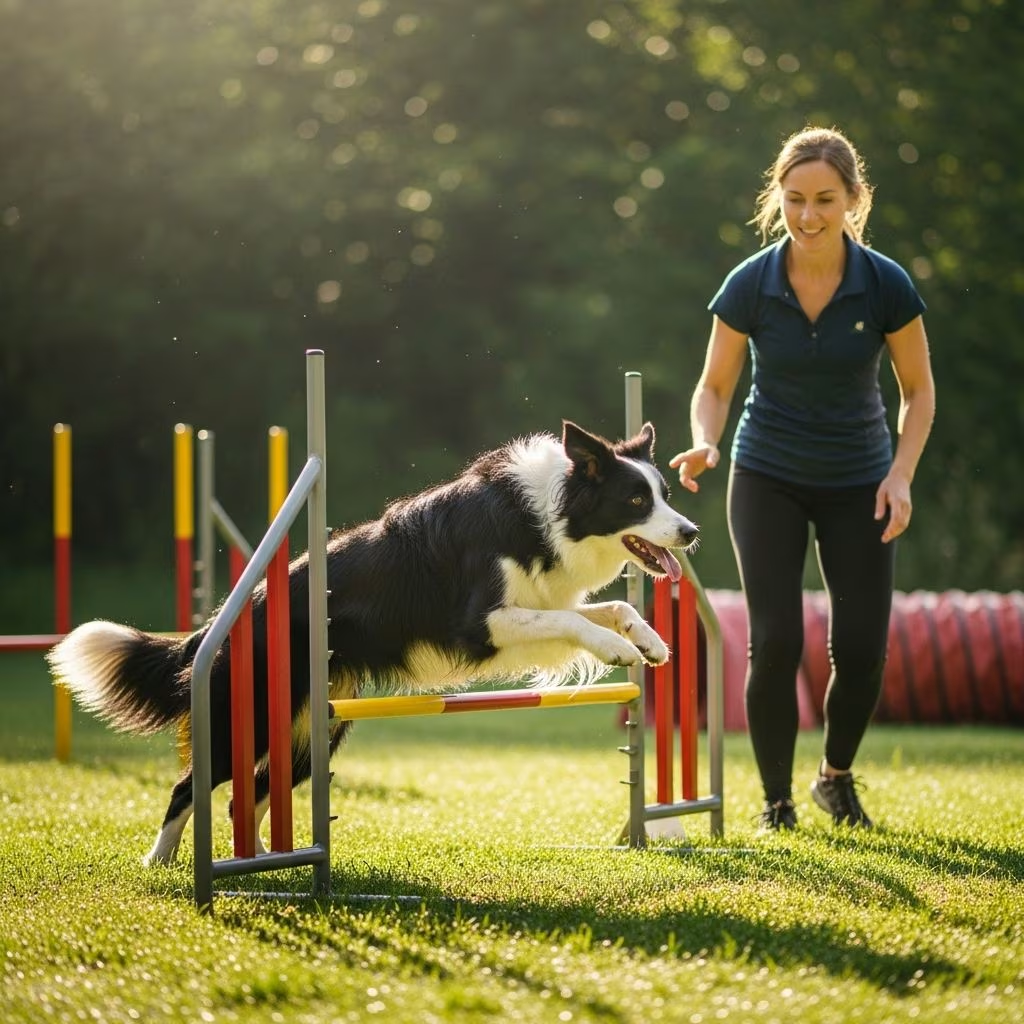
What Is Proofing in Dog Training?
Proofing in dog training refers to the process of ensuring that your dog can reliably perform a learned behavior in a variety of situations and environments. This means that your dog will respond to your commands not just at home, but also in distracting or unfamiliar settings. Proofing is essential for building a strong foundation of obedience and reliability in your dog.
Why Is Proofing Important?
Proofing is crucial because it helps your dog generalize their training. Dogs are creatures of habit and often learn behaviors in specific contexts. Without proofing, a dog might only respond to commands in familiar environments, such as at home, but fail to do so in new or distracting situations. Proofing ensures that your dog’s training is robust and reliable, no matter where you are.
Step-by-Step Guide to Proofing Behaviors
Proofing behaviors involves gradually increasing the difficulty of the training environment and adding distractions. Here’s a step-by-step guide to help you proof your dog’s behaviors:
1. Start in a Familiar Environment
Begin by practicing the behavior in a quiet, familiar environment, such as your home. This helps your dog focus and build confidence in their ability to perform the behavior.
2. Gradually Increase Distractions
Once your dog is comfortable performing the behavior in a familiar environment, start introducing mild distractions. This could be a family member walking by, a toy on the floor, or a low-level noise. Gradually increase the level of distraction as your dog becomes more proficient.
3. Practice in Different Locations
Move to different locations, such as your backyard, a park, or a friend’s house. Each new environment presents new challenges and distractions, helping your dog generalize the behavior.
4. Add More Complex Distractions
As your dog becomes more reliable, introduce more complex distractions, such as other dogs, people, or loud noises. This helps your dog learn to focus on you and the task at hand, even in challenging situations.
5. Reinforce Consistently
Consistent reinforcement is key to proofing behaviors. Reward your dog every time they successfully perform the behavior, regardless of the environment or level of distraction. This reinforces the behavior and helps your dog understand that it is important in all situations.
Common Challenges in Proofing Behaviors
Proofing behaviors can be challenging, especially when dealing with highly distracting environments or stubborn dogs. Here are some common challenges and tips for overcoming them:
- Distractions: Start with mild distractions and gradually increase the difficulty. If your dog is struggling, go back to a less distracting environment and build up slowly.
- Consistency: Be consistent with your commands and rewards. Inconsistent reinforcement can confuse your dog and make proofing more difficult.
- Patience: Proofing takes time and patience. Don’t rush the process. Allow your dog to build confidence and reliability at their own pace.
- Environment: Choose environments that are safe and appropriate for your dog. Avoid overwhelming your dog with too many distractions at once.
Advanced Proofing Techniques
Once your dog has mastered basic proofing, you can move on to more advanced techniques. These techniques help your dog become even more reliable and responsive in challenging situations.
1. Variable Reinforcement
Use variable reinforcement to keep your dog engaged and motivated. Instead of rewarding every single correct response, occasionally reward your dog after several correct responses. This helps your dog stay focused and attentive.
2. Random Distractions
Introduce random distractions to keep your dog on their toes. This could be a sudden noise, a person walking by, or a toy being thrown. Random distractions help your dog learn to stay focused and responsive, even when unexpected things happen.
3. Real-World Scenarios
Practice in real-world scenarios, such as busy parks, crowded streets, or during social events. This helps your dog generalize their training and become more reliable in everyday situations.
Benefits of Proofing Behaviors
Proofing behaviors offers numerous benefits for both you and your dog. Here are some of the key advantages:
- Reliability: Your dog will respond reliably to commands in any environment, making them easier to manage and safer to be around.
- Confidence: Proofing helps your dog build confidence in their abilities, which can lead to better overall behavior and a stronger bond with you.
- Safety: A well-proofed dog is less likely to get into trouble or react unpredictably in new or challenging situations.
- Enjoyment: Proofing makes training more enjoyable for both you and your dog, as you can practice in a variety of fun and interesting environments.
FAQs
Q: How long does it take to proof a behavior?
A: The time it takes to proof a behavior varies depending on the dog, the behavior, and the level of distraction. Some dogs may learn quickly, while others may take longer. Patience and consistency are key.
Q: Can I proof behaviors with an older dog?
A: Yes, older dogs can learn new behaviors and benefit from proofing. The process may take longer, but with patience and positive reinforcement, older dogs can become reliable and responsive.
Q: What if my dog is easily distracted?
A: If your dog is easily distracted, start with mild distractions and gradually increase the difficulty. Use high-value rewards to keep your dog motivated and focused.
Q: Can I proof behaviors with a puppy?
A: Yes, puppies can benefit from proofing behaviors. Start with simple commands and gradually increase the difficulty as your puppy grows and develops.
Conclusion
Proofing behaviors is an essential part of dog training that ensures your dog can reliably perform learned behaviors in any environment. By following the step-by-step guide and using advanced techniques, you can help your dog become more reliable, confident, and safe. Remember to be patient, consistent, and positive, and enjoy the process of building a strong bond with your dog.
References
- Best Friends Animal Society — Dog Training Tips: How to Proof Behaviors. http://bestfriends.org/pet-care-resources/dog-training-tips-how-proof-behaviors
- Best Friends Animal Society — Training for Shelter Dogs. https://bestfriends.org/network/resources-tools/training-shelter-dogs
- Best Friends Animal Society — Proven Lifesaving Strategies for Big Dogs Training Playbook. https://bestfriends.org/network/resources-tools/proven-lifesaving-strategies-big-dogs-training-playbook



