

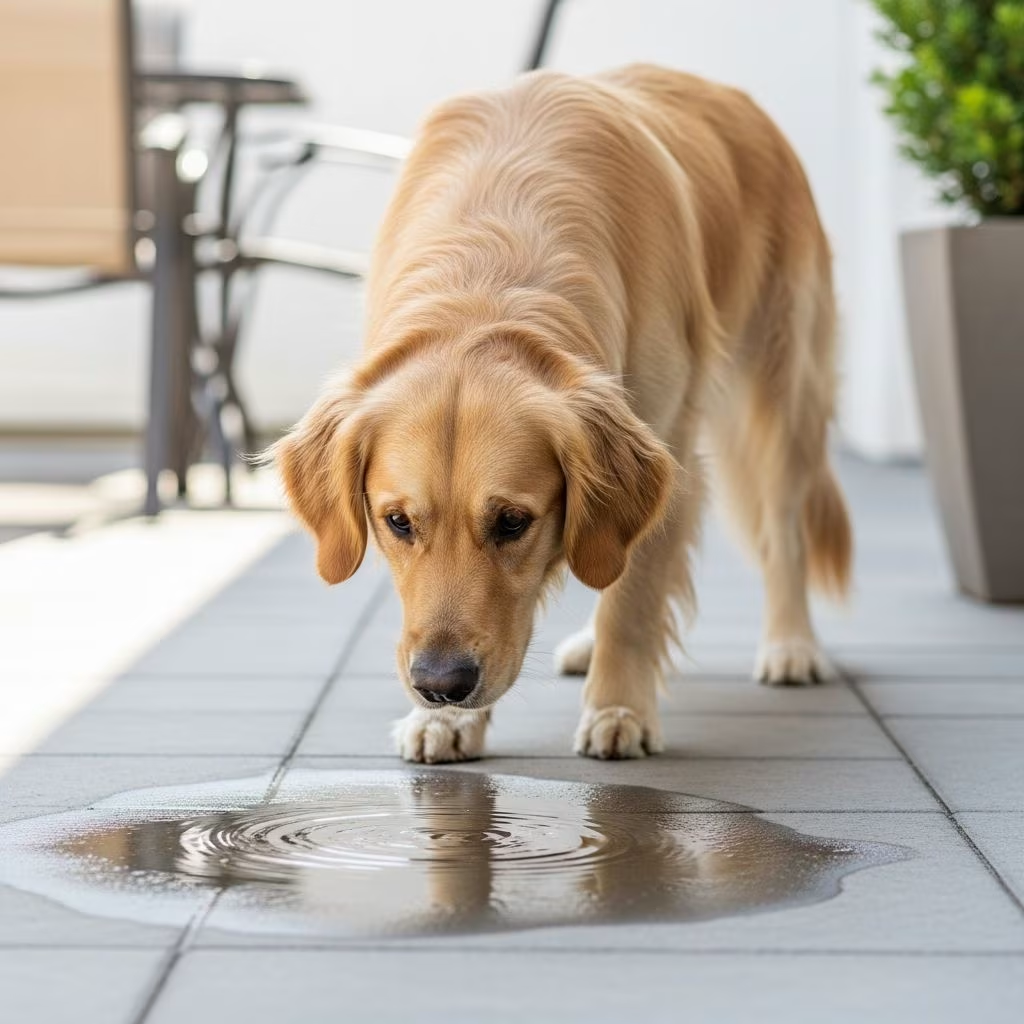
Understanding Why Dogs Eliminate on Patios
One of the most frustrating challenges dog owners face is their pets choosing to eliminate on patios or outdoor furniture areas rather than designated potty zones. This behavior often stems from several underlying causes that, when properly understood, can be effectively addressed through targeted training and management strategies.
Dogs may use patios as bathroom areas because these spaces often possess characteristics similar to indoor environments—they may have concrete or paver surfaces that feel stable underfoot, offer some shelter, or contain remnants of previous accidents that signal “this is a bathroom spot” to your dog’s sensitive nose. Additionally, patios frequently lack the distractions of a full yard, making them feel safe and private to your pet.
The Foundation: Understanding House Training Basics
Before addressing patio-specific issues, it’s essential to understand the fundamentals of house training. House training is simple in concept but requires consistency and patience in execution. The basic principle involves teaching your dog that there are designated locations for elimination and that all other areas—including the patio—are off-limits.
The core process includes establishing a specific potty spot, maintaining a consistent schedule, supervising your dog closely, confining them when unsupervised, and rewarding desired behavior immediately and enthusiastically. When these elements work together seamlessly, most dogs quickly learn appropriate bathroom habits.
Key House Training Principles
Designation and Consistency: Dogs thrive on routine and clear boundaries. By consistently directing your dog to the same designated potty area away from the patio, you reinforce that this is the only appropriate elimination spot. This repetition helps establish a strong habit that your dog will prefer to follow.
Close Supervision: Puppies and newly trained dogs require constant monitoring when inside or on outdoor spaces like patios. Unsupervised dogs will seek out spots that feel suitable for elimination, and absorbent surfaces like patio rugs or shaded areas become prime targets. When you cannot actively watch your dog, confine them to a crate or designated safe space.
Environmental Management: Remove temptations and manage your dog’s environment strategically. Use baby gates, close doors, and remove items that might encourage bathroom behavior in inappropriate areas.
Why Patios Attract Dogs for Elimination
Patios present unique challenges for dog owners because they combine elements of both indoor and outdoor environments. Understanding what makes patios attractive bathroom spots helps you develop effective countermeasures.
Environmental Factors
Patios often feature materials and conditions that appeal to dogs seeking a potty spot. Concrete or pavers provide firm, defined surfaces. Patio rugs and furniture cushions absorb moisture similarly to indoor carpets and rugs. Shade structures offer privacy and shelter. Most importantly, if your dog has previously eliminated on the patio, the scent marking remains even after cleaning, signaling to your dog that “this is a bathroom area.”
The patio’s proximity to your home also plays a role. Dogs may view it as a convenient compromise between inside and the designated outdoor potty area, especially if they’re not fully housetrained or if access to the true potty spot is slow or inconvenient.
Preventing Patio Accidents: Step-by-Step Strategies
Step 1: Thoroughly Clean the Patio
Before implementing any training strategy, eliminate scent markers that encourage your dog to use the patio as a bathroom. Dogs’ olfactory systems are extraordinarily sensitive—they can detect previous urine and feces odors that are completely imperceptible to humans. Use an enzymatic cleaner specifically formulated to break down urine and fecal matter rather than simply masking odors. These cleaners neutralize the organic compounds that signal “bathroom area” to your dog’s nose.
Clean the entire patio thoroughly, paying special attention to corners, under furniture, and along the patio edges where your dog may have previously eliminated. Multiple cleaning sessions may be necessary.
Step 2: Establish a Clear Designated Potty Area
Create a specific, easily accessible outdoor location exclusively for bathroom breaks. This area should be:
- Away from the patio and main living areas
- Easily accessible from your home’s primary exit
- Free from heavy distractions or foot traffic
- Consistently available at all times of day
For apartment dwellers or those without traditional yards, a porch potty—a contained, easy-to-clean grassy area—offers an ideal solution. This designated potty area, whether a corner of your yard or a porch potty system, becomes the exclusive location where your dog learns elimination is appropriate.
Step 3: Implement a Consistent Potty Schedule
Dogs are creatures of habit and routine. Establishing a predictable schedule helps their bodies regulate elimination naturally. A typical schedule for puppies and young dogs includes:
- First thing in the morning upon waking
- After meals (typically 15-30 minutes following eating)
- After drinking water
- After play sessions or exercise
- After naps or extended crate time
- Before bedtime
- Mid-day breaks for puppies
By taking your dog to the designated potty area at these predictable times, you prevent accidents and provide multiple opportunities for success. This schedule is particularly important during the initial training phase and when addressing patio elimination problems.
Step 4: Master Recognition of Potty Signals
Learning to read your dog’s body language enables you to anticipate elimination needs before accidents occur. Common potty signals include:
- Sniffing the ground intensely
- Walking in circles or figure-eights
- Squatting or assuming elimination posture
- Whining or scratching at the door
- Sudden restlessness or pacing
- Hunching their back
When you observe any of these behaviors, immediately guide your dog to the designated potty area. Keep a leash readily accessible near doors so you can quickly respond to these signals without delay.
Step 5: Use Positive Reinforcement Effectively
Reward your dog enthusiastically and immediately after successful elimination in the designated area. Use high-value treats, verbal praise, and physical affection to create a strong positive association with appropriate potty behavior. Timing is critical—the reward must occur within seconds of completion to establish the connection between the behavior and the reward.
Never punish accidents or show frustration. Punishment creates fear and confusion rather than understanding, potentially making house training more difficult. Instead, focus entirely on rewarding correct behavior.
Environmental Management and Prevention
Restricting Patio Access
During the training phase, limit or eliminate your dog’s unsupervised access to the patio. Use baby gates, doors, or barriers to prevent your dog from venturing onto the patio without your direct supervision and guidance. This management strategy prevents repeated accidents that reinforce the patio as a bathroom location.
When your dog must access the patio—for example, when guests are present or during family activities—keep them on a leash to maintain control and direct them away from bathroom behavior.
Making the Patio Less Appealing
Modify the patio environment to reduce its bathroom appeal. Remove patio rugs, mats, and cushions that absorb moisture and feel similar to indoor bathroom locations. If you must keep outdoor furniture, ensure it’s elevated and difficult for your dog to access underneath.
Some dog owners find success using motion-activated sprinklers or deterrent devices on patios, creating an unpleasant sensory experience that discourages the dog from lingering in these areas.
Addressing Specific Patio Situations
Dogs Refusing to Use Designated Areas
If your dog consistently refuses to eliminate in the designated potty area, gradually transition them using porch potties or pee pads as intermediary steps. Place a pee pad at the boundary between the patio and your designated outdoor area, then gradually move it further from the patio over several days or weeks. Simultaneously, begin reducing the pad’s size by cutting it smaller until your dog eliminates on grass without the pad present.
Multidog Households
When multiple dogs share a home, some may copy others’ patio elimination behavior. Train each dog individually in separate sessions when possible, and supervise group outdoor time closely to redirect any dogs attempting to use the patio as a bathroom.
Frequently Asked Questions
Q: How long does it typically take to stop a dog from eliminating on the patio?
A: Timeline varies based on your dog’s age, previous training, and consistency of your approach. Most dogs show significant improvement within 2-4 weeks of consistent training, though complete reliability may take several months. Puppies typically train faster than adult dogs with established habits.
Q: Should I use punishment if I catch my dog going potty on the patio?
A: No. Punishment creates fear and doesn’t teach your dog where the appropriate location is. Instead, calmly interrupt the behavior, immediately take your dog to the designated potty area, and reward any completion there. Focus all your energy on reinforcing correct behavior rather than punishing mistakes.
Q: Can I use pee pads indoors while training my dog away from the patio?
A: While some trainers use pee pads as intermediate steps, this approach can create confusion because it teaches your dog that indoor elimination is acceptable. If you must use pads, transition away from them as quickly as possible. A porch potty offers a better alternative for apartment dwellers.
Q: What should I do if my dog has already developed a strong patio elimination habit?
A: Start with thorough enzymatic cleaning to remove scent markers, then implement all prevention strategies consistently. Consider temporarily restricting patio access entirely to break the habit cycle, then gradually reintroduce supervised access only.
Q: Is my dog’s patio elimination a sign of a medical problem?
A: While most cases are behavioral, frequent or urgent elimination can indicate urinary tract infections, digestive issues, or other health concerns. If your dog’s bathroom habits change suddenly or seem excessive, consult your veterinarian to rule out medical causes.
References
- Puppy Potty Training Tips — Hill’s Pet Nutrition. 2024. https://www.hillspet.com/dog-care/training/puppy-potty-training-tips
- How to Potty Train a Puppy or Dog: 6 Main Steps — Woofz. 2024. https://www.woofz.com/blog/how-to-potty-train-a-puppy/
- Potty-Pad Training Your Dog — Animal Humane Society. 2024. https://www.animalhumanesociety.org/resource/potty-pad-training-your-dog



