

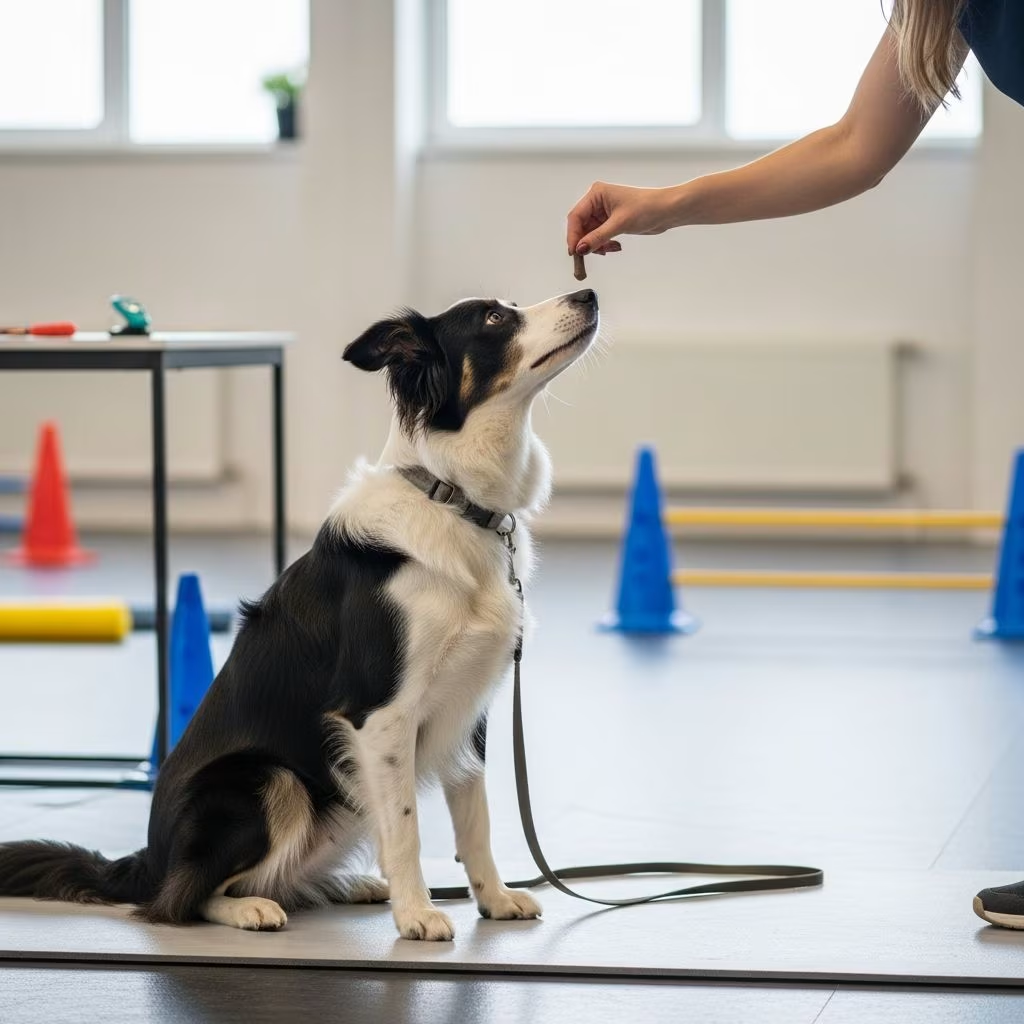
Selecting the right training method can transform your relationship with your dog, fostering obedience, confidence, and joy. This guide examines key approaches, drawing from established practices to help owners make informed choices.
Core Principles of Effective Dog Training
Dog training relies on understanding canine learning through operant and classical conditioning. Operant conditioning shapes behavior via consequences—rewards increase desired actions, while punishments aim to decrease unwanted ones. Classical conditioning pairs stimuli with responses, like associating a clicker sound with treats.
Modern methods prioritize welfare, avoiding outdated dominance theories that misinterpret dog behavior as pack challenges. Instead, evidence supports reward-focused strategies for long-term success.
Positive Reinforcement: Building Behaviors Through Rewards
This dominant approach rewards good actions with treats, toys, or praise, ignoring or redirecting misbehavior. Dogs repeat rewarded behaviors, learning quickly without fear.
- Key Techniques: Use high-value treats for commands like sit, stay, or recall. Mark correct responses with a clicker or word like “yes”.
- Best For: Puppies, food-motivated dogs, and basic obedience.
Owners report faster learning and stronger bonds. Sessions remain fun, reducing stress.
Pros and Cons Table
| Pros | Cons |
|---|---|
| Boosts confidence and enthusiasm | Requires consistent treats, potential weight gain |
| Scientifically proven for reliability | Slower for severe issues like aggression |
Science-Based Training: Research-Driven Strategies
Grounded in psychology, ethology, and behavior analysis, this method customizes plans using learning theory. Trainers integrate positive reinforcement, shaping (gradual behavior approximation), and desensitization for fears.
Influenced by experts like B.F. Skinner, it adapts to individual needs, ensuring humane outcomes.
- Applications: Anxiety, reactivity, or complex skills like agility.
- Tools: Clickers, data tracking for progress.
Studies confirm its efficacy in professional settings like detection work.
Balanced Training: Rewards Meet Corrections
Combining positives with mild aversives—like leash pops or e-collars—this method addresses non-compliance directly. It teaches both “do” and “don’t” for comprehensive control.
Suitable for high-drive dogs or real-world scenarios where instant response matters.
| Aspect | Details |
|---|---|
| Rewards | Treats, play for compliance |
| Corrections | Low-level collar stimulation, verbal cues |
| Outcomes | Quick results in distractions |
Critics note risks of fear if misapplied, but skilled trainers minimize this.
LIMA Approach: Humane and Flexible Hierarchy
Least Intrusive, Minimally Aversive (LIMA) starts with gentlest methods, escalating only if needed. It assesses dog temperament, prioritizing welfare.
- Steps: Observe, reinforce positives, use barriers or timeouts before tools.
- Ideal For: Balanced owners open to evidence-based adjustments.
This philosophy bridges pure positive and balanced camps.
Model-Rival Training: Learning by Observation
Dogs mimic skilled models (humans or dogs) performing tasks, leveraging social instincts. No direct rewards; success is intrinsic.
Common in herding or rescue, it builds focus amid excitement.
- Process: Dog watches model retrieve, then tries.
- Pros: Natural, effective for social breeds; combines well with others.
Other Notable Methods
Luring: Guiding with Temptation
Food lures prompt positions like sit by following hand signals. Effective for novices and motivated pups, transitioning to verbal cues.
Relationship-Based Training
Emphasizes consistent feedback, praise for rights, gentle corrections for wrongs. Fun sessions mimic child-rearing, prioritizing enjoyment.
Correction-Based: Traditional but Controversial
Relies on punishment tools like prong collars for dominance assertion. Largely outdated due to welfare concerns and inefficacy long-term.
Choosing the Right Method for Your Dog
Consider breed, age, issues, and lifestyle. Puppies thrive on positive reinforcement; rescues may need science-based for traumas. Test in short sessions.
| Dog Profile | Recommended Method |
|---|---|
| Puppy/Easy Learner | Positive Reinforcement |
| High Energy/Working | Balanced or Model-Rival |
| Reactive/Fearful | Science-Based/LIMA |
Green flags for trainers: Relationship focus, tool flexibility, client references.
Frequently Asked Questions (FAQs)
What is the best dog training method?
No universal best; positive reinforcement suits most, per experts. Match to your dog’s needs.
Is positive reinforcement enough for aggression?
Often yes with professional guidance, but LIMA allows escalation if needed.
Are shock collars safe?
When used correctly in balanced training, low levels are safe; avoid misuse.
How long do training sessions last?
5-15 minutes, multiple daily for focus.
Can I train multiple dogs together?
Yes, model-rival excels here.
Practical Tips for Success
- Consistency across family members.
- Short, positive sessions.
- Track progress; adjust methods.
- Professional help for bites or shutdowns.
Integrate training into daily life for lasting habits.
References
- Common Dog Training Methods and Their Pros and Cons — Astro Loyalty. 2023. https://www.astroloyalty.com/common-dog-training-methods-and-their-pros-and-cons/
- Dog Training Methods: Pros and Cons of Each Approach — Woofz. 2024. https://www.woofz.com/blog/dog-training-methods/
- 12 Dog Training Methods Explained: A Science-Backed Guide — QC Pet Studies. 2025-10-12. https://www.qcpetstudies.com/blog/2025/10/12-dog-training-methods-explained-science-backed-guide
- Dog Training Methods and Beliefs- What are the differences? — DeMarinis Dog Training. 2023. https://www.demarinisdogtraining.com/blog/dog-training-methods-and-beliefs-what-are-the-differences
- Understanding the different types of training methods — Noel Hoffmann. 2024. https://noelhoffmann.com/understanding-the-different-methods-of-training-dogs/
- Which Dog Training Method is the Best? — Pack Leader Help. 2024. https://www.packleaderhelp.com/post/which-dog-training-method-is-the-best



