

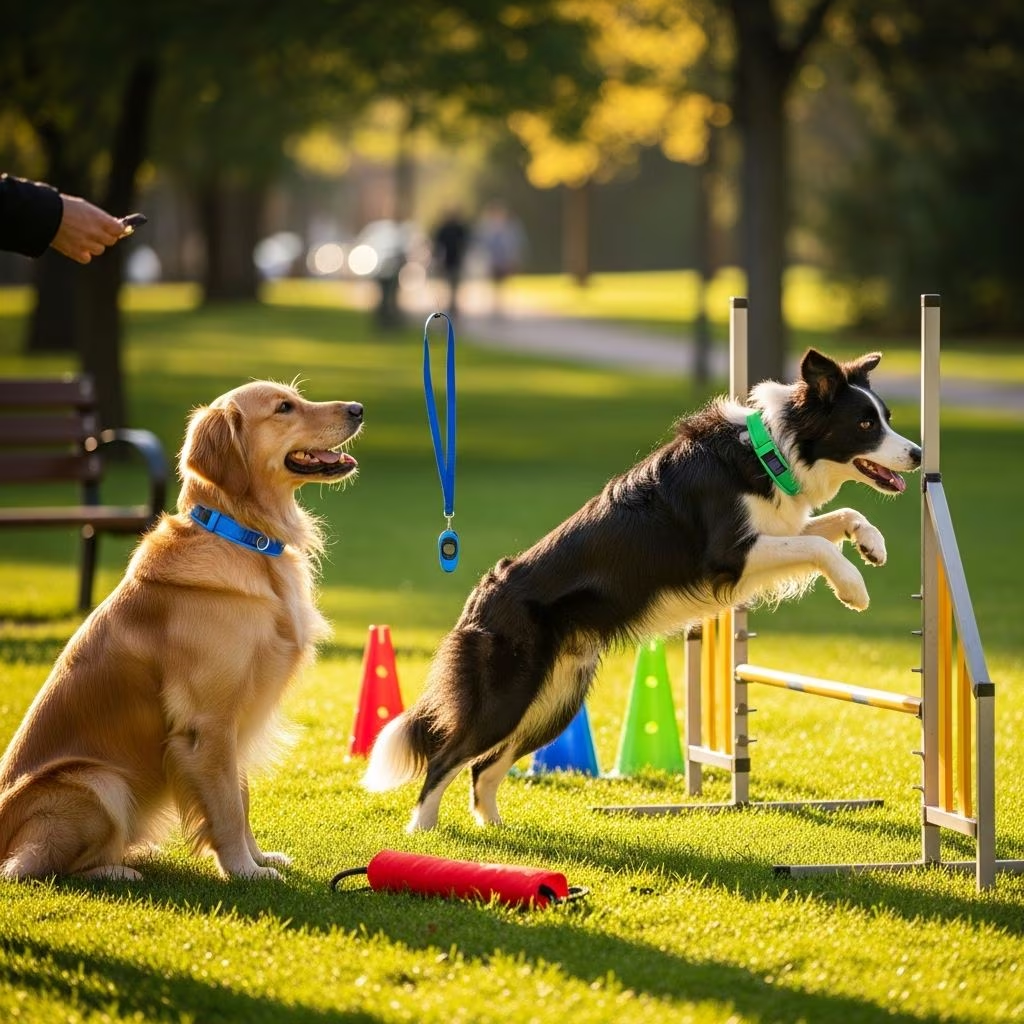
Effective dog training hinges on clear communication, not just between you and your pet, but also in the language used by trainers and enthusiasts. Many terms sound similar yet carry distinct meanings, which can confuse newcomers. This guide breaks down core vocabulary, drawing from established practices to help you navigate training sessions with confidence. Understanding these words empowers you to choose methods that suit your dog’s needs and your goals.
Foundational Concepts in Canine Learning
At the heart of dog training lie principles from behavioral science. These form the bedrock for teaching commands, modifying habits, and fostering good manners.
- Classical Conditioning: This process pairs a neutral stimulus with an unconditioned one to elicit a response. For instance, a bell ringing before mealtime makes dogs salivate at the sound alone.
- Operant Conditioning: Behaviors increase or decrease based on consequences. Rewards encourage repetition, while ignoring reduces unwanted actions.
These mechanisms underpin modern approaches, shifting away from outdated dominance models toward science-backed strategies.
Key Markers and Rewards
Precise timing in rewarding behaviors separates good training from great results. Tools like clickers provide instant feedback.
| Term | Definition | Example |
|---|---|---|
| Clicker Training | A method using a click sound to mark exact desired behaviors, followed by a treat. | Click when the dog sits, then reward to associate the sound with positivity. |
| Jackpot | An extra-large reward given for exceptional performance to boost motivation. | Multiple treats for a perfect recall in a distracting park. |
| Continuous Reinforcement | Rewarding every correct response to build strong habits initially. | Treat every sit until reliable, then fade rewards. |
Variable reinforcement, where rewards come unpredictably, mimics real life and sustains engagement longer than constant treats.
Building Behaviors Step by Step
Teaching complex skills requires breaking them into manageable parts. Trainers use techniques to guide dogs progressively.
- Shaping: Reinforcing successive approximations toward the target behavior, like rewarding partial paw lifts before full shakes.
- Luring: Using a treat to lead the dog into position, such as lowering the nose for a sit, then phasing out the lure.
- Capturing: Waiting for natural behaviors to occur and marking them immediately, ideal for spontaneous sits or lies.
These methods promote willing participation without force, enhancing the dog-human bond.
Proofing for Real-World Reliability
Dogs struggle with generalization, performing well in familiar settings but faltering elsewhere. Proofing addresses this.
The **three D’s**—distance, duration, and distraction—test behaviors under varying conditions. Start close and quiet, then gradually increase challenges: ask for a longer stay amid noises or farther away. Criteria define success, including speed (latency) and steadiness.
Aversives and Modern Alternatives
Traditional methods often relied on corrections, but contemporary training prioritizes welfare.
- Correction: An aversive to signal errors, like a leash tug—now viewed critically as it risks fear.
- Conditioned Punisher: A cue warning of discomfort, such as a verbal “no,” to interrupt without physical force.
- LIMA: Least Intrusive, Minimally Aversive approach, favoring rewards first and interventions only when necessary.
Dominance theory and alpha rolls, once popular, are discredited; they can provoke aggression rather than compliance.
Training Sessions and Schedules
Structured practice maximizes progress. Sessions should be short, focused, and consistent.
- Criteria: Specific standards for a session, like holding a sit for 5 seconds without breaking gaze.
- Extinction: Withholding rewards for unwanted behaviors until they fade, such as ignoring jumps for attention.
- Two-Fer: Requiring two behaviors chained together for one reward, building sequences.
End sessions positively, evaluating to adjust difficulty next time.
Specialized Terms for Advanced Trainers
Protection or service dog work introduces niche vocabulary.
- Crossover Dog: Pets switching from aversive to positive methods, needing patience to rebuild trust.
- Civil Agitation: Simulating real threats without gear to build defensive responses.
- Prong Collar: Applies even neck pressure; use cautiously under professional guidance.
Common Pitfalls in Terminology
Misunderstandings arise from vague or loaded words. “Positive” means adding something pleasant, not just feel-good training. Avoid coddling, which reinforces anxiety rather than independence.
Differential reinforcement strengthens desired actions while extinguishing others, using varied treat values for proficiency levels.
FAQs on Dog Training Terms
What is the difference between luring and shaping?
Luring guides with a motivator; shaping rewards tiny steps toward the goal without prompts.
Is clicker training suitable for all dogs?
Yes, adaptable for any age or breed, especially crossover dogs transitioning methods.
How do the three D’s improve training?
They ensure behaviors hold up anywhere, anytime by incrementally challenging reliability.
What does LIMA stand for?
Least Intrusive, Minimally Aversive—prioritizing humane, effective techniques.
Can I use punishment in training?
Modern advice favors reinforcement; punishment risks fallout like fear or avoidance.
Applying Lingo for Better Results
Mastering these terms lets you follow professional advice accurately and customize plans. Track progress with a journal noting criteria met per session. Combine methods—like capturing then shaping—for versatile skills. Patience and consistency yield obedient, happy dogs.
For puppies, focus on acquisition: mark and reward basics repeatedly. Adults benefit from proofing and extinction for habit tweaks. Always match techniques to temperament—soft dogs thrive on praise, resilient ones handle mild challenges.
Explore resources from certified trainers emphasizing force-free methods. Join communities discussing real applications, avoiding debunked myths like pack leadership.
References
- What Common Dog Training Words Mean — American Kennel Club. 2023-05-15. https://www.akc.org/expert-advice/training/dog-training-terms-lingo/
- Glossary Archive — Karen Pryor Clicker Training. 2024-02-10. https://clickertraining.com/glossary/
- Glossary of 120+ Dog Training Terminology — The Academy of Pet Careers. 2023-11-20. https://www.theacademyofpetcareers.com/blog/dog-training-terminology/
- Dog Training A-to-Z: Brief Glossary of Terms — Vetstreet. 2022-08-05. https://www.vetstreet.com/our-pet-experts/dog-training-a-to-z-brief-glossary-of-terms
- Vocabulary Among Dog Trainers — Leerburg. 2021-12-01. https://leerburg.com/pd-vocab.php



