

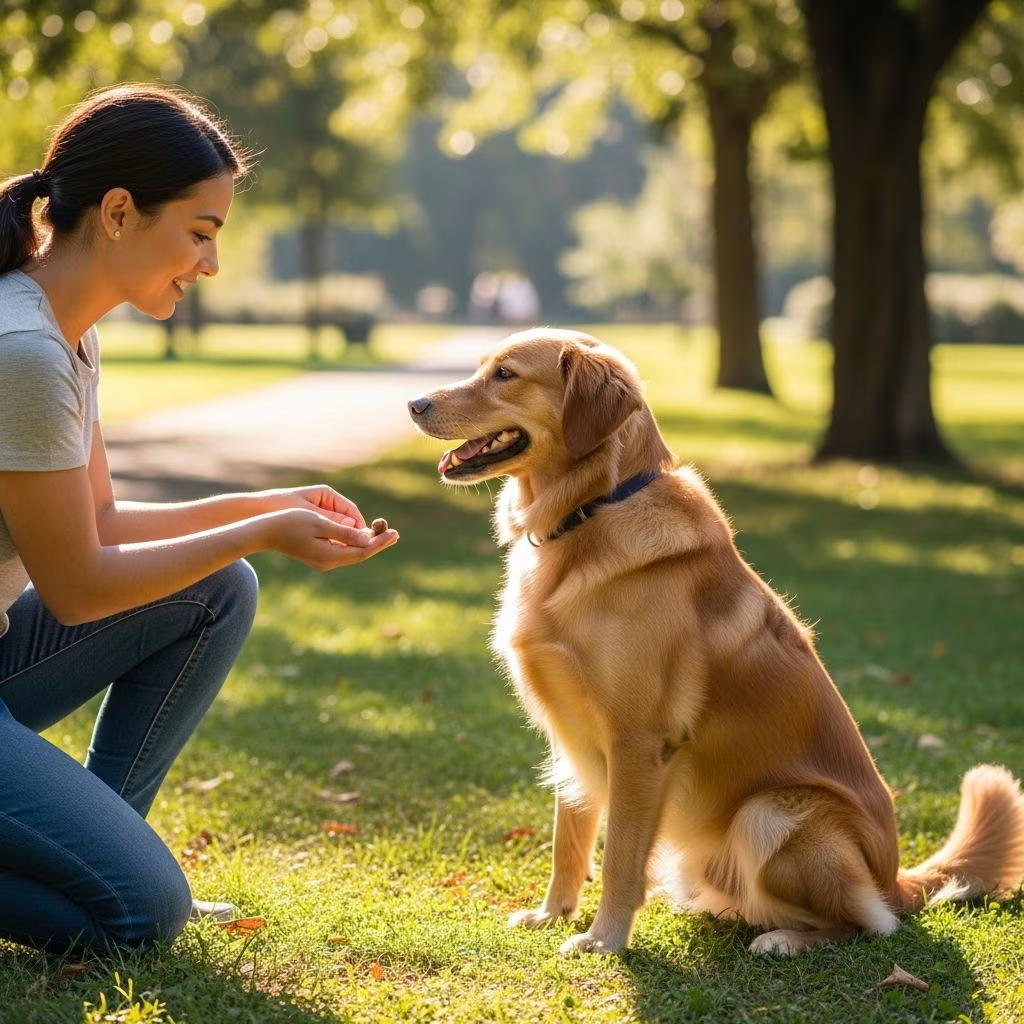
Dog Training: A Complete Guide to Building Better Behaviors
Training your dog is one of the most rewarding investments you can make in your relationship with your canine companion. Whether you have a new puppy, an adult rescue dog, or a senior companion, proper training creates a foundation for a harmonious household and strengthens the bond between you and your pet. Effective dog training combines patience, consistency, positive reinforcement, and understanding of canine behavior to help your dog become a well-adjusted member of your family.
Dog training extends far beyond teaching basic commands. It encompasses socialization, behavior modification, enrichment, and communication techniques that help dogs understand what you expect from them. When done correctly, training reduces stress for both dogs and their owners, prevents behavioral problems, and can even be lifesaving in emergency situations.
Understanding the Fundamentals of Dog Training
Before diving into specific training techniques, it’s essential to understand the core principles that make dog training successful. Dogs learn through repetition, consistency, and positive reinforcement. They don’t have the ability to reason about right and wrong in the way humans do; instead, they learn to associate their actions with consequences.
The most effective training methods focus on rewarding desired behaviors rather than punishing unwanted ones. This approach, known as positive reinforcement training, encourages dogs to repeat behaviors that result in rewards such as treats, praise, toys, or play. Dogs trained using positive reinforcement tend to be more confident, less stressed, and more enthusiastic about learning compared to those trained with punishment-based methods.
Consistency is another critical element. All family members must use the same commands, reward system, and rules. If one person allows the dog on the couch while another doesn’t, the dog becomes confused about what behavior is acceptable. Clear, consistent expectations help your dog understand the household rules quickly.
Clicker Training: A Modern Approach to Communication
Clicker training has become one of the most popular and effective dog training methods in recent years. This technique uses a small handheld device that makes a distinctive clicking sound to mark the exact moment your dog performs the desired behavior, followed immediately by a reward. The clicker serves as a bridge between the behavior and the reward, helping your dog understand precisely what action earned them the treat or praise.
The beauty of clicker training lies in its precision and clarity. Because the click happens at the exact instant the behavior occurs, your dog makes an immediate connection between what they did and the reward they receive. This is particularly valuable for teaching complex behaviors that involve multiple steps or for refining existing skills.
To start clicker training, you must first establish that the click means a reward is coming. This process, called “loading the clicker,” involves clicking and immediately giving your dog a treat dozens of times until they understand the association. Once your dog has learned that clicks predict rewards, you can use the clicker to mark any behavior you want to reinforce, whether it’s sitting, making eye contact, or coming when called.
Clicker training works exceptionally well for dogs of all ages and experience levels. It’s particularly effective for rescue dogs or dogs with behavioral issues because it focuses entirely on building positive associations rather than correcting mistakes. The method has been validated by animal behaviorists and is used not only for dogs but also for cats, birds, and other animals.
Crate Training: Creating a Safe Haven
Crate training teaches your dog to view their crate as a safe, comfortable space rather than a place of punishment. When done correctly, crate training provides numerous benefits including easier house-training, a secure space during travel, and a sanctuary where your dog can retreat when they need to decompress.
Many new dog owners mistakenly believe that crate training is cruel or confining, but the opposite is true when implemented properly. Dogs are naturally den animals, and a properly sized crate can fulfill their instinctive desire for a small, secure space. The key to successful crate training is introducing the crate gradually and always associating it with positive experiences.
Begin crate training by leaving the crate door open and allowing your dog to explore it at their own pace. Place treats, toys, and comfortable bedding inside to create positive associations. Gradually increase the time your dog spends in the crate, starting with just a few seconds and building up. Feed meals inside the crate to reinforce that it’s a good place. Always ensure your dog has adequate bathroom breaks and never use the crate as punishment.
The appropriate crate size is important for success. Your dog should be able to stand, turn around, and lie down comfortably, but not so much extra space that they can eliminate in one corner and sleep in another. A crate that’s too large defeats the house-training purpose, while a crate that’s too small creates discomfort and stress.
Basic Commands Every Dog Should Know
Teaching basic commands provides the foundation for all future training and helps ensure your dog’s safety. The most essential commands include sit, stay, come, down, and leave it. These commands give you the ability to manage your dog’s behavior in various situations and can be lifesaving in emergency scenarios.
Sit is typically the easiest command to teach and is an excellent starting point for any training program. To teach sit, hold a treat close to your dog’s nose and move it upward, allowing their head to follow the treat naturally. As their head moves up, their bottom will naturally lower to the ground. The moment their bottom touches the ground, click the clicker (if using clicker training) and reward immediately.
Stay builds on the sit command and teaches impulse control. Once your dog reliably sits on command, ask them to sit and then hold your hand up in a “stop” gesture while taking a small step back. Reward them for remaining in the sit position. Gradually increase the duration they must stay and the distance you move away.
Come is perhaps the most important command for safety. This command requires that your dog returns to you immediately when called, regardless of distractions. Start practicing recall in a confined space with high-value treats and lots of enthusiasm. Call your dog’s name with excitement, and when they come to you, immediately reward them generously.
Down is useful for calming an excited dog or preventing jumping. Start with your dog in a sit position, then hold a treat to the ground in front of them, using your other hand to gently guide their front legs downward if needed. Once they’re in the down position, reward immediately.
Leave it protects your dog from eating harmful substances and teaches respect for boundaries. Place a treat on the ground and cover it with your foot. When your dog tries to get the treat, say “leave it.” When they back away, reward them with a different, better treat. This command can literally save your dog’s life.
Training Your New Dog: Making the Transition Smooth
Bringing a new dog home is an exciting time, but it also comes with adjustment challenges for both the dog and your family. Your dog behaviorist recommendations for transitioning a new dog include establishing a consistent routine immediately. Dogs thrive on predictability, so set regular times for feeding, potty breaks, play sessions, and training.
Create a safe space for your new dog to decompress during their first few days. This might be a specific room or area where they can become familiar with their new surroundings without being overwhelmed. Limit access to the entire house initially and gradually expand their territory as they become more confident and housetrained.
Begin basic training as soon as your dog arrives, but keep initial sessions short and positive. Five to ten minute training sessions are more effective than longer sessions, especially for puppies and dogs with short attention spans. The goal of early training is to establish communication and build your dog’s confidence, not to perfect commands.
Socialization is critical during the first few weeks. Expose your new dog to various people, animals, environments, and experiences in a controlled manner. Proper socialization during this period reduces the likelihood of fear-based behaviors and aggression issues later in life. If your dog shows signs of fear or stress during socialization, slow down the process and consult with a professional trainer or behaviorist.
Behavior Modification and Managing Challenging Behaviors
Even with excellent training, many dogs develop unwanted behaviors that require specific modification techniques. Common behavioral issues include excessive barking, jumping on people, pulling on the leash, and aggression. Professional guidance is recommended for serious behavioral problems, but many minor issues can be addressed through dedicated training.
For excessive barking, determine the underlying cause first. Is your dog alerting to something, seeking attention, bored, or anxious? Once you understand the motivation, you can address it effectively. For attention-seeking barking, ignore the behavior completely and reward silence. For boredom-related barking, provide more exercise and mental enrichment.
Jumping typically stems from excitement or a dog’s desire for attention. Rather than punishing jumping, teach an incompatible behavior like sitting. Reward your dog for sitting and greeting visitors calmly, and ignore or redirect jumping behavior. Consistency from all family members and visitors is essential for success.
Leash pulling often develops because dogs learn that pulling gets them where they want to go. To address this, stop walking whenever your dog pulls and remain still until the leash goes slack. The moment it does, reward and continue walking. Your dog will gradually learn that pulling stops forward progress, while walking politely on a loose leash results in forward movement and rewards.
Enrichment and Mental Stimulation
Training isn’t only about teaching commands; it’s also about providing mental enrichment that keeps your dog’s brain active and engaged. Mental stimulation is just as important as physical exercise for your dog’s overall wellbeing and can prevent the development of behavioral problems that stem from boredom.
Puzzle toys, interactive feeders, sniff games, and training sessions all provide mental enrichment. Vary the types of activities your dog engages in to maintain their interest and continue challenging them. As your dog masters certain commands or games, introduce new variations or difficulty levels to keep them engaged.
Teaching your dog to use training buttons or other novel behaviors provides excellent mental stimulation while strengthening your communication. Even teaching a simple “touch” command, where your dog touches their nose to your hand on command, engages their problem-solving skills and strengthens your bond.
Proofing Behaviors: Practicing in Different Environments
One of the most overlooked aspects of dog training is “proofing,” which means teaching your dog to perform a command reliably in various situations and environments. A dog that sits perfectly in your kitchen might not sit in a park full of distractions. Proofing ensures your training transfers to real-world situations.
To proof a behavior, practice it in increasingly distracting environments. Start in your home, then move to a quiet outdoor area, then a busier location. Practice with different people, around other dogs, and with various distractions present. The more varied practice environments your dog experiences, the more reliable the behavior becomes.
Proofing also involves varying your rewards and slowly reducing your dependence on treats. Once your dog reliably performs a command, you can transition to intermittent rewards, where you reward unpredictably rather than every time. This creates a strong, lasting behavior that persists even without consistent treats.
Training Puppies: Starting Early
Puppies are capable of learning from a very young age, typically around 7-8 weeks old. Early training establishes good habits and prevents the development of behavioral problems. Puppy training should focus on socialization, basic commands, house-training, and bite inhibition.
House-training puppies requires patience and consistency. Take your puppy outside frequently—after meals, after naps, after playtime, and before bedtime. When they eliminate outside, reward immediately and enthusiastically. Accidents are inevitable and should never be punished; instead, clean thoroughly with enzymatic cleaner to remove scent markers that encourage repeat mistakes.
Bite inhibition is a critical skill for puppies. During normal play, puppies learn to modulate their bite force. If your puppy bites too hard during play, yelp loudly and stop play temporarily. This mimics how puppies learn from littermates that biting too hard ends the fun.
Frequently Asked Questions About Dog Training
Q: At what age should I start training my dog?
A: Training can begin as early as 7-8 weeks for puppies. Even older dogs can learn new behaviors at any age, though puppies may learn slightly faster. The best time to start is always now, regardless of your dog’s age.
Q: How long does it take to train a dog?
A: This depends on the specific behavior and your dog’s individual learning pace. Basic commands typically take 2-6 weeks of consistent practice. More complex behaviors or severe behavioral issues may require months of training.
Q: Should I use treats for training forever?
A: No. Once your dog reliably performs a behavior, you can gradually transition to intermittent rewards and other forms of reinforcement like praise and play. Many dogs will continue performing well-trained behaviors even without treats.
Q: What should I do if my dog isn’t responding to training?
A: Consider whether your dog is receiving adequate physical exercise and mental stimulation. Dogs that are bored or under-exercised often have difficulty focusing on training. Also ensure your rewards are truly motivating and that you’re using consistent commands.
Q: Is punishment effective in dog training?
A: Punishment-based training can create fear and anxiety and may lead to aggressive behaviors. Positive reinforcement-based methods are more effective, create better relationships, and result in dogs that are eager to learn.
Q: When should I consult a professional trainer?
A: Consider hiring a professional trainer for serious behavioral issues, aggression, or if you’re struggling with basic training after consistent effort. A professional can assess your specific situation and create a customized training plan.
Q: Can older dogs learn new behaviors?
A: Absolutely. Dogs of any age can learn new behaviors. Older dogs may require slightly more patience, but their capacity to learn remains strong throughout their lives.
References
- Dog Behavior and Handling Webinar — Best Friends Animal Society. 2025. https://bestfriends.org/network/webinars-videos/dog-behavior-and-handling-webinar
- How To Train Your New Dog: Get the Basics — Best Friends Animal Society. 2025. https://bestfriends.org/pet-care-resources/how-train-your-new-dog-get-basics
- Basic Training & Socialization — Best Friends Animal Society. 2025. https://bestfriends.org/pet-care-resources/issues/basic-training-socialization
- Proven Lifesaving Strategies for Big Dogs Training Playbook — Best Friends Animal Society. 2025. https://bestfriends.org/network/resources-tools/proven-lifesaving-strategies-big-dogs-training-playbook



