

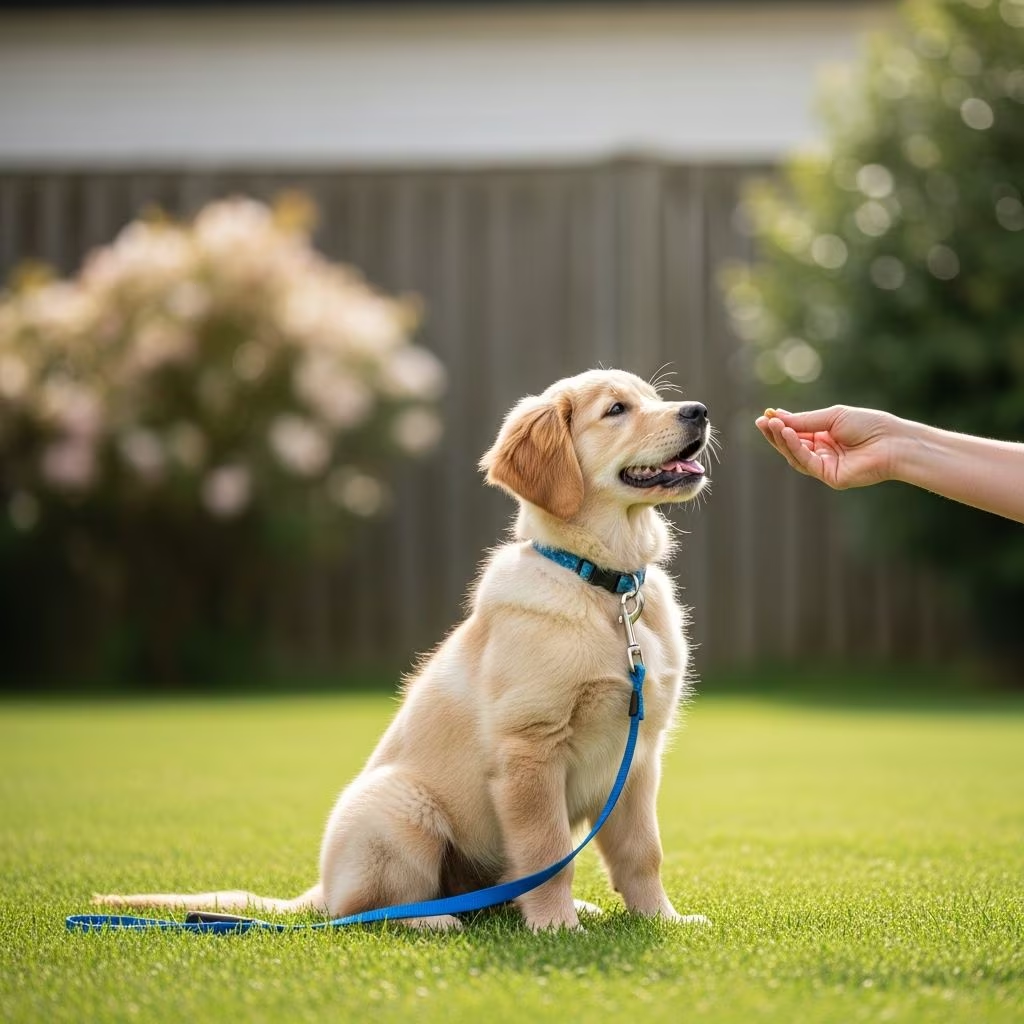
Training your dog represents one of the most rewarding investments you can make in your relationship with your canine companion. Whether you have a new puppy or an adult dog, establishing clear communication and teaching foundational behaviors creates a safer, happier household for everyone. Many new dog owners feel overwhelmed by where to begin, but with the right approach and realistic expectations, anyone can successfully train their dog.
Understanding the Foundation of Effective Training
Before diving into specific commands, it’s important to recognize what makes training successful. The most critical factor is consistency. Dogs thrive on predictability and repetition. When you establish a training routine and stick to it, your dog learns faster and retains commands more reliably. The brain of a dog is remarkably adaptable, and through repeated positive experiences, new neural pathways form that strengthen desired behaviors.
Training also requires patience. Just like humans, dogs learn at different rates. Some dogs grasp commands within days, while others need weeks of practice. This variation depends on breed, age, temperament, and previous experiences. Frustration during training sessions communicates negative emotions to your dog and can undermine your progress. Instead, view training as an ongoing journey rather than a destination.
Structuring Your Training Schedule
The frequency and duration of training sessions dramatically impact your success. Short, focused sessions are far more effective than long, drawn-out ones. Dogs have limited attention spans, and training fatigue sets in quickly. Most experts recommend keeping sessions between 5 to 10 minutes long. However, you can conduct multiple sessions throughout the day if time permits.
Create a training schedule that fits your lifestyle. Consistency matters more than intensity. A dog that receives three 5-minute training sessions daily will progress faster than one receiving a single 30-minute session weekly. Choose times when both you and your dog are relatively calm and focused. Many trainers recommend scheduling sessions before meals, as your dog may be more motivated by food rewards.
Environmental Considerations
Where you train significantly influences your dog’s ability to concentrate and learn. Always begin training in the least distracting environment possible. Your living room, a quiet hallway, or a calm backyard works better than a park or busy street. Once your dog masters a command in a controlled setting, gradually introduce mild distractions. Eventually, practice in progressively more challenging environments until your dog responds reliably anywhere.
Using Rewards Effectively
Positive reinforcement remains the most effective training method. Food rewards are one of the most powerful motivators available to trainers. Before starting, gather high-quality treats or kibble pieces. The better the reward, the more enthusiastically your dog will engage. Some dogs respond strongly to special training treats, while others work happily for pieces of their regular kibble.
Beyond food, other rewards include verbal praise, physical affection, and playtime. Every dog has preferences. Some dogs light up at the sound of genuine praise, while others crave belly rubs. Experiment to identify what motivates your individual dog most effectively. The key is to reward the desired behavior immediately after it occurs. This timing helps your dog connect the action with the reward.
The Timing Principle
Dogs live in the present moment. If you delay rewards by even a few seconds, your dog may not understand what behavior earned the reward. When your dog sits, offer the treat within one second for maximum learning. This creates a clear cause-and-effect relationship in your dog’s mind: “When I sit, good things happen.”
Essential Commands Every Dog Should Know
Certain commands form the foundation of canine obedience and safety. These fundamental skills make daily life easier and protect your dog from dangerous situations. The following commands should be your priority when beginning your training journey.
Teaching Your Dog to Sit
The sit command is typically the easiest first command to teach. Hold a treat just above your dog’s nose level. Slowly move the treat backward over your dog’s head toward their tail. As your dog’s eyes follow the treat, their bottom naturally lowers into a sitting position. The moment their rear touches the ground, immediately reward them with the treat and enthusiastic praise.
Never physically push your dog into position. Allow them to discover sitting through their own movement. This self-directed learning creates stronger learning than forced compliance. Repeat this exercise 5-10 times per session, several times daily. Within a few days to a week, most dogs begin sitting automatically when they see a treat raised above their nose. Once they understand the action, begin adding the verbal cue “sit” just before they perform the behavior. Eventually, they’ll respond to the word alone.
Teaching Your Dog to Stay
The stay command requires your dog to maintain a position despite your movement or environmental changes. Begin with your dog in a sitting position. Use a clear hand signal, such as an open palm facing your dog, while saying “stay.” Take a single step backward while maintaining eye contact. If your dog remains in place, immediately return and reward them with treats and praise.
Gradually increase the difficulty by taking additional steps away from your dog. Progress slowly, ensuring success at each stage before advancing. If your dog breaks the stay, calmly return them to the position and try again with a shorter distance. Build duration gradually over multiple training sessions. After weeks of practice, your dog should maintain a stay for several minutes while you’re across the room.
Teaching Your Dog to Come When Called
The recall command “come” is critical for safety, particularly if your dog ever escapes outdoors. Start training in a confined space or use a long leash. Call your dog’s name in a happy, enthusiastic tone followed by the command “come.” Make your voice irresistibly cheerful—act as if calling your dog is the most exciting thing you’ve done all day. When your dog comes to you, reward them with high-value treats and genuine excitement.
Never call your dog over to do something unpleasant, like administer medication or end playtime. Your dog will learn that “come” means the fun ends. Instead, occasionally call your dog to reward them with treats or praise, then let them return to their activity. Start with very short distances and gradually increase the distance as your dog becomes reliable. Add mild distractions only after consistent performance in controlled settings.
Teaching Your Dog to Lie Down
Teach lie down after your dog reliably sits. With your dog sitting, hold a treat in your hand and slowly lower it toward the ground while saying “down.” Your dog should follow the treat and naturally lower their body into a lying position. When they’re fully prone, reward immediately. Repeat this process multiple times daily until your dog associates the command with the action.
Resist the urge to physically push your dog down or manipulate their legs into position. Self-directed movement creates stronger learning and better behavior retention. Patience during this phase pays dividends as your dog understands the behavior through discovery rather than compulsion.
Leash Training and Walking Skills
Proper leash training prevents pulling, creates pleasant walking experiences, and enhances your dog’s safety. Equipment matters significantly in leash training success. Use a standard flat leash with either a harness or collar. Avoid retractable leashes during initial training, as they teach inconsistent distances and encourage pulling. A front-clip harness provides superior control compared to neck collars, especially for strong pullers.
Begin leash training in quiet, low-distraction environments. Keep the leash loose and relaxed. Reward your dog for walking beside you with occasional treats and verbal praise. If your dog pulls forward, stop moving and wait for them to return to your side before continuing. This teaches your dog that pulling doesn’t achieve their goal, but walking calmly does.
The Heel Command
The heel command teaches your dog to walk directly beside you on a loose leash. Add the verbal cue “heel” as your dog is walking correctly beside you. Practice in quiet areas initially, then gradually introduce mild environmental distractions. Over weeks of consistent practice, your dog learns that staying by your side during walks results in rewards and praise.
Important Training Principles and Techniques
| Training Principle | Description | Impact |
|---|---|---|
| Say commands once only | Use the cue word a single time with consistent pronunciation | Prevents confusion and improves response reliability |
| Start in low-distraction areas | Begin training in quiet, familiar environments | Allows your dog to focus and learn faster |
| Use consistent terminology | Everyone in the household uses the same command words | Eliminates confusion and accelerates learning |
| Reward immediately | Deliver rewards within 1-2 seconds of correct behavior | Creates clear cause-and-effect learning |
| Practice regularly | Train multiple short sessions daily rather than one long session | Maintains momentum and reinforces learning |
Command Clarity
Say each cue word only once. Repeating commands confuses your dog and weakens their response. If you say “sit, sit, sit,” your dog learns that they only need to comply after the third repetition. Instead, say the command once clearly. If your dog doesn’t respond, wait a moment and try again, but still use a single utterance.
Household Consistency
Everyone in your household must use identical command words and apply the same training rules. If one family member says “down” for the lie down command while another says “lay down,” your dog becomes confused. Hold a family meeting before beginning training and establish which words you’ll use for each command.
Advanced Concepts for Early Success
Several advanced concepts, while seemingly complex, actually simplify training and accelerate learning. Understanding these principles helps you troubleshoot problems and optimize your sessions.
Building Attention and Focus
Before teaching complex behaviors, establish that your dog looks to you for guidance. Practice making your dog’s attention a rewarding behavior in itself. Use a special word or gesture, such as “look at me,” and immediately reward when your dog makes eye contact. This foundation behavior makes all subsequent training more effective.
Progressive Difficulty
Each behavior should progress gradually through predictable stages. Don’t expect your dog to maintain a stay for a minute if they’ve only practiced 10-second stays. Don’t demand recall success from across a park if they’ve only practiced in your living room. Gradually increase distance, duration, and distraction level only after establishing reliability at the current level.
Common Beginner Mistakes to Avoid
New trainers often inadvertently sabotage their own success. Understanding common pitfalls helps you navigate the learning process more smoothly.
- Training for too long: Extended sessions cause fatigue and frustration. Stick to 5-10 minute sessions regardless of how well training is going.
- Skipping environmental progression: Training exclusively indoors then expecting outdoor success sets your dog up to fail. Gradually introduce real-world distractions.
- Inconsistent family participation: Mixed signals from different family members confuse your dog and slow progress dramatically.
- Using ineffective rewards: If your dog isn’t motivated by your chosen reward, training stalls. Identify what genuinely excites your individual dog.
- Punishing mistakes: Harsh corrections teach your dog to fear you, not to comply. Positive methods work faster and create stronger bonds.
- Repeating commands: Multiple repetitions teach your dog to ignore you initially. Use single, clear commands.
Frequently Asked Questions
At what age should I start training my dog?
You can begin basic training with puppies as young as 8 weeks old. Puppies can learn basic commands like sit and come. Adult dogs learn just as quickly as puppies, so don’t worry if you have an older dog—it’s never too late to train.
How long until my dog learns a command?
Most dogs grasp basic commands within 5-14 days of consistent daily practice. Some dogs learn faster, while others need several weeks. Consistency and patience matter more than speed.
What if my dog isn’t food motivated?
Identify alternative rewards your dog loves: specific toys, verbal praise, physical affection, or play sessions. Use whatever genuinely excites your individual dog.
Should I use a clicker during training?
Clicker training is an advanced technique that creates a precise marker for the exact moment your dog performs the desired behavior. It’s optional but can accelerate learning for dogs that respond well to it.
What should I do if training isn’t working?
Evaluate your reward effectiveness, training duration, session frequency, and environmental distractions. Often, small adjustments dramatically improve results. If problems persist, consider consulting a professional trainer.
Building Long-Term Success
Training isn’t a destination but an ongoing relationship-building process. Even after your dog masters basic commands, continue practicing regularly to maintain skills. Introduce new commands gradually, keeping sessions enjoyable for both you and your dog. The time you invest in training pays dividends throughout your dog’s entire life through a stronger bond, better behavior, and a safer, happier household.
References
- 5 Dog Training Tips for Beginners — Open Farm. 2024. https://openfarmpet.com/blogs/news/dog-training-tips-for-beginners
- Dog Training 101: Basic Training Tips for Dogs and Puppies — CareCredit. 2024. https://www.carecredit.com/well-u/pet-care/how-to-train-your-dog/
- THE BASICS OF TRAINING YOUR DOG — Wisconsin 4-H Extension. 2021. https://4h.extension.wisc.edu/files/2021/05/The-Basics-of-Training-Your-Dog.pdf
- Dog Training For Dummies Cheat Sheet — Dummies. 2024. https://www.dummies.com/article/home-auto-hobbies/pets/dogs/training/dog-training-for-dummies-cheat-sheet-208990/
- How to Train Your Dog & Top Training Tips — RSPCA. 2024. https://www.rspca.org.uk/adviceandwelfare/pets/dogs/training
- How to Train a Dog & Dog Obedience Training — American Kennel Club. 2024. https://www.akc.org/expert-advice/training/



