

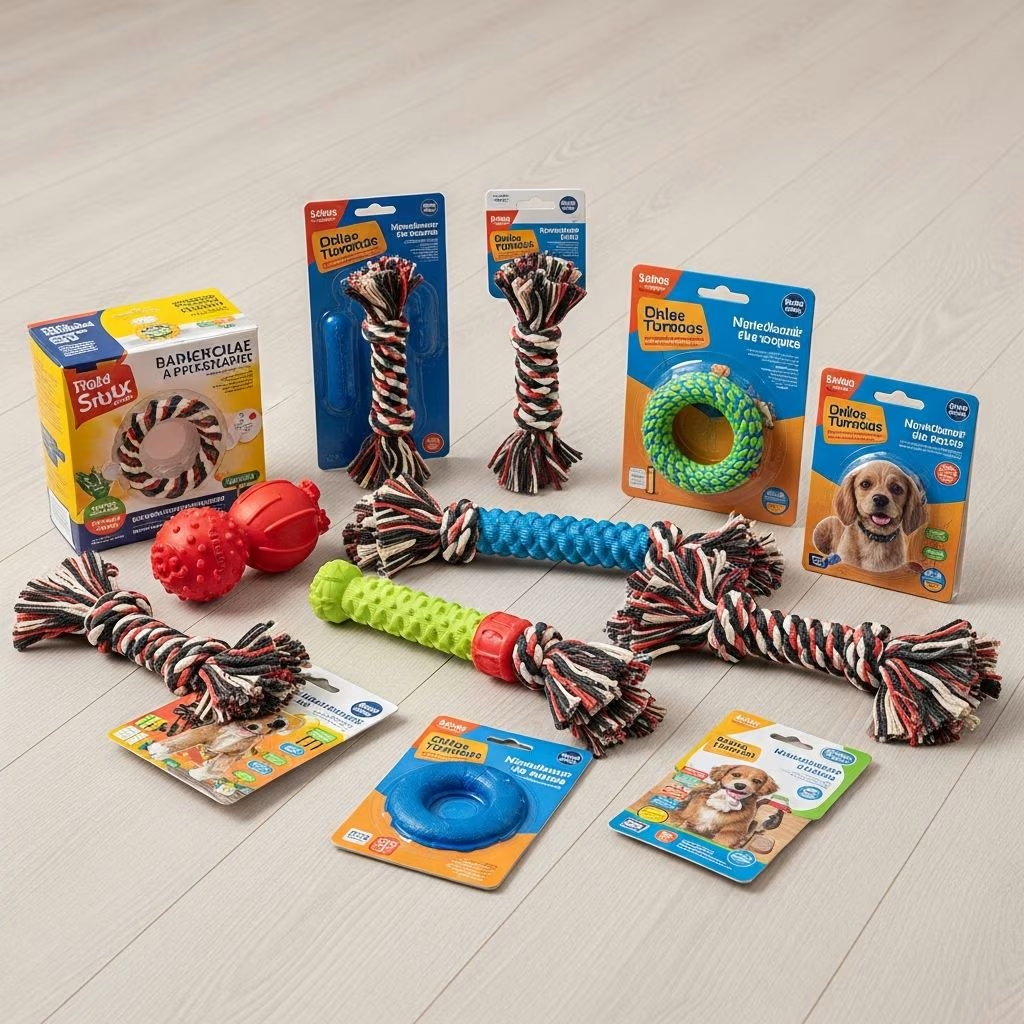
Pet toys are essential for keeping dogs mentally stimulated and physically active, but not all toys are created equal. The market is flooded with options, and many seemingly innocent toys can pose serious health risks if chosen carelessly. Understanding how to evaluate toys, recognize potential dangers, and monitor your dog’s playtime is crucial for responsible pet ownership.
Understanding the Risks Hidden in Pet Toys
Toy-related injuries rank among the most preventable health emergencies veterinarians encounter. When a dog ingests foreign objects or suffers dental damage from inappropriate toys, the consequences can be severe and costly. Many pet owners don’t realize that their dog’s favorite toy might contain hazardous materials or design flaws that create danger during everyday play.
The risks associated with dog toys fall into several categories: toxic chemical exposure, choking hazards, intestinal blockages, dental damage, and physical injuries from sharp edges or broken pieces. Each of these dangers requires a different prevention strategy, and awareness is the first line of defense.
Toxic Materials and Chemical Concerns
One of the most insidious risks comes from harmful substances contained within toy materials themselves. Unlike products designed for human consumption, pet toys face virtually no federal safety regulations in the United States, allowing manufacturers to use materials that would never be approved for children’s products.
Chemical Hazards in Manufacturing
Many rubber and plastic toys contain harmful chemicals that leach out during chewing. Phthalates, which are plasticizers used to make plastics flexible, have been identified as potential endocrine disruptors in pet toys. When dogs repeatedly chew on toys containing these chemicals, they may ingest substances that accumulate in their bodies over time, potentially affecting their hormonal and reproductive systems.
Cheap or poorly manufactured toys, particularly those imported from countries with less stringent manufacturing standards, may also contain toxic heavy metals like lead in their paint or plastic coating. If a dog ingests lead-contaminated material, it can cause severe poisoning affecting the nervous system, gastrointestinal tract, and other vital organs. This is why purchasing from reputable, well-established brands with proven safety records is essential.
Identifying Safe Material Sources
Look for toys explicitly labeled as made from food-grade natural rubber or those carrying “non-toxic” certifications. These materials are tested for safety and are far less likely to contain harmful chemicals or heavy metals. When examining toy labels, check for manufacturer information and country of origin. Established brands with transparent sourcing and quality control processes are significantly safer choices than unknown manufacturers.
Size and Choking Risk Assessment
Selecting the appropriately sized toy for your specific dog is one of the most straightforward yet frequently overlooked safety measures. Toys that are too small can easily be swallowed whole or become lodged in your dog’s mouth or throat, creating a choking emergency.
Finding the Right Fit
A properly sized toy should not be small enough for your dog to fit entirely into their mouth, nor should it be so large that they cannot comfortably chew or manipulate it with their jaws. For dogs who engage in “kill” play behavior—shaking and thrashing toys—the toy size should roughly correspond to prey animals appropriate for your dog’s size, whether mouse-sized for small breeds, rabbit-sized for medium dogs, or duck-sized for larger dogs.
This becomes particularly challenging in multi-pet households where dogs of different sizes share the same space. A toy appropriate for a large dog might be a serious choking hazard for a small dog or puppy. In these situations, storing toys separately and providing access only during supervised play helps prevent accidental exposure to inappropriate sizes.
Age-Related Considerations
Puppies and senior dogs have specific toy needs. Young puppies are exploring the world orally and are more likely to swallow toy pieces, while senior dogs may have dental disease or weaker teeth that make hard toys problematic. Soft rubber toys are generally safer choices for both age groups, as they’re gentler on developing or compromised teeth and less likely to cause fractures or tooth loss.
Material Durability and Construction Quality
The durability of a toy directly affects its safety profile. Even toys made from non-toxic materials become hazardous when they break down and create small, ingestible pieces. Understanding which materials withstand chewing better and how to assess construction quality is fundamental to toy selection.
Comparing Toy Materials
| Material Type | Durability | Best For | Safety Concerns |
|---|---|---|---|
| Soft Rubber | High | Aggressive chewers, puppies, seniors | Ensure non-toxic; check for additives |
| Plush/Fabric | Moderate | Gentle players, comfort seekers | Monitor for torn seams and stuffing |
| Hard Plastic/Nylon | Very High | Durable chewers | Risk of dental fractures; test with fingernail |
| Rope/Woven | Moderate | Tug games (supervised) | Choking risk; fibers cause blockages |
| Bones/Antlers/Rawhide | High | Intense chewers | Dental fractures; choking; blockages |
The Fingernail Test
A simple assessment tool exists for evaluating toy hardness: the fingernail test. If you cannot press your fingernail into a toy or bend it with your hands, it is likely too hard for your dog’s teeth. Excessively hard toys can cause painful dental fractures, crack molars, or create dead teeth—teeth that become discolored (appearing pink, purple, or white) and may require extraction or root canal treatment. This simple test takes seconds but can prevent expensive veterinary procedures.
Identifying Detachable Parts and Hidden Hazards
Many toys contain components designed to enhance engagement but simultaneously create serious risks. Squeakers, plastic eyes, bells, internal beans, and synthetic stuffing all pose hazards if your dog manages to separate them from the main toy body.
Common Problematic Features
Squeakers embedded within toys are particularly problematic. Dogs may become obsessed with locating and destroying the squeaker, and if they ingest it, the small plastic device can cause intestinal blockage requiring emergency surgery. Similarly, plastic eyes or noses attached to stuffed toys can be chewed off and swallowed. Even seemingly safe fillings like polystyrene beads or nutshell fragments found in some plush toys should never be ingested by dogs.
Rope toys deserve special attention. While they’re excellent for supervised tug-of-war games, unsupervised access to rope toys creates a risk of linear foreign body obstruction. If your dog chews off and swallows rope fibers, these can bunch up the intestines, cutting off blood flow and causing life-threatening damage that often requires emergency surgery.
To mitigate these risks, inspect toys before purchase and remove any easily detachable items. Choose toys with features securely fastened or embedded in ways that prevent separation. Avoid toys with small decorative elements altogether if your dog has a history of destroying toys.
Supervision and Regular Inspection Protocols
Even the safest toy selection cannot guarantee safety without proper monitoring. Establishing inspection routines and understanding your dog’s individual play habits are essential components of toy safety management.
Developing an Inspection Schedule
Toys should be inspected regularly for signs of wear and tear, particularly before and after playtime. Look for:
- Cracks or chips in rigid materials
- Rips, tears, or fraying in fabric
- Pieces about to come off or already missing
- Sharp edges or splintering
- Stuffing protruding from seams
- Discoloration or sticky residue indicating material breakdown
If you notice any of these warning signs, retire the toy immediately, even if it’s relatively new. A toy’s age is less important than its current condition.
Understanding Your Dog’s Chewing Behavior
Dogs fall into distinct categories based on how they interact with toys, and toy selection should match these behaviors. Dogs that “live to destroy” their toys need durable, tough toys that can withstand intense chewing without breaking into pieces. For these power chewers, soft plush or squeaker toys are inappropriate choices, as they will be quickly dismantled and ingested.
Conversely, gentle dogs who primarily carry toys without aggressive chewing can enjoy a wider variety, including plush toys with softer materials. Understanding your individual dog’s play style is crucial for matching them with appropriate toys.
Rotation and Limitation Strategies
Rather than providing access to an entire basket of toys, offer your dog one or two toys at a time. This rotation strategy allows you to monitor specific toys more carefully for missing pieces, signs of deterioration, or complete loss. It also maintains novelty, as dogs tend to show greater interest in toys they haven’t seen recently. When introducing a new toy, supervise the initial interactions to assess how your dog engages with it before allowing unsupervised access.
Special Considerations for Different Life Stages
Puppies, adult dogs, and senior dogs have distinct needs and vulnerabilities that should influence toy selection and monitoring protocols.
Puppies and Young Dogs
Puppies explore their world through chewing and are more likely to swallow foreign objects. They also have developing teeth that are sensitive to trauma. Non-toxic, soft rubber toys are ideal for this life stage, as they satisfy the urge to chew while protecting developing dentition. Avoid small toys that can be swallowed whole and closely supervise play to catch and remove toys if destructive chewing begins.
Adult Dogs
Adult dogs in their prime are typically the most challenging group regarding toy safety, as they often have the strongest jaws and most destructive chewing habits. Matching toy durability to chewing intensity becomes critical. Regular inspection becomes non-negotiable for this age group.
Senior Dogs
As dogs age, dental disease becomes more common, and tooth enamel thins. Hard toys that were safe during adulthood may cause fractures in aging dogs. Softer rubber toys, gentle plush options, and toys specifically designed for seniors should replace harder alternatives as your dog matures.
Edible Chews and Special Products
Edible chews including rawhide, bones, antlers, and hard nylon products require special consideration due to their specific hazards. While these items can provide extended chewing satisfaction, they carry risks that differ from regular toys.
Why Rawhide and Bones Are Problematic
Rawhide chews are popular because dogs enjoy them, but they create choking hazards when large pieces are swallowed. They also don’t break down easily in the digestive system, leading to potential blockages in the esophagus or intestines. Natural bones and antlers are excessively hard and frequently cause dental fractures, particularly in dogs with existing dental disease.
These items should only be offered under direct supervision, and removed immediately if your dog seems to be swallowing large pieces or struggling with them. For dogs in crates or left unsupervised, these chews should not be accessible at all.
Safer Alternatives
Durable yet flexible heavy-duty natural rubber chews offer a middle ground—they withstand intense chewing without breaking into sharp or ingestible pieces, providing similar satisfaction without the same degree of risk. These alternatives satisfy your dog’s chewing instinct while minimizing the hazards associated with truly hard or edible products.
Addressing Multi-Pet Household Challenges
Homes with multiple dogs of different sizes, ages, or chewing intensities require strategic toy management. A toy that’s perfect for your 80-pound German Shepherd could be a choking hazard for your 10-pound Chihuahua. Similarly, a gentle toy for your senior dog might be destroyed within minutes by your adolescent pit bull.
The best approach is to store toys separately, making access controlled rather than free. Provide toys during supervised play sessions where you can manage which dog has access to which toys. This prevents accidental mix-ups and reduces opportunities for inappropriate toy ingestion. Some owners find it helpful to designate specific toys for specific dogs based on their individual needs and behaviors.
When to Consult Your Veterinarian
Your veterinarian is an invaluable resource for toy selection advice tailored to your specific dog’s needs. Factors including breed predispositions, individual health conditions, dental status, and chewing behavior patterns all influence what toys are appropriate. Veterinarians can recommend specific brands, products, and play strategies based on their medical knowledge and professional experience with dogs similar to yours.
If your dog has a history of toy-related emergencies, eating non-food items, or has dental disease, professional guidance becomes especially important. Your vet can help you navigate the vast toy market to identify options that match your dog’s specific situation.
Creating a Safe Playtime Environment
Beyond toy selection, the environment where play occurs matters. Ensure your home is free of other choking hazards like string, ribbon, rubber bands, children’s toys, and pantyhose that dogs might mistakenly chew. Even non-toy items can pose serious risks if your dog’s access isn’t controlled.
During playtime, watch your dog for signs of distress, choking, or difficulty. Know the signs of choking and be prepared to respond quickly if needed. When play sessions end, store toys in a designated location where your dog cannot access them unsupervised. This prevents opportunistic chewing and allows for proper toy rotation.
Frequently Asked Questions About Dog Toy Safety
How often should I inspect my dog’s toys?
Inspect toys at least weekly, and more frequently for dogs with aggressive chewing habits or toys showing early signs of wear. Immediately remove any toy with visible damage, regardless of when it was last inspected.
Are plush toys safe for dogs?
Plush toys can be safe for gentle dogs, but require monitoring. Ensure they don’t contain dangerous fillings like nutshells or polystyrene beads, check that they’re machine washable, and inspect regularly for rips and loose stuffing. Dogs that destroy plush toys quickly should not have access to them unsupervised.
What’s the safest toy material?
Soft, bendable natural rubber toys are generally considered among the safest options, as they’re durable, non-toxic, difficult to break into small pieces, and gentle on teeth. However, the “safest” toy ultimately depends on your individual dog’s behavior and needs.
Can I leave my dog unsupervised with any toy?
Dogs with known destructive chewing habits should only have access to extremely durable toys during unsupervised periods, or better yet, no toys at all—just provide toys during supervised play. Rope toys, rawhide, and other edible chews should never be left unsupervised.
What should I do if my dog swallows a toy piece?
Contact your veterinarian immediately. Small pieces may pass naturally, but others can cause blockages requiring emergency surgery. Your vet will advise whether observation or intervention is necessary based on the item’s size and your dog’s symptoms.
References
- Pet Talk: Pet Toy Dangers — Texas A&M College of Veterinary Medicine & Biomedical Sciences. https://vetmed.tamu.edu/news/pet-talk/pet-toy-dangers/
- Best Toys for Your Dog: A Guide to Fun and Safety — Animal Dental Specialists. https://animaldentalspecialists.com/best-toys-for-dogs-a-guide-to-fun-and-safety/
- Is Your Dog’s Chew Toy Safe? A Guide for Gilbert Pet Owners — GQ Veterinary Clinic. https://www.gqvet.com/is-your-dogs-chew-toy-safe-a-guide-for-gilbert-pet-owners/
- Choosing the Right Dog Toys: Pet Care Tips — SPCA. https://spca.org/pettips
- Are Pet Toys Regulated? — American Pet Products Association Law Library. https://americanpetproducts.org/law-library/are-pet-toys-regulated
- How to Choose Safe, Durable Toys Your Dog Will Love — BARK. https://bark.co/blogs/bark-post/safe-dog-toys



