

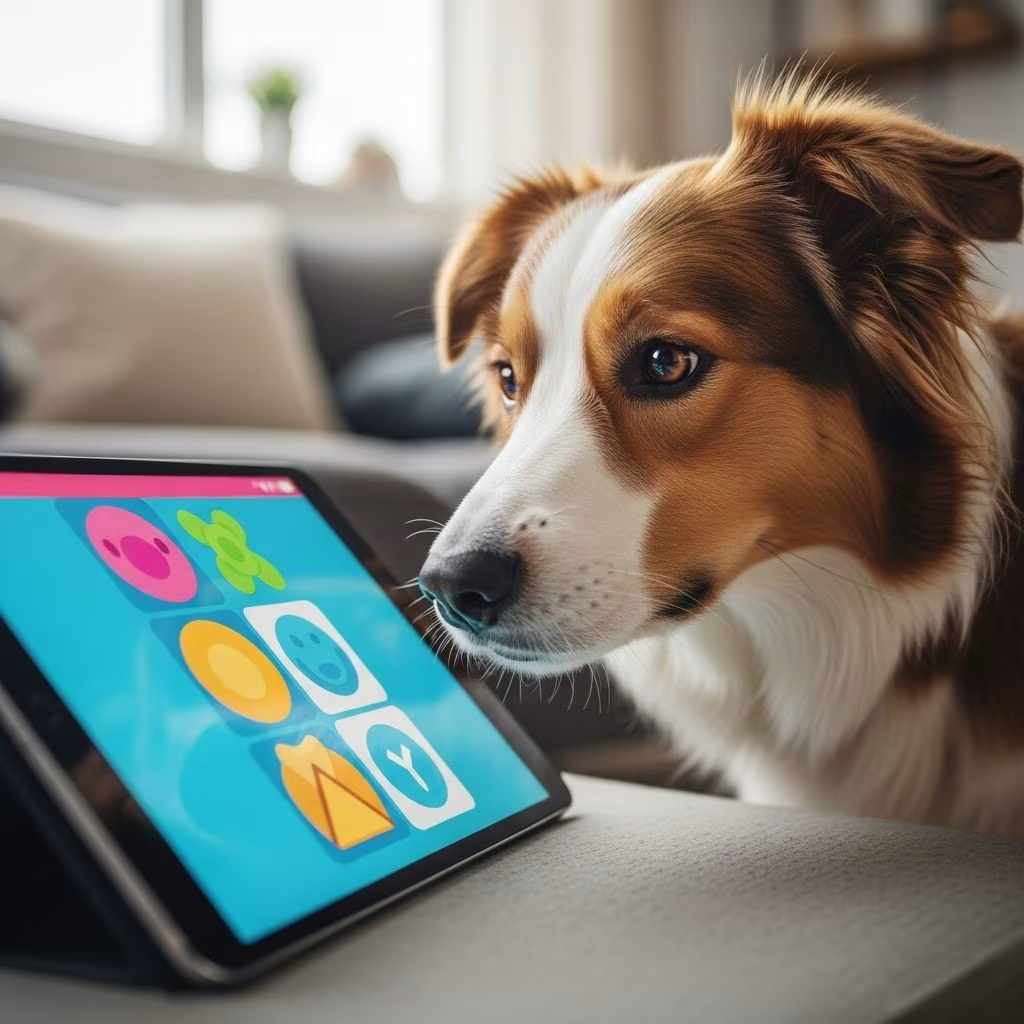
Dogs no longer have to sit on the sidelines while humans tap away on screens. With thoughtfully designed touchscreen games, your dog can join the fun in ways that support mental enrichment, help reduce boredom, and even keep senior dogs mentally sharp.
This guide explains what dog touchscreen games are, why they matter for your dog’s wellbeing, how to introduce them safely, and when they work best as part of a balanced enrichment routine.
What Are Dog Touchscreen Games?
Dog touchscreen games are simple interactive apps or digital setups that respond when a dog touches the screen with their nose or paw. Instead of complex rules, these games focus on easy, high-reward actions so most dogs can quickly understand that touching the screen makes something fun happen.
Common Types of Dog-Friendly Screen Games
- Chase games – A moving object (like a mouse, ball, or fish) scurries across the screen, and your dog tries to “catch” it by tapping or nudging the display.
- Noise-maker apps – Each touch triggers a sound (squeaks, animal calls, or chimes), rewarding your dog with immediate feedback.
- Art or painting apps – Nose or paw taps create colorful patterns, so your dog “paints” on the screen.
- Yes/No or simple choice games – Large on-screen buttons let your dog “answer” questions or make selections with a tap.
- Button or puzzle interfaces – Custom setups where dogs press large buttons or shapes to trigger treats or advance in a game, either on or off a touchscreen.
Many of these games borrow design principles from apps for toddlers—big shapes, bold colors, and simple interactions—because these are easy for dogs to see and target with their nose or paw.
Why Touchscreen Games Appeal to Dogs
From your dog’s perspective, a good digital game is just another way to perform natural behaviors like chasing, sniffing, or problem-solving in a new environment. The screen becomes a puzzle that reacts when they interact with it, which can be highly rewarding.
Built-In Rewards That Make Screens Fun
- Instant feedback – A sound, movement, or color change appears the moment your dog touches the screen.
- Chasing instinct – Moving animations tap into your dog’s prey drive in a controlled way.
- Food or toy rewards – In more advanced setups, correct responses trigger a real-life treat dispenser or toy release.
Because many dogs are naturally curious, they often experiment with the device and quickly notice that touching the screen makes something happen. This discovery can spark ongoing interest and engagement.
Benefits of Touchscreen Games for Dogs
Used thoughtfully, touchscreen games can offer meaningful advantages for dogs of many ages, especially when physical exercise alone does not meet all of their needs.
Cognitive Enrichment and Mental Fitness
Research from veterinary and animal behavior teams has shown that structured touchscreen tasks can help keep older dogs mentally engaged and may slow age-related cognitive decline. In experimental studies, senior dogs trained to use touchscreen devices to solve simple puzzles showed:
- Improved attention and learning – Dogs practiced problem-solving and pattern recognition to earn rewards.
- Better working memory – Repeated tasks appeared to support memory-related skills in older dogs.
- Greater willingness to try new tasks – Once dogs understood one game, they were more motivated to learn additional tasks.
Support for Senior Dogs
Many older dogs have joint pain, limited mobility, or medical conditions that reduce how much they can run, jump, or hike. Low-impact touchscreen games offer a way to provide:
- Mental stimulation without stressing the body.
- Variety in daily routines when long walks are no longer possible.
- Engagement for dogs who still crave interaction but tire easily.
Reduced Boredom and Problem Behaviors
Bored dogs often invent their own entertainment—chewing furniture, barking excessively, or digging through the trash. Veterinary behaviorists note that interactive games can redirect this energy into more constructive activities and reduce anxiety-related behaviors, especially when dogs spend time alone.
Mood and Welfare Improvements
In controlled enrichment studies, dogs using interactive digital setups showed signs of positive affect, such as relaxed body language and wagging tails, and had lower levels of stress hormones during participation. Caregivers also reported stronger dog–owner relationships when they took part in guided touchscreen tasks with their dogs.
| Benefit | How Touchscreen Games Help |
|---|---|
| Mental stimulation | Engages learning, problem-solving, and memory through simple puzzles and tasks. |
| Senior dog support | Provides low-impact enrichment for dogs with reduced mobility. |
| Boredom relief | Offers an outlet for energy that might otherwise fuel destructive behaviors. |
| Stress reduction | Interactive tasks have been associated with lower stress hormone levels in dogs. |
| Human–dog bond | Cooperative play and training around devices can strengthen relationships. |
Safety First: Protecting Devices and Dogs
Before handing your tablet over to your dog, you’ll need a few safety basics to keep both your pet and your device protected.
Protecting Your Screen and Hardware
- Use a durable screen protector – Paw pads, nails, and wet noses can scratch or damage an unprotected screen.
- Keep the device flat – Place the tablet on the floor or a low, stable surface so it cannot slide or fall if your dog gets enthusiastic.
- Add a rugged case – A shock-absorbing case helps protect against bumps or knock-overs.
- Supervise at all times – Never leave your dog alone with electronics that could be chewed or broken.
Keeping Playtime Safe and Healthy
- Limit session length – Short, positive sessions (5–10 minutes) prevent frustration and overexcitement.
- Avoid slippery floors – Ensure your dog has good footing so they do not slide while reaching for the screen.
- Watch for stress signals – Yawning, lip licking, turning away, or refusing to engage can indicate that your dog needs a break.
- Balance digital and real-world play – Screen time should add enrichment, not replace walks, sniffing, and social contact.
Teaching Your Dog to Use a Touchscreen
You do not need advanced training skills to help your dog enjoy simple touchscreen games. A basic “touch” cue is often enough to get started.
Step 1: Teach a Nose Target
- Present your open hand at your dog’s nose level.
- When your dog sniffs or touches your palm with their nose, mark the behavior (with a clicker or a cheerful “yes!”) and reward with a treat.
- Repeat until your dog reliably bumps your hand as soon as you present it.
Step 2: Add a Verbal Cue
- As your dog moves in to bump your hand, say your chosen cue, such as “touch.”
- Mark and reward every correct response.
- Gradually present your hand in different positions—slightly higher, lower, or off to the side—so your dog learns that “touch” means “bump this target” in many places.
Step 3: Transition to a Paper Target
- Attach a small piece of paper to your palm where your dog normally touches.
- Ask for “touch,” then mark and reward when your dog bumps the paper.
- Over several repetitions, shift the paper from your hand to a nearby wall or the floor.
- Continue reinforcing touches to the paper until your dog clearly targets it on its own.
Step 4: Move the Target to the Screen
- Place the paper target on your tablet screen using removable tape.
- Ask for “touch” and reward when your dog bumps the paper on the device.
- Gradually make the paper smaller, continuing to reinforce correct touches.
- Once your dog confidently touches a very small piece of paper, remove it and cue “touch” directly to the screen.
At this point, many dogs are ready to interact with simple apps that respond to any touch, such as painting or noise-maker games.
Choosing the Right Games for Your Dog
Not every dog will enjoy every type of digital game. Tailor your choices to your dog’s age, health, and personality.
For Playful, High-Energy Dogs
- Chase-style apps with moving critters or balls.
- Games that respond with fast animations or squeaks to each tap.
- Short sessions followed by real-life fetch or tug to satisfy their urge to chase and grab.
For Senior or Low-Mobility Dogs
- Noise-maker or art apps that require only gentle nose taps.
- Simple choice games with large on-screen buttons.
- Structured puzzle tasks where they earn treats for specific touches.
For Puzzle-Loving Dogs
- Step-by-step training games that increase in difficulty over time.
- Custom button interfaces where correct choices trigger treats, based on research prototypes that use multi-button setups for canine gaming.
Balancing Screen Time With Real-World Enrichment
Even the most engaging touchscreen experience cannot replace the benefits of real-world exploration, physical exercise, and social interaction. Behavior experts emphasize that digital play should complement, not substitute for, traditional forms of enrichment.
Best Practices for a Healthy Mix
- Use touchscreen games as a bonus activity on rainy days, after medical procedures, or for short mental workouts.
- End each screen session by switching to real play, such as a brief game of fetch, a sniffing walk, or a toy that squeaks like the sound in the app.
- Monitor your own habits—if screen games start replacing quality time together, reset the balance and prioritize direct interaction.
Frequently Asked Questions (FAQs)
Q: Are touchscreen games safe for all dogs?
Most healthy adult dogs can safely enjoy brief, supervised touchscreen play. Dogs with severe vision problems, significant mobility issues, or strong tendencies to chew electronics may not be good candidates. When in doubt, consult your veterinarian before introducing new forms of enrichment.
Q: How long should my dog play touchscreen games?
Start with sessions of 3–5 minutes and watch your dog’s body language. If they remain relaxed and engaged, you can extend to about 10 minutes. Several short, positive sessions spread throughout the week are more beneficial than long, tiring ones.
Q: Can touchscreen games replace walks or training?
No. Touchscreen games are a supplemental form of mental enrichment. Dogs still need regular physical exercise, social interaction, and basic training to stay healthy and well-adjusted.
Q: Is it harder to teach senior dogs to use a touchscreen?
Older dogs can absolutely learn to use touchscreens, especially when you use gentle, reward-based methods. Studies of senior dogs have shown they can learn touchscreen tasks and benefit from the resulting mental stimulation, even if they require a bit more time and patience during training.
Q: Will screens harm my dog’s eyes?
There is currently no evidence that occasional, short sessions with tablets at normal brightness levels harm dogs’ eyes. To be safe, avoid extremely bright settings and keep the screen at a comfortable distance, just as you would for yourself.
References
- Video Games and Your Pet — Ken Cohn, DVM / American Animal Hospital Association. 2018-03-01. https://www.kencohndvm.com/articles/563127-video-games-and-your-pet
- Training Senior Dogs to Play Games on Touch Screens — Victoria Schade / PetMD. 2017-11-21. https://www.petmd.com/dog/training/training-senior-dogs-play-games-touch-screens
- Evaluating a Four-Button Computerized Gaming System for Cognitive Engagement in Dogs — Kenawell A. et al., Learn Behav. 2025-11-04. https://pubmed.ncbi.nlm.nih.gov/41186871/
- Touchscreen Games for Dog Brain Training — University of Veterinary Medicine, Vienna / Phys.org. 2018-02-08. https://phys.org/news/2018-02-touchscreen-games-dog-brain.html
- Touchscreen Games May Help Older Dogs Stay Mentally Fit — Press Trust of India / Business Standard. 2018-02-08. https://www.business-standard.com/article/pti-stories/touchscreen-games-may-help-older-dogs-stay-mentally-fit-118020800994_1.html



